Your Responsible Supplier Partner for Oil and Gas Products.

API 5CT T95 Casing and Tubing
Hot Topic



Rencent Articles

Recent Resources
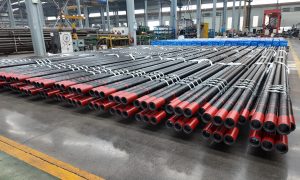
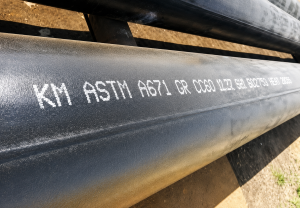
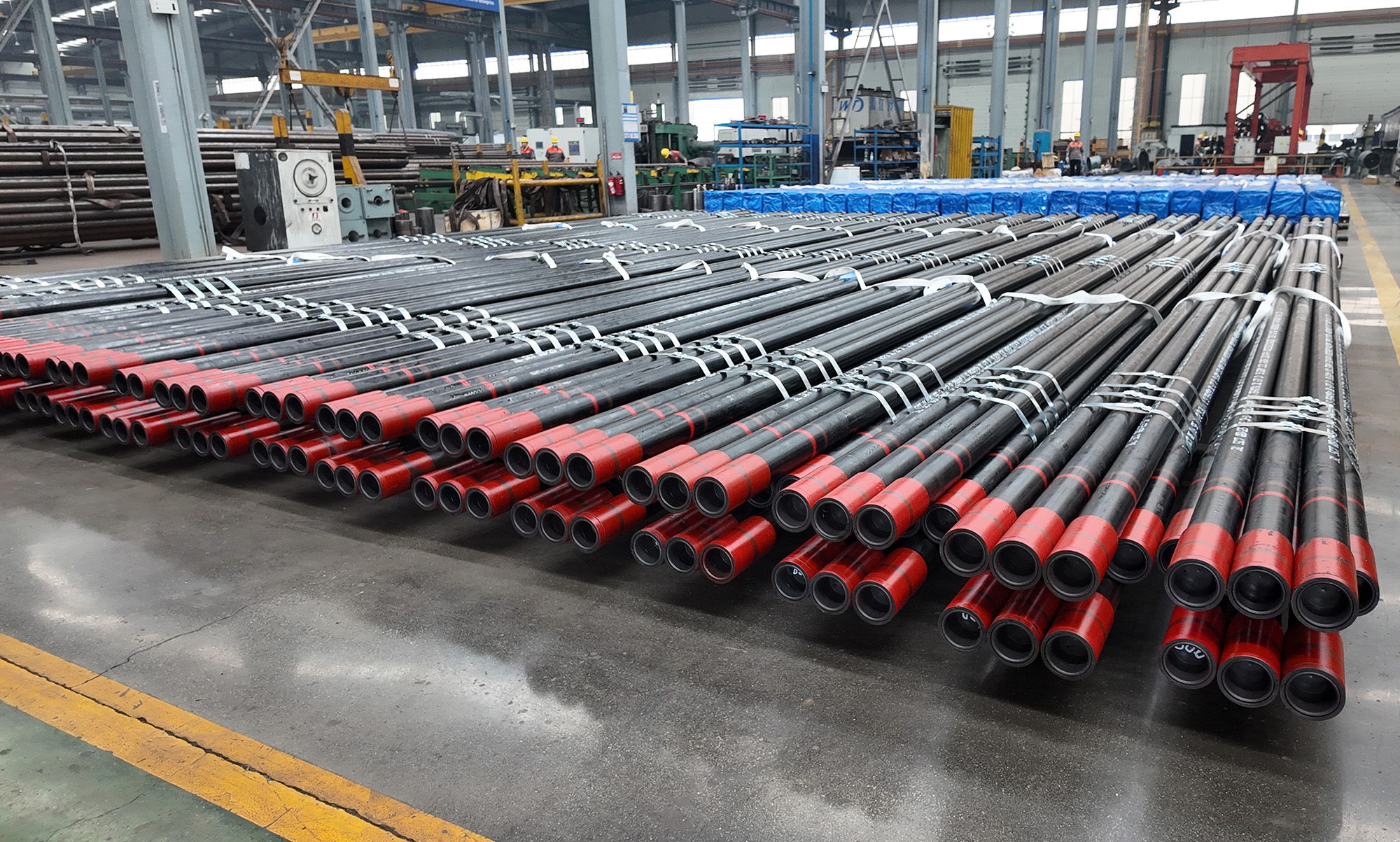
API 5CT T95 Casing and Tubing
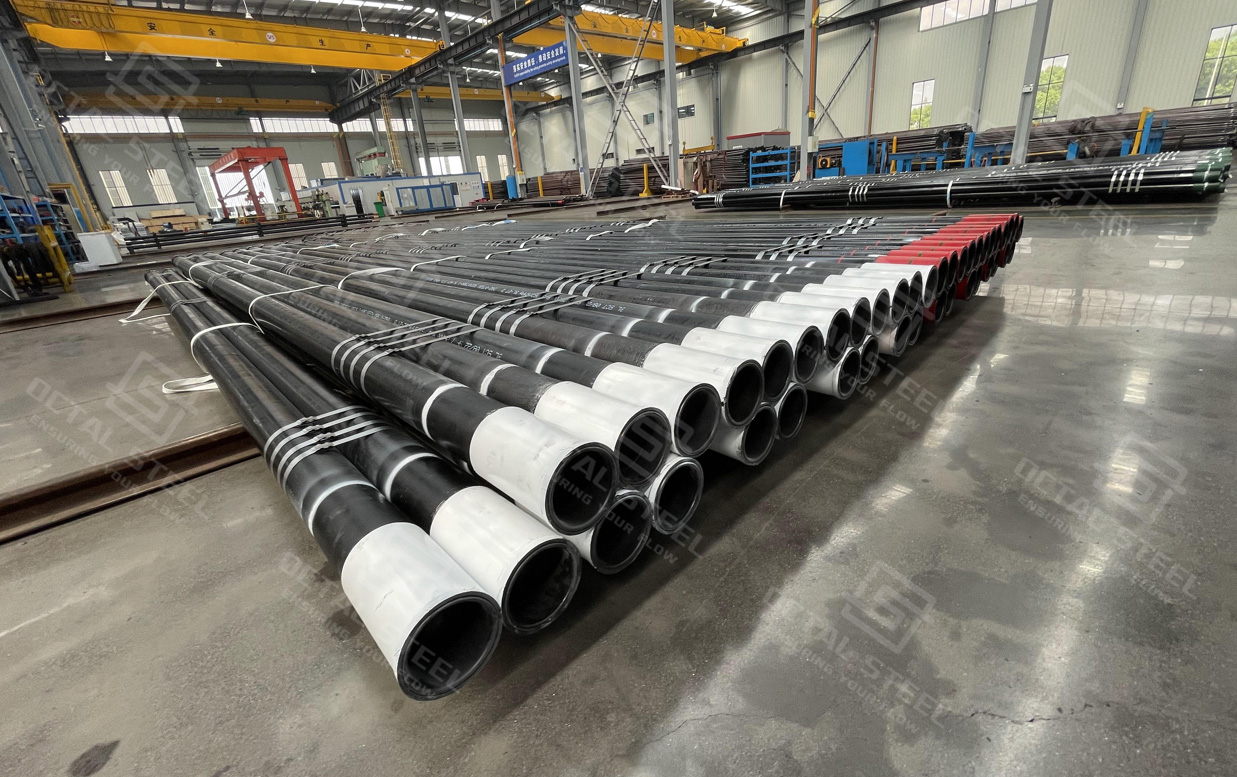
Octal supplies seamless, quenched-and-tempered T95 casing and tubing with heat/lot traceability for sour-service well applications.
Casing OD: Typically 4 1/2” to 16”.
Tubing OD: Typically 1.050” to 4 1/2”.
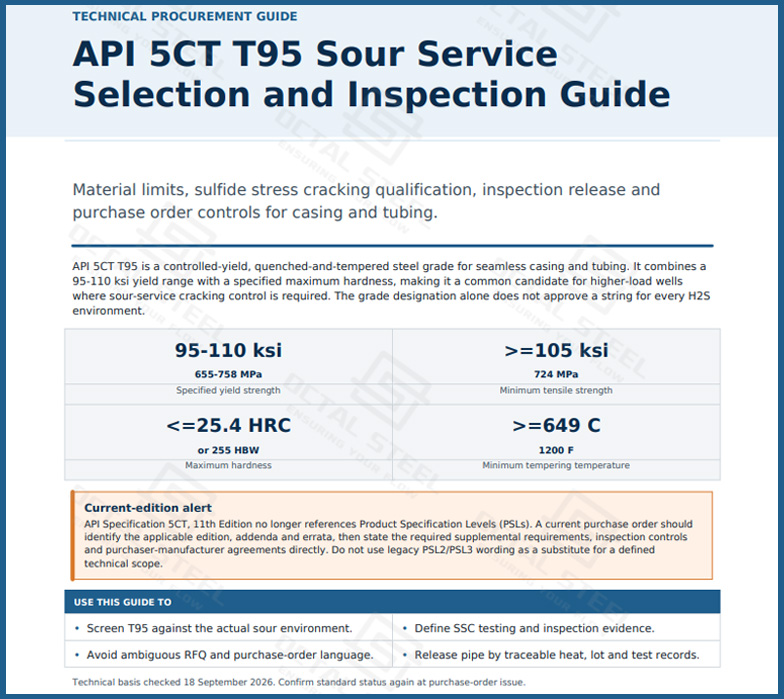
Mechanical Properties: Yield strength 95–110 ksi; tensile strength ≥105 ksi; hardness ≤25.4 HRC or 255 HBW.
Length: API R1, R2 or R3.
Connections: STC, LTC, BTC, NUE, EUE and qualified premium connections.
Applications: Production casing, liners and tubing for H₂S-containing wells.
Standards: API 5CT; API 5B for standard threads; ISO 15156 or NACE TM0177 when specified.
API 5CT T95 casing and tubing refers to seamless Oil Country Tubular Goods manufactured to API Spec 5CT in the T95 controlled-yield steel grade. In a completed well, T95 casing supports and isolates the wellbore after cementing, while T95 tubing forms the internal, normally retrievable conduit used to produce or inject fluids.
Both products are supplied in a quenched-and-tempered condition for well strings that need more load capacity than L80 while retaining the strength, hardness and sulfide stress cracking controls required for demanding sour-service projects. The controlled yield range of 95–110 ksi (655–758 MPa) prevents the material from drifting into an unnecessarily high-strength condition, while the maximum hardness of 25.4 HRC or 255 HBW controls one of the principal metallurgical factors associated with sulfide stress cracking.
T95 is commonly considered for production casing, liners and tubing exposed to H₂S-bearing gas or sour condensate. The grade designation alone, however, does not qualify a string for every sour well. H₂S partial pressure, pH, chloride content, temperature, applied stress, CO₂ corrosion, connection sealing performance and the applicable NACE MR0175/ISO 15156 requirements must still be reviewed against the well design.
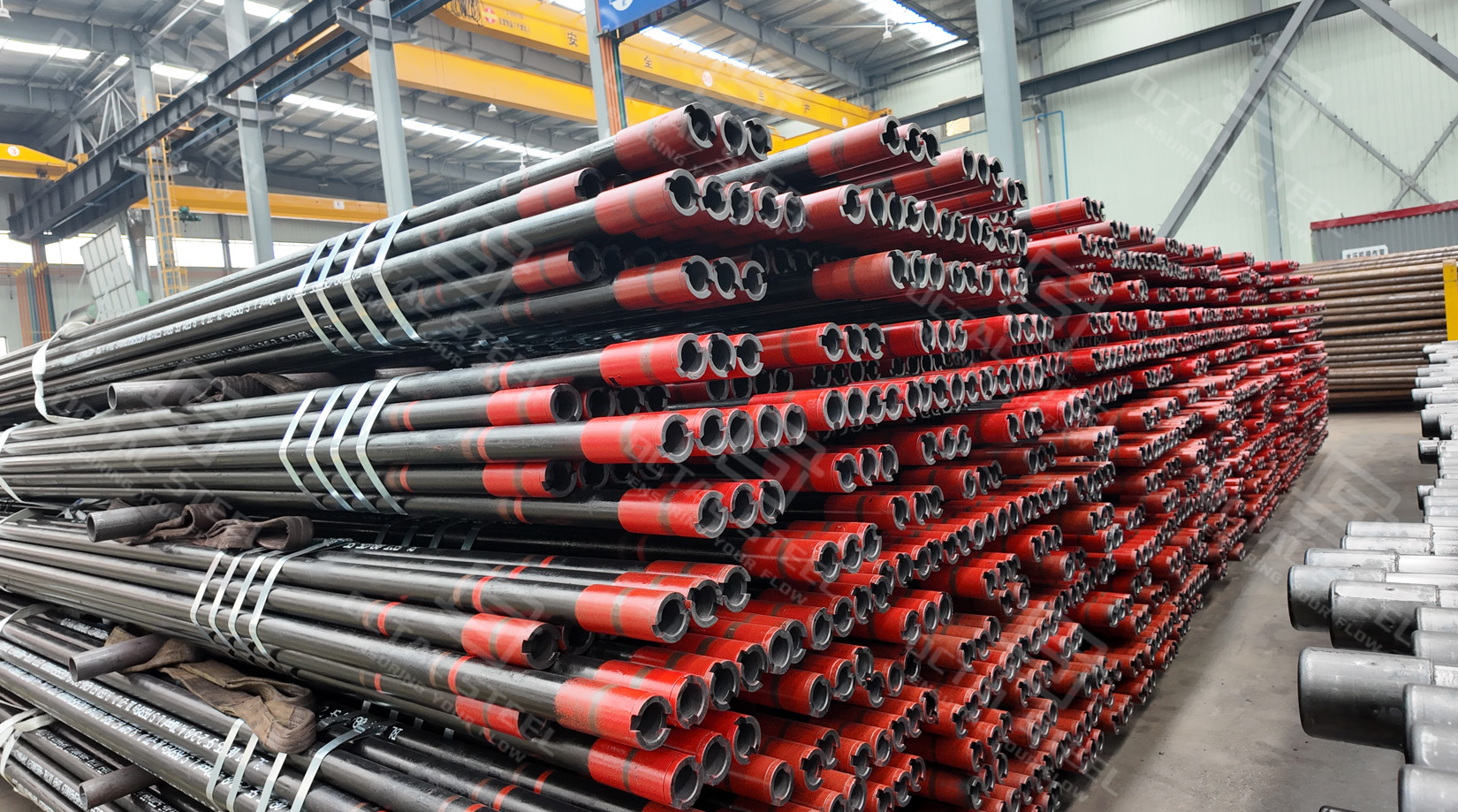
API 5CT T95 Standard and Compliance Basis
API 5CT T95 belongs to the Group 2 controlled-yield grades and is supplied as seamless, full-body quenched-and-tempered casing or tubing. API 5CT 11th Edition no longer uses PSL designations. Purchase orders should instead identify the applicable edition, addenda, errata, supplemental requirements and inspection criteria. API 5CT compliance confirms product acceptance but does not qualify T95 for every sour well; H₂S service must still be reviewed against the actual environment and applicable ISO 15156-2 or ANSI/NACE TM0177 requirements.
| Document | Role in a T95 Order | Information to Define |
|---|---|---|
| API Specification 5CT | Governs the casing or tubing product, grade, manufacture, testing and acceptance | Edition, addenda, errata, product form and applicable supplemental requirements |
| API Specification 5B | Governs standard API thread dimensions, gaging and inspection | Connection type, coupling requirements and thread inspection |
| ISO 15156-2 | Provides the material-selection and qualification framework for H2S-containing environments | H2S partial pressure, pH, temperature, chlorides and stress conditions |
| ANSI/NACE TM0177 | Provides laboratory methods for evaluating resistance to SSC and stress-corrosion cracking | Test method, applied stress, specimen location, solution and acceptance criteria |
| Project specification | Adds well-specific inspection, documentation and service requirements | Sampling frequency, NDE coverage, witness points, certificates and deviation control |
API 5CT T95 Product Specification
| Item | T95 Supply and Acceptance Basis |
|---|---|
| Product standard | API Spec 5CT, current applicable edition, addenda and errata stated in the purchase order |
| Product form | Casing, liner, production tubing, couplings and agreed accessory items |
| Manufacturing route | Seamless |
| Heat treatment | Full-body quenched and tempered |
| Minimum tempering temperature | 649°C / 1200°F |
| Minimum yield strength | 655 MPa / 95,000 psi |
| Maximum yield strength | 758 MPa / 110,000 psi |
| Minimum tensile strength | 724 MPa / 105,000 psi |
| Maximum hardness | 25.4 HRC or 255 HBW |
| Casing size reference | Typical T95 mill availability from 4-1/2 to 16 in.; exact OD and weight combinations confirmed per mill |
| Tubing size reference | 1.050 to 4-1/2 in.; availability depends on weight, end finish and connection |
| Length | API R1, R2 or R3; R2 and R3 are commonly requested |
| Casing connections | STC, LTC, BTC or qualified premium connection |
| Tubing connections | NUE, EUE or qualified premium connection |
| Sour-service verification | API 5CT SSC requirements plus project-specific NACE TM0177 or ISO 15156 qualification where specified |
| Documentation | MTC, heat-treatment records, mechanical and hardness results, NDE, hydrostatic test, dimensional inspection, thread inspection and heat/lot packing map |
API 5CT dimensions are specified by outside diameter and nominal weight, rather than by ordinary pipe schedules. Two 7 in. T95 casing strings can therefore have different wall thicknesses, drift diameters and pressure ratings even though their outside diameters are identical. Burst, collapse and axial capacity must be calculated for the selected OD, weight, connection and design factors; the T95 grade name alone does not establish string performance.
More general dimensional and acceptance requirements are covered in Octal Steel’s API 5CT casing and tubing specification.
API 5CT T95 Mechanical Properties
| Property | API 5CT T95 Requirement |
|---|---|
| Yield strength | 655–758 MPa |
| Yield strength | 95–110 ksi |
| Minimum tensile strength | 724 MPa |
| Minimum tensile strength | 105 ksi |
| Maximum hardness | 25.4 HRC |
| Brinell equivalent limit | 255 HBW |
| Heat-treatment condition | Quenched and tempered |
The upper yield limit matters in sour service. A pipe that exceeds 110 ksi may appear mechanically stronger, but it no longer fits the specified T95 strength window. The altered strength and microstructure can also change its SSC response. Octal therefore checks both minimum and maximum yield values during material release instead of accepting a report that shows only “95 ksi minimum.”
Elongation is tested using the specimen type and calculation required by the applicable API 5CT edition. The MTC should record the elongation result together with the specimen orientation, test method and represented lot so that the value can be traced to the applicable test conditions.
T95 Chemical Composition
The alloy design uses chromium and molybdenum to obtain the required hardenability and mechanical properties after quenching and tempering. Phosphorus and sulfur are restricted because steel cleanliness and inclusion control affect toughness and SSC performance.
| Element | Minimum % | Maximum % |
|---|---|---|
| Carbon (C) | — | 0.350 |
| Manganese (Mn) | — | 1.200 |
| Chromium (Cr) | 0.400 | 1.500 |
| Molybdenum (Mo) | 0.250* | 0.850 |
| Nickel (Ni) | — | 0.990 |
| Phosphorus (P) | — | 0.020 |
| Sulfur (S) | — | 0.010 |
*The minimum molybdenum content may be reduced to 0.150% for wall thicknesses below 17.78 mm (0.700 in.) where permitted by the applicable API 5CT requirement.
The applicable API 5CT table notes, wall thickness and ordered edition govern the final molybdenum requirement. Any permitted exception must be confirmed against the purchase specification and the heat analysis shown on the MTC.
Chemical composition is only the starting point. Two heats with compliant chemistry can develop different hardness profiles if austenitizing, quenching, tempering or straightening is poorly controlled. For this reason, the heat-treatment chart and through-wall hardness results are reviewed together with the ladle analysis.
API 5CT T95 Casing Pipe and T95 Tubing
T95 casing and tubing use the same controlled-strength material concept, but they perform different jobs in the completed well.
| Product | Downhole Function | Typical Connections | Main Design Checks |
|---|---|---|---|
| T95 casing or liner | Supports the wellbore, provides pressure containment and enables zonal isolation after cementing | STC, LTC, BTC or premium connection | Collapse, burst, axial load, cementing load, running clearance and connection efficiency |
| T95 production tubing | Carries produced or injected fluid and can normally be retrieved during workover | NUE, EUE or premium connection | Internal and external pressure, axial load, sealing, erosion, corrosion allowance and workover cycles |
An API 5CT T95 casing steel pipe order should state the OD, nominal weight, length range and connection. “7 in. T95 casing” is incomplete because the weight selection changes the wall thickness, internal diameter, drift clearance and pressure performance.
Manufacturing and Heat Treatment
T95 is supplied through a controlled seamless route:
1.A qualified steel billet is heated, pierced and hot worked into a seamless shell.
2.The pipe is rolled or sized to the required OD, wall thickness and mass.
3.Full-body austenitizing and quenching establish the required transformed microstructure.
4.Tempering at no less than 649°C (1200°F) adjusts strength, toughness and hardness into the T95 acceptance window.
5.Straightening and end preparation are performed under controlled conditions.
6.The pipe body, ends and connections pass the specified dimensional, mechanical, NDE and pressure tests before marking and packing.
Straightening deserves specific attention. Excessive cold work after heat treatment can introduce residual stress or create local hard areas even when the average mechanical properties remain acceptable. End zones also need careful control because automatic inspection equipment may not cover the full pipe end. The inspection plan should identify how these areas are examined, cut back or verified before threading.
Couplings must remain traceable to their own material and heat-treatment records. A compliant pipe-body certificate does not automatically release the coupling or threaded connection.
T95 Selection for Sour Service
T95 controls susceptibility to sulfide stress cracking, but it is not a general corrosion-resistant alloy. It does not by itself prevent CO₂-driven wall loss, oxygen corrosion, erosion-corrosion or chloride-related damage.
A sour-service review should include the following data:
| Well Parameter | Why It Affects the Decision |
|---|---|
| H2S partial pressure | Determines the severity of the sour exposure and the applicable material qualification region |
| Fluid pH | Lower pH generally increases hydrogen charging and SSC risk |
| Temperature | Changes corrosion behavior and the applicable ISO 15156 material limits |
| Chloride concentration | Influences localized corrosion and material selection |
| CO2 and water phase | May create significant mass-loss corrosion even when SSC requirements are met |
| Applied and residual stress | SSC requires both a susceptible material and tensile stress |
| Completion fluid and inhibitors | Affect the corrosion mechanism and long-term mitigation strategy |
| Connection sealing requirement | Determines whether an API thread is sufficient or a qualified premium connection is needed |
Where the ordered API requirement or project specification invokes NACE TM0177 Method A testing at 80% of specified minimum yield strength, the stress level should be stated explicitly in the test instruction. Do not assume that 80% SMYS applies to every T95 order; the governing API 5CT edition, applicable addenda and errata, and project specification control the final requirement.
Where significant CO₂ corrosion, elevated chlorides or a more severe sour envelope is present, the appropriate solution may be 13Cr, a higher-alloy OCTG grade, CRA tubing, an internal corrosion program or a different material qualification route. Substituting T95 without reviewing the actual environment can solve the load requirement while leaving the corrosion mechanism unchanged.
For detailed material limits, SSC qualification requirements, inspection controls and purchase-order preparation, download the API 5CT T95 Sour Service Selection and Inspection Guide.
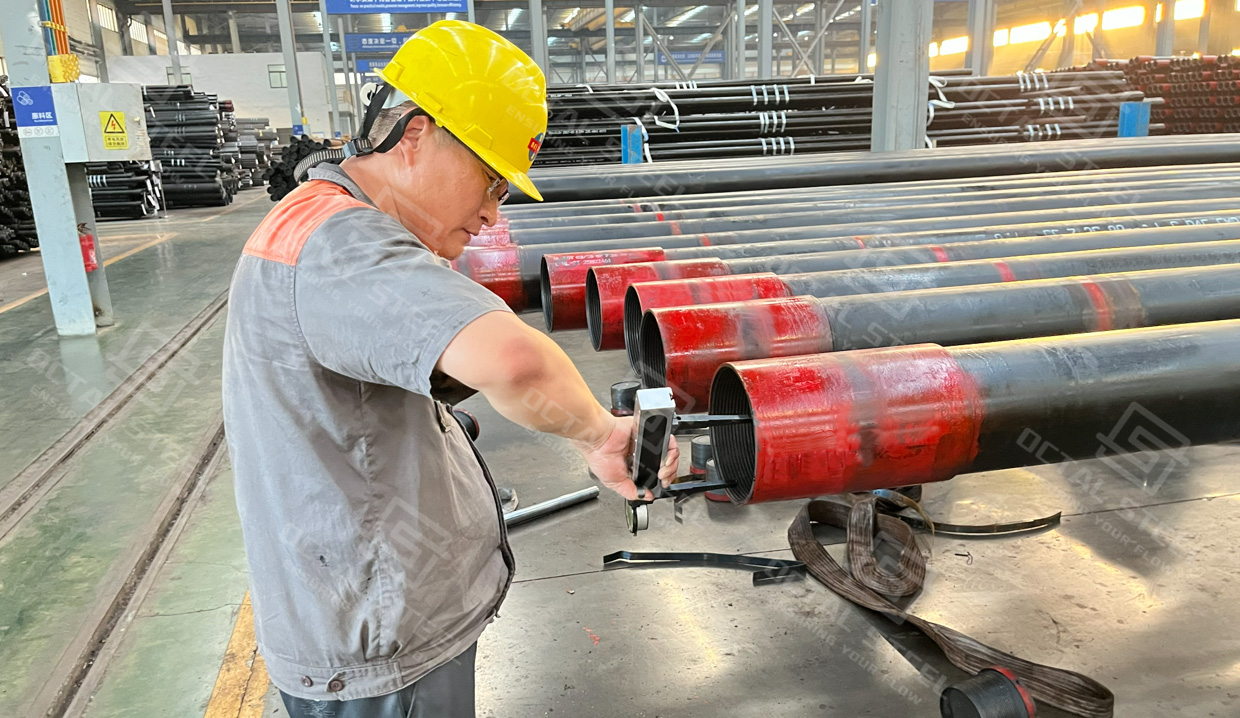
Connections and Thread Inspection
Standard API casing connections include STC, LTC and BTC. Standard tubing connections include NUE and EUE. Their dimensions, tolerances and gauging are controlled by API 5B.
Premium connections may be selected where the well requires higher connection efficiency, reduced OD clearance, metal-to-metal sealing or improved gas-tight performance. In this case, the pipe body may comply with API 5CT, while thread geometry, make-up torque, inspection and acceptance remain controlled by the connection licensor or manufacturer.
Octal can coordinate T95 pipe with OCTA premium connection options after the combined tension, compression, internal pressure, external pressure and sealing requirements have been reviewed. A premium name alone should not replace a connection-performance check.
Before shipment, connection release should cover:
• Connection verification: confirm size, weight and thread type. STC/LTC use 8 TPI, BTC uses 5 TPI, and NUE/EUE use 10 TPI.
• Visual inspection: inspect 100% of accessible threads over the full 360° circumference for burrs, dents, corrosion, torn threads and handling damage.
• API 5B gaging: verify thread form, taper, lead, height and stand-off; record the gage number, calibration status and result.
• Traceability: confirm coupling grade, heat or lot number, heat treatment and MTC identification match the T95 pipe.
• Make-up control: check coupling position and stand-off; premium connections should follow the approved torque-turn limits.
• Surface protection: verify phosphate or specified treatment, approved thread compound and clean protectors on every exposed end.
• Release record: state the inspected quantity, rejected ends, inspector and inspection date.
Inspection and Release of T95 Casing and Tubing
T95 acceptance requires more than a chemical certificate and one tensile result.
| Inspection stage | Acceptance focus | Release evidence |
|---|---|---|
| Heat and chemistry | T95 chemistry and heat identity | Ladle analysis and MTC |
| Heat treatment | Quench-and-temper route; minimum 649°C temper | Furnace chart and heat-treatment lot record |
| Tensile testing | Yield within 95–110 ksi; tensile at least 105 ksi | Tensile report linked to heat and lot |
| Hardness testing | Maximum 25.4 HRC or 255 HBW; local variation reviewed | Hardness map or test record |
| Wall measurement | Full-body coverage required for the applicable T95 scope | Minimum measured wall for each length |
| Pipe-body NDE | Full-length examination using the approved method and reference standard | UT, EMI or other applicable NDE report |
| End-zone inspection | Coverage of areas outside automatic inspection | Manual/supplementary report or documented cutback |
| SSC testing | Method, stress level, sampling and acceptance defined by API/PO | NACE TM0177 report where required |
| Hydrostatic test | Each length tested at the applicable API pressure and hold time | Hydrostatic test record |
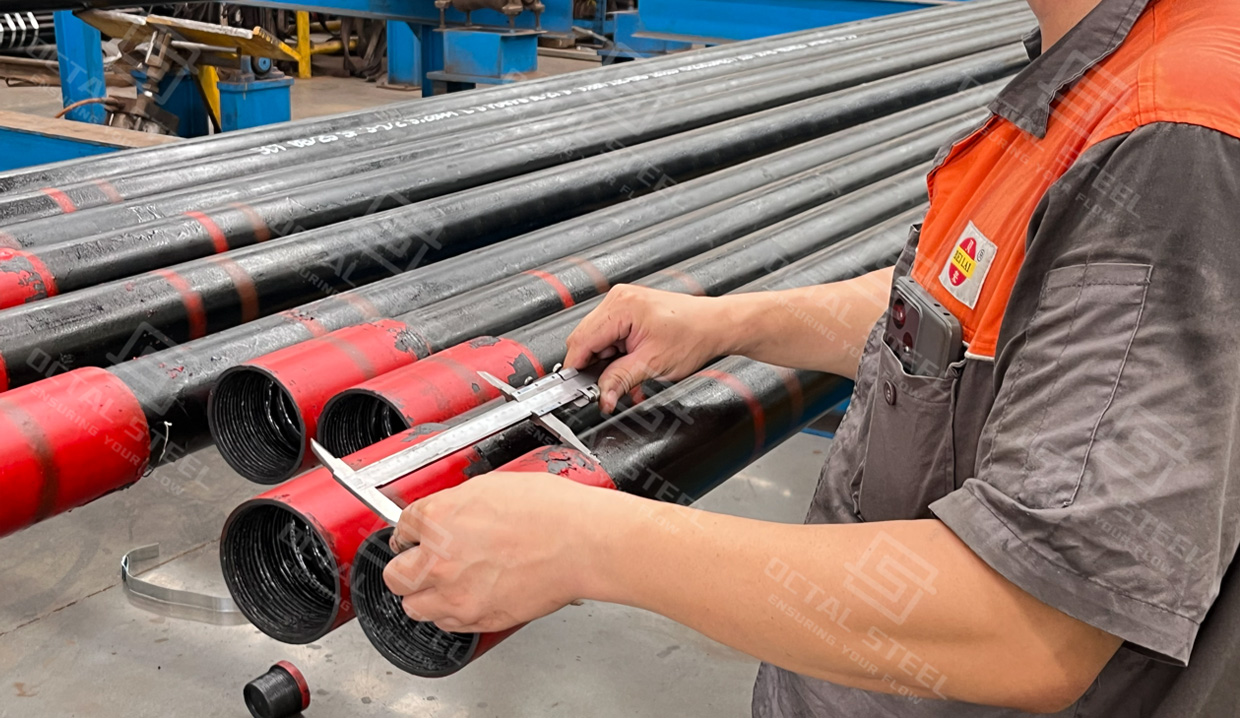
| Drift and dimensions | OD, wall, mass, length, straightness and internal clearance | Dimensional and drift report |
| Threads and couplings | Correct form, gaging, grade and condition | API 5B or proprietary connection inspection |
| Final traceability | No mixing of heats, grades or released lots | Pipe marking, MTC, inspection file and packing-list heat map |
A purchase order that states only “100% NDT” is still incomplete. It should identify the pipe area, inspection method, reference notch or calibration standard, acceptance level and treatment of uninspected end zones.
The finished traceability chain should read:
Pipe marking → heat number → heat-treatment lot → MTC → tensile and hardness results → SSC/NDE/hydrostatic records → thread inspection → packing-list heat map.
This allows the receiving inspector to trace an individual joint without reconstructing the manufacturing history from several unrelated reports.
Typical Well Applications
Production casing in sour gas and condensate wells
After the casing is run and cemented, it carries collapse, burst and axial loads while isolating formations over the life of the well. Where L80 does not provide sufficient strength, T95 offers a higher controlled yield range without moving directly to conventional P110. The final choice still depends on the calculated string loads, cementing program, temperature and H₂S exposure.
Production tubing exposed to H₂S-bearing fluids
Production tubing sees internal pressure, thermal movement, workover handling and direct contact with the produced fluid. In gas or sour-condensate service, the connection can be as critical as the pipe body. T95 tubing may therefore be supplied with EUE for conventional service or a qualified premium connection when the sealing envelope requires it.
Workover or injection strings with sour exposure
Pressure cycling, stimulation chemicals and changing fluid composition can move a string outside the assumptions used during initial material selection. T95 may be used only after the new fluid chemistry, stress state, temperature and connection loads have been checked. A previous T95 installation is not evidence that the grade is suitable for a different injection or workover program.
T95 Compared with L80 C90 and P110
| Grade | Yield strength ksi |
Minimum tensile ksi |
Maximum hardness | Practical selection position |
|---|---|---|---|---|
| L80 Type 1 | 80–95 | 95 | 23 HRC | Lower-strength, hardness-controlled grade for suitable sour environments |
| C90 | 90–105 | 100 | 25.4 HRC | Controlled sour-service grade below the T95 strength range |
| T95 | 95–110 | 105 | 25.4 HRC | Higher controlled strength with SSC-related manufacturing and testing requirements |
| P110 | 110–140 | 125 | No comparable fixed API maximum for conventional P110 | Higher mechanical strength, but not a direct sour-service replacement for T95 |
T95 is often chosen when the well needs more axial or pressure-related capacity than L80 or C90, but the material must remain within a controlled sour-service strength and hardness envelope. P110 offers higher strength, yet selecting it solely because the number is larger can be the wrong decision where H₂S governs material performance.
Why Choose Octal for API 5CT T95 Casing and Tubing
Octal reviews each T95 order against the specified API 5CT edition, pipe size, weight, length, end finish, connection and sour-service requirements before production. This prevents grade, connection or inspection requirements from being treated as interchangeable across different well designs.
During production, the pipe heat number remains linked to the chemistry, heat-treatment batch, tensile and hardness results, NDE, hydrostatic test and dimensional inspection. The final document package can include the MTC, furnace record, inspection reports, thread-gaging results and packing-list heat map, with third-party witnessing arranged when required by the purchase order.
Available connection options include STC, LTC, BTC, NUE, EUE and qualified premium connections. Before shipment, pipe markings, coupling identity, thread condition, protectors and packing records are checked to maintain product traceability and reduce connection damage during transport.
FAQ
Q1:Should T95 casing be ordered as Schedule 40 or Schedule 80
A1:No. OCTG casing is ordered by outside diameter and nominal weight, such as 7 in. × 29 lb/ft. The nominal weight determines the API wall thickness, internal diameter and drift.
Q2:Can T95 casing or tubing be repaired by field welding
A2:Field welding should not be treated as a routine repair. Welding can alter the quenched-and-tempered microstructure and create a hard heat-affected zone. Any repair requires engineering approval, a qualified welding procedure and the required post-repair inspection.
Q3:Does black coating make T95 suitable for sour service
A3No. Handling or storage coatings do not qualify the pipe for H₂S exposure and do not replace SSC evaluation. External coating must also be compatible with cementing or the intended completion design.
Q4:Can T95 couplings be accepted using only the pipe-body MTC
A4:No. Couplings require their own grade, heat-treatment, mechanical-property, hardness and thread-inspection traceability. The pipe-body certificate alone does not demonstrate that the coupling meets the ordered requirements.
The resource belongs to the product
OCTG Tubing, API 5CT Tubing
Click permalink to view detail & more descripton.
Social Share