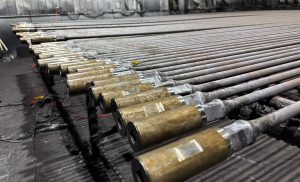
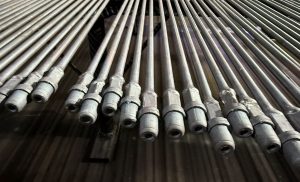
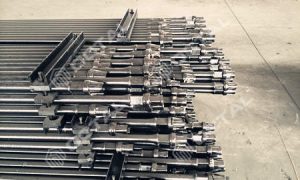
Your Responsible Supplier Partner for Oil and Gas Products.

Sucker Rod 4130
Hot Topic

Rencent Articles


Recent Resources
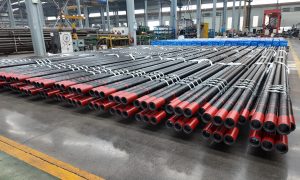
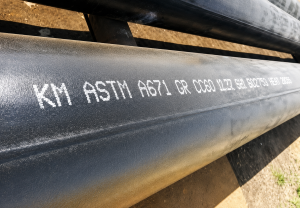
Sucker Rod 4130
API 11B Grade Control: Finished rod strength is verified by API 11B grade, not material name alone.
Cr-Mo Alloy Steel: Typical chemistry includes 0.28–0.33% C, 0.80–1.10% Cr and 0.15–0.25% Mo.
Strength Range: Grade C/K rods commonly cover 90,000–115,000 psi; Grade D covers 115,000–140,000 psi.
Heat Treatment Response: 4130 chemistry supports hardenability, strength stability and controlled hardness.
Traceability Control: Heat number, MTC, tensile test, thread inspection and rod marking should stay linked.
AISI 4130 sucker rod refers to a chromium-molybdenum alloy steel rod used in API 11B rod pumping systems, where the rod body and threaded ends work under repeated tensile load. Its typical chemistry includes about 0.28–0.33% carbon, 0.80–1.10% chromium and 0.15–0.25% molybdenum, giving the material better hardenability and heat-treatment response than plain carbon steel. In finished sucker rods, however, 4130 is only the material designation; the actual strength level is still controlled by API 11B grade, such as Grade C / K at 90,000–115,000 psi and Grade D at 115,000–140,000 psi tensile strength range.
For this reason, a 4130 alloy steel sucker rod should be reviewed as a finished rod-string component, not only as a steel grade. The key technical points include chemical composition by heat, heat treatment condition, tensile strength, hardness consistency, thread and coupling fit, rod marking, MTC and heat / lot traceability. These records are especially important because fatigue risk in rod pumping service often starts from threaded ends, shoulder contact areas or surface defects rather than from the straight rod body alone.
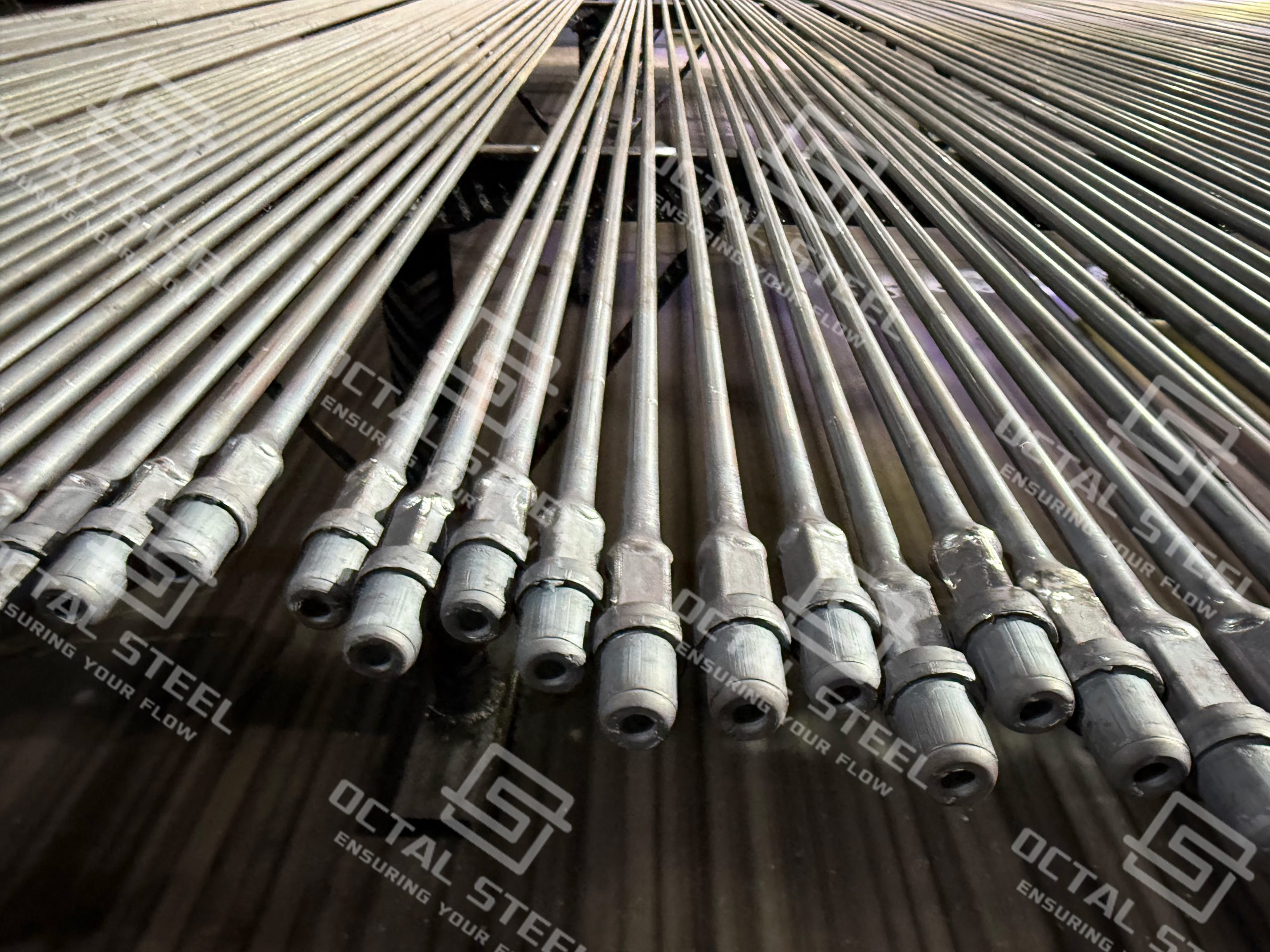
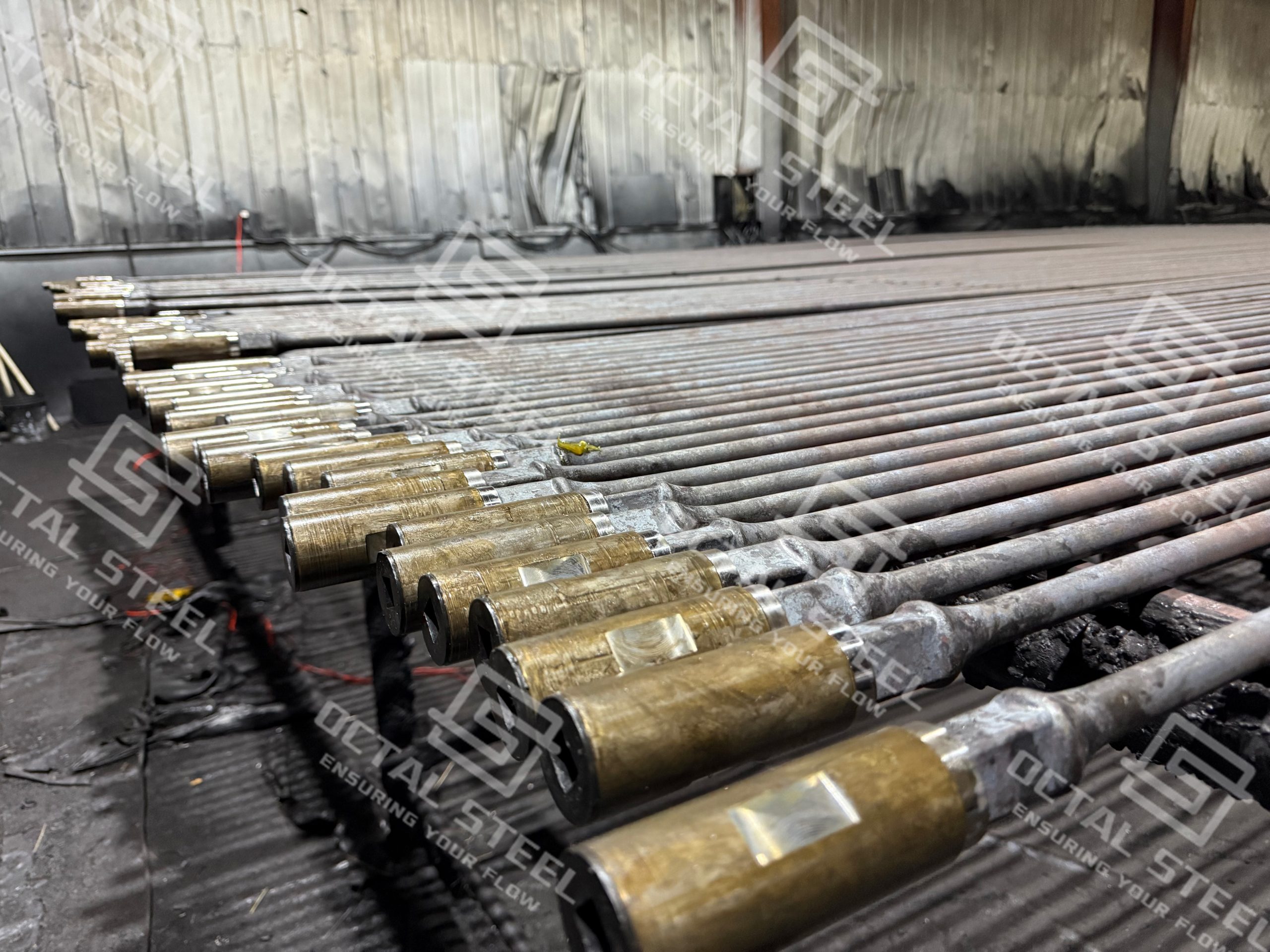
AISI 4130 Chemical Composition and Alloying Logic
AISI 4130 belongs to the Cr-Mo low alloy steel family. In sucker rod service, this chemistry is important because the rod body and threaded ends work under repeated tensile load. The steel needs enough strength after heat treatment, but it also needs toughness and stable performance around fatigue-sensitive areas such as the pin end, shoulder area and coupling connection.
| Element | Typical Range | Technical Meaning in 4130 Sucker Rod |
|---|---|---|
| Carbon, C | 0.28–0.33% | Supports strength, hardness response and heat-treatment behavior |
| Chromium, Cr | 0.80–1.10% | Improves hardenability and helps maintain strength through the rod section |
| Molybdenum, Mo | 0.15–0.25% | Supports hardenability and improves resistance to softening |
| Manganese, Mn | 0.40–0.60% | Contributes to strength and steelmaking control |
| Silicon, Si | 0.15–0.30% | Works as a deoxidizer and contributes to strength |
| Phosphorus / Sulfur | Controlled residuals | Kept low to reduce harmful effects on toughness and fatigue performance |
Download:AISI 4130 Sucker Rod Chemical Composition and Alloy Function
The most important alloying elements for a 4130 sucker rod are chromium and molybdenum. Chromium improves hardenability, which helps the steel achieve more consistent properties after heat treatment. Molybdenum supports hardenability and helps the rod maintain strength stability. Carbon provides the base strength response, but too much carbon can reduce toughness and make the material less forgiving in fatigue-sensitive service.
Chemical composition is the starting point for AISI 4130 sucker rod review. The finished rod should also be verified by heat treatment records, tensile strength, hardness consistency, thread inspection and heat / lot traceability. These records connect the 4130 material chemistry with API 11B grade control and final rod marking.
Mechanical Strength and API 11B Grade Control
AISI 4130 identifies the Cr-Mo alloy steel used for the sucker rod, but the final strength level is defined by API 11B grade and verified on the finished rod. Grade C and Grade K sucker rods are commonly controlled at 90,000–115,000 psi tensile strength, while Grade D is commonly controlled at 115,000–140,000 psi. Fzor a 4130 sucker rod, the material chemistry supports hardenability and heat-treatment response, but tensile strength, hardness consistency, thread quality, coupling fit and heat / lot traceability are the records that confirm whether the finished rod matches the required API 11B grade.
| API 11B Grade | Common Tensile Strength Range | Technical Meaning |
|---|---|---|
| Grade C | 90,000–115,000 psi | Standard strength range for moderate rod-string load conditions |
| Grade K | 90,000–115,000 psi | Similar strength range, often associated with corrosion-related service review |
| Grade D | 115,000–140,000 psi | Higher strength category used where rod-string load is heavier |
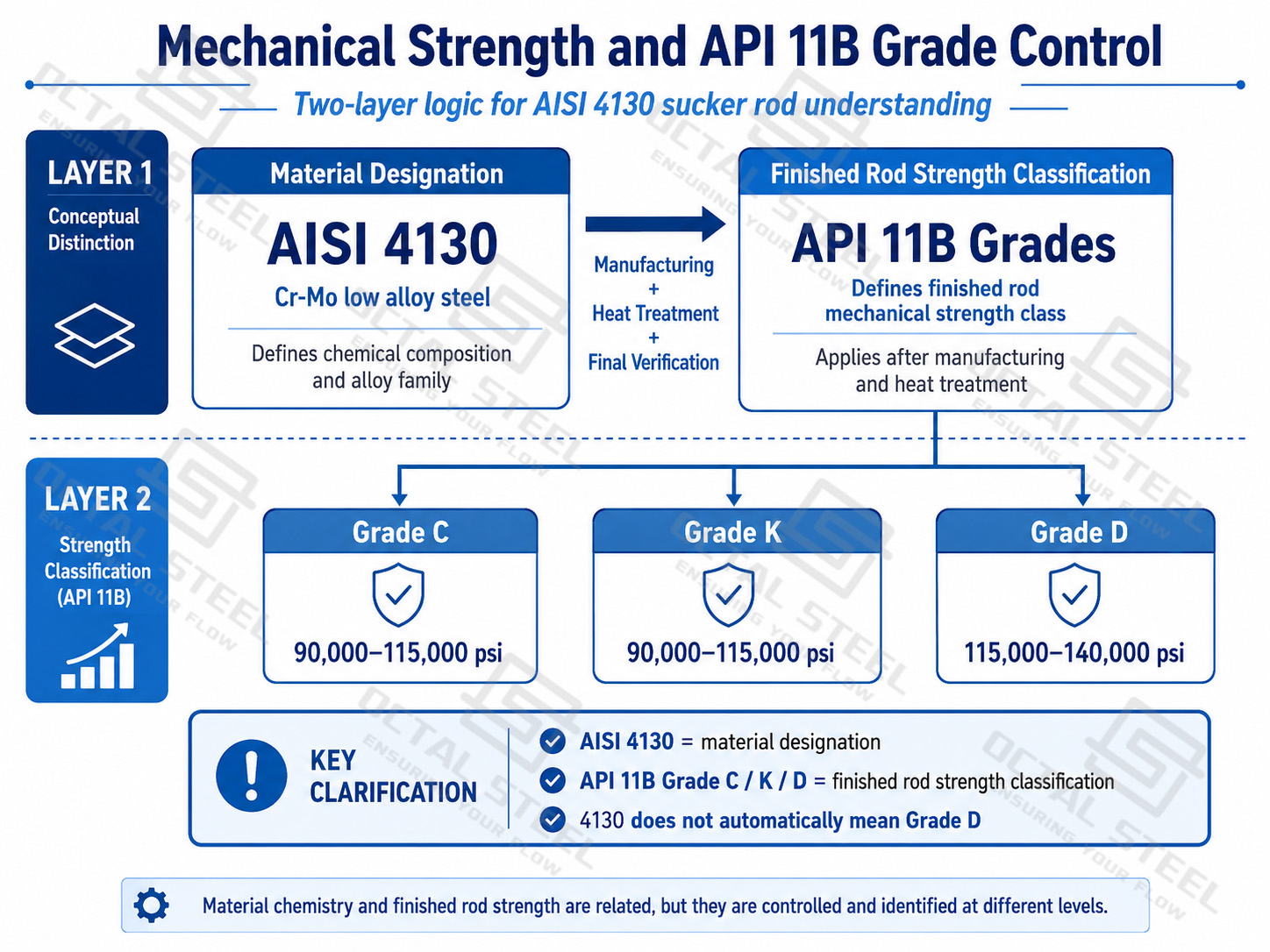
A 4130 sucker rod can be associated with high-strength rod applications, but the material name alone should not be treated as the final strength certificate. The finished rod performance depends on several linked factors:
- Alloy chemistry by heat
- Heat treatment route and temperature control
- Tensile strength and yield strength verification
- Hardness consistency where required
- Thread profile and pin-end condition
- Coupling grade and fit
- Rod marking, MTC and heat / lot traceability
The rod body may meet the expected strength range, but the threaded end still carries repeated load transfer through the coupling. In rod pumping service, the connection area often becomes more critical than the straight rod body because fatigue damage can start from thread roots, shoulder contact issues, surface marks or poor fit-up.
Why 4130 Steel Is Used for Sucker Rods
Rod pumping systems create repeated up-and-down movement from the surface pumping unit to the downhole pump. The sucker rod string works under cyclic tensile load instead of one simple static load. This is why fatigue behavior, straightness, thread consistency and coupling compatibility matter as much as nominal strength.
AISI 4130 is used for sucker rod applications because it offers a practical balance of strength, hardenability and toughness after controlled heat treatment. Its Cr-Mo alloy design allows the rod to reach stable mechanical properties without immediately moving into more heavily alloyed material systems.
4130 steel is useful where the rod string requires:
- Controlled strength after heat treatment
- Better hardenability than plain carbon steel
- Good toughness for cyclic loading
- Stable thread and end-area machining quality
- Material traceability by heat and lot
- Compatibility with API 11B grade and coupling requirements
The material should not be described as suitable for every well condition. In deeper wells, high-corrosion environments, severe side loading or highly deviated sections, material selection needs to be reviewed with actual rod load, fluid condition, corrosion risk, stroke speed, coupling type and inspection requirements. The value of 4130 is its balanced material route, not a universal answer for all rod strings.
4130 Sucker Rod in Rod Pumping Systems
In a rod pumping system, the sucker rod connects the surface pumping unit with the downhole pump. During operation, the rod string transmits reciprocating movement through thousands or millions of load cycles. A 4130 alloy steel sucker rod must therefore be reviewed as part of the full rod-string load path, not only as a single steel bar.
Typical review points include:
- Rod-body tensile load during upstroke
- Compression or bending influence in deviated sections
- Thread fatigue at the pin end
- Coupling fit and shoulder contact
- Straightness during reciprocating movement
- Surface condition along the rod body
- Heat treatment uniformity and hardness control
- Marking consistency between rod body, MTC and packing records
For beam pumping units and reciprocating rod lift systems, the main performance concern is not only whether the rod has enough tensile strength. The rod also needs stable connection behavior. Thread damage, coupling mismatch, poor shoulder contact or unclear traceability can reduce the reliability of the whole rod string even when the material chemistry looks acceptable.
API 11B Sucker Rod Supply Range
A complete API 11B sucker rod range normally covers the rod body and related rod-string accessories. For 4130 sucker rod applications, the supply range should be described by material, grade, rod type, coupling type, length and document control.
| Product Category | Technical Scope |
|---|---|
| Sucker rod | API 11B steel sucker rods for rod pumping systems |
| Pony rod | Shorter rods used for rod-string length adjustment |
| Polished rod | Surface-end rod component working through the wellhead sealing area |
| Coupling | Full-size, slim-hole or related coupling types according to rod string design |
| Common grades | C, K, D and related strength categories |
| Alloy steel options | AISI 4130M, 4138M, 4140M, 4142M, 4330M and related alloy systems |
| Technical records | MTC, heat number, tensile test, hardness review, thread inspection and marking records |
For a 4130 sucker rod, technical identification should cover more than nominal diameter and length. API 11B grade, material heat number, heat treatment condition, mechanical test results, thread inspection, coupling match and final marking should be linked in one traceable record, so the finished rod can be verified from steel heat to bundle marking and shipment documents.
In practical rod-string review, the following items should stay aligned:
- Rod size and length
- API 11B grade
- Material designation
- Coupling size and grade
- Thread form and pin-end condition
- Heat number and MTC
- Mechanical test records
- Marking and bundle identification
Inspection Points for AISI 4130 Sucker Rod
Inspection gives the material data practical meaning. For AISI 4130 sucker rods, the review should connect chemistry, mechanical strength, heat treatment, thread quality and traceability. This matters because the rod body and threaded ends work together under repeated tensile load.
| Inspection Area | What Should Be Checked |
|---|---|
| Chemical composition | Heat chemistry for C, Cr, Mo, Mn, Si and residual elements |
| Mechanical properties | Tensile strength, yield strength and elongation against grade requirement |
| Heat treatment | Heat treatment record and hardness consistency where required |
| Thread and pin end | Thread profile, shoulder condition, pin surface and coupling fit |
| Rod body | Straightness, surface condition, diameter and visual defects |
| Coupling compatibility | Coupling grade, size, thread fit and rod-string interface |
| Traceability | Heat number, rod marking, MTC, inspection records and packing identification |
Download:4130 Sucker Rod Inspection and Traceability Checklist
The threaded end deserves close attention because load transfer is concentrated through the pin and coupling. A rod body with good chemistry and strength can still create service risk when the thread profile is damaged, the shoulder contact is poor, or the coupling grade does not match the rod-string requirement.
For 4130 alloy steel sucker rods, the most useful inspection record chain is:
- Heat number
- Chemical composition
- Heat treatment record
- Tensile / yield test result
- Hardness review where required
- Thread inspection
- Rod marking
- MTC
- Packing list and bundle identification
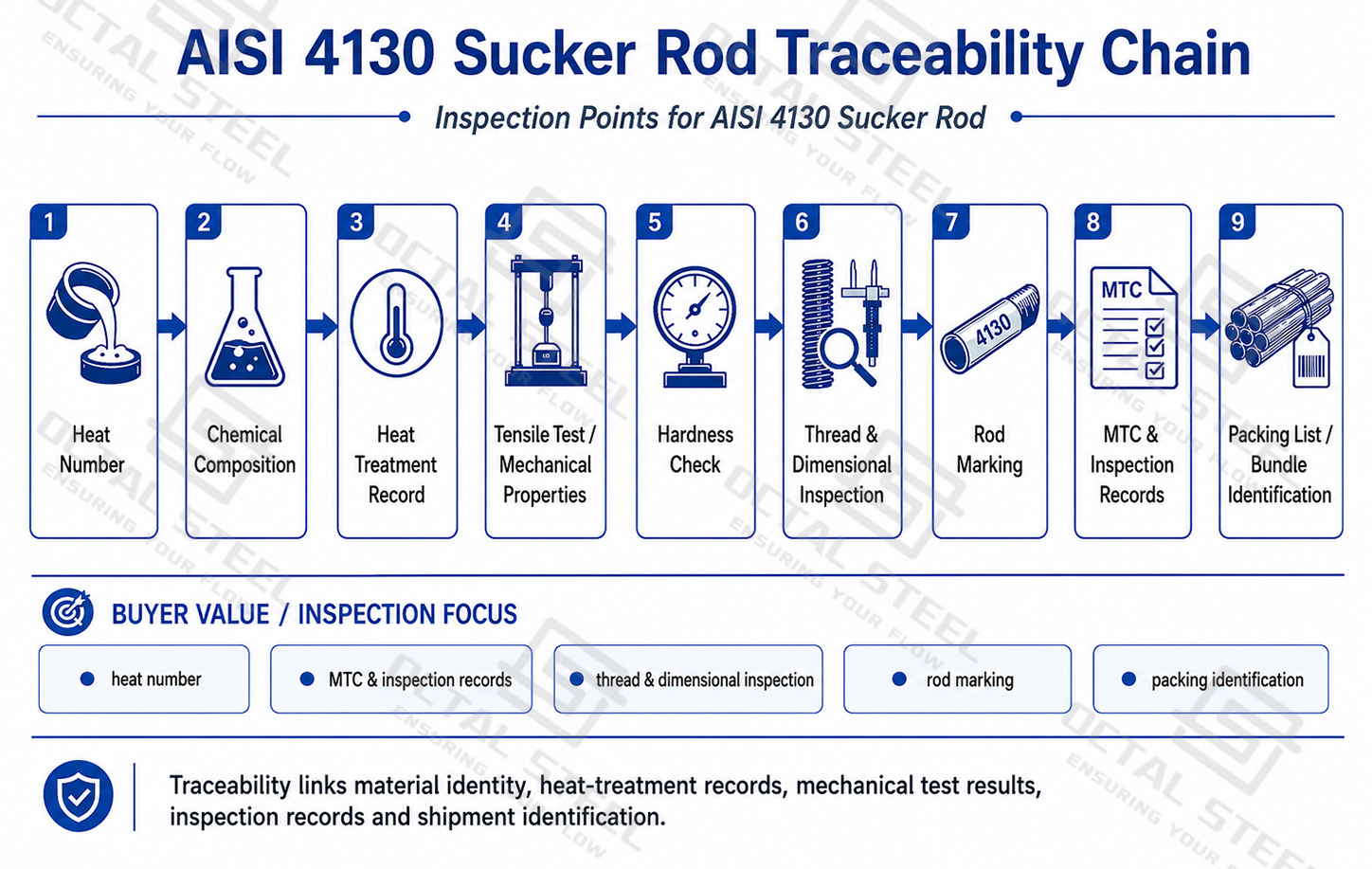
This chain turns material identity into verifiable product identity. It also helps separate a true API 11B sucker rod record from a general steel material certificate.
4130 vs 4140 / 4142 / 4330 Sucker Rod Material
AISI 4130 is often compared with other alloy steels used in sucker rods, including 4140, 4142 and 4330. The comparison should not be reduced to which material sounds stronger. Each alloy family has a different balance of carbon level, alloy content, hardenability, toughness and heat treatment response.
| Material Family | General Technical Character |
|---|---|
| 4130 / 4130M | Cr-Mo alloy steel with balanced strength, toughness and heat treatment response |
| 4140 / 4142 | Higher-carbon Cr-Mo alloy systems with higher strength potential |
| 4330 | Ni-Cr-Mo alloy family used where higher toughness and strength are required |
| 4138M and related modified grades | Modified alloy systems developed for specific strength and service-performance targets |
Download:4130 vs 4140 vs4142vs 4330 Sucker Rod Material Comparison
4130 is often valued for balanced performance. 4140 and 4142 generally provide a different strength route due to higher carbon and alloy response. 4330 adds nickel into the alloy system, which changes toughness and strength potential. These differences matter when rod-string load, well depth, fatigue risk and corrosion tendency change.
The better comparison is not 4130 versus 4140 by name only. The more useful review is:
- Material designation
- API 11B grade
- Heat treatment condition
- Tensile and yield strength
- Hardness consistency
- Thread quality
- Coupling compatibility
- Service environment
A 4130 sucker rod may be suitable where balanced strength, heat treatment stability and fatigue performance are required. A different alloy system may be selected when the rod string requires another strength-toughness profile. The final decision should always be based on finished rod performance, not only steel grade.
Why Choose OCTAL STEEL
OCTAL STEEL supports API 11B sucker rod supply with material grade, rod strength, thread control, coupling match and documentation managed as one technical package. For 4130 sucker rod, the key value is not only material availability. The finished rod should be traceable from steel heat to rod marking, with the API grade, heat treatment condition, mechanical test results, thread inspection and coupling information kept consistent.
Technical support includes:
- Alloy steel options such as 4130M, 4138M, 4140M, 4142M and 4330M series
- API 11B grade alignment for C, K, D and related sucker rod strength categories
- Sucker rod, pony rod, polished rod and coupling supply range
- Thread profile, pin end, shoulder area and coupling compatibility review
- Heat number, MTC, tensile test and hardness record traceability
- Rod marking, bundle identification and packing-list consistency
- Inspection records covering surface condition, straightness, thread condition and document release
For technical projects, this means each rod can be checked by material identity, API grade, inspection record and physical marking instead of relying on material name alone. A clear record chain helps connect 4130 chemistry, finished rod strength, thread quality, coupling fit and shipment identification, reducing confusion between general steel material data and a complete API 11B sucker rod record.
FAQ
1. Is AISI 4130 sucker rod the same as API 11B Grade D?
No. AISI 4130 is a Cr-Mo alloy steel material designation, while API 11B Grade D is a finished rod strength grade. Grade D sucker rods are commonly controlled at 115,000–140,000 psi tensile strength, so the finished rod still needs tensile testing, heat treatment records, thread inspection and traceability verification.
2. Why is AISI 4130 used for sucker rods?
AISI 4130 contains chromium and molybdenum, which improve hardenability and heat-treatment response compared with plain carbon steel. This helps the sucker rod achieve a controlled strength-toughness balance for cyclic tensile load, especially around fatigue-sensitive areas such as the pin end, shoulder area and coupling connection.
3. What records should verify a 4130 sucker rod?
A 4130 sucker rod should be verified by heat chemistry, API 11B grade, tensile strength, heat treatment record, hardness review where required, thread inspection, coupling match, MTC, rod marking and heat / lot traceability. These records connect the steel heat to the finished rod and help separate a true API 11B rod record from a general material certificate.
4. When should 4130 be compared with 4140, 4142 or 4330 sucker rod material?
4130 should be compared with 4140, 4142 or 4330 when rod load, well depth, fatigue risk, corrosion tendency or coupling stress becomes more demanding. 4130 gives a balanced Cr-Mo material route, while 4140 / 4142 offer higher-carbon Cr-Mo strength potential and 4330 provides a Ni-Cr-Mo option for higher toughness and strength requirements.