Your Responsible Supplier Partner for Oil and Gas Products.

Corrugated Steel Plate
Recent Products
Rencent Articles


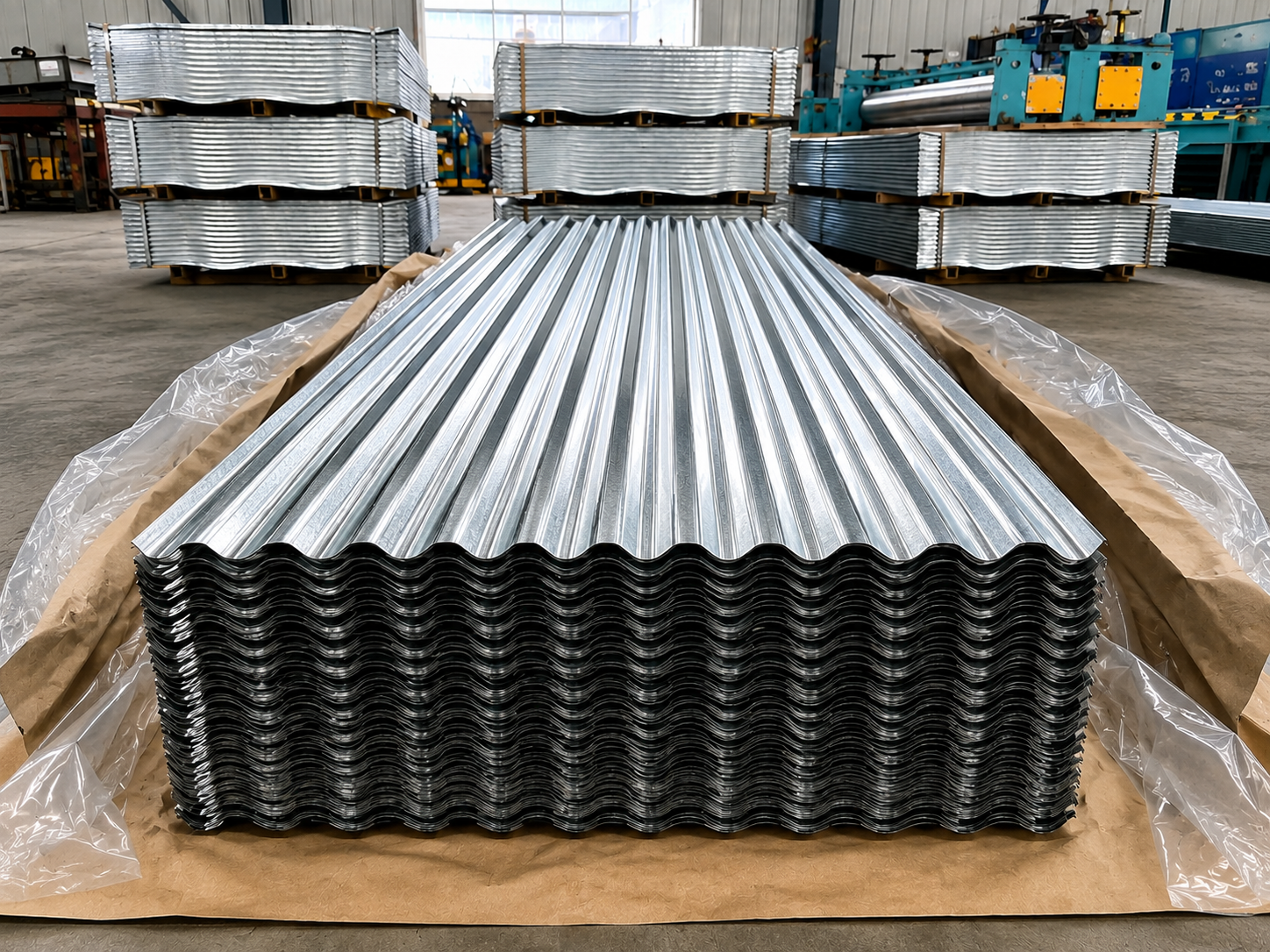
Corrugated Steel Plate
Material: SS400 or Q235 hot-rolled steel plate
Thickness: 1.6–7.0 mm
Profiles: 125×25, 150×50, 150×65, 200×55, 300×110, 400×150 mm
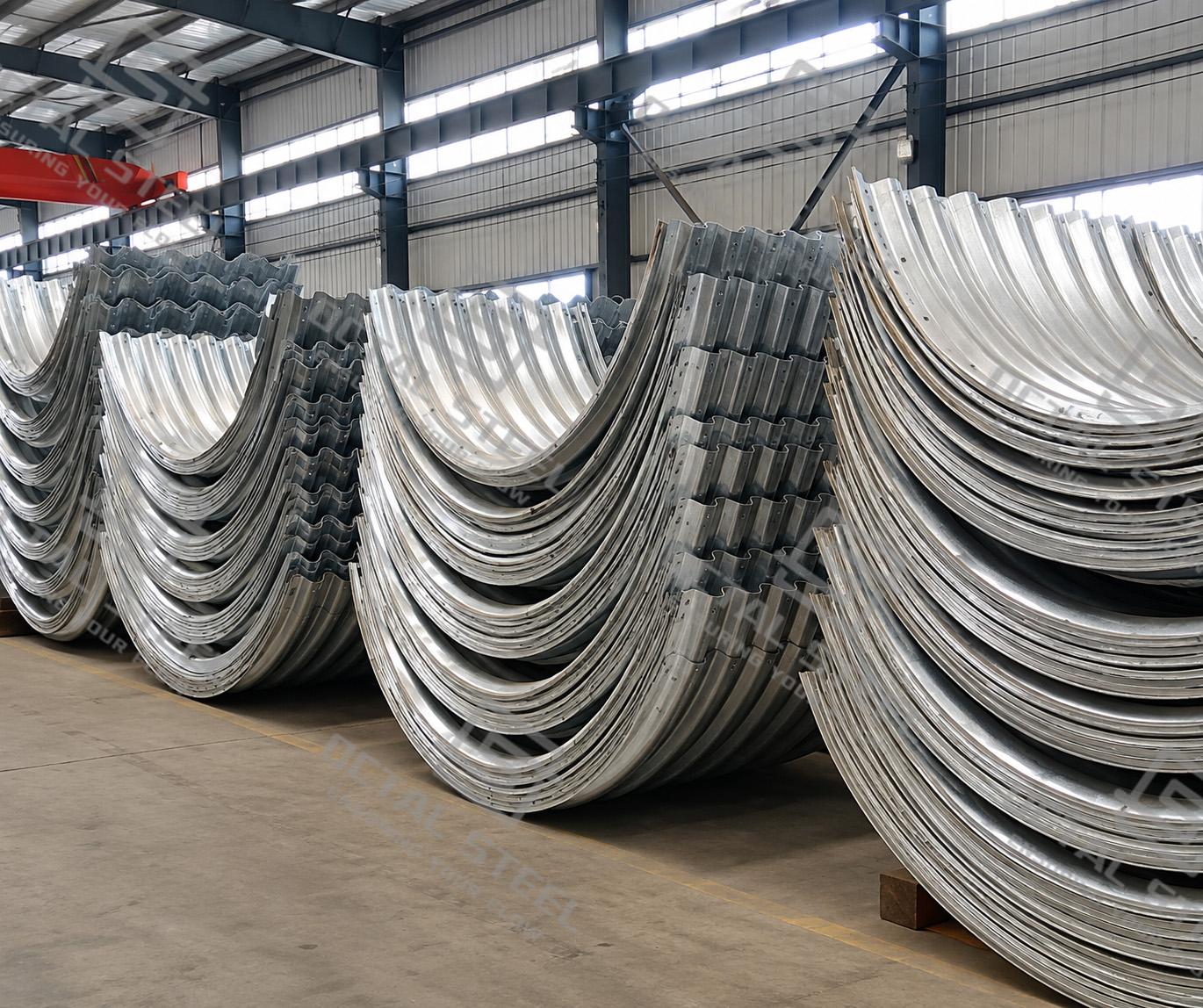
Shapes: Round, elliptical, pipe arch, arch and horseshoe
Applications: Culverts, underpasses, drainage and buried structures
Inspection: Thickness, corrugation, connections, coating and traceability
Corrugated steel plate is formed by roll-forming or press-forming equipment from carbon steel plate, commonly SS400 or Q235 hot-rolled steel, into a defined wave-shaped corrugation profile that increases sectional stiffness. The corrugated geometry improves deformation resistance and load distribution, while the steel remains suitable for curving, drilling or punching, galvanizing and field assembly. This combination of stiffness and flexibility makes the plate suitable for culverts and other buried structures where the steel works together with the surrounding compacted soil.
Depending on project geometry and opening requirements, corrugated steel plate can be fabricated into round, elliptical, pipe-arch, arch, horseshoe and other structural forms, or field-bolted into larger corrugated steel structural plate systems. Corrugated steel material can also be formed into spiral corrugated steel pipe for drainage and culvert applications. Typical uses include road and railway culverts, stormwater drainage, underpasses and utility passages. For North American field-bolted structural plate projects, ASTM A761/A761M-25 and AASHTO M 167M/M 167-24 may apply where specified.
Corrugated Steel Plate Specifications and Ordering Data
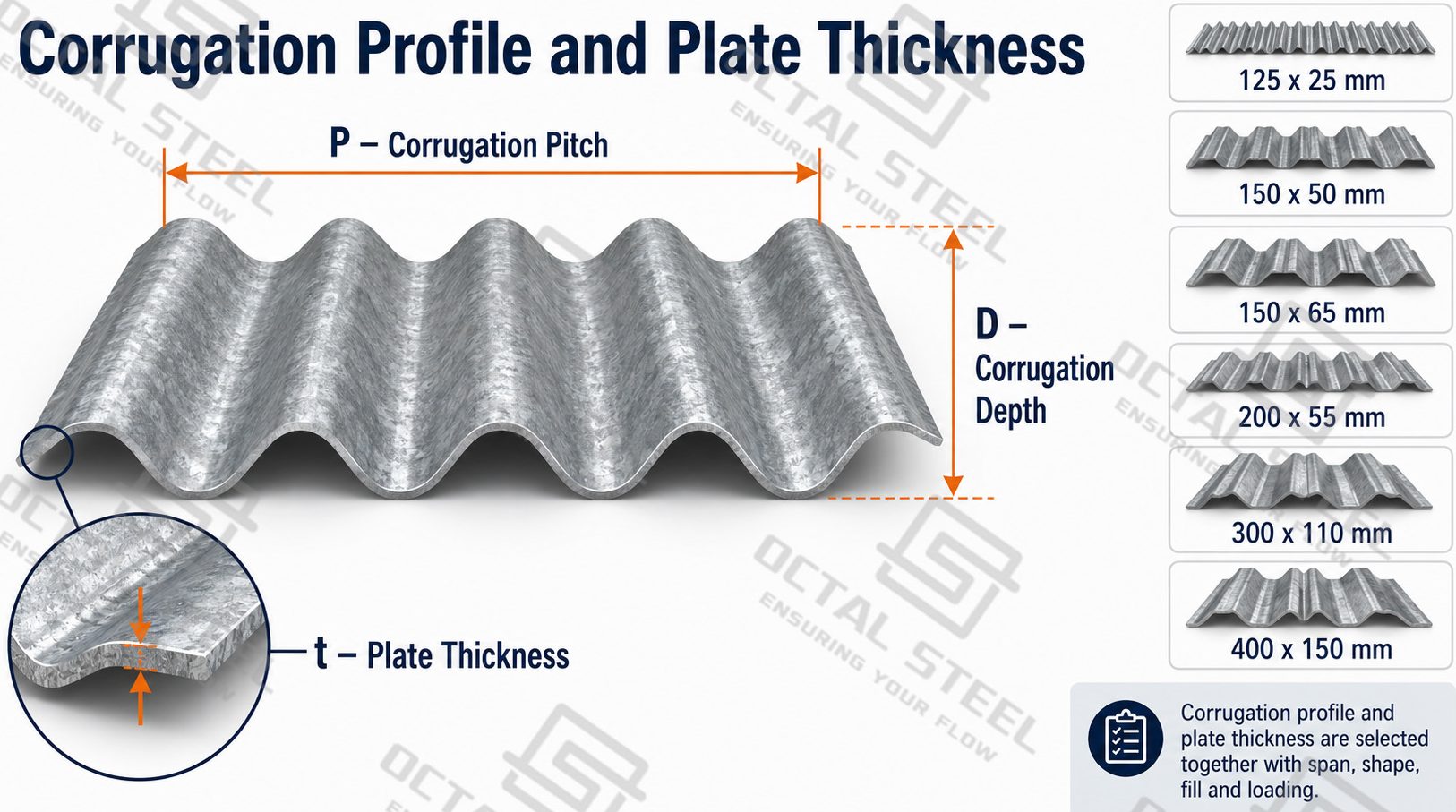
The corrugation is not simply a surface pattern. Its pitch and depth change the geometry and stiffness of the plate, while plate thickness determines the amount of steel available to carry structural forces. These parameters therefore need to be considered together with span, rise, fill height, loading and backfill conditions.
| Item | Representative Supply Range | Engineering Meaning |
|---|---|---|
| Product | Corrugated steel plate | Structural plate for fabricated or field-assembled systems |
| Material | SS400 or Q235 hot-rolled steel plate | Material selection according to project specification |
| Plate Thickness | 1.6–7.0 mm | Selected with corrugation, span and loading requirements |
| Corrugation Profile | 125 × 25, 150 × 50, 150 × 65, 200 × 55, 300 × 110, 400 × 150 mm | Pitch × depth |
| Assembly Form | Integral/factory-formed or field-assembled | Selected according to structure size, transport and installation access |
| Structural Shapes | Round, ellipse, arch, horseshoe, pear and project-specific shapes | Geometry selected for hydraulic opening and site clearance |
| Representative Diameter / Span | 0.3–12 m | Depends on structural form and project design |
| Representative Fill Height | 0.5–60 m | Design variable rather than a universal allowable value |
| Connection | Internal flange, external flange, plate lap connection or clamp connection | Depends on structural configuration |
| Corrosion Protection | Hot-dip galvanizing; secondary coating where specified | Selected according to exposure and design life |
| Inlet / Outlet Geometry | Square or skew alignment; straight or bevelled end configuration | Adapted to roadway, channel and embankment geometry |
The ranges above describe available product configurations rather than interchangeable combinations. A 400 × 150 mm corrugation, for example, should not automatically be paired with every plate thickness or span. Corrugation, thickness, structural geometry and earth loading must be reviewed as one system.
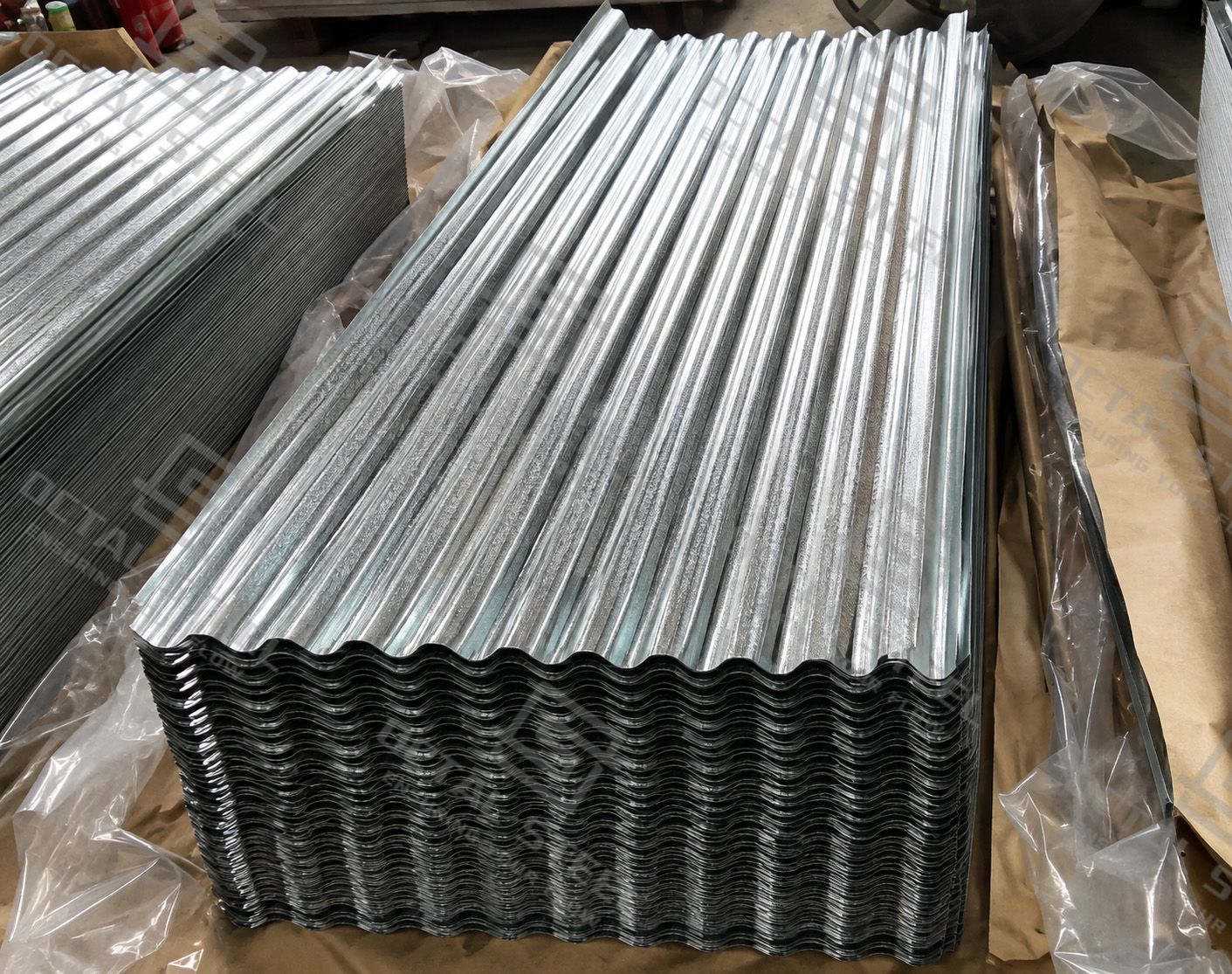
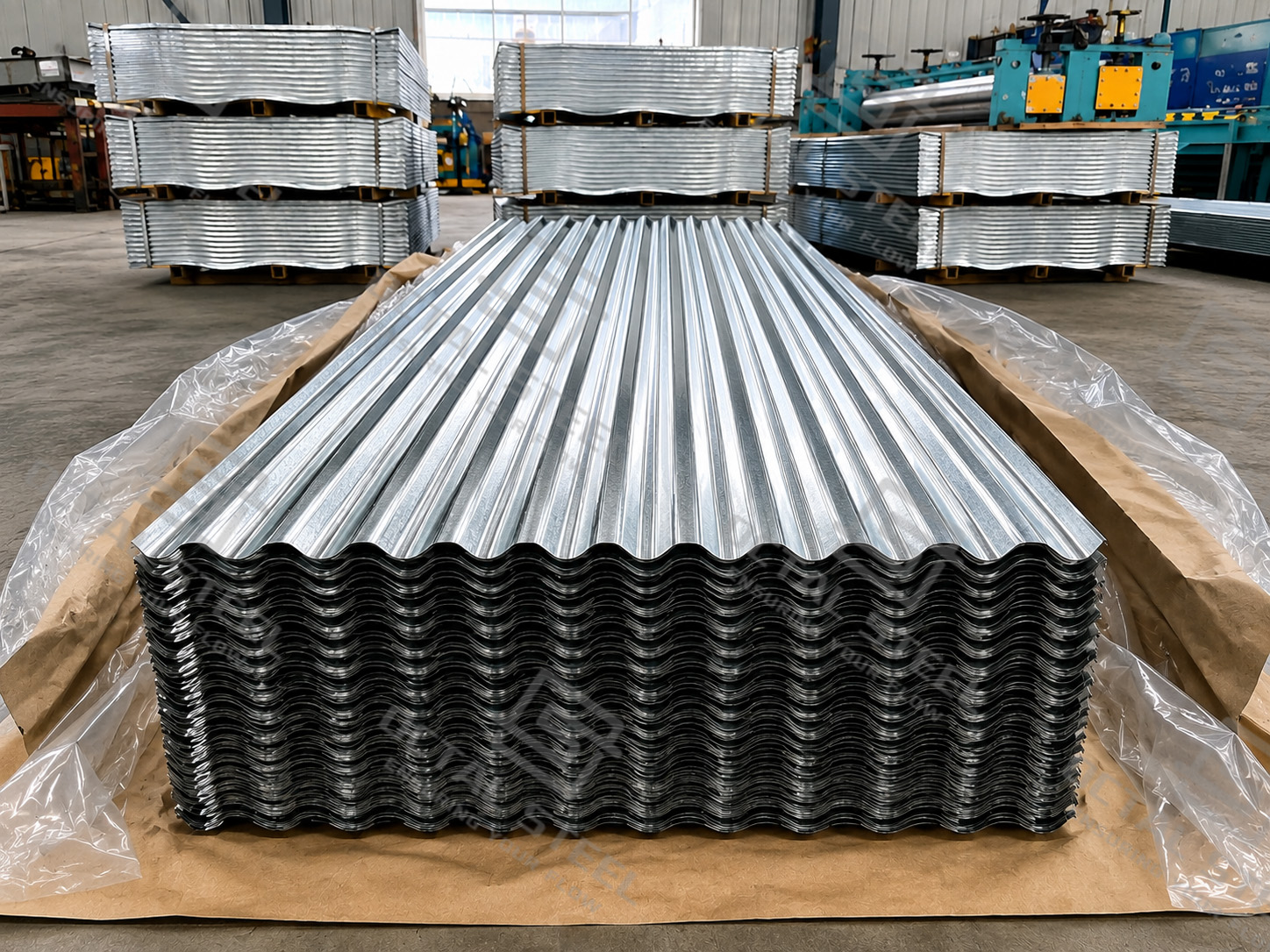
Corrugation Profile and Corrugated Steel Plate Thickness
A corrugation profile is normally expressed as wave pitch × wave depth. The pitch is the repeating distance between adjacent corrugations, while the depth describes the vertical geometry of the wave. Increasing corrugation depth changes the plate section geometry and can provide greater structural capacity without treating the plate as a simple flat steel sheet.
Representative OCTAL STEEL supply profiles include 125 × 25, 150 × 50, 150 × 65, 200 × 55, 300 × 110 and 400 × 150 mm. Selection is driven by the required span or diameter, structural shape, fill height, design loading and the stiffness required during assembly and service.
Corrugated steel plate thickness must therefore be specified together with the corrugation profile. Ordering only by plate thickness leaves out one of the most important structural variables.
For field-assembled structural plate systems, current industry guidance likewise treats shape, span, corrugation, loading, cover depth and backfill as connected design inputs rather than independent catalogue dimensions.
Corrugated Steel Plate Shapes and Structural Forms
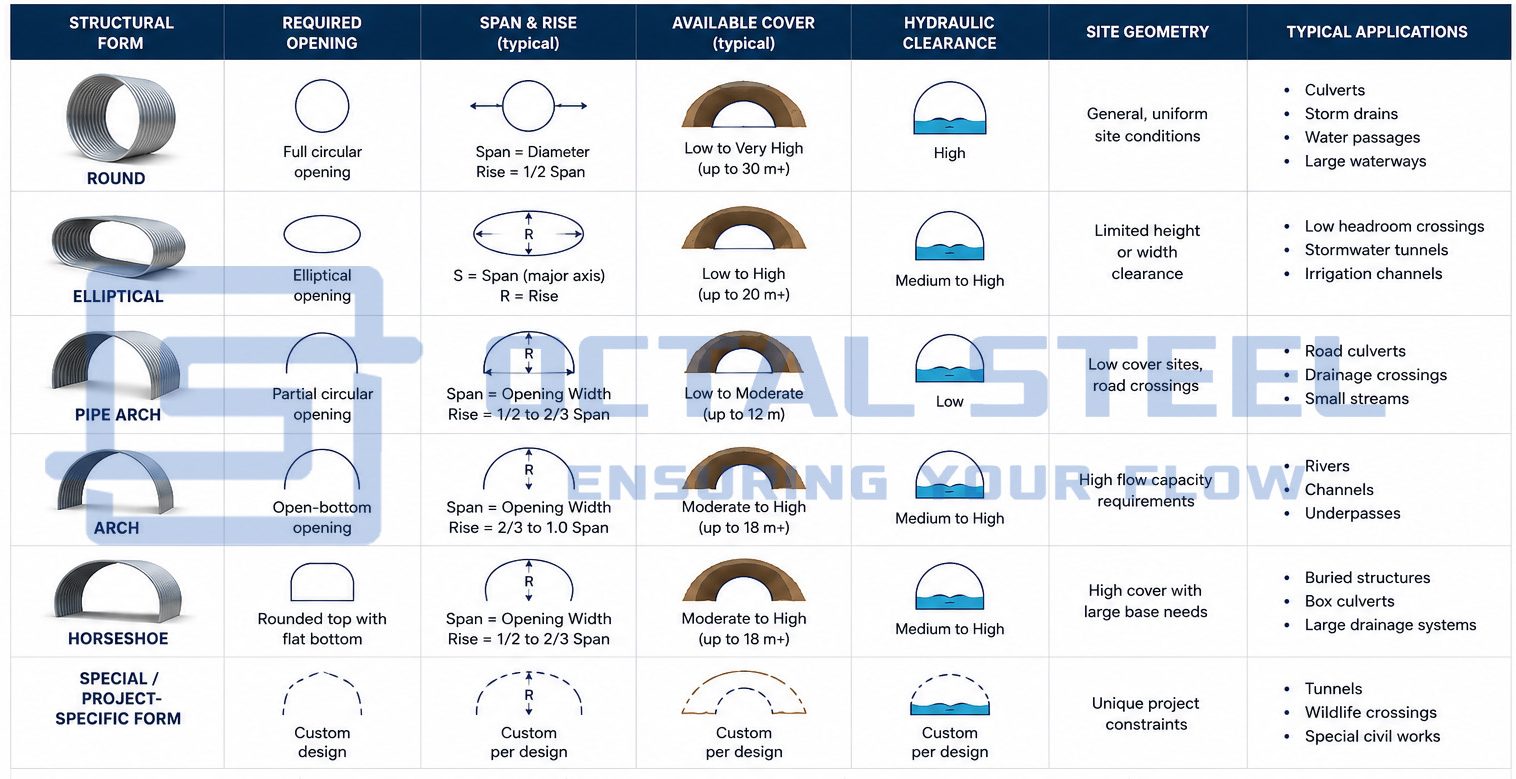
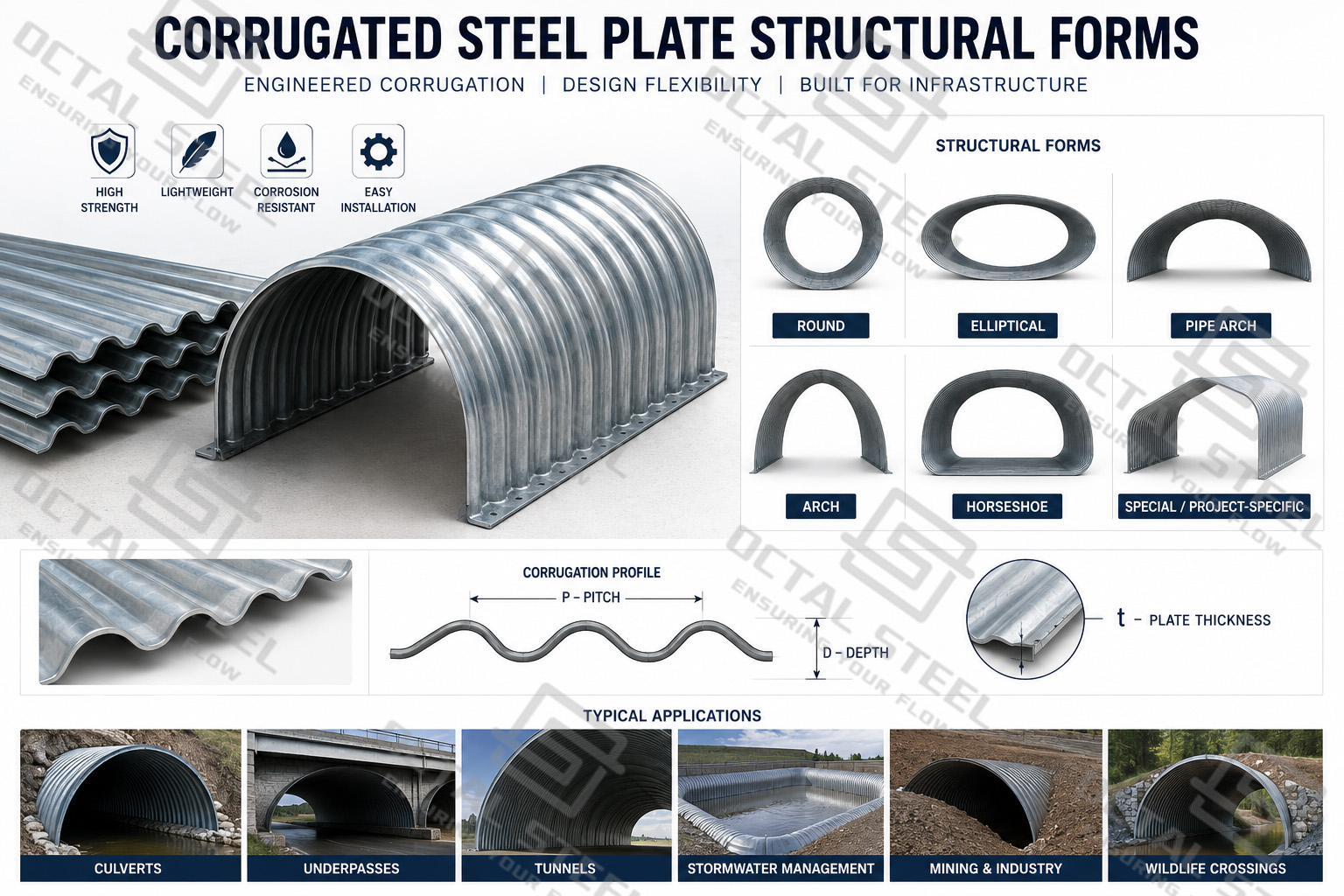
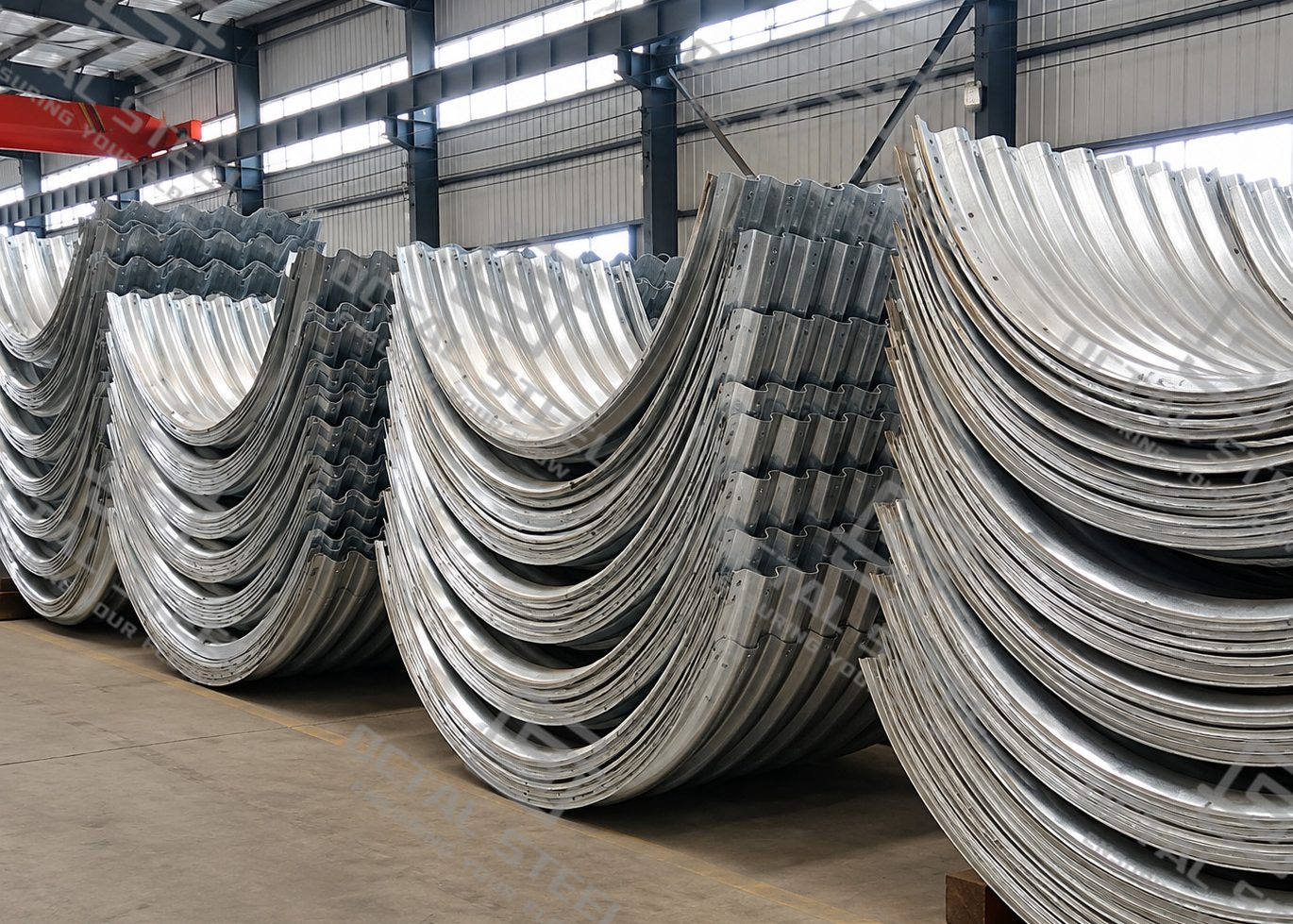
Corrugated steel plate can be curved and assembled into different structural forms according to the required opening, span, rise and site conditions. For large culverts and buried structures, individual corrugated plates are formed to the specified radius and connected on site to create a complete load-carrying structure. This field-assembled configuration is commonly referred to as a corrugated steel structural plate system.
The structural shape is not only an appearance choice. It determines how the available width and height are used and affects hydraulic opening, clearance, earth cover and installation geometry. OCTAL STEEL can supply corrugated steel plate for round, elliptical, pipe-arch, arch, horseshoe and other project-specific configurations.
For smaller or factory-formed products, corrugated steel material can also be processed into complete corrugated steel pipe or spiral corrugated steel pipe. Larger spans are more commonly produced from separate curved plate sections because individual plates are easier to transport, handle and assemble at the installation site.
When specifying the structural form, the required span or diameter, rise, corrugation profile, plate thickness, fill height and connection arrangement should be considered together. Two structures with the same nominal opening may require different corrugated steel plate configurations when their shape, earth cover or installation conditions are different.
Spiral Corrugated Steel Pipe
Corrugated steel plate and steel strip can also be formed into spiral corrugated steel pipe. In this configuration, the material is corrugated and continuously formed into a round pipe with a helical pattern. The finished pipe can then be joined by coupling or flange systems according to project requirements. Spiral corrugated pipe is commonly associated with drainage, culvert and underground utility applications.
The spiral-pipe range shown in the project catalogue is different from the larger field-bolted structural plate range and should be specified separately.
| Spiral Corrugated Steel Pipe Item | Representative Specification |
|---|---|
| Inside Diameter | 300–3600 mm |
| Steel Thickness | 1.6–4.2 mm |
| Corrugation Profiles | 68 × 13, 75 × 25 and 125 × 25 mm |
| Connection | Clamp/coupling or flange connection |
| Main Shape | Round |
| Representative Material | Hot-dip galvanized steel strip/plate; SS400 or Q235 configurations where specified |
| Corrosion Protection | Galvanizing with additional asphalt treatment where required |
| Typical Functions | Drainage, culvert, underground protection, ventilation and irrigation |
Corrugated steel pipe, also commonly searched as corrugated metal pipe, is a finished pipe product, whereas corrugated steel structural plate is supplied as plate sections that are assembled into the required structure. ASTM A760/A760M-25 covers metallic-coated corrugated steel pipe for drainage, culvert and related applications, while structural plate is covered separately by ASTM A761/A761M.
Corrugated Steel Culvert Shapes and Connection Options
A corrugated steel culvert does not need to be circular. Its geometry can be selected around the available waterway, road elevation, excavation limits and required internal clearance.
Round sections provide a simple closed structure. Pipe arches reduce overall rise while maintaining useful waterway width. Elliptical and horseshoe structures provide additional flexibility where either horizontal or vertical clearance controls the design. Large field-bolted plate systems can also form underpasses, tunnels and structural plate culverts that would be difficult to transport as completed pipe sections. Industry guidance similarly identifies round, vertical ellipse, pipe arch, underpass, arch, horizontal ellipse and special structural forms.
Connection design depends on how the product is manufactured. Field-assembled plate structures may use bolted lap or flange-type connections, while spiral corrugated steel pipe may use coupling bands or flanged ends. The connection system must match the plate geometry, assembly sequence and project drawings rather than being selected only from the nominal diameter.
How to Select Corrugated Steel Plate for a Project
The first selection question is not simply “What thickness is required?” Plate thickness is only one part of the structural system.
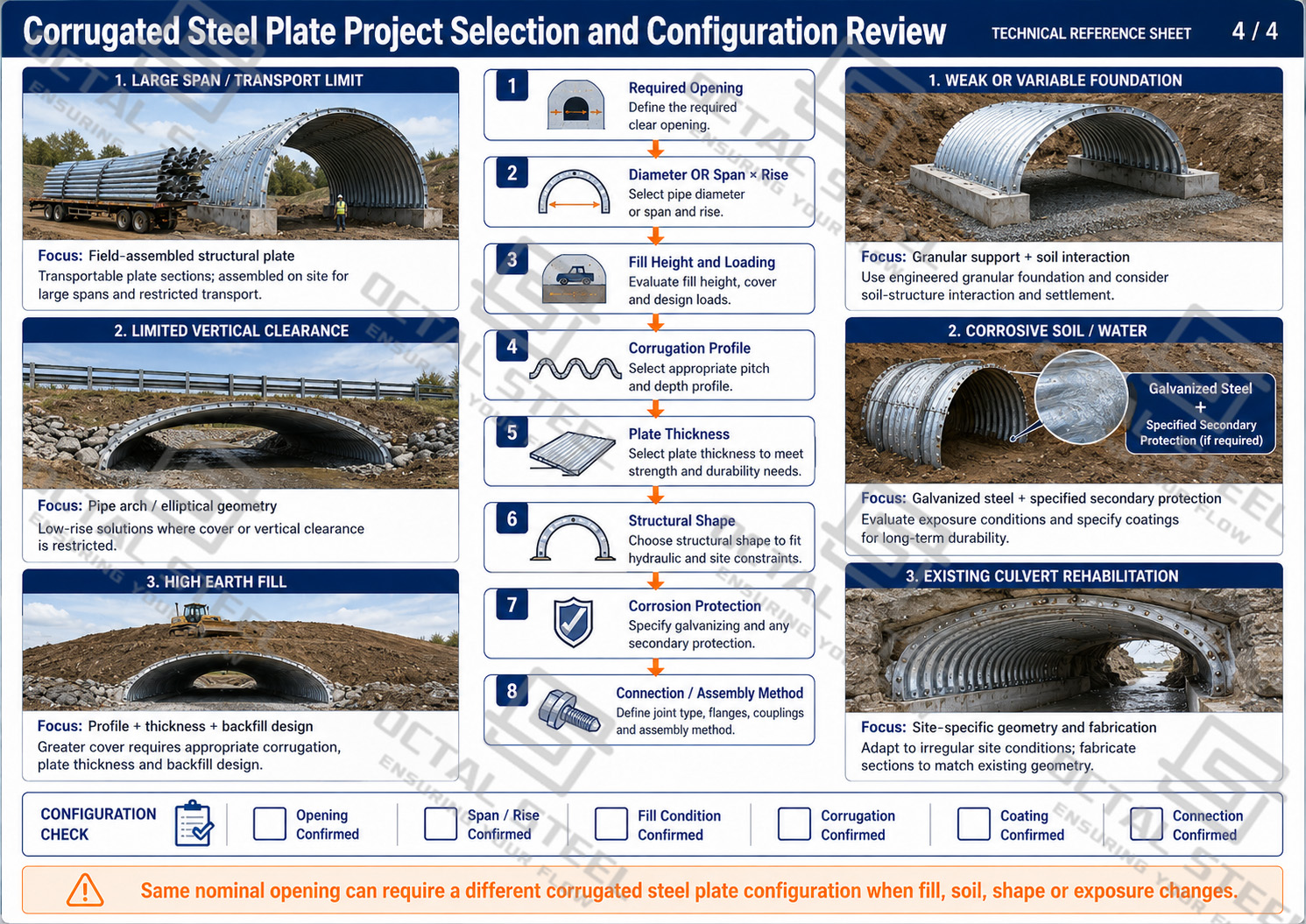
A practical selection sequence is:
Required opening or culvert diameter → span and rise → fill height and loading → corrugation profile → plate thickness → structural shape → coating → connection and transport method.
This is also why the same nominal culvert diameter can require different plate configurations under different fill, traffic, soil and environmental conditions.
Download:Corrugated Steel Plate Geometry Structural Selection Guide.pdf
Galvanized Corrugated Steel Plate and Corrosion Protection
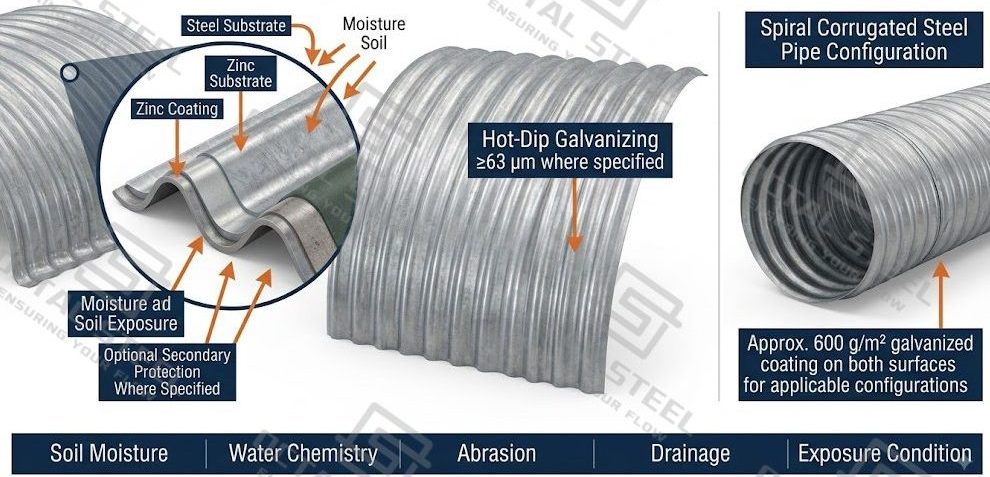
Galvanized corrugated steel plate is protected by a zinc layer applied to the steel surface after forming or fabrication. The zinc coating isolates the carbon-steel substrate from direct exposure to moisture and also provides sacrificial protection if small areas of the coating are damaged during handling or installation.
For structural corrugated steel plate, hot-dip galvanizing can be specified with a zinc coating thickness of ≥63 μm, with additional asphalt or other secondary protection applied where the soil, water or project environment requires further corrosion resistance. The coating system should be selected together with the plate thickness, structural form and expected exposure conditions rather than treated as a separate finishing option.
Spiral corrugated steel pipe may use a different galvanizing specification. Applicable configurations can be supplied with approximately 600 g/m² total galvanized coating on both surfaces, with additional asphalt treatment where specified. Because corrugated steel plate and spiral corrugated steel pipe use different forming methods and product specifications, their coating values should be confirmed separately during project selection.
Corrosion protection also depends on the actual installation environment. Soil moisture, pH, water chemistry, abrasion, drainage conditions and long-term exposure can all influence coating consumption and steel durability. For buried culverts and structural plate systems, the required corrosion-protection system should therefore be defined from the service environment and project specification rather than from plate thickness or zinc coating alone.
Installation, Foundation and Backfill
Corrugated steel plate forms a flexible buried structure rather than a rigid concrete member. After installation, the steel plate and the compacted soil around it work together to carry earth and traffic loads. Proper foundation preparation, symmetrical backfilling and controlled compaction are therefore essential to maintaining the designed shape and structural performance.
For field-assembled corrugated steel structural plate, the foundation is normally prepared with suitable granular material such as gravel, crushed granular soil or sand. Backfill is placed evenly on both sides of the structure so that unbalanced soil pressure does not push the plate out of shape. A representative installation method uses compacted lifts of up to approximately 300 mm, with field compaction of at least 93% where specified. Smaller compaction equipment is used close to the steel surface to reduce the risk of local deformation caused by heavy machinery.
Spiral corrugated steel pipe uses a similar soil-support principle but may follow a different installation arrangement. Fine soil or sand can be placed simultaneously along both sides of the pipe in layers of approximately 150–200 mm, with compaction of not less than 90% for the applicable installation condition. The pipe haunch and lower side zones require particular attention because poorly compacted material in these areas reduces support and can lead to uneven deformation.
For representative spiral-pipe installations, the minimum soil cover can be taken as the greater of 300 mm or D/5, where D is the pipe diameter. Large structural plate systems may require different cover, lift thickness and compaction criteria because their span, corrugation profile, plate thickness and loading conditions differ from smaller spiral-formed pipe.
Foundation type also affects installation. A firm natural foundation generally requires only proper leveling and granular bedding, while rock foundations need a cushioning layer between the steel structure and hard substrate. Soft ground may require a thicker granular foundation or additional ground treatment to provide uniform support.
Final foundation thickness, backfill density, lift thickness and cover depth should be established from the structural design, soil conditions, loading and applicable project specification. These parameters are part of the soil–steel interaction system and should be reviewed together with the corrugated steel plate geometry rather than treated as independent construction details.
Manufacturing and Quality Control
Corrugated steel plate production starts with material identification rather than with corrugation itself. The steel grade and plate thickness must first match the purchase specification before the material is formed.
A representative manufacturing sequence is:
Material Identification → Plate/Coil Preparation → Corrugation Forming → Cutting and Curving → Hole or Connection Preparation → Hot-Dip Galvanizing / Specified Surface Treatment → Dimensional Inspection → Connection Check → Marking and Packing.
For field-bolted corrugated steel structural plate, inspection focuses on dimensions that affect assembly: plate thickness, corrugation pitch and depth, plate radius, hole and connection geometry, edge condition and coating condition.
For spiral corrugated steel pipe, additional attention is given to the continuous forming geometry, lock-seam condition, pipe diameter, end configuration and coupling compatibility.
Quality-control records can be specified to include material identification, dimensional inspection, coating inspection, connection verification, marking and heat/lot traceability. Acceptance criteria should come from the purchase order, project drawings and applicable standard rather than unsupported generic tolerances.
Corrugated Steel Plate Applications
Road and Railway Culverts
Corrugated steel plate can be assembled into culverts beneath road or railway embankments where the structure must carry soil and traffic loads while maintaining a drainage opening. Round, pipe-arch and other shapes allow the waterway to be matched to the available cover and site geometry.
Large-Span Structural Plate Culverts and Underpasses
Where a finished pipe would be difficult to transport, individual plate sections can be delivered to site and bolted into a larger structure. This approach is used for structural plate culverts, vehicle or pedestrian underpasses, stream crossings, tunnels and bridge-replacement structures.
Stormwater and Municipal Drainage
Round corrugated steel pipe and larger structural plate systems can convey stormwater beneath roads, yards and municipal infrastructure. ASTM A760/A760M specifically covers metallic-coated corrugated steel pipe intended for stormwater drainage, underdrains, culverts and similar uses.
Utility and Pipeline Protection
Corrugated structures can form protective passages around underground cables, utility services and pipelines where the surrounding soil load needs to be transferred around the protected service.
Mining and Industrial Passages
The catalogue also identifies applications including mine ventilation passages, shafts and industrial underground structures. In these projects, the structural opening, plate configuration, coating and installation environment need to be defined before selecting the product.
Agricultural and Water-Control Projects
Spiral corrugated steel pipe and plate structures can be incorporated into irrigation channels, drainage crossings, well-related structures and other agricultural water-control works where rapid assembly and buried structural performance are required.
Engineering Advantages of Corrugated Steel Plate
The main advantage of corrugated steel plate is not simply that steel is strong. The corrugated geometry and surrounding soil work together to create a flexible structural system.
- Efficient structural geometry. Corrugation increases the section geometry of the plate, allowing a relatively thin steel section to form a load-carrying buried structure when correctly designed and backfilled.
- Flexible assembly. Structural plates can be transported as individual sections and assembled on site. This reduces the transport limitation that would occur with a completed large-diameter structure.
- Multiple structural shapes. Round, ellipse, arch, pipe-arch, horseshoe and special configurations allow the opening to follow hydraulic and clearance requirements instead of forcing every project into one circular diameter.
- Suitable for difficult site conditions. Flexible buried structures can accommodate controlled deformation and rely on soil-structure interaction, but this advantage depends directly on proper foundation preparation and backfill quality.
- Reduced wet construction work. Factory-formed steel components and mechanical field connections can reduce the amount of cast-in-place construction required at the culvert location.
- Repair and rehabilitation flexibility. Structural plate sections can also be fabricated for lining or rehabilitation where existing geometry makes conventional replacement difficult.
OCTAL STEEL Project Supply and RFQ Information
OCTAL STEEL can coordinate corrugated steel plate, structural plate sections and related corrugated steel pipe configurations according to project drawings and operating conditions. The objective is to match the steel product to the complete buried structure rather than treating plate thickness as the only ordering parameter.
For an RFQ, provide as many of the following inputs as available:
- Product form: corrugated steel plate, structural plate culvert or spiral corrugated steel pipe.
- Applicable standard or project specification.
- Required structural shape.
- Inside diameter, or span × rise.
- Total structure length.
- Corrugation profile.
- Required or preliminary plate thickness.
- Fill or cover height.
- Design loading information.
- Foundation and backfill conditions.
- Corrosion environment and required coating.
- Connection or assembly method.
- Inlet and outlet geometry.
- Drawings, inspection requirements and documentation requirements.
Providing the structural opening, fill condition and service environment at the RFQ stage allows the corrugation, plate thickness, coating and assembly method to be reviewed together and reduces the risk of ordering a plate configuration that fits dimensionally but does not match the project design.
Download:Corrugated Steel Plate Installation Inspection Project Guide.pdf
FAQ
Q: What is the difference between corrugated steel plate and corrugated steel pipe?
A: Corrugated steel plate is the formed plate used to fabricate or field-assemble structural systems. Corrugated steel pipe is a finished pipe configuration. Large structural plate systems are commonly assembled from curved plate sections on site, while spiral corrugated steel pipe is continuously formed into a round pipe.
Q: Which standards apply to corrugated steel structural plate?
A: For North American projects, ASTM A761/A761M and AASHTO M 167M/M 167 cover zinc-coated corrugated steel structural plate for field-bolted pipe, pipe-arches and arches where specified. Corrugated steel pipe is covered separately by standards such as ASTM A760/A760M and AASHTO M 36M/M 36.
Q: Can plate thickness be selected from the culvert diameter alone?
A: No. Diameter or span is only one input. Corrugation profile, structural shape, fill height, loading, backfill, connection arrangement and applicable design specification also affect the required plate configuration.
Q: What information is most important when ordering a structural plate culvert?
A: Provide the required shape, span and rise or diameter, length, fill height, design loading, corrugation, coating, foundation/backfill conditions and applicable standard. A project drawing is preferable because it allows plate geometry and field connections to be reviewed as one assembled structure.