Your Responsible Supplier Partner for Oil and Gas Products.

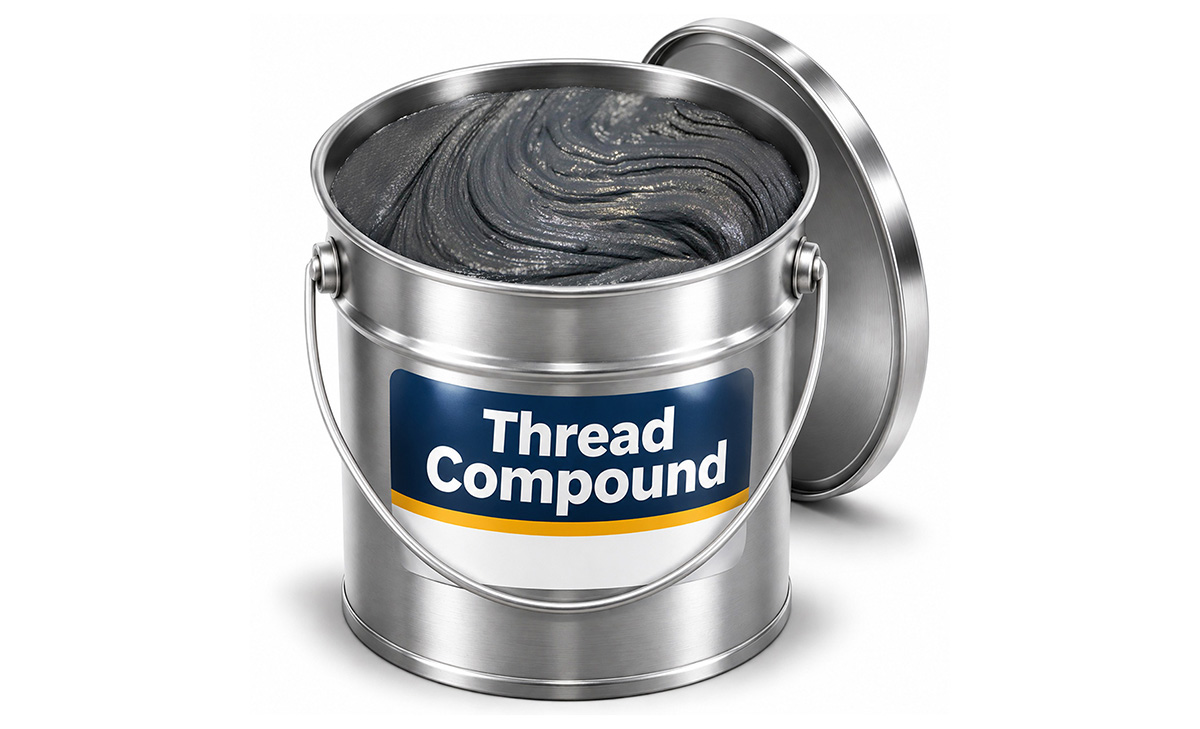
Pipe thread compound
Recent Products


Rencent Articles






Pipe thread compound
Applications: Drill stem, casing, tubing and threaded line pipe connections
Formulations: Copper-based, metal-free and zinc-based
NLGI Grade: 1 or 1–0, depending on formulation
Worked Penetration: 320–360 (ASTM D217)
Density: 1.23–1.88 kg/L, depending on formulation
Friction Factor: 0.9–1.15
Service Temperature: -45°C to 260°C, depending on grade
Four-Ball Weld Load: 620–800 kgf (ASTM D2596)
Dropping Point: ≥200°C or ≥260°C, depending on formulation
Copper Corrosion: 1A (selected grades)
Brushability: Down to -45°C for selected Arctic grades
Packaging: 5-gallon pails; net weight varies by formulation
Unopened Shelf Life: 4 years
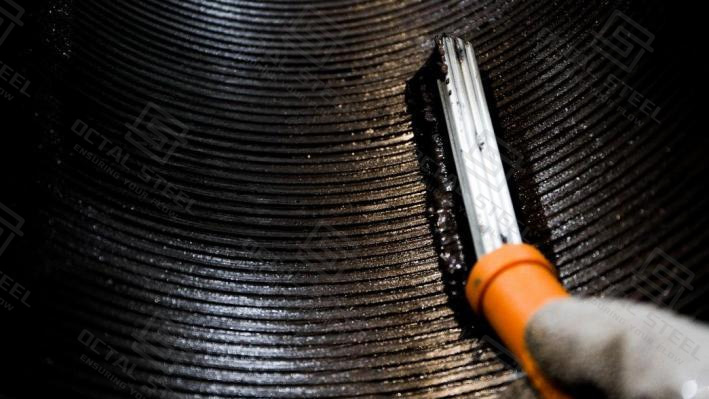
Pipe Thread Compound plays an important role in protecting threaded connections used in drilling equipment, casing, tubing and line pipe. During connection make-up and break-out, it forms a lubricating layer between mating thread surfaces, helping reduce direct metal-to-metal contact, prevent galling and thread damage, and maintain controlled friction during assembly.
In oil and gas operations, threaded connections face different mechanical and operating conditions. Drill pipe and other drill stem components undergo repeated make-up cycles, high torque, axial loads and vibration. Casing and tubing connections, on the other hand, involve different thread geometries, sealing designs and make-up torque requirements, particularly in premium connection applications.
To meet these requirements, Thread Compound formulations vary in solid lubricant composition, friction factor, load-carrying performance, temperature resistance and corrosion protection. Available options include copper-based, metal-free and other metal-containing formulations, as well as grades developed for conventional and low-temperature operations.
For API and proprietary connections, the selected compound must match the connection manufacturer’s make-up procedure and friction-factor requirements. A compound intended for drill stem connections should not automatically be substituted for one specified for casing or tubing.
Thread Compound Standards
Oilfield Thread Compound is evaluated against industry standards covering thread lubrication, friction characteristics, anti-galling performance and corrosion resistance. The main applicable standards include:
| Standard | Scope |
|---|---|
| API RP 5A3 | Thread compounds for casing, tubing, line pipe and drill stem elements |
| ISO 13678 | Evaluation and testing of thread compounds for casing, tubing, line pipe and drill stem elements |
| GB/T 23512 | Evaluation and testing of thread compounds used in the petroleum and natural gas industries |
These standards establish requirements and evaluation procedures for different types of oilfield thread compounds. The applicable standard depends on the connection type and intended application. Conformity should be confirmed for the specific formulation and its corresponding test results.
ASTM Test Methods
Several ASTM methods are used to measure the physical and lubrication properties of Thread Compound.
| Test Method | Property Tested | Purpose |
|---|---|---|
| ASTM D217 | Worked Penetration | Measures grease consistency after mechanical working |
| ASTM D2265 | Dropping Point | Determines the dropping point under specified test conditions |
| ASTM D2596 | Four-Ball EP Test | Evaluates extreme-pressure performance and weld load |
| ASTM D4048 | Copper Corrosion | Evaluates the corrosive effect on copper |
Friction Factor and Four-Ball Weld Load measure different performance characteristics. Friction Factor is used in connection make-up torque calculations, while Four-Ball Weld Load indicates extreme-pressure performance under laboratory test conditions.
Thread Compound Technical Specifications
Thread Compound specifications vary according to the solid lubricant system, formulation and intended connection. The following tables compare representative parameters for drill stem and OCTG compounds.
1.Drill Stem Thread Compound Specifications
Drill stem formulations are designed for rotary shouldered connections, including drill pipe, drill collars and tool joints.
| Parameter | Standard Copper-Based | Arctic Copper-Based |
|---|---|---|
| NLGI Grade | 1 | 1 |
| Worked Penetration (ASTM D217) | 320–350 | 320–350 |
| Density | 1.35 kg/L | 1.35 kg/L |
| Friction Factor | 1.1 | 1.15 |
| Service Temperature | -18°C to 260°C | -45°C to 260°C |
| Four-Ball Weld Load (ASTM D2596) | 800 kgf | 800 kgf |
The main difference is low-temperature performance. The Arctic formulation extends the specified service-temperature range to -45°C, while the standard grade is rated down to -18°C.
2.OCTG Thread Compound Specifications
OCTG formulations are used for casing, tubing and threaded line pipe connections. Available options include metal-free and copper-based compounds.
| Parameter | Metal-Free | Metal-Free (Adjusted FF) | Copper-Based (Lead- and Zinc-Free) |
|---|---|---|---|
| NLGI Grade | 1–0 | 1–0 | 1 |
| Worked Penetration (ASTM D217) | 330–360 | 330–360 | 320–350 |
| Density | 1.27 kg/L | 1.23 kg/L | 1.32 kg/L |
| Friction Factor | 0.9 | 1.0 | 0.9 |
| Service Temperature | -18°C to 200°C | -18°C to 200°C | -18°C to 260°C |
| Four-Ball Weld Load (ASTM D2596) | 620 kgf | 620 kgf | 800 kgf |
The three formulations differ mainly in friction factor, solid lubricant composition and temperature resistance. The metal-free options have friction factors of 0.9 and 1.0, while the selected copper-based formulation combines a friction factor of 0.9 with a higher four-ball weld load of 800 kgf.
3.Additional Physical and Corrosion Properties
| Parameter | Representative Result |
|---|---|
| Dropping Point | ≥200°C or ≥260°C, depending on formulation |
| Flash Point | ≥200°C |
| Copper Corrosion (ASTM D4048) | 1A |
| Salt Spray Corrosion Test | 5% salt spray, 2,000 h, below 1.0% for selected grades |
| Thermal Stability | 138°C, 24 h, ≤25% |
| Unopened Shelf Life | 4 years |
| Standard Grade Brushability | Down to -18°C |
| Selected Arctic Grade Brushability | Down to -45°C |
Dropping Point and Service Temperature are different parameters. A compound with a dropping point of 260°C is not necessarily suitable for continuous operation at that temperature. The specified service-temperature range must be checked separately for each grade.
Friction factor, four-ball weld load and corrosion resistance should also be evaluated independently, as each measures a different aspect of compound performance.
Types of Pipe thread compound
Thread Compound can be classified by its intended connection and by its solid lubricant formulation. These two classifications serve different purposes: the first identifies where the compound is used, while the second describes the materials that contribute to its lubrication characteristics.
1. Drill Stem Thread Compound
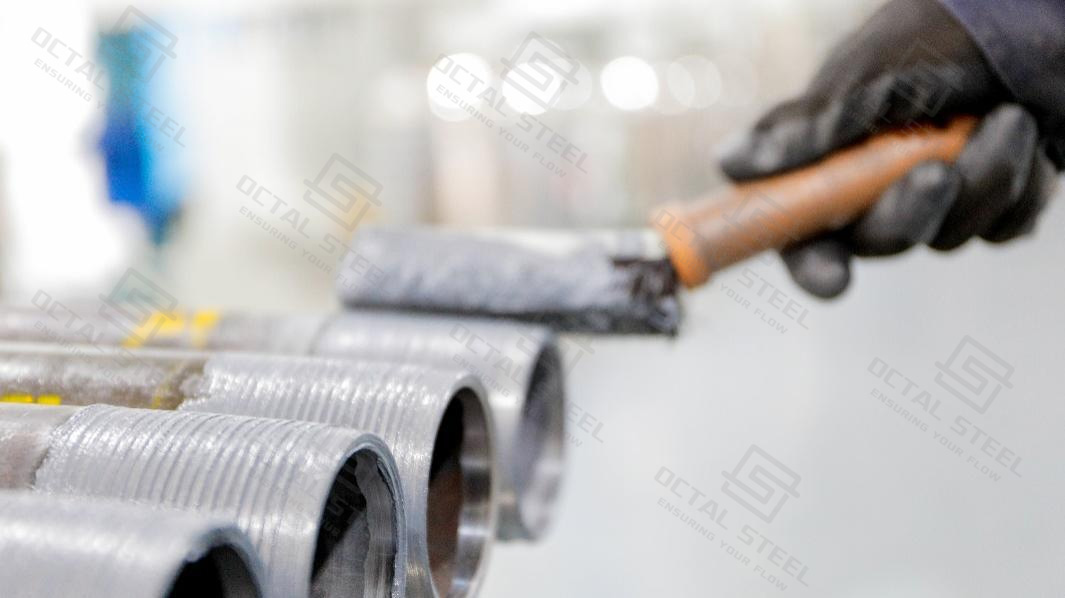
Drill Stem Thread Compound is formulated for rotary shouldered connections used on drilling equipment, including: Drill Pipe, Drill Collars, Tool Joints, Drilling Subs, Drill Bit Connections.
These connections undergo repeated make-up and break-out cycles and transmit drilling torque through the threaded joint. The compound must maintain lubrication at the thread flanks and shoulder contact surfaces while limiting galling under high contact pressure.
Available formulations include copper-containing and zinc-containing compounds, with selected Arctic grades for low-temperature operations.
Copper-Based Drill Stem Compound
Copper-based formulations use copper particles or foil, powdered graphite and other additives to improve lubrication and anti-galling performance.
The standard grade has a friction factor of 1.1, a four-ball weld load of 800 kgf, and a service-temperature range of -18°C to 260°C. The Arctic formulation extends the lower service-temperature limit to -45°C, with a friction factor of 1.15.
Zinc-Based Drill Stem Compound
Certain drill stem formulations use specially treated zinc powder together with other additives.
The representative product data show:
| Parameter | Specification |
|---|---|
| NLGI Grade | 1 |
| Worked Penetration | 320–350 |
| Density | 1.58–1.85 kg/L |
| Friction Factor | 1.0 |
| Four-Ball Weld Load | 620 kgf |
| Service Temperature | -20°C to 177°C |
These formulations are intended for specified drill stem applications. Their friction factor and composition should be checked against the drilling connection requirements.
2. Casing and Tubing Thread Compound
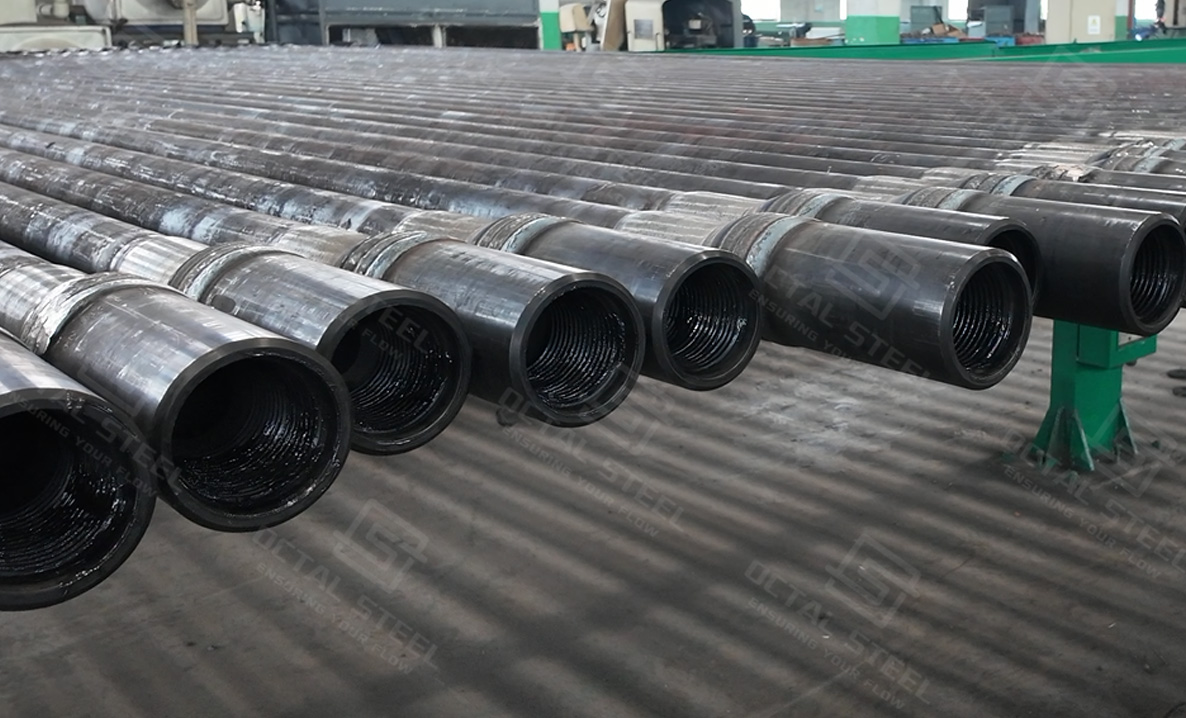
Casing and Tubing Thread Compound is used on threaded connections in oil country tubular goods (OCTG), including casing and tubing strings.
The compound must suit the thread profile, make-up torque and sealing arrangement. API connections and proprietary premium connections may have different friction-factor requirements.
Metal-Free Casing and Tubing Thread Compound
Metal-free formulations use powdered graphite and other non-metallic materials instead of metallic solid lubricants.
The main technical specifications include:
| Parameter | Specification |
|---|---|
| NLGI Grade | 1–0 |
| Worked Penetration | 330–360 |
| Density | 1.23–1.27 kg/L |
| Friction Factor | 0.9–1.0 |
| Four-Ball Weld Load | 620 kgf |
| Service Temperature | -18°C to 200°C |
These formulations are used on API and selected non-API premium connections in casing, tubing and threaded line pipe applications. Their metal-free composition makes them particularly relevant for projects where specifications restrict the use of metal-containing thread compounds.
Copper-Based Casing and Tubing Thread Compound
Copper-based OCTG formulations combine copper foil, powdered graphite and other materials to support thread lubrication and protection.
A representative lead-free and zinc-free formulation has the following specifications:
| Parameter | Specification |
|---|---|
| NLGI Grade | 1 |
| Worked Penetration | 320–350 |
| Density | 1.32 kg/L |
| Friction Factor | 0.9 |
| Dropping Point | ≥260°C |
| Service Temperature | -18°C to 260°C |
| Four-Ball Weld Load | 800 kgf |
| Copper Corrosion | 1A |
This type of compound is intended for casing, tubing and threaded line pipe connections, including API/NC and selected non-API special connections.
3. Line Pipe Thread Compound
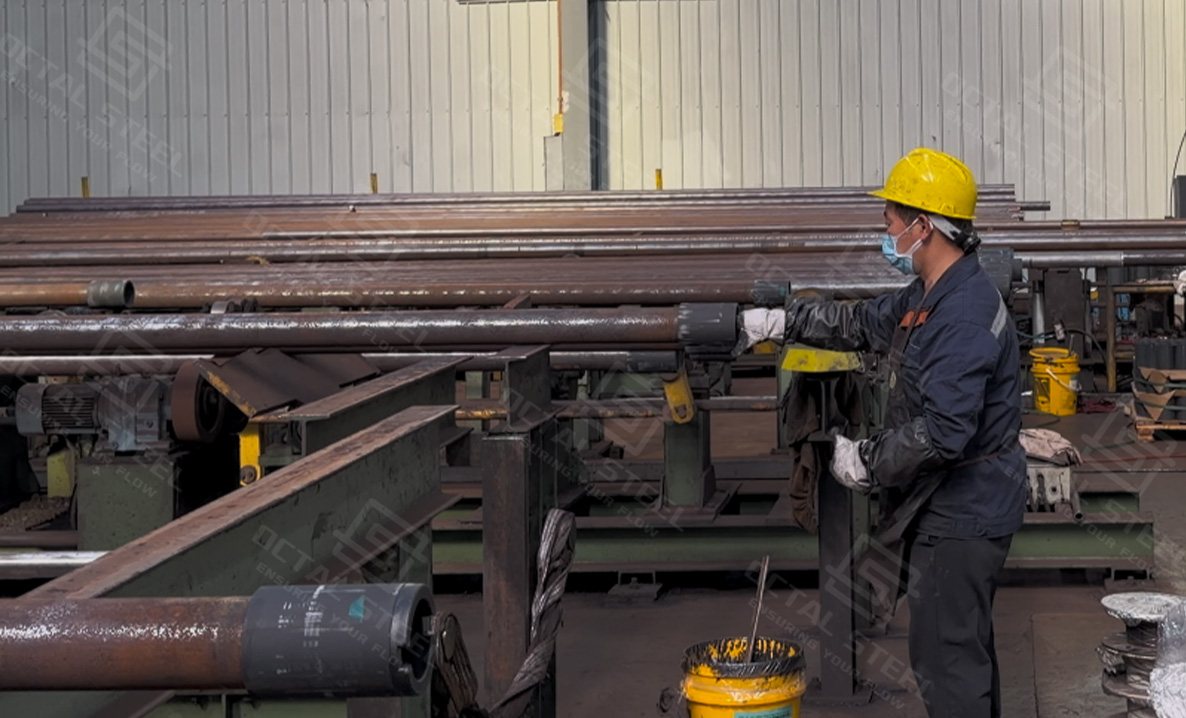
Line Pipe Thread Compound is used on threaded line pipe connections where lubrication and compound-assisted sealing are specified.
The connection may differ in thread profile, dimensions and sealing arrangement from conventional casing and tubing connections. The compound must therefore be compatible with the actual pipe-end design.
Important selection factors include:
• Thread profile and connection dimensions.
• Required friction factor.
• Make-up torque.
• Operating temperature.
• Corrosion exposure.
• Sealing arrangement.
A compound suitable for an OCTG connection should not automatically be assumed suitable for every threaded line pipe design.
Key Performance Characteristics of Thread Compound
1.Anti-Galling and Thread Protection
Galling is a form of adhesive wear that occurs when heavily loaded metal surfaces slide against each other. During repeated connection make-up and break-out, thread flanks and other contact surfaces can experience high local pressure.
Without suitable lubrication, direct metal contact may cause:
• Surface scoring and metal transfer.
• Damage to thread flanks.
• Increased make-up and break-out resistance.
• Premature wear of reusable connections.
• Difficult connection disassembly.
Thread Compound forms a lubricating layer between mating metal surfaces. Solid lubricants such as graphite and selected metallic particles help reduce direct contact and limit the risk of galling.For drill stem connections, the compound must also maintain its protective film under torque, vibration and repeated mechanical loading.
2.Friction Factor and Make-Up Torque Control
Friction Factor (FF) describes the friction characteristics of a thread compound under the applicable test procedure. It is used in connection-specific make-up torque calculations.
The product data show that drill stem and OCTG formulations can have different FF values:
| Formulation | Friction Factor |
|---|---|
| Standard Copper-Based Drill Stem Compound | 1.1 |
| Arctic Copper-Based Drill Stem Compound | 1.15 |
| Metal-Free OCTG Compound | 0.9 |
| Adjusted-Friction-Factor Metal-Free OCTG Compound | 1.0 |
| Copper-Based OCTG Compound | 0.9 |
A difference between FF 0.9 and FF 1.15 can affect the relationship between applied torque and the final connection make-up condition.For this reason, the compound specified for a connection should be used with the corresponding make-up procedure. This is particularly important for premium gas-tight connections, where torque, position and sealing-surface contact must remain within the connection manufacturer’s limits.
3.Extreme-Pressure and Load-Carrying Performance
During drilling, drill stem connections are subjected to high torque, axial loads and repeated mechanical stress. Under these conditions, the lubricant film between mating thread surfaces must withstand substantial contact pressure without losing its ability to protect the metal surfaces.
The Four-Ball Weld Load (ASTM D2596) provides a measurable indication of a compound’s extreme-pressure load-carrying capacity. The tested formulations show different results depending on their composition:
| Drill Stem Compound | Four-Ball Weld Load |
|---|---|
| Copper-Based Drill Stem Compound | 800 kgf |
| Arctic Copper-Based Drill Stem Compound | 800 kgf |
| Zinc-Based Drill Stem Compound | 620 kgf |
The copper-based formulations reach a weld load of 800 kgf, compared with 620 kgf for the zinc-based formulation. This difference indicates that the copper-based grades withstand a higher load before welding occurs in the four-ball test.
A higher weld load indicates stronger extreme-pressure performance under this specific test condition. However, it does not directly represent the maximum load or torque a threaded connection can withstand in field operation. Friction Factor, anti-galling performance and connection-specific testing must also be considered when evaluating a compound for drilling applications.
4.Corrosion Resistance and Water Resistance
Thread surfaces may be exposed to moisture, drilling fluids, saltwater and corrosive substances during field operations.
Selected Thread Compound formulations are designed to:
• Maintain adhesion on threaded surfaces.
• Resist wash-off during handling and operation.
• Reduce exposure of metal surfaces to moisture.
• Limit corrosion and surface pitting.
• Protect threads during intermediate storage.
Some formulations are also described for applications involving H₂S and CO₂ exposure. Their suitability for sour-service conditions must be confirmed against the specific formulation, test documentation and actual operating environment.
5.Temperature Resistance and Low-Temperature Brushability
Temperature affects both lubricant behavior and application conditions.
At low temperatures, excessive thickening can make the compound difficult to spread evenly. At elevated temperatures, oil separation, softening and loss of adhesion may affect its protective performance.
The catalogue includes formulations with different temperature ranges:
| Formulation | Temperature Range |
|---|---|
| Standard Drill Stem Compound | Approximately -18°C to 260°C |
| Arctic Drill Stem Compound | Down to -45°C; upper limit varies by grade |
| Standard Metal-Free OCTG Compound | -18°C to 200°C |
| Selected Copper-Based OCTG Compound | -18°C to 260°C |
Brushability temperature and service temperature should be evaluated separately. A compound that can be applied at -45°C must still be checked against its stated operating-temperature range.
6.Sealing Performance
Thread Compound can contribute to sealing performance by filling small clearances between mating thread surfaces.
The sealing mechanism depends on the connection design. For conventional threaded connections, the compound may help reduce leakage paths. Premium connections often rely on engineered metal-to-metal sealing surfaces, where the compound primarily supports lubrication and anti-galling performance.Thread Compound should not be treated as a substitute for the connection’s designed sealing structure.
Formulation Components and Quality Evaluation
Formulation Components
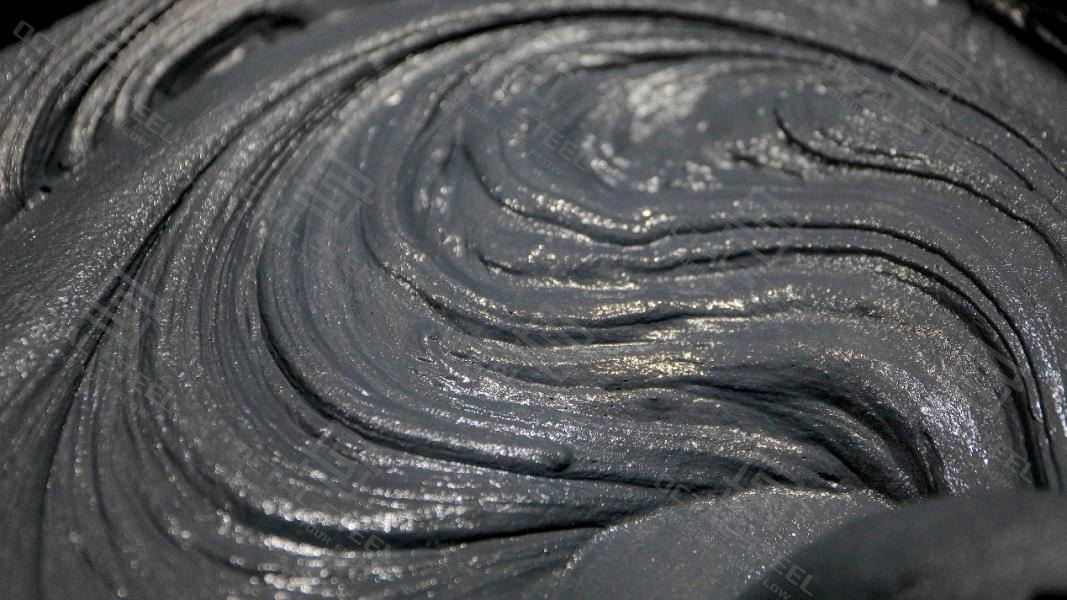
Thread Compound combines base grease, thickener, solid lubricants and functional additives to achieve the required lubrication, anti-galling and corrosion protection properties. The composition varies between copper-based, zinc-based and metal-free formulations.
| Component | Function |
|---|---|
| Base Grease | Provides the carrier medium, lubrication and adhesion |
| Thickener | Maintains grease structure and consistency |
| Powdered Graphite | Provides solid lubrication and helps reduce direct metal contact |
| Copper Particles or Foil | Used in copper-based formulations to improve lubrication and anti-galling performance |
| Treated Zinc Powder | Used in selected zinc-based drill stem formulations |
| Functional Additives | Help improve corrosion resistance, stability and application characteristics |
Quality Evaluation
The performance of Thread Compound should be evaluated through several key properties, including grease consistency, friction factor, extreme-pressure performance, corrosion resistance and thermal stability.
These properties are measured through different tests. For example, ASTM D217 evaluates worked penetration, ASTM D2596 measures extreme-pressure performance, and ASTM D4048 evaluates copper corrosion.
Test results should be considered together rather than individually. A high four-ball weld load does not necessarily mean a lower friction factor, and good corrosion resistance alone does not establish suitability for a particular threaded connection.
Thread Compound Applications
Drill Pipe and Tool Joint Connections
Drill pipe connections undergo frequent make-up and break-out during drilling operations. Tool joints must transfer drilling torque and withstand axial loads while maintaining reliable threaded connections.
Thread Compound is applied to the pin and box threads as well as the relevant shoulder contact surfaces. During connection make-up, the compound helps reduce metal-to-metal contact, limiting galling and wear on these heavily loaded surfaces.
Copper-based and other drill stem formulations are available for different friction-factor requirements, mechanical loads and operating temperatures. The appropriate formulation depends on the connection type and the conditions encountered during drilling.
Drill Collars and Downhole Tools
Drill collars, stabilizers, subs and other downhole tools rely on threaded connections to form and maintain the drill string assembly. These connections are exposed to high torque, axial loads and repeated make-up cycles during drilling.
Applying suitable Thread Compound to the threaded surfaces helps protect the connections against galling and excessive wear. Its friction characteristics and temperature resistance are particularly important when selecting a compound for tools operating under demanding downhole conditions.
Casing and Tubing Connections
During well construction, casing and tubing joints are connected one by one as the pipe string is lowered into the well. Each connection must be properly made up to maintain the mechanical integrity of the string throughout installation and subsequent service.
Thread Compound is applied to the mating thread surfaces before make-up. It helps reduce friction during engagement, limits metal transfer and protects thread flanks from damage caused by repeated handling and connection assembly. For long casing and tubing strings, consistent application is particularly important because numerous connections are made during a single running operation.
Connection design also affects how the compound is used. Conventional API connections and premium connections may have different thread profiles, shoulder arrangements and sealing mechanisms. In premium connections with metal-to-metal seals, the compound supports thread lubrication and anti-galling protection, while the engineered sealing surfaces provide the primary seal.
Line Pipe Connections
Threaded line pipe connections are used in piping systems where individual pipe sections are joined through threaded ends. During installation, the compound helps lubricate the mating threads, allowing the connection to be assembled while reducing the risk of thread damage.
In these applications, sealing performance and chemical compatibility are important considerations. The compound may help fill small clearances between mating threads where the connection design relies on compound-assisted sealing. Its compatibility with the transported medium, operating temperature and potential exposure to water or corrosive substances should also be considered.
Unlike welded pipe joints, threaded connections depend on the condition and engagement of the thread surfaces. Damaged threads, improper engagement or unsuitable compound application can affect connection performance. Proper thread preparation and the correct compound are therefore important during pipe installation and maintenance.
High-Temperature, Low-Temperature and Corrosive Environments
Oilfield connections may operate under extreme temperatures and corrosive conditions. The selected Thread Compound must maintain its lubrication and protective properties throughout the intended service range.
High-Temperature Operations: Elevated temperatures may cause grease softening, oil separation and reduced adhesion. Suitable formulations should maintain physical stability and lubrication performance.
Low-Temperature Operations: Low temperatures can increase grease consistency and make application difficult. Arctic formulations with brushability down to -45°C are available for cold-weather operations.
Corrosive and Sour-Service Environments: Exposure to saltwater, moisture, H₂S and CO₂ requires attention to corrosion resistance and chemical compatibility. Salt-spray and copper-corrosion tests help evaluate specific properties, but sour-service suitability requires separate assessment.
Thread Compound Use and Storage
Proper application and storage of Thread Compound help maintain its lubrication performance and protect threaded connections from damage and contamination.
1. Check the Compound Before Use
Before application, confirm that the compound type, intended connection, friction factor and service-temperature range match the operating requirements.
Drill stem compounds and casing/tubing compounds have different formulations and should not be interchanged without technical confirmation. Check the container for damage, contamination or changes in grease consistency before use.
2. Clean the Threaded Connection
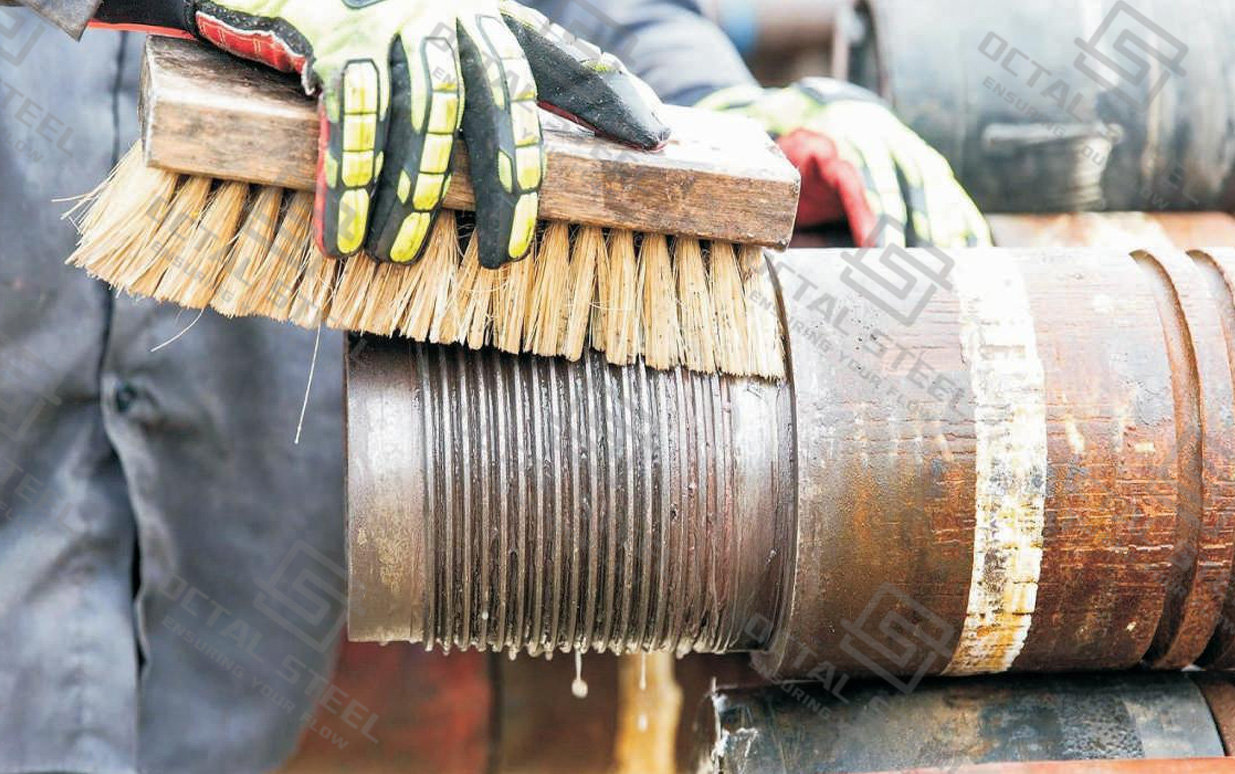
Remove drilling mud, dirt, loose rust and other contaminants from the pin and box connections before applying the compound.
New or stored pipes may have a separate storage protective compound on their threads. Remove this material using an appropriate cleaning procedure before applying running Thread Compound. Residual grease can affect friction characteristics and connection make-up.
3. Apply Thread Compound Evenly
Use a clean brush and uncontaminated container during application. Keep dirt, drilling mud and used oil away from the compound.
Apply an even layer to the specified thread surfaces and relevant sealing faces or shoulders. The coating amount and distribution should follow the connection’s make-up requirements.
4. Follow the Make-Up Procedure
Use the specified make-up torque, friction factor and connection procedure for the threaded joint.
For premium connections, pay particular attention to torque, final position and sealing-surface requirements. Different connection designs may require different make-up conditions.
5. Storage and Shelf Life
Keep Thread Compound in its original, sealed packaging and store it in a clean, dry place. Protect the container from moisture, dirt and excessive heat to prevent contamination or changes in grease properties.
The unopened shelf life for the listed running-compound grades is four years. Check the manufacturing and expiry dates before use.
Safety Restriction: Thread Compound must not be used in oxygen pipelines or oxygen-enriched environments.
Why Choose OCTAL for Thread Compound?
OCTAL works with oilfield tubular products, including casing, tubing and line pipe. This experience gives us a practical understanding of how thread protection, connection design and make-up requirements relate to oilfield applications.
When helping customers select Thread Compound, we focus on several key aspects:
• Application-Based Selection: Understanding whether the compound is intended for drill stem, casing, tubing or threaded line pipe connections.
• Technical Specification Review: Comparing friction factor, service temperature, grease consistency and other relevant performance parameters.
• Product Range Options: Providing different formulation options, including copper-based, metal-free and other specialized compounds for varying application requirements.
• Project Requirements: Taking connection specifications, operating conditions, packaging and technical documentation into account when discussing product suitability.
We believe a suitable product should be supported by clear technical information and a good understanding of its intended application. At OCTAL, our focus is to help customers identify the right Thread Compound for their equipment and project requirements, rather than treating one formulation as a universal solution.
FAQ
1. What Information Is Needed to Get a Quote for Oilfield Thread Compound?
To receive an accurate quotation, provide the connection type, application, required friction factor, operating temperature, service environment, order quantity and packaging requirements. Connection specifications and applicable project standards also help identify the appropriate formulation.
2. Does API RP 5A3 Testing Guarantee Thread Compound Compatibility with Every Connection?
No. API RP 5A3 testing evaluates thread compound performance under specified laboratory procedures, but it does not guarantee compatibility with every connection design or field condition. The tested grade and its suitability for the intended connection must be evaluated separately.
3. How Can Buyers Verify the Friction Factor of Thread Compound?
Request the friction factor test results for the exact product grade and compare them with the connection’s specified make-up torque requirements. Different friction factors affect make-up and breakout torque, so compounds with different FF values should not be substituted without technical evaluation.
4. Can Storage Compound Be Used as Running Thread Compound?
Not unless the product is specifically designed and qualified for both purposes. Storage Compound protects threaded connections against corrosion during transportation and storage, while Running Thread Compound is applied during connection make-up. Check the product designation before use.