Your Responsible Supplier Partner for Oil and Gas Products.

Casing and Tubing
Recent Products

Rencent Articles


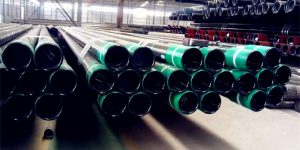

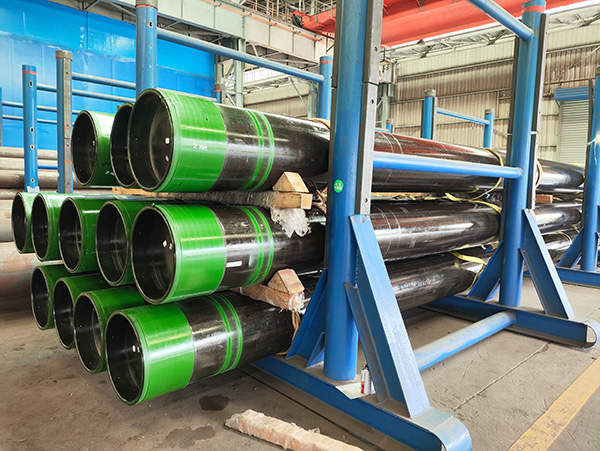
Casing and Tubing
Standard: API 5CT / ISO 11960
Product Range: Casing pipe, tubing pipe, couplings, pup joints and accessories
Casing Size Range: 4 1/2″–20″
Tubing Size Range: 1.900″–4 1/2″
Grades: H40, J55, K55, N80, L80, C90, T95, P110, Q125, 13Cr, Duplex and CRA options
Length Range: R1 / R2 / R3
Connections: STC, LTC, BTC, NU, EUE and premium connections
What Are Casing and Tubing?
Casing and Tubing are two core OCTG tubular products used in oil and gas wells, but they serve different engineering functions. Casing is the structural pipe string installed in the wellbore and usually cemented in place. It supports the drilled hole, isolates different formations, protects freshwater zones, controls wellbore stability, and provides the main pressure barrier during drilling, cementing, completion and production.
Tubing is installed inside the casing after the well structure is established. It provides the controlled flow path for oil, gas, water or injection fluids between the reservoir and the surface equipment. Unlike casing, tubing is more directly exposed to production fluids, internal pressure, workover operations, scaling, corrosion and connection sealing requirements. In many wells, tubing can be retrieved or replaced, while casing normally remains as part of the permanent well structure.
Casing and tubing are not made from one fixed steel chemistry. Most API 5CT casing and tubing are produced from carbon steel or low-alloy steel, mainly based on iron, carbon and manganese. For higher-strength grades, the chemistry and heat treatment are more tightly controlled; for corrosive wells, materials such as 13Cr, Super 13Cr, Duplex or CRA may be selected for better resistance to CO₂, chlorides or sour-service conditions.
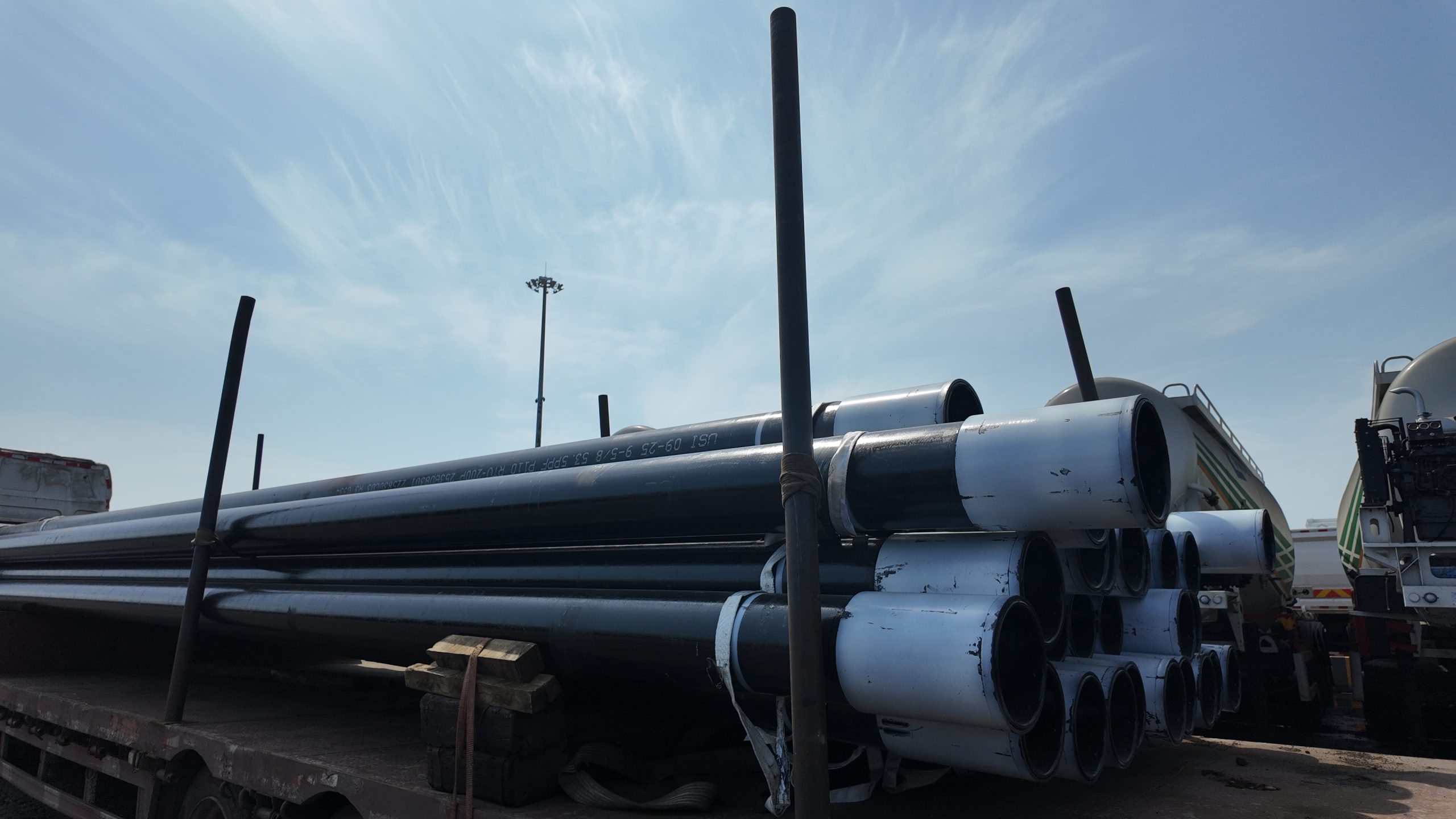
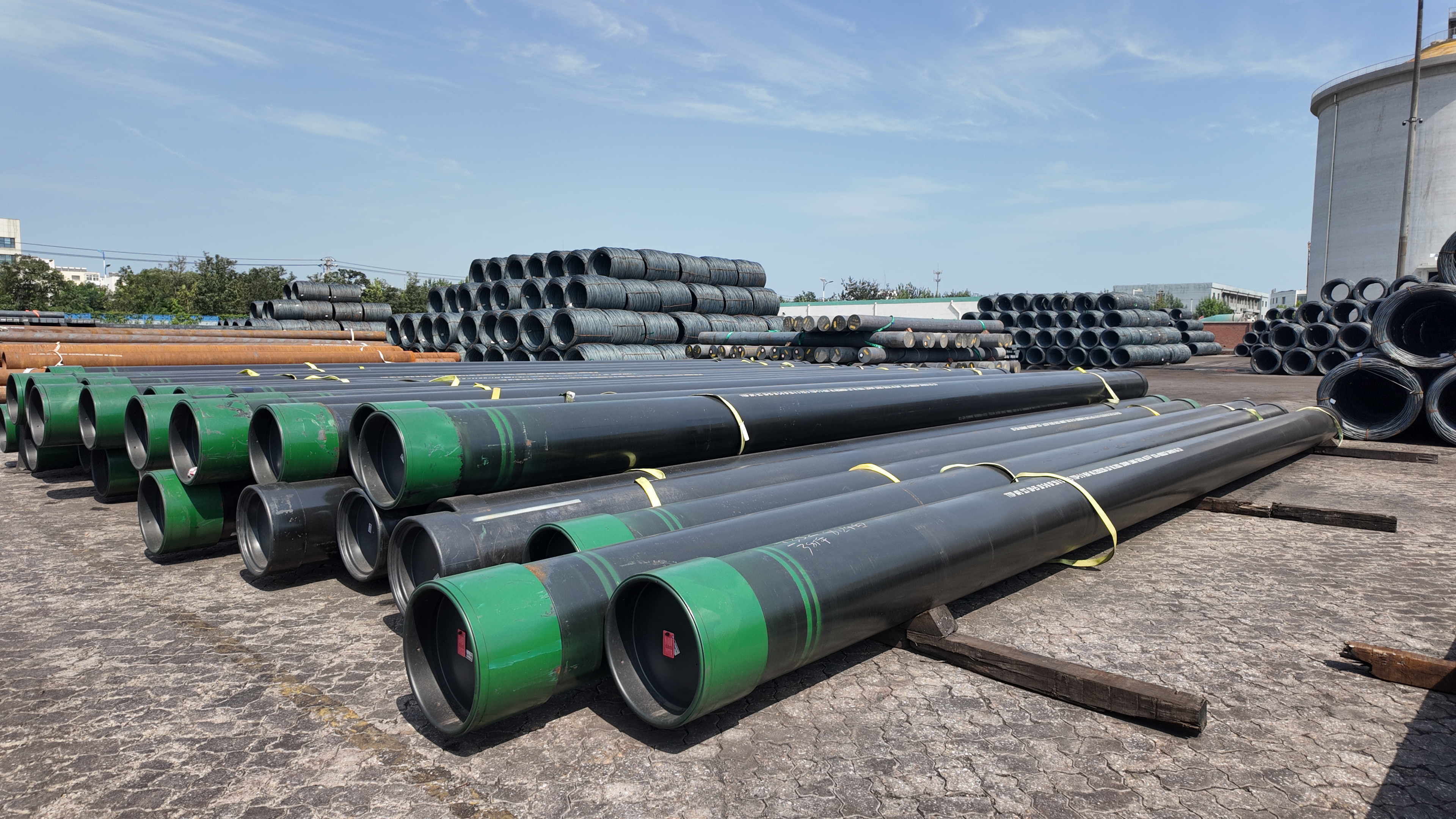
Octal Pipe supplies API 5CT casing and tubing as a project-ready OCTG package, covering grade selection, connection matching, thread protection, MTC, inspection records and heat/lot traceability. A recent API 5CT seamless casing shipment to Halliburton shows how mixed-grade casing can be managed through specification-based staging, packing verification and traceable shipment documents.
| Material Route | Main Composition | Typical Grades | Main Use | Buyer Focus |
|---|---|---|---|---|
| Carbon-Manganese Steel | Mainly Fe + C + Mn, with Si and low P/S control | H40, J55, K55, N80 | Conventional casing and tubing for general well service | Good for standard wells; check grade, size, connection and MTC |
| Heat-Treated Low-Alloy Steel | Carbon steel base with controlled alloy elements such as Cr / Mo / Ni | L80, C90, T95, P110, Q125 | Higher strength for collapse, burst and tension loads | Check heat treatment, hardness, toughness and traceability |
| 13Cr / Corrosion-Resistant Steel | Chromium-bearing steel, mainly using Cr for corrosion resistance | L80 13Cr, Super 13Cr | CO2 corrosion and selected corrosive production fluids | Use when ordinary carbon steel may not resist corrosive fluids |
| Duplex / CRA Route | Higher Cr, Ni, Mo or duplex alloy design | Duplex, Super Duplex, CRA grades | Severe corrosion, chloride-bearing and aggressive wells | Select by CO2, H2S, chloride, temperature and corrosion model |
For buyers, ordering API 5CT casing and tubing should not stop at size and grade. A reliable order needs to confirm OD, weight, wall thickness, length range, connection type, drift requirement, collapse / burst / tension capacity, sour-service or corrosion condition, inspection scope and document traceability before production release. Casing is mainly selected by well depth, formation pressure, mud weight, cementing design and zonal isolation requirements, while tubing is more closely related to flow rate, internal pressure, packer compatibility, connection sealing and workover load. Octal Pipe supplies casing and tubing as a project-ready OCTG package, with grade selection, connection matching, thread protection, drift inspection, MTC, NDT / hydrotest records when required, and heat/lot traceability aligned with the buyer’s PO and ITP.
API 5CT Casing and Tubing Specifications
Casing and tubing are usually ordered under API 5CT / ISO 11960. Threads, couplings and gauging requirements are commonly checked against API 5B or the approved premium connection drawing when a special connection is required. For buyers, the specification should not stop at “J55 casing” or “P110 tubing.” A complete order should define the product type, grade, size, weight, connection, length range, drift requirement, inspection scope and document package before production release.
| Item | Typical Supply Scope | Buyer Focus |
|---|---|---|
| Standard | API 5CT / ISO 11960 | Basic OCTG delivery requirement |
| Products | Casing, tubing, couplings, pup joints, accessories | Full OCTG package supply |
| Casing OD | 4 1/2″–20″ | Surface, intermediate and production casing |
| Tubing OD | 1.900″–4 1/2″ | Production or injection string |
| Grades | H40, J55, K55, N80, L80, C90, T95, P110, Q125, 13Cr, CRA options | Strength, corrosion and sour-service selection |
| Length Range | R1 / R2 / R3 | Running program and joint count |
| Casing Connections | STC, LTC, BTC, Premium | Load, sealing and cementing service |
| Tubing Connections | NU, EUE, Flush, Premium | Drift, packer fit and pressure sealing |
| Drift | API drift or special drift | Tool clearance and completion compatibility |
| Inspection | Dimensional check, drift, thread inspection, NDT, hydrotest if required | Pre-shipment acceptance control |
| Documents | MTC, heat number traceability, inspection records, packing list | Marking-to-document traceability |
Download: api_5ct_casing_tubing_specifications
For project orders, buyers should treat API 5CT casing and tubing as a technical package. The grade controls strength and service suitability; the connection controls make-up and sealing reliability; the drift requirement controls tool passage; and the document package proves that the delivered joints match the approved PO, ITP and receiving inspection requirements.
Casing vs Tubing
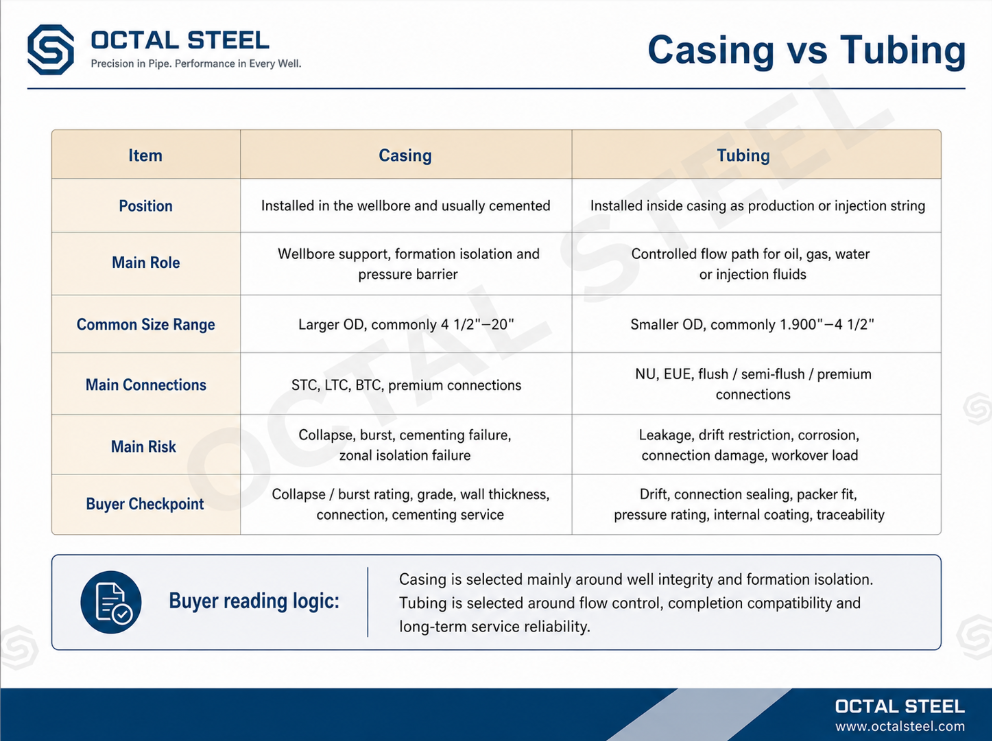
Buyer reading logic: Casing is selected mainly around well integrity and formation isolation. Tubing is selected around flow control, completion compatibility and long-term service reliability.
How Casing and Tubing Work in a Well
An oil and gas well is usually built with several casing strings, not one single pipe. Each casing string is run at a different drilling stage and has a different job. Surface casing protects shallow formations and freshwater zones. Intermediate casing isolates unstable or pressure-sensitive formations before drilling deeper. Production casing or liner forms the long-term wellbore barrier for production or injection service.
After the casing strings are set and cemented, tubing is installed inside the production casing. Tubing is the main flow path for produced oil, gas, water or injection fluids. In simple terms, casing protects and supports the well, while tubing carries the production flow.
| OCTG Item | Main Role | Buyer Focus |
|---|---|---|
| Surface Casing | Protects shallow formations and freshwater zones | OD, grade, connection and cementing plan |
| Intermediate Casing | Isolates unstable or pressure-sensitive zones | Collapse rating, burst rating and mud weight |
| Production Casing / Liner | Provides the long-term wellbore barrier | Pressure rating, corrosion condition and traceability |
| Production Tubing | Carries produced or injected fluids inside the casing | Drift, connection, packer fit and corrosion control |
| Pup Joints / Accessories | Adjusts string length and connects downhole tools | Length, thread type, marking and heat/lot mapping |
Casing failure can affect well integrity, cement isolation and pressure control. Tubing mismatch may cause leakage, flow restriction, failed drift inspection or tool clearance problems. This is why casing and tubing should be selected as a complete OCTG package, not only by size and grade.
Casing and Tubing Grades
Grade selection should be based on the actual well condition, not only the price or strength level. The same casing or tubing size may perform very differently depending on grade, heat treatment, pressure load, corrosion condition, connection type and inspection scope.
Different API 5CT casing and tubing grades are selected for different well conditions:
- H40 / J55 / K55: Suitable for shallow wells, surface casing and standard production service where pressure and load are moderate.
- N80-1 / N80Q: Used for medium-depth wells requiring higher strength; N80Q is a quenched-and-tempered route.
- L80 / C90 / T95: Selected where controlled strength, hardness and sour-service review are required.
- P110: Used in deep wells, high-pressure sections and higher-load casing or tubing strings.
- Q125: Designed for ultra-deep wells, HPHT sections and severe-load applications.
- 13Cr / Super 13Cr / Duplex / CRA: Used for CO₂, chloride-bearing or corrosion-sensitive wells.
Key Selection Parameters for Casing and Tubing Grades:
- Yield Strength: Confirms the basic load-bearing level of the casing or tubing body.
- Collapse / Burst Rating: Critical for casing strings exposed to external pressure, internal pressure and cementing loads.
- Hardness Control: Important for L80, C90, T95 and sour-service applications.
- Heat Treatment: Affects strength stability, toughness and pipe-body reliability, especially for N80Q, P110 and Q125.
- Corrosion Condition: CO₂, H₂S, chloride content and temperature may require 13Cr, Duplex or CRA materials.
- Connection Type: STC, LTC, BTC, NU, EUE or premium connections should match the well load and sealing requirement.
- Inspection Records: MTC, heat number traceability, drift test, thread inspection, NDT and hydrotest records should be reviewed before shipment.
Buyer note: A higher grade is not always the safest choice. The correct grade should match the well depth, pressure profile, corrosion condition, connection design and inspection requirement.
Download: casing_and_tubing_grades_octal_transparent_watermark
Casing Connections and Tubing Connections
Connections are critical because they decide whether the casing or tubing string can be made up correctly, run smoothly, seal under pressure and carry axial / torsional load at site. Even if the pipe body grade, size and wall thickness are correct, the wrong connection type can still cause thread mismatch, coupling rejection, leakage risk, failed make-up torque or rig-side delay.
For casing, the connection must match the well depth, cementing load, axial tension, pressure rating and running condition. For tubing, the connection must also consider drift clearance, packer compatibility, sealing performance, workover load and internal flow restriction. Premium connections may be required when standard API connections cannot meet gas sealing, high torque, HPHT, CO₂ injection or critical completion requirements.
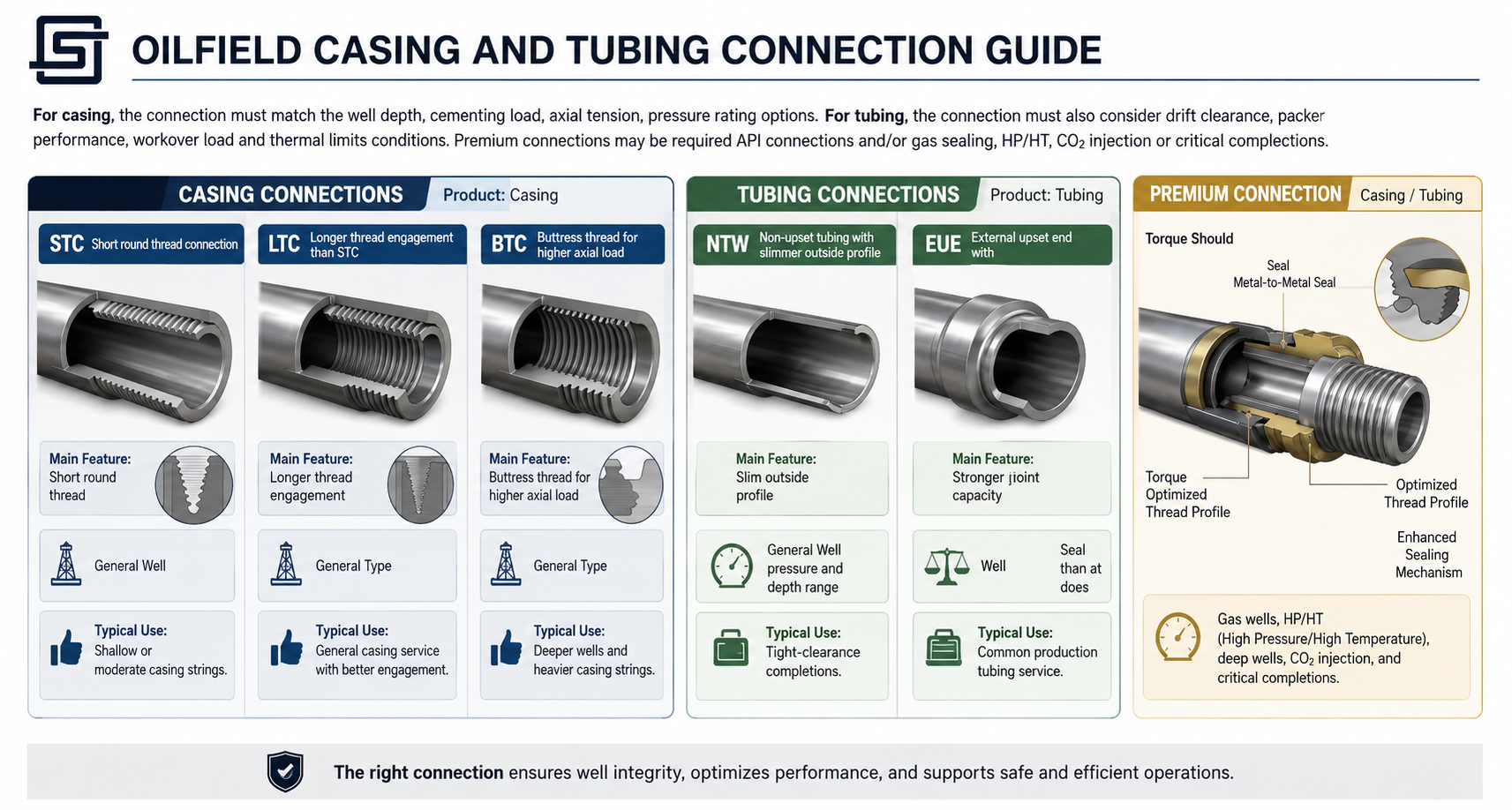
Download: casing_tubing_connections
For tubing orders, drift requirement should be confirmed together with the connection type. The OD may be correct, but if the internal clearance does not match packers, safety valves, downhole tools or logging tools, the string may fail inspection or create running restrictions. For casing orders, buyers should also check thread protectors, coupling make-up, thread inspection records and connection compatibility before shipment release.
Manufacturing and Heat Treatment
Casing and tubing may be supplied as seamless or welded OCTG products, but heat treatment is one of the key steps that decides final pipe performance. Its purpose is to control yield strength, tensile strength, hardness and toughness, so the pipe body can meet collapse, burst, tension and sour-service requirements. For grades such as N80Q, L80, P110 and Q125, heat treatment is not a background process; it is a critical control point that should match the grade route, MTC values and inspection release records.
Typical seamless OCTG production route:
| Process Step | Control Point | Buyer Meaning |
|---|---|---|
| Steelmaking and Billet Control | Heat number, chemistry, inclusion control and material route | Supports MTC traceability and grade consistency |
| Piercing and Rolling | Pipe-body formation, OD, wall thickness and eccentricity | Affects collapse / burst performance and dimensional acceptance |
| Sizing and Straightening | OD tolerance, straightness and pipe geometry | Reduces fit-up, drift and running issues |
| Heat Treatment | Normalizing, quenching, tempering or stress relief when required | Controls yield strength, tensile strength, hardness and toughness |
| Threading and Coupling Make-Up | STC, LTC, BTC, NU, EUE or premium connection dimensions | Reduces make-up rejection and connection leakage risk |
| Inspection and Marking | Dimensional check, drift, NDT, hydrotest, marking and packing | Connects each joint to heat number, MTC and shipment records |
Heat treatment should not be treated as a background process. For N80Q, L80, P110, Q125 and sour-service grades, the stability of yield strength, hardness and toughness is directly tied to the well’s pressure and loading design.
Where Casing and Tubing Are Used
- Surface Casing During Cementing
Surface casing is run after the upper hole section is drilled. Its job is to stabilize shallow formations, protect freshwater zones and create a reliable cemented barrier. The buyer should lock OD, weight, grade, connection and cementing plan before release, because weak casing selection can lead to poor cement support, shoe-track problems or pressure-control risk.
- Intermediate Casing Through Unstable or Pressure-Changing Zones
Intermediate casing is used when the drilling program needs to isolate troublesome zones before deeper drilling continues. These zones may involve changing mud weight, lost circulation, shale instability or higher formation pressure. The key review items are collapse rating, burst rating, wall thickness, connection strength and cementing reliability.
- Production Casing and Liners in High-Pressure Wells
Production casing or liner becomes part of the long-term well barrier. It must handle internal pressure, external pressure, axial load, corrosion condition and connection sealing over the life of the well. P110, Q125, high-collapse casing or premium connections may be required depending on well depth, pressure profile and completion design.
- Production Tubing for Oil, Gas and Water Flow
Tubing carries produced fluids from downhole to surface. The main risks are leakage, corrosion, internal scaling, drift restriction and connection failure. For buyers, tubing OD, wall thickness, drift, connection type, internal coating and packer compatibility should be reviewed together.
- Sour-Service and CO₂-Containing Wells
When H₂S or CO₂ is present, material selection becomes more sensitive. L80, C90, T95, 13Cr, duplex or CRA routes may be selected depending on sour-service rules, CO₂ partial pressure, chloride content, temperature and project corrosion model. Hardness, heat treatment and MTC traceability must be reviewed carefully.
- HPHT and Long-Lateral Wells
HPHT wells and long-lateral completions expose casing and tubing to combined pressure, temperature, tension, bending and connection loads. Premium connections, special drift, stricter NDT and full traceability are often used to reduce make-up rejection, leak paths and intervention risk.
Quality Control and Inspection Records
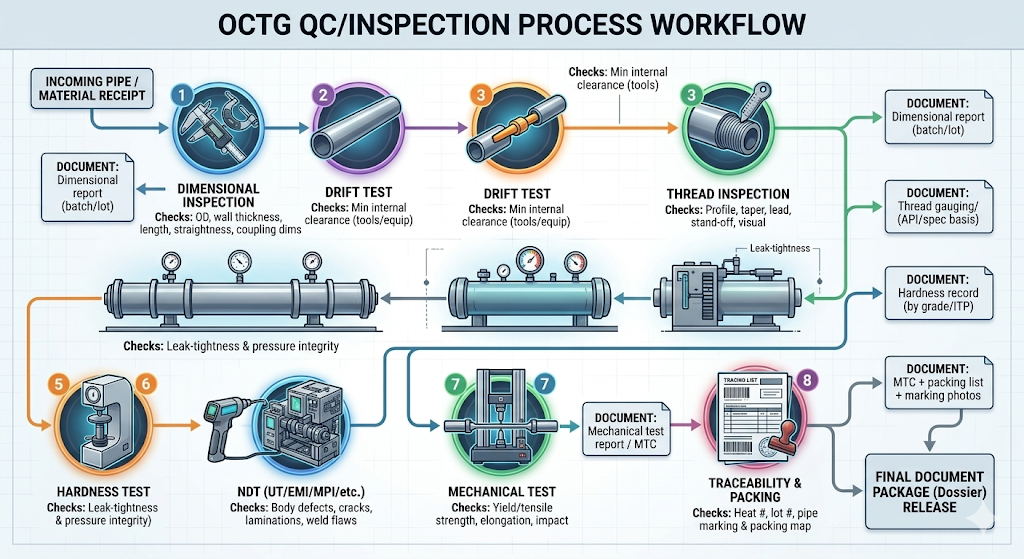
For casing and tubing, quality control is not only a factory step; it is the proof that each pipe joint can match the ordered grade, size, connection, drift, pressure requirement and service condition. The purpose of inspection records is to make every joint traceable from pipe marking to heat number, MTC, dimensional check, NDT, hydrotest, drift test and packing list. Without this document chain, buyers may face receiving disputes, missing MTC review, failed drift inspection or delayed shipment release.
| QA / Inspection Item | What It Checks | Proof in Document Package |
|---|---|---|
| Dimensional Inspection | OD, wall thickness, length, straightness and coupling dimensions | Dimensional report by batch or lot |
| Drift Test | Minimum internal clearance for tools and completion equipment | Drift record with API drift or special drift basis |
| Thread Inspection | Thread profile, taper, lead, stand-off and visual thread condition | Thread gauging or visual inspection report when specified |
| Hydrostatic Test | Leak-tightness and pressure integrity | Hydrotest record with pressure, hold time and result when required |
| NDT | Pipe-body defects, laminations, cracks or weld-related flaws where applicable | UT / EMI / MPI / other NDT reports per PO / ITP |
| Hardness Test | Sour-service or high-strength grade hardness control | Hardness record when required by grade or ITP |
| Mechanical Test | Yield strength, tensile strength, elongation and impact where required | MTC or mechanical test report |
| Traceability | Heat number, lot number, pipe marking and packing map | MTC + packing list + marking photos |
Download: quality_control_inspection_records_octal_transparent_watermark
A complete document chain should connect:
pipe marking → heat number → MTC → mechanical test → NDT / hydrotest / drift test → packing list → shipment documents
This helps buyers confirm that the delivered casing and tubing match the approved PO, ITP and site receiving requirements.
Failure Map for Casing and Tubing Orders
Common casing and tubing order failures usually come from unclear specifications, wrong connection matching, missing inspection records, or unverified service conditions:
- Wrong connection designation: Casing or tubing cannot make up with the existing string, coupling, crossover or downhole tool.
- Drift mismatch: Packers, safety valves, completion tools or logging tools cannot pass through the tubing or casing ID.
- Collapse / burst margin not checked: The selected pipe may not match the well depth, mud weight, design pressure or safety factor.
- Sour-service gap: H₂S exposure may create SSC risk if hardness, material route and sour-service requirement are not reviewed.
- Thread damage during shipment: Poor thread protection can cause make-up delay, re-cutting or rejected joints at site.
- Missing heat / lot mapping: The receiving team cannot connect delivered joints with MTC, heat number and packing list records.
Key Buyer Control Points for Casing and Tubing Orders:
- Connection Control: Lock STC, LTC, BTC, NU, EUE or premium connection type in the PO.
- Drift Requirement: Specify API drift or special drift before production release.
- Pressure Review: Confirm collapse rating, burst rating, well depth, mud weight and design pressure.
- Sour-Service Review: Check NACE MR0175 / ISO 15156, hardness records, MTC and material route when H₂S is present.
- Thread Protection: Require thread protectors, stable bundling, packing photos and clear tally list.
- Traceability: Match pipe marking, heat number, MTC, inspection records and packing list before shipment.
Octal Pipe Supply Scope
Octal Pipe supplies OCTG casing and tubing for oil and gas drilling, completion and production projects. Supply can cover casing pipe, tubing pipe, couplings, pup joints, crossovers and project-specific accessories according to PO and ITP requirements.
Our supply focus is not only the pipe itself. The order can be coordinated around:
- API 5CT / ISO 11960 standard requirements
- Casing and tubing grade selection
- STC / LTC / BTC / NU / EUE / premium connection matching
- API drift or special drift requirements
- Thread protection and packing control
- NDT, hydrostatic test, dimensional inspection and thread inspection
- MTC, heat number traceability and EN 10204 3.1 / 3.2 documents when specified
- Third-party inspection support before shipment release
For project buyers, this helps reduce wrong-grade delivery, connection mismatch, missing inspection records and receiving delays.
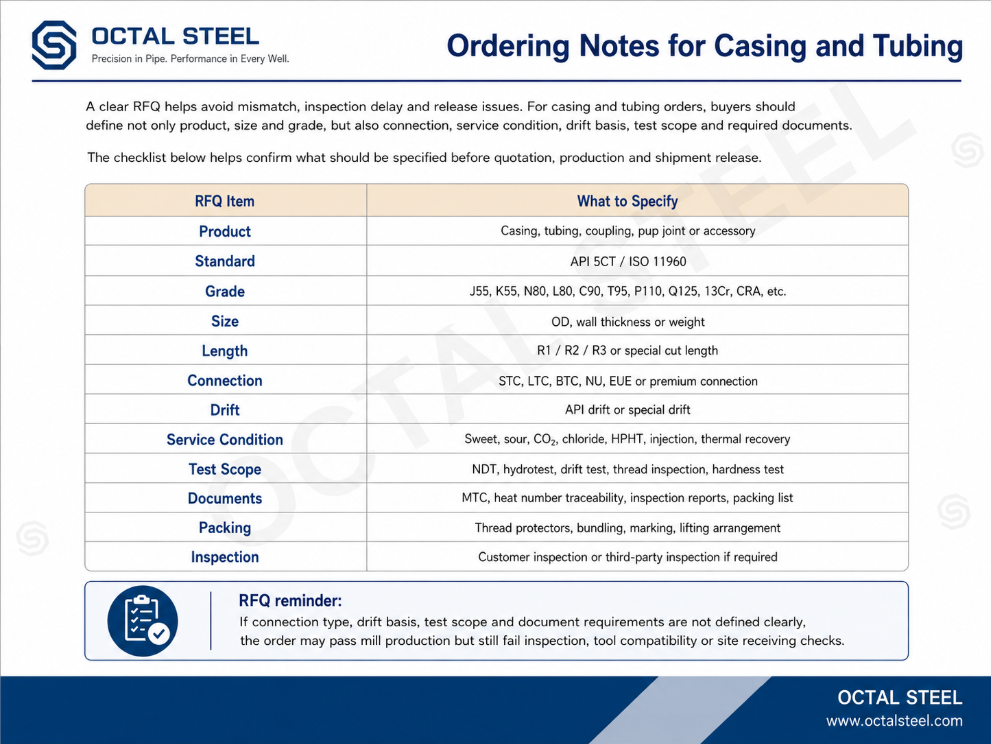
Ordering Notes for Casing and Tubing
A clear RFQ should include the following information:
Delivery and Shipping Support from Octal Pipe
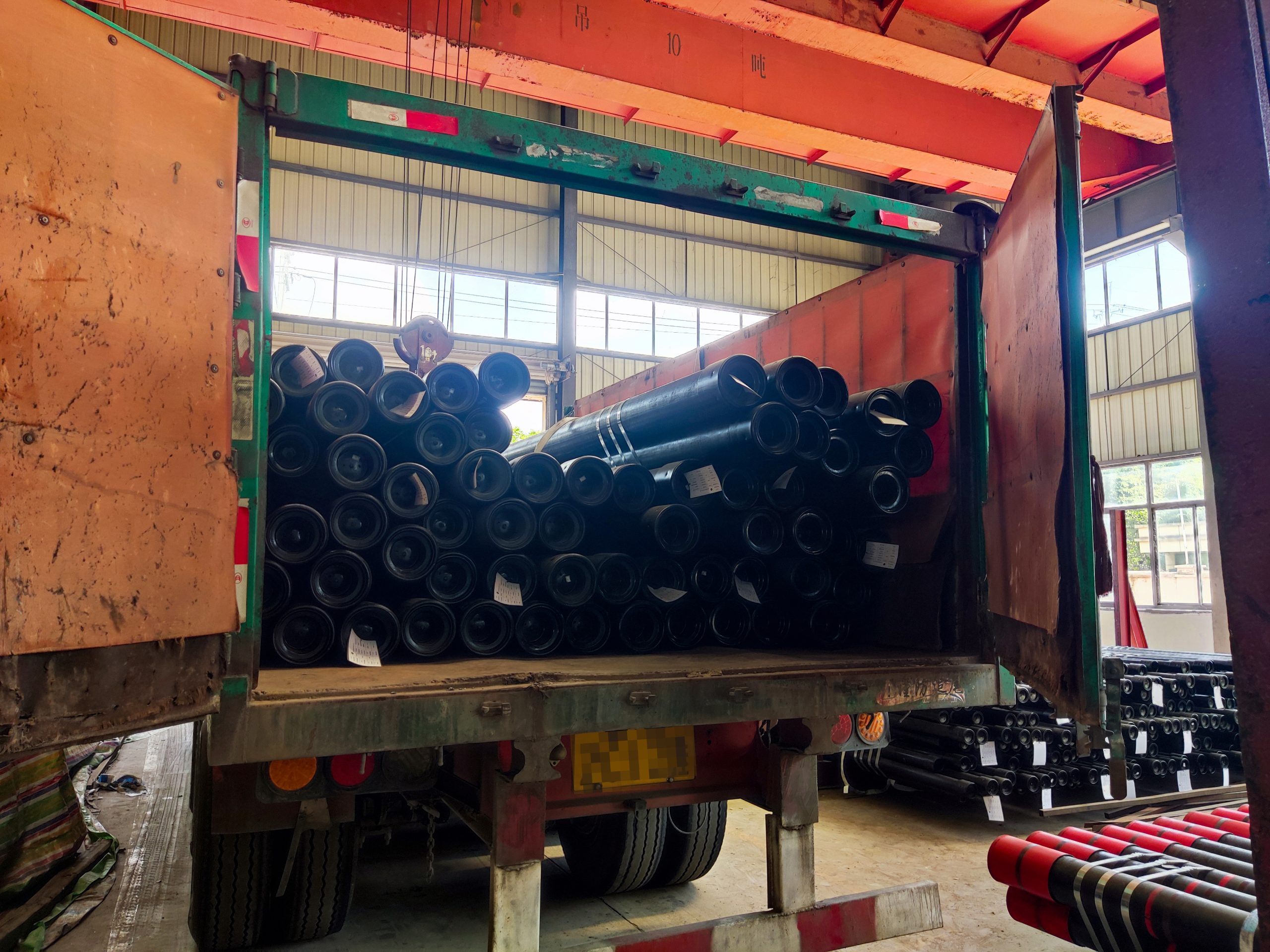
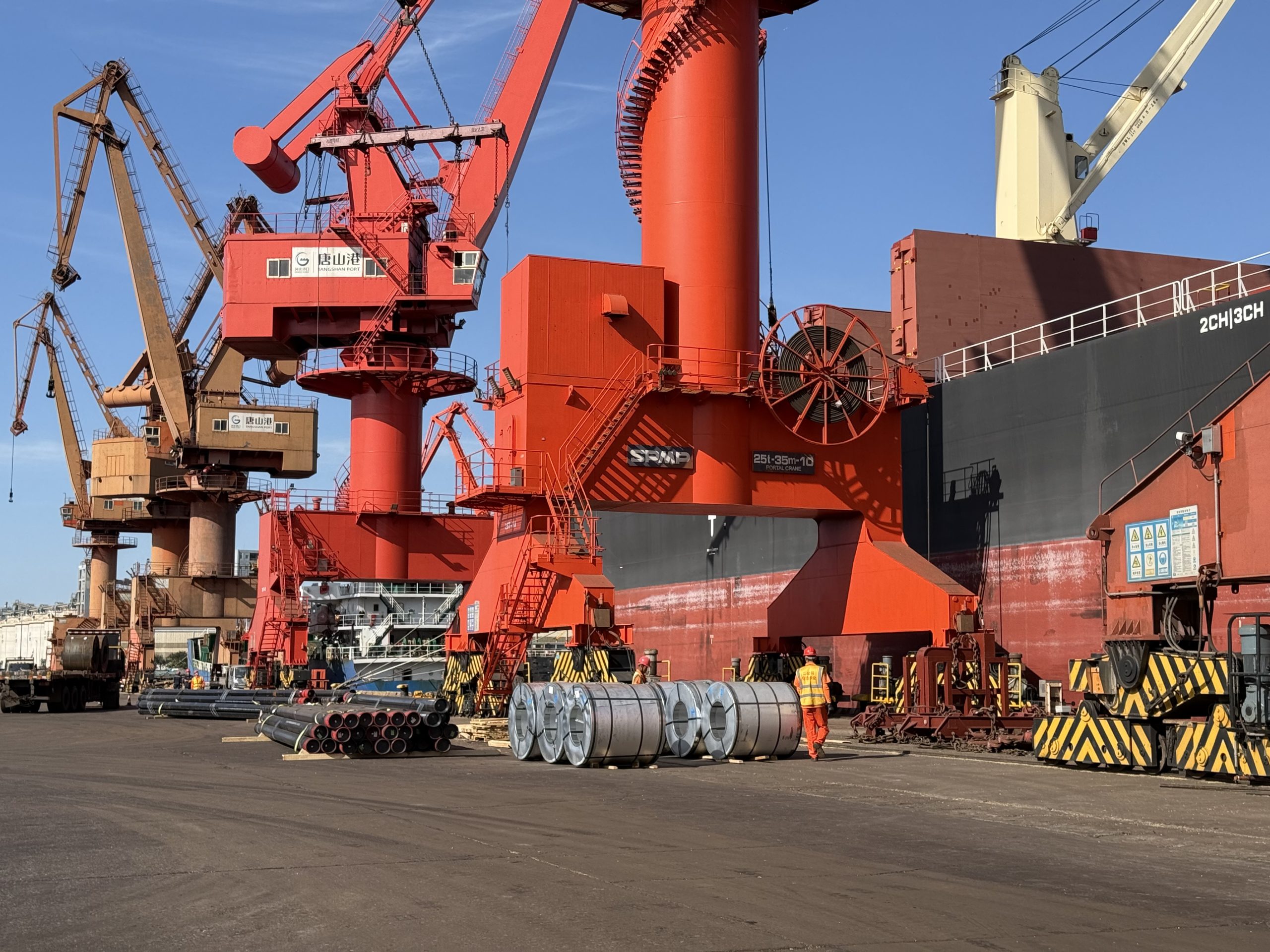
For API 5CT casing and tubing orders, Octal Pipe provides shipment support from packing review to cargo release. Before delivery, we help check thread protectors, pipe marking, bundle stability, surface protection, heat number traceability and packing list matching to reduce thread damage, mixed-lot issues and receiving disputes.
Octal Pipe can also provide MTC, inspection records, packing photos, marking photos, shipment documents and export loading coordination according to the buyer’s PO and ITP. For mixed OCTG orders, we help organize casing, tubing, couplings, pup joints and accessories by size, grade, connection and heat/lot information, so the receiving team can review the goods more efficiently after arrival.
FAQ
1. What is the difference between casing and tubing in oil and gas wells?
Casing is cemented in the wellbore to support the hole, isolate formations and provide pressure barriers. Tubing is installed inside casing to carry oil, gas, water or injection fluids.
2. How should buyers specify API 5CT casing and tubing?
Buyers should confirm standard, grade, OD, weight, wall thickness, length, connection, drift, service condition, inspection scope and documents. MTC, heat number traceability, thread inspection and drift records should be included when required.
3. Which API 5CT grade is suitable for casing and tubing?
Grade selection depends on well depth, pressure, corrosion and service severity. J55/K55 suit standard wells, N80/L80 cover higher-strength or controlled service, P110/Q125 suit deeper or higher-load wells, and 13Cr/CRA is used for corrosive fluids.
4. Why is drift test important for tubing?
Drift test confirms the tubing has enough internal clearance for packers, safety valves, logging tools and completion equipment. Failed drift can cause tool passage problems and rig delay.
5. When should premium connections be used?
Premium connections are used when standard API threads may not meet sealing, torque or load requirements. They are common in gas wells, HPHT wells, deep wells, CO₂ injection and critical completions.
Social Share