Your Responsible Supplier Partner for Oil and Gas Products.

API 5CT Q125
Hot Topic



Rencent Articles

Recent Resources
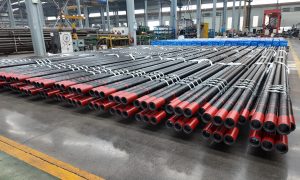
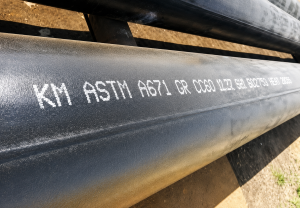
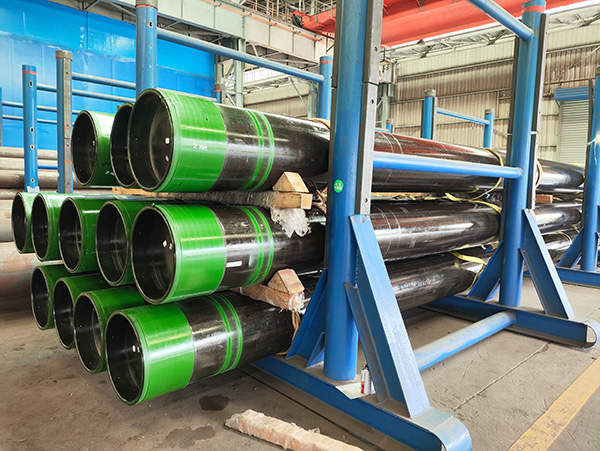
API 5CT Q125
API 5CT Grade: High-strength OCTG casing and tubing grade identified by 125 ksi minimum yield strength.
Mechanical Strength: Yield strength range 125,000–150,000 psi / 862–1,034 MPa; minimum tensile strength 135,000 psi / 931 MPa.
Heat Treatment: Commonly supplied in quenched and tempered condition to balance strength, hardness and toughness.
Connection Review: STC, LTC, BTC or premium connections must be checked for tensile load, sealing demand and make-up reliability.
What Is API 5CT Q125?
API 5CT Q125 is defined by its 125 ksi minimum yield strength, but it should not be read only as a higher-strength label. In the API 5CT casing and tubing system, Q125 represents a high-strength OCTG grade where pipe-body capacity, quenched and tempered condition, toughness response, hardness control, connection performance and full-body inspection all need to be considered together. It is usually reviewed for deep, high-load or high-pressure well sections, but final suitability still depends on wall thickness, connection type, collapse design, sour-service exposure and heat/lot traceability.
| Item | API 5CT Q125 Technical Meaning |
|---|---|
| Product family | API 5CT casing and tubing |
| Grade | Q125 |
| Strength identity | 125 ksi minimum yield strength |
| Metric equivalent | 862 MPa minimum yield strength |
| Typical product forms | API 5CT Q125 casing, API 5CT Q125 tubing, Q125 oil casing and Q125 tube |
| Common well conditions | Deep well, high-load or high-pressure casing strings where higher pipe-body strength is required |
| Main load resistance | Helps resist axial tension, internal pressure and collapse-related loading in demanding well sections |
| Common condition | Quenched and tempered to obtain a controlled strength and toughness balance |
| Technical caution | Q125 should not be understood only as “stronger steel”; toughness, hardness control, dimensional accuracy, connection performance, NDE release and traceability also affect field reliability |
Q125 should be reviewed as a complete OCTG material system, not only as a strength number. In deep wells, one weak point in thread quality, heat treatment consistency or NDE release can matter as much as the nominal yield strength.
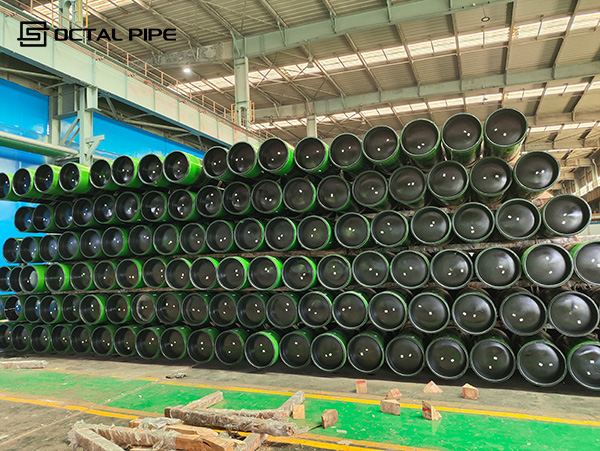
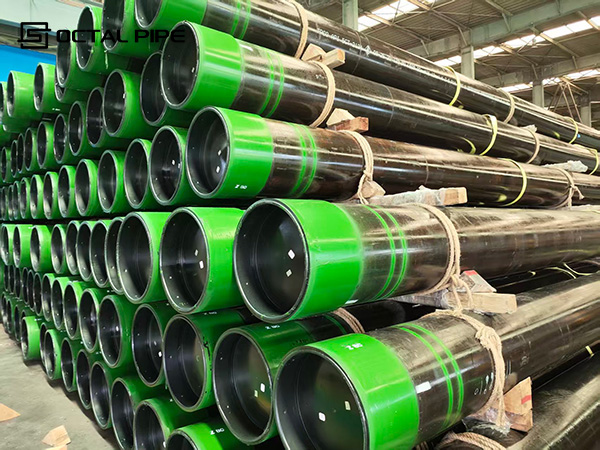
API 5CT Q125 Mechanical Properties
The most important data point for API 5CT Grade Q125 is its yield strength range. Public product data for Q125 commonly lists minimum yield strength as 125,000 psi / 862 MPa, maximum yield strength as 150,000 psi / 1,034 MPa, and minimum tensile strength as 135,000 psi / 931 MPa.
| Mechanical Property | API 5CT Q125 Reference Value |
|---|---|
| Minimum yield strength | 125,000 psi / 862 MPa |
| Maximum yield strength | 150,000 psi / 1,034 MPa |
| Minimum tensile strength | 135,000 psi / 931 MPa |
| Strength description | High-strength casing and tubing grade |
| Common heat treatment | Quenched and tempered |
| Common shorthand | 125 KSI minimum yield |
Download:API 5CT Q125 Mechanical Properties and Chemical Composition
Yield strength shows the stress level at which the pipe body begins to deform plastically. Tensile strength shows the minimum stress level before fracture under tensile loading. For Q125 casing pipe, these numbers are important because the casing string may be exposed to high axial tension, internal pressure, external collapse pressure and connection loads during running, cementing, pressure testing and production.
However, the strength table is not the whole design answer. A Q125 pipe body with high yield strength can still be limited by connection efficiency, collapse performance, sour-service restrictions, impact toughness or field running conditions. Grade selection should always be tied to the actual well design load case.
Chemical Composition of API 5CT Q125
API 5CT Q125 is a high-strength low-alloy OCTG grade, and its chemistry is normally controlled to support strength, hardenability, heat-treatment response and toughness. Public supplier references often present Q125 chemistry in a Cr-Mo low-alloy range such as carbon 0.28–0.33%, manganese 0.90–1.20%, chromium 0.50–0.80%, molybdenum 0.15–0.25%, silicon 0.15–0.35%, phosphorus ≤0.020%, and sulfur ≤0.010%. These values should be treated as typical supplier chemistry ranges, not as a universal substitute for the applicable API 5CT grade table or the mill test certificate.
| Element | Typical Reference Range / Limit | Technical Role |
|---|---|---|
| Carbon, C | 0.28–0.33% | Supports strength and hardenability after heat treatment |
| Manganese, Mn | 0.90–1.20% | Helps hardenability and strength; also supports deoxidation |
| Chromium, Cr | 0.50–0.80% | Improves hardenability and contributes to strength stability |
| Molybdenum, Mo | 0.15–0.25% | Supports hardenability and tempering response |
| Silicon, Si | 0.15–0.35% | Deoxidation and strength contribution |
| Phosphorus, P | ≤0.020% | Restricted impurity; excess may reduce toughness |
| Sulfur, S | ≤0.010% | Restricted impurity; excess may affect toughness and cleanliness |
Download:API 5CT Q125 Mechanical Properties and Chemical Composition
The chemical composition of API 5CT Q125 works together with the heat-treatment process to achieve the required strength and toughness balance. Q125 is not only defined by its alloy content; the delivered pipe must meet the specified mechanical properties after processing and remain traceable through heat number, lot records, test reports and material certificate.
For technical review, the chemistry table explains why Q125 is commonly treated as a controlled low-alloy steel rather than a plain carbon grade. Carbon, manganese, chromium and molybdenum support hardenability and high-strength response after quenching and tempering, while phosphorus and sulfur limits help maintain toughness and steel cleanliness.
Where API 5CT Q125 Is Commonly Used
API 5CT Q125 is typically considered when conventional lower-strength grades do not provide enough margin for the well design. It is mainly used in deep well casing strings, high-pressure oil and gas wells, collapse-sensitive sections, and production or intermediate casing where pipe-body strength, axial tension, internal pressure and external collapse load must be reviewed together. In these applications, Q125 is selected by load case, pressure condition, well depth and design risk, not by industry name alone.
Deep Well Casing Strings
In deep wells, the casing string carries greater suspended weight. As well depth increases, axial tensile load becomes a major design concern, especially during running and cementing. Q125 casing for deep wells provides a higher pipe-body strength margin because its minimum yield strength is 125 ksi.
This does not mean Q125 automatically solves every deep well problem. The final design still depends on:
- casing OD and wall thickness;
- string weight;
- connection tensile efficiency;
- running load;
- dogleg severity;
- safety factor required by the well design;
- inspection and traceability records.
High-Pressure Oil and Gas Wells
In high-pressure oil and gas wells, API 5CT Q125 may be selected when internal pressure and tensile load create a demanding pipe-body requirement. The casing body must be reviewed under combined loading, not only by yield strength. Burst resistance, collapse resistance and axial tension can act together during running, cementing, pressure testing and production.
Key points in this application include:
- Internal pressure may control burst design in high-pressure production or injection sections.
- Axial tensile load increases with string depth, casing weight and running condition.
- External collapse pressure still needs review, especially in deep or depleted formations.
- Connection performance must be checked separately from pipe-body strength.
- Thread and coupling reliability affect tensile capacity, pressure sealing and make-up performance.
For Q125 petroleum casing, the connection is often one of the controlling details. The pipe body may provide high yield strength, but the selected thread and coupling must also meet the required tensile load, sealing demand and make-up reliability for the actual well condition.
Collapse-Sensitive Well Sections
Q125 is sometimes discussed in wells where external collapse pressure is a concern. This can happen in deep wells, depleted reservoirs, high mud weight sections or unstable formations. The grade can help improve strength margin, but collapse resistance is not controlled by grade alone.
Collapse performance is also affected by:
- wall thickness;
- OD / wall ratio;
- pipe roundness and ovality;
- residual stress;
- manufacturing route;
- heat treatment stability;
- dimensional control;
- applicable collapse calculation or test basis.
This is an important point in technical writing: Q125 is not the same thing as high collapse casing. Q125 describes grade and strength. High collapse performance requires additional design and manufacturing control.
Production Casing and Intermediate Casing
Q125 casing pipe may be used in production casing or intermediate casing when the section needs higher pipe-body strength under load, pressure or difficult downhole conditions. In production casing, the grade is usually reviewed together with cementing pressure, perforation stage, pressure testing, temperature change and long-term well integrity.
Key points in this application include:
- Production casing must maintain strength and pressure integrity during completion and production.
- Intermediate casing may need to isolate difficult formations and hold pressure during later drilling operations.
- Wellbore stability is a key concern when the casing passes through unstable or high-stress formations.
- Connection reliability should still be checked, because the casing string performance is not controlled by pipe-body strength alone.
API 5CT Q125 Casing Sizes and Connections
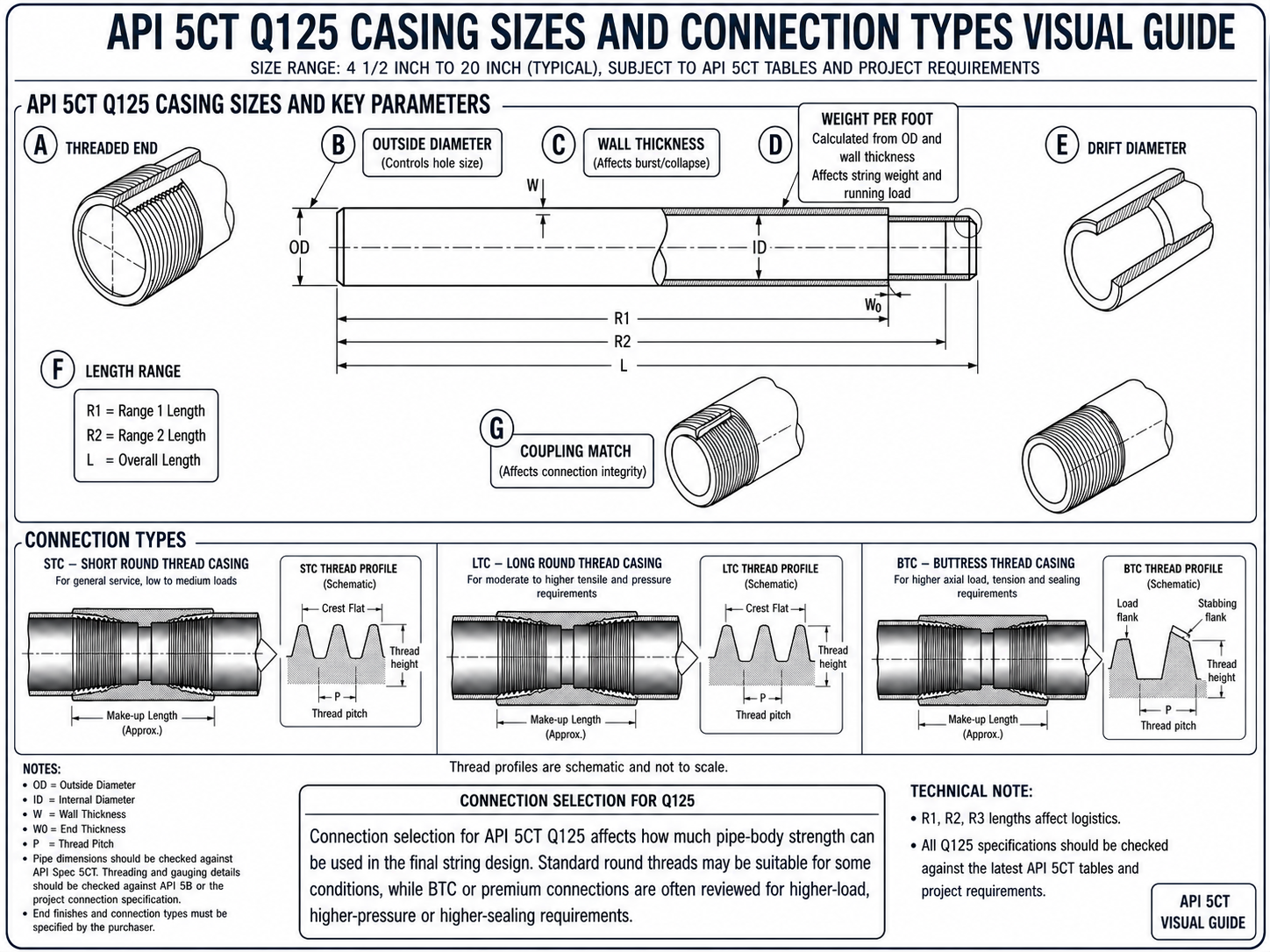
Public product pages often show API 5CT Q125 casing size ranges from about 4 1/2 inch to 20 inch and common thread forms such as STC, LTC and BTC. These are useful product references, but the actual size, wall thickness, weight and thread form should be checked against the latest applicable API 5CT / API 5B tables and the well design.
| Parameter | Why It Matters for Q125 |
|---|---|
| Outside diameter | Controls hole size, clearance and casing program design |
| Wall thickness | Affects burst, collapse, tensile load and drift diameter |
| Weight per foot | Affects string weight, handling and running load |
| Length range | R1, R2 and R3 lengths affect logistics and running practice |
| Thread type | STC, LTC, BTC or premium connection affects tensile and sealing behavior |
| Drift diameter | Confirms internal clearance for tools and completion equipment |
| Coupling match | Affects connection integrity and make-up performance |
For API 5CT Q125 casing, connection selection directly affects how much pipe-body strength can be used in the final string design. A high-strength pipe body may still be limited if the selected connection does not provide enough axial capacity, sealing performance or make-up reliability for the well condition. Standard round threads may be suitable for some moderate sections, while buttress or premium connections are often reviewed for higher-load or higher-pressure applications.
API 5CT Q125 vs P110, L80 and C110
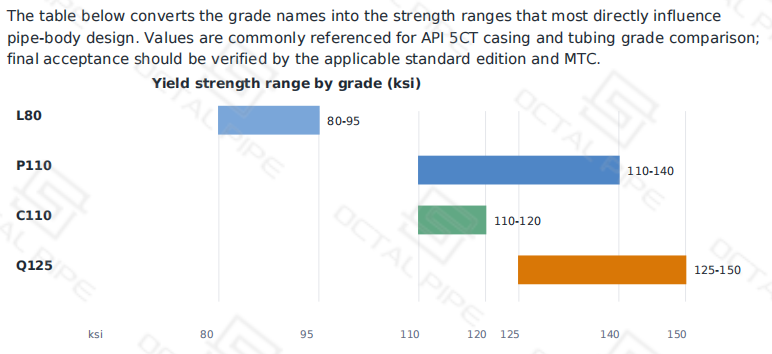
API 5CT Q125 is often compared with P110, L80 and C110 because these grades are used in different strength levels and well conditions within the OCTG casing and tubing system. Q125 provides a higher minimum yield strength than P110 and L80, but grade selection should not be based on yield strength alone. A proper comparison also needs to consider collapse design, burst pressure, axial load, connection performance, sour-service exposure, hardness control and impact toughness requirements.
| Grade | General Strength Position | Typical Use Logic | Key Technical Caution / Selection Factors |
|---|---|---|---|
| L80 | Medium-strength controlled grade | Used where moderate strength and controlled properties are required | Not the same strength level as Q125; selection should still consider well depth, burst/collapse design and service environment |
| P110 | Common high-strength OCTG grade | Used where higher strength than N80 / L80 is required | Lower minimum yield strength than Q125; connection type, string tension and inspection records should be checked before substitution |
| C110 | High-strength grade often discussed with sour-service control | Used where strength and SSC resistance may both matter | Requires strict sour-service, hardness and impact toughness review, especially where H₂S exposure is present |
| Q125 | 125 ksi minimum yield high-strength grade | Used in deep, high-load or high-pressure casing strings | Not automatically suitable for sour service or every severe well; review required yield strength, burst/collapse design, connection capacity, heat treatment, full-body NDE and inspection records |
Download:API 5CT Q125 vs P110, L80 and C110 Comparison
Q125 has a higher minimum yield strength than P110, but grade selection should not be treated as a simple strength upgrade. In sour-service conditions, high-strength steel may be more sensitive to sulfide stress cracking if hardness, stress and environment are not properly controlled. In other cases, the final design limit may come from the connection, collapse rating, impact toughness requirement or inspection acceptance rather than the pipe body alone.
Heat Treatment, Hardness and Toughness Control
API 5CT Q125 is commonly supplied in a quenched and tempered condition. Quenching helps the steel reach the required high-strength range, while tempering adjusts hardness and toughness so the pipe body does not become overly brittle. For Q125, this balance is critical because the grade is used in high-load casing and tubing applications where yield strength, impact toughness, hardness stability and full-body integrity must work together.
Heat treatment should be reviewed together with mechanical testing and heat/lot traceability. A Q125 pipe that meets strength values but shows unstable hardness, weak impact response or inconsistent heat-treatment results may still create field risk, especially in deep wells, high-pressure sections or severe running conditions.
| Control Point | Why It Matters for API 5CT Q125 |
|---|---|
| Quenching and tempering | Builds the required strength while maintaining a controlled toughness balance |
| Hardness testing | Checks whether the heat-treatment result is stable across the pipe body |
| Impact testing | Confirms toughness response under the specified test condition |
| Microstructure control | Helps reduce unstable high-strength behavior after heat treatment |
| Heat / lot traceability | Links test results to the actual delivered pipe, heat number and production lot |
| Retest and release control | Prevents nonconforming lots from being released without proper review |
This is why API 5CT Q125 should not be judged by yield strength alone. Heat-treatment consistency, hardness control, impact performance and traceability records are part of the final technical acceptance.
Inspection and Testing Points for API 5CT Q125
For API 5CT Q125 casing and tubing, inspection should focus on strength verification, heat treatment consistency, pipe body integrity and connection reliability. Public ISO 11960:2020 preview material shows specific attention to Grade Q125 in areas such as hardness testing, sampling and test specimen location, and full-body full-length NDE for high-strength grades including Q125.
| Inspection Item | What It Confirms |
|---|---|
| Tensile test | Yield strength and tensile strength meet Q125 range |
| Hardness test | Heat treatment and strength level are controlled |
| Impact test | Toughness response under specified test condition |
| Hydrostatic test | Pipe body holds specified pressure without leakage |
| Drift test | Internal clearance is suitable for running tools |
| Full-body NDE | Detects pipe body defects before use |
| Thread inspection | Confirms connection geometry and make-up reliability |
| Coupling inspection | Confirms coupling match and thread integrity |
| Dimensional inspection | Checks OD, wall thickness, straightness and length |
| MTC and traceability | Links chemical and mechanical data to heat / lot identity |
DownloadAPI :5CT Q125 Inspection and Application Risk Checklist
Several inspection points deserve closer attention for Q125:
- Tensile testing verifies the 125 ksi minimum yield requirement and upper yield limit.
- Hardness testing helps confirm that the quenched and tempered condition is stable.
- Impact testing is important because high strength without adequate toughness can be risky in severe service.
- NDE is important because high-strength pipe is less tolerant of hidden defects under high stress.
- Thread inspection is critical because connection failure can occur even when pipe-body strength is acceptable.
FAQ
1. Is API 5CT Q125 always better than P110 casing?
No. API 5CT Q125 has a higher minimum yield strength than P110, but casing grade selection is not a simple strength upgrade. Q125 should also be checked for collapse design, burst pressure, axial tension, connection capacity, sour-service exposure, hardness control and inspection acceptance.
2. Is API 5CT Q125 suitable for sour service?
API 5CT Q125 should not be treated as a sour-service grade by default. If H₂S is present, Q125 must be reviewed against NACE MR0175 / ISO 15156 and the project’s SSC requirements, including hardness, stress level, temperature, pH, chloride content and actual H₂S partial pressure.
3. Does Q125 mean high collapse casing?
Not automatically. Q125 defines a high-strength API 5CT grade with 125 ksi minimum yield strength, while collapse resistance also depends on OD, wall thickness, ovality, residual stress, heat treatment, manufacturing control and the specific collapse rating method. A Q125 pipe is not a high-collapse product unless the collapse performance is separately verified.
4. What inspection records are important for API 5CT Q125?
Important records include MTC by heat number, tensile test, hardness test, impact test, hydrostatic test, drift test, full-body NDE, dimensional inspection, thread inspection and coupling inspection. For Q125, heat/lot traceability is especially important because strength, toughness and connection reliability must be linked to the delivered pipe, not only to a catalog grade.
The resource belongs to the product
OCTG Tubing, API 5CT Tubing
Click permalink to view detail & more descripton.
Social Share