Your Responsible Supplier Partner for Oil and Gas Products.

Polished Rod
Recent Products

Rencent Articles


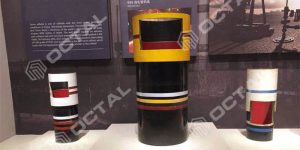

Polished Rod
Applicable Standard: API Spec 11B where specified
Common Diameters: 1-1/8″, 1-1/4″, 1-1/2″, 1-3/4″
Material: Carbon Steel, Alloy Steel, Stainless / Corrosion-Resistant Construction
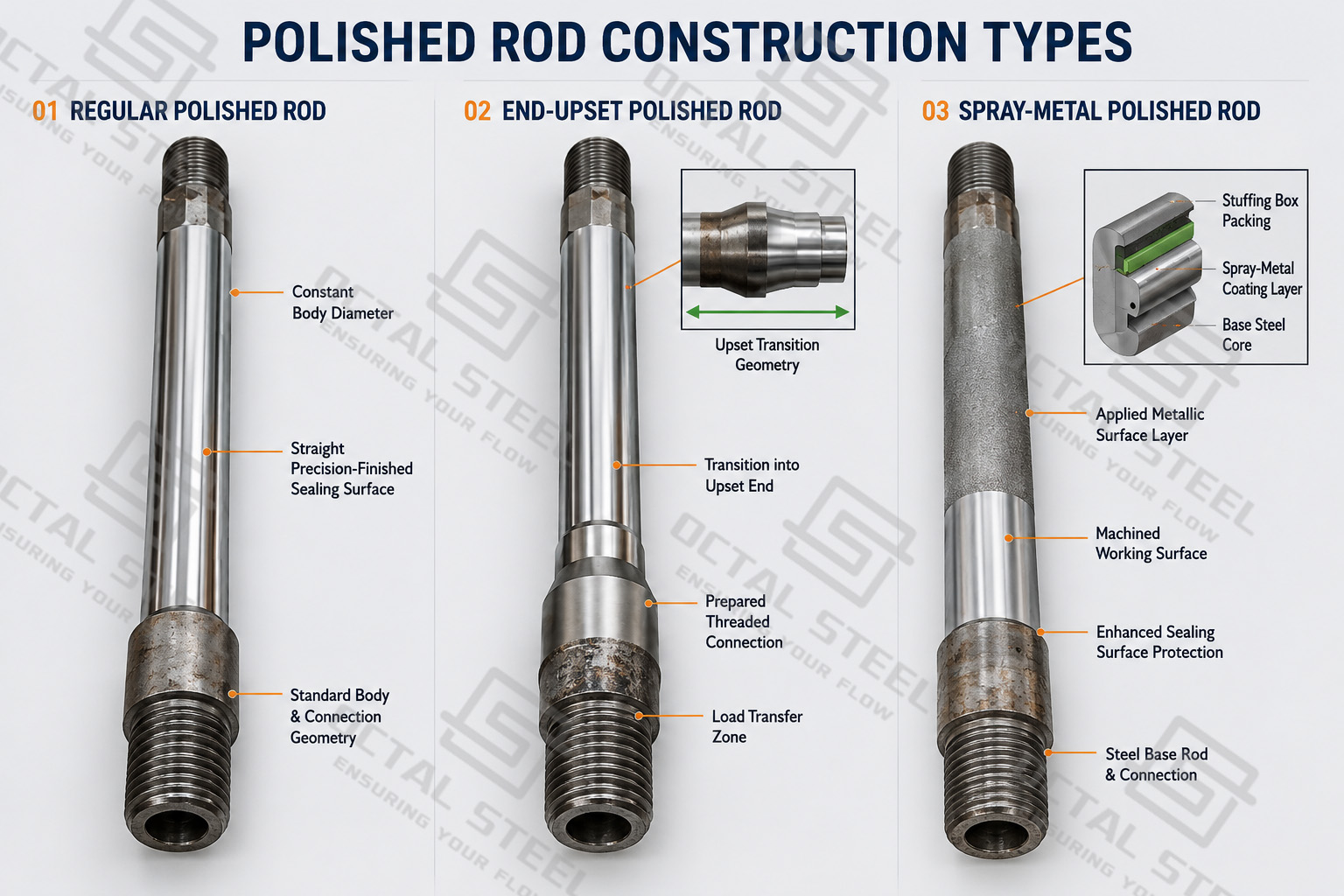
Types: Regular Polished Rod, End-Upset Polished Rod, Spray-Metal Polished Rod
Application: Surface load transfer and dynamic sealing through the stuffing box in rod-lift pumping systems
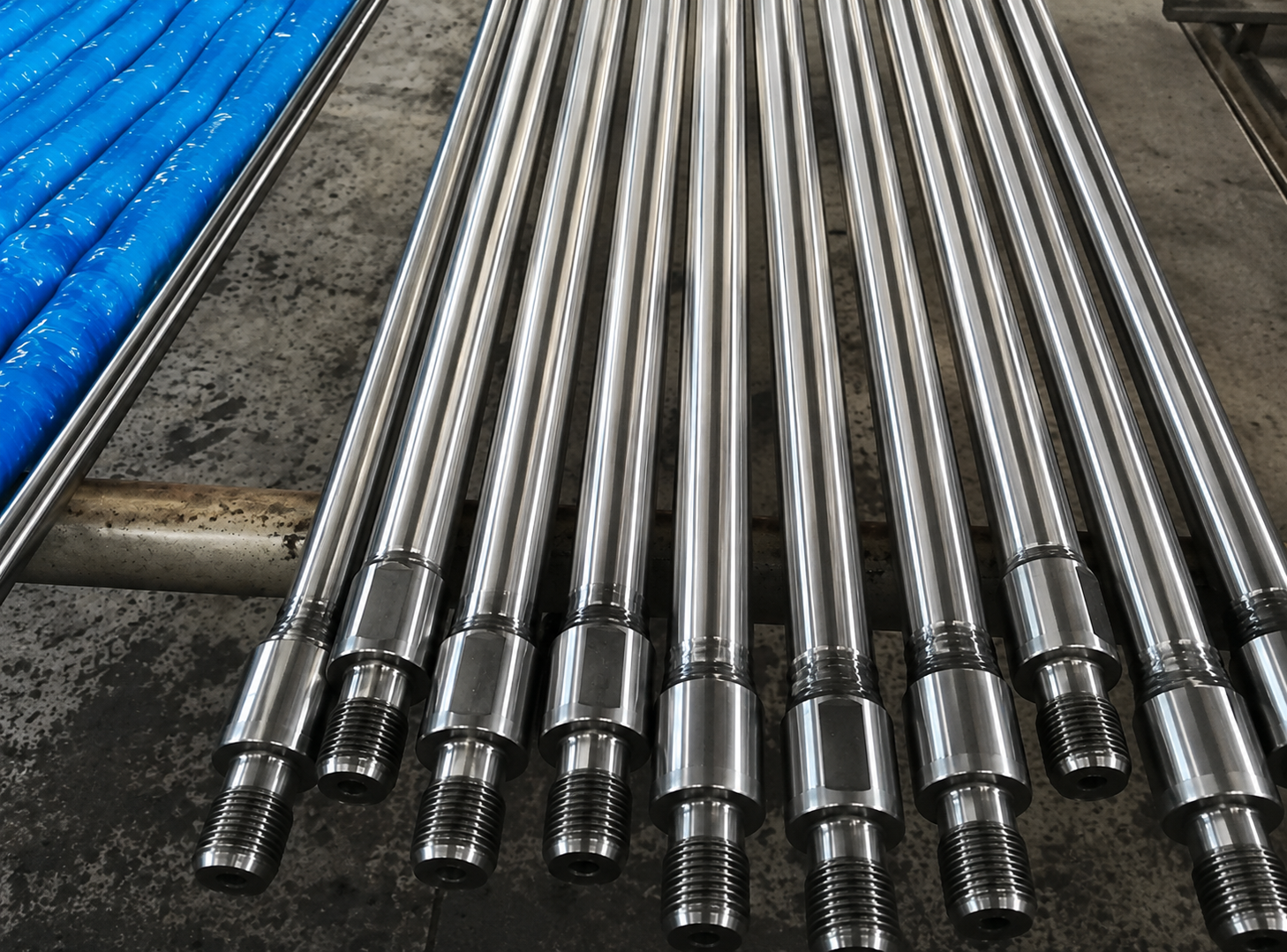
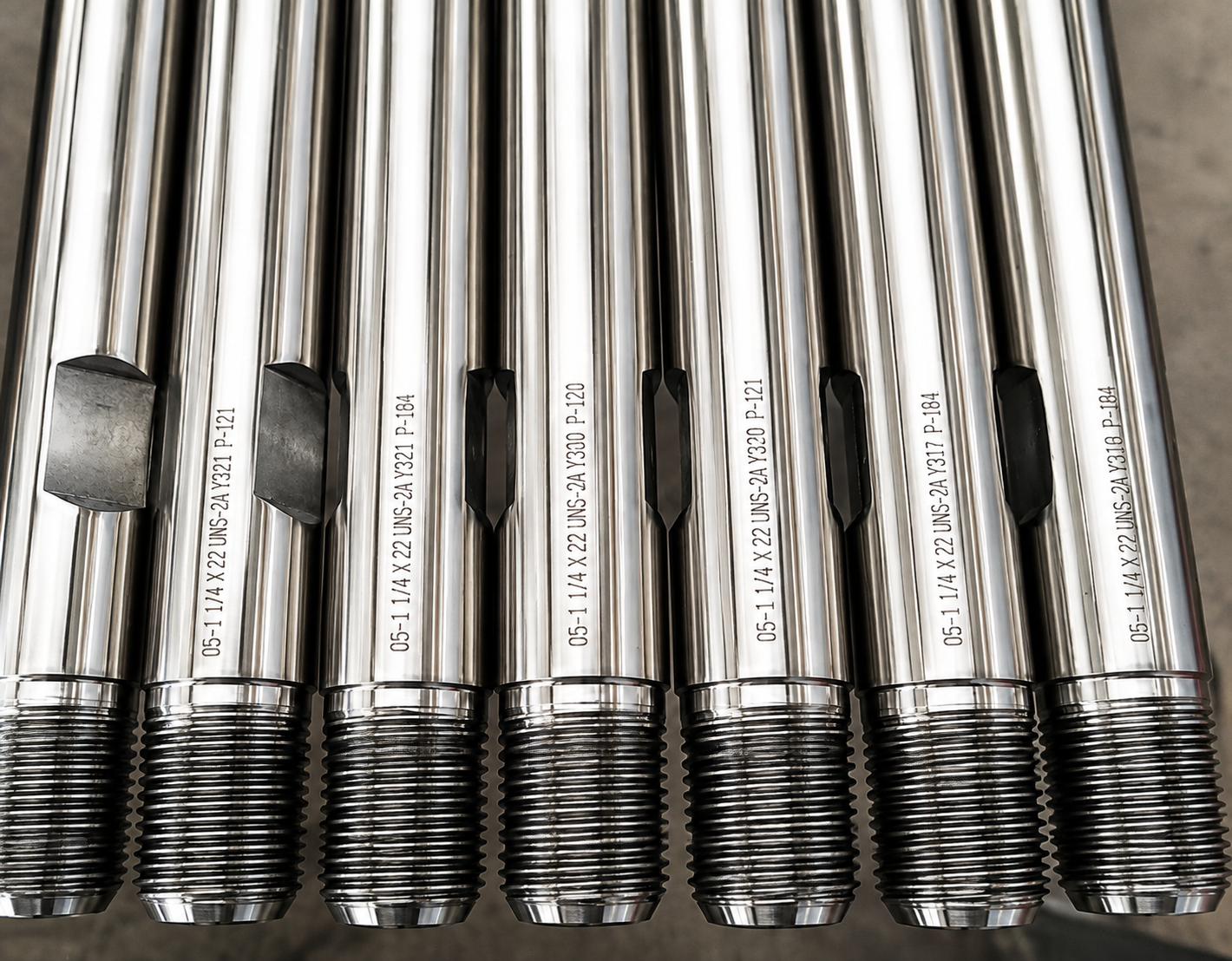
Polished rod is the surface-end load-carrying member of a sucker rod pumping system, connecting the surface pumping unit with the downhole sucker rod string. It is typically manufactured from carbon steel, alloy steel or corrosion-resistant steel, with a precision-finished working surface and optional spray-metal or other wear- and corrosion-resistant treatments for demanding well conditions. During operation, the rod reciprocates through the wellhead stuffing box while carrying cyclic tensile loads and maintaining a moving sealing interface with the packing. Polished rods are therefore used in conventional rod-lift wells as well as corrosive, abrasive, high-load or long-stroke pumping conditions where surface finish, straightness, material strength and wear resistance directly affect sealing reliability and operating life.
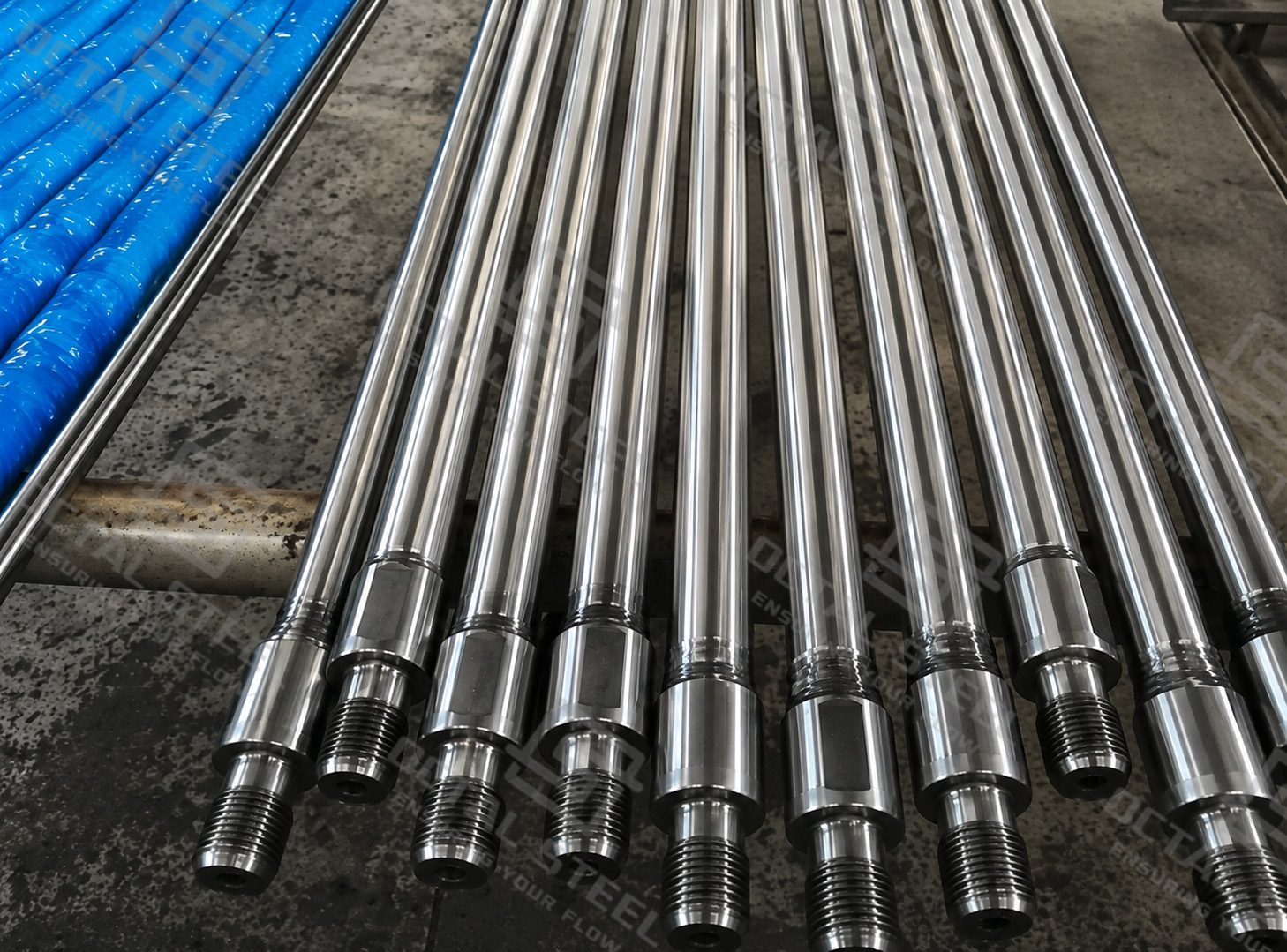
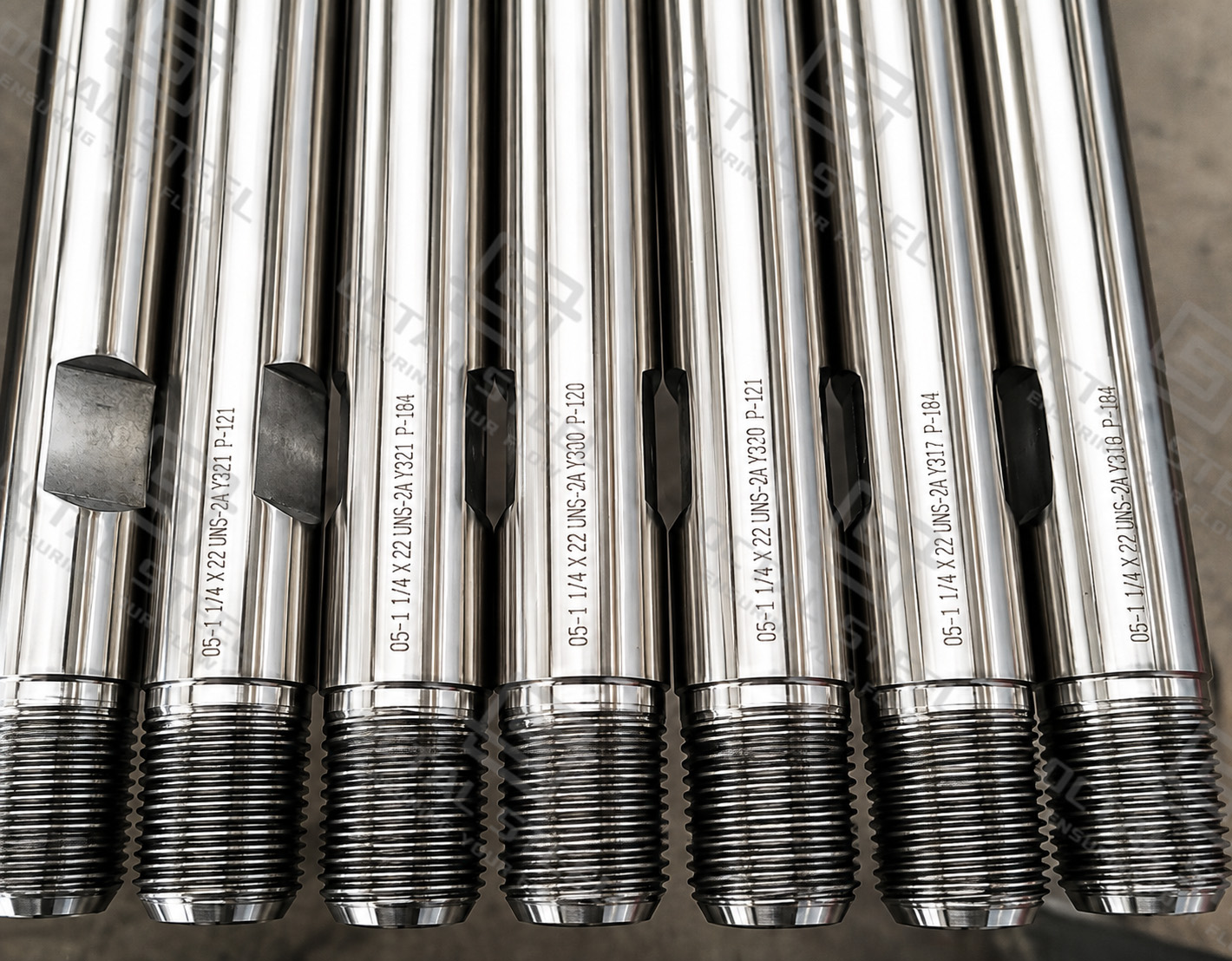
For an oilfield polished rod, selection involves more than tensile strength alone. Rod diameter and length must match the pumping-unit stroke and wellhead arrangement, while the end connection must remain compatible with the polished rod coupling and sucker rod string. Surface condition, material grade and any corrosion- or wear-resistant treatment also need to match the produced fluid, packing system and actual operating environment. OCTAL STEEL supplies polished rods as part of its sucker rod and rod-related product range, allowing polished rods, sucker rods, pony rods and compatible connections to be specified within the same project requirement. Supply can be coordinated according to required dimensions, material, connection type, surface treatment, applicable API 11B requirements and inspection documentation, helping maintain compatibility from the surface equipment to the rod string.
Polished Rod Specifications and Ordering Data
Polished rod dimensions are not universal across every manufacturer or pumping system. Current industry product ranges show several common diameters and multiple lengths, while API 11B defines the applicable rod-related product and connection requirements. For purchasing, the correct approach is to specify the complete rod configuration rather than selecting only by outside diameter.
| Specification Item | Typical Selection Basis |
|---|---|
| Product | Polished Rod |
| Application | Surface load transfer in sucker rod / rod-lift pumping systems |
| Applicable Standard | API Spec 11B where specified |
| Common Diameter Range | 1-1/8″, 1-1/4″, 1-1/2″ and 1-3/4″ represented in industry configurations |
| Length | Selected according to pumping-unit stroke and wellhead geometry |
| Construction | Regular, end-upset, spray-metal or specified corrosion/wear-resistant construction |
| Material | Carbon steel, alloy steel or corrosion-resistant material according to service condition |
| Working Surface | Precision-finished surface; optional wear- or corrosion-resistant treatment |
| End Connection | Matched to polished rod coupling and sucker rod string |
| Selection Inputs | Load, stroke, well fluid, corrosion, abrasion, stuffing-box and packing condition |
| Documentation | Material identification, dimensions, marking and inspection records as specified |
Polished rod dimensions are defined by the surface pumping system and rod-string configuration rather than by one universal size range. Typical oilfield diameters include 1-1/8″, 1-1/4″, 1-1/2″ and 1-3/4″, with length selected to match the pumping-unit stroke, wellhead height and stuffing-box position. Material, working-surface treatment and end connection are then specified according to load, corrosion, abrasion and mating-component requirements. OCTAL STEEL confirms the final configuration against the approved project datasheet before supply.
Download:OCTAL_STEEL_Polished_Rod_Engineering_Guide.pdf
How a Polished Rod Works in a Sucker Rod Pumping System
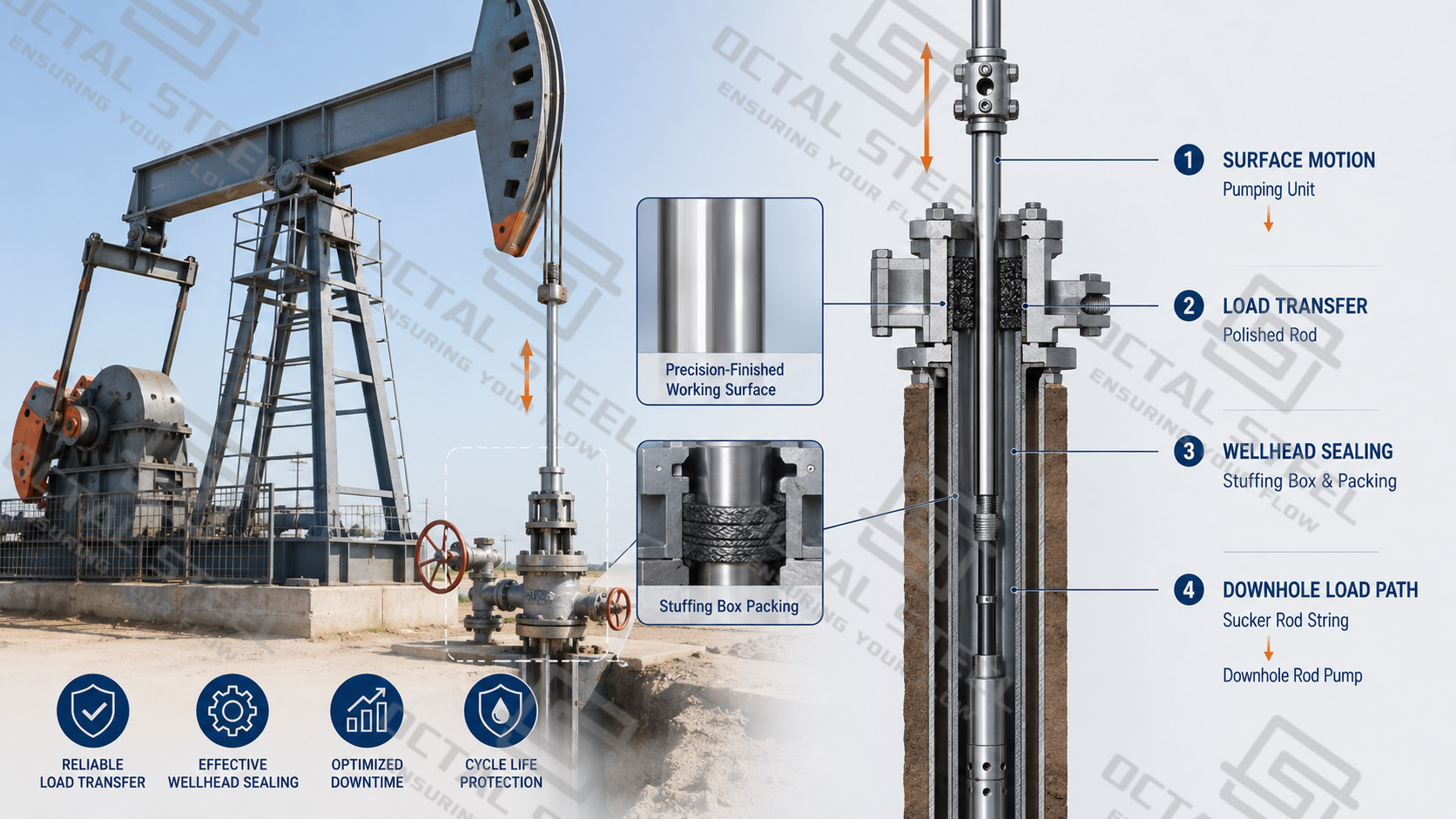
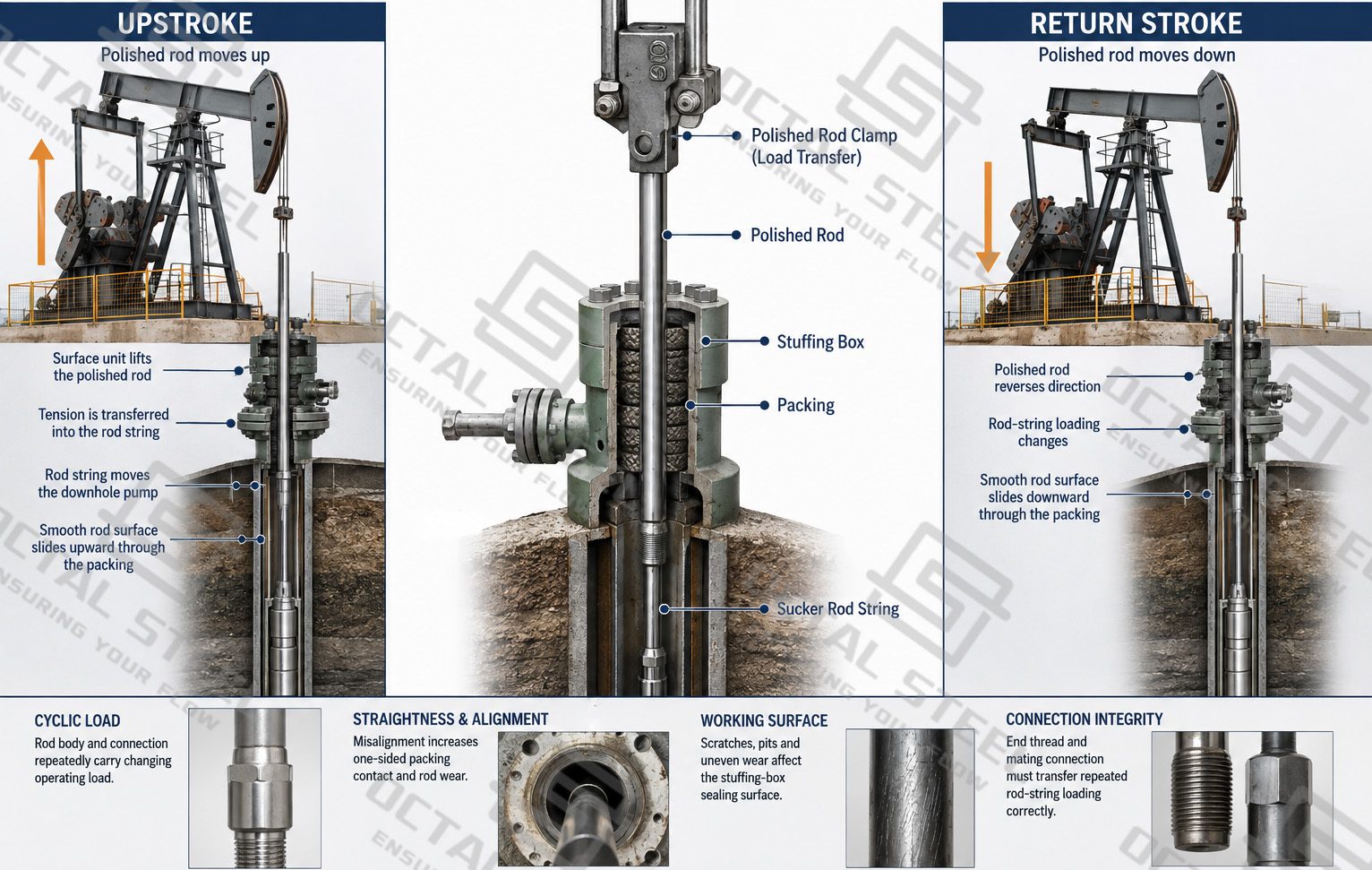
The polished rod is the surface load-transfer member between the pumping unit and the downhole sucker rod string. Its upper end is secured by the polished rod clamp and carrier-bar assembly, while the lower end connects to the sucker rod string through the specified coupling or connection. As the pumping unit completes each stroke, the polished rod moves vertically and transfers the reciprocating motion, tensile load and dynamic forces from the surface unit into the rod string and ultimately to the downhole pump.
During the upstroke, the polished rod carries a significant portion of the suspended rod-string and pumping load while moving upward through the wellhead stuffing box. During the return stroke, the load condition changes as the rod string and downhole pump move downward. This repeated loading produces continuous cyclic stress at the rod body and connections, so rod strength, straightness, thread integrity and correct alignment are important for preventing fatigue, bending and abnormal connection loading.
At the wellhead, the polished section repeatedly slides through the stuffing-box packing, which provides the dynamic seal around the moving rod. The polished surface must therefore maintain accurate diameter, low surface damage and good straightness over the sealing zone. Corrosion pits, longitudinal scoring, coating damage or misalignment can increase packing wear, friction and leakage even when the rod itself still has adequate tensile strength. In field operation, polished-rod performance is therefore controlled by the combined condition of the rod surface, stuffing-box alignment, packing adjustment, end connection and cyclic operating load, rather than by rod strength alone.
Operating path:
Pumping Unit → Polished Rod Clamp → Polished Rod → Stuffing Box → Sucker Rod String → Downhole Pump.
Polished Rod Types
Regular Polished Rod
A regular polished rod has a constant body diameter and prepared end connections for installation between the surface pumping equipment and sucker rod string. It is the conventional choice for rod-lift wells where the required load, corrosion level and stuffing-box wear can be handled by the selected steel grade and finished rod surface.
Selection focus: body diameter, overall length, pin connection, polished working surface and compatibility with the stuffing box, coupling and sucker rod string.
End-Upset Polished Rod
An end-upset polished rod has a specially formed or enlarged end section to accommodate the required connection geometry while retaining the specified working diameter through the polished sealing section. It is used where the rod-string design requires a different end configuration from a regular straight-body polished rod.
The upset geometry, thread size and mating coupling must be selected as one connection system. Incorrect matching can affect make-up, load transfer and fatigue performance at the end connection.
Spray-Metal Polished Rod
A spray-metal polished rod uses a metallic protective layer applied over a steel base rod to improve the working surface under combined corrosion and abrasive wear. It is typically considered for wells where produced fluids, scale or solids can damage a conventional polished surface and accelerate stuffing-box packing wear.
Selection focus: base steel, coating material, coating integrity, finished surface condition and compatibility with the stuffing-box packing. The coating improves surface protection, but it does not replace correct rod alignment or packing adjustment.
Polished Rod Material and Surface Selection
Polished rod material selection must satisfy two functions at the same time: carrying cyclic rod-string loads and maintaining a durable sealing surface through the stuffing box. The correct construction therefore depends on mechanical load, produced-fluid chemistry, abrasive solids, surface wear and connection requirements rather than material strength alone.
| Material / Construction | Typical Engineering Use | Main Selection Controls |
|---|---|---|
| Carbon Steel Polished Rod | Conventional rod-lift wells with controlled corrosion and moderate mechanical loading | Tensile load, straightness, surface finish, packing wear and well-fluid condition |
| Alloy Steel Polished Rod | Higher-load or more demanding cyclic service requiring improved strength and fatigue performance | Strength level, heat treatment, fatigue duty, connection loading and corrosion exposure |
| Spray-Metal Polished Rod | Wells where the sealing surface is exposed to combined corrosion and abrasive wear | Coating integrity, hardness, bond quality, finished surface condition and packing compatibility |
| Stainless Steel Polished Rod | Corrosive service where the base rod requires higher resistance to produced-fluid attack | Fluid chemistry, corrosion mechanism, mechanical strength and thread compatibility |
| Special Corrosion-Resistant Construction | Aggressive fluids or repeated surface pitting, sealing damage or corrosion-related failures | Fluid composition, corrosion severity, surface protection system and approved material specification |
Main Selection Focus
The most important point is the working surface through the stuffing box. Even when the rod has sufficient tensile strength, corrosion pits, scoring, coating damage or uneven wear can increase packing friction and create a leakage path. For this reason, material grade, surface treatment and stuffing-box condition must be evaluated together.
For higher mechanical loading, the rod must also maintain adequate strength, fatigue resistance and connection integrity over repeated pumping cycles. In corrosive or abrasive wells, surface protection becomes equally important because damage at the sealing zone can limit service life before the rod body reaches its mechanical limit.
OCTAL STEEL selects polished rod material, surface construction and end connection according to the actual well condition, pumping load and approved project datasheet. Final selection should confirm the rod body material, working-surface treatment, corrosion environment, stuffing-box interface and mating sucker rod connection as one complete system.
Maintaining a Smooth Polished Rod Surface
The working surface of a polished rod must remain smooth and straight because it moves continuously through the stuffing-box packing during every pumping stroke. A smooth surface allows the packing to seal evenly around the rod while keeping friction and wear under control.
The surface can become rough or damaged because of corrosive produced fluids, sand or scale, rod misalignment, excessive packing pressure, poor lubrication, or long-term sliding wear. These conditions may create scratches, corrosion pits, coating damage or uneven wear in the sealing area.
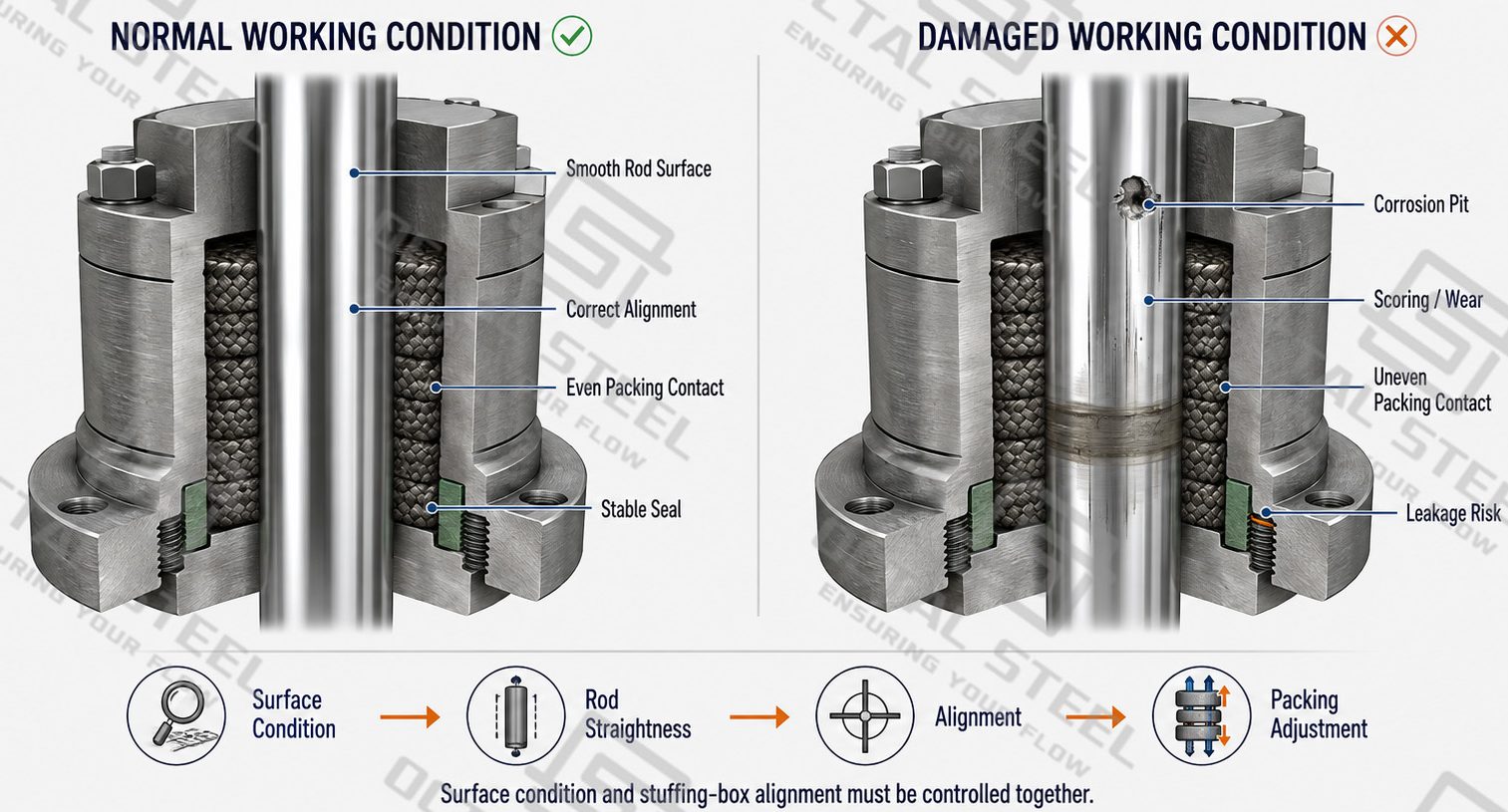
Maintaining a smooth working surface helps:
- reduce friction between the polished rod and packing;
- limit packing wear and overheating;
- maintain a stable wellhead seal;
- reduce leakage around the stuffing box;
- extend the service life of both the rod and packing.
Surface condition is maintained through proper rod material and surface treatment, accurate straightness and alignment, correct packing adjustment, suitable lubrication where required, and regular inspection of the sealing area. For corrosive or abrasive wells, spray-metal or other corrosion-resistant surface constructions can provide additional protection.
Main inspection points: surface scratches, corrosion pits, coating damage, uneven wear, rod straightness, stuffing-box alignment and packing condition.
Polished Rod Dimensions and Connection Compatibility
A purchaser selecting polished rod sizes should confirm the complete surface and rod-string geometry before releasing the order.
The rod body diameter affects the stuffing box, packing and clamp interface. The total length must suit the stroke and wellhead configuration. At the lower end, thread and connection geometry must match the coupling or sucker rod string API’s current Spec 11B materials continue to treat polished-rod threads as a defined part of the rod-related product system; the current Addendum 1 includes requirements for polished rod pin thread configuration.
For an RFQ, the most useful information is:
- polished rod diameter and required length;
- applicable API 11B requirement;
- end and thread configuration;
- mating sucker rod and polished rod coupling;
- pumping-unit stroke and operating load;
- stuffing-box and packing configuration;
- well-fluid corrosion condition;
- abrasive solids or scale condition;
- required base material and surface treatment;
- marking, inspection and material-document requirements.
This information is more reliable than ordering a polished rod only by nominal diameter.
Selection by Operating Condition
Conventional Rod-Pumped Well
Where the produced fluid is not strongly corrosive and the stuffing-box interface is correctly aligned, a conventional carbon or alloy-steel polished rod may provide the required combination of load capacity and surface performance. Selection remains dependent on the actual polished-rod load, stroke, connection and packing arrangement.
Corrosive Well Fluid
When produced fluids repeatedly attack the polished surface, corrosion pits can turn directly into sealing defects. A corrosion resistant polished rod, stainless construction or suitable metallic surface treatment may be required, depending on the actual fluid chemistry and mechanical load. Commercial suppliers specifically separate these products from standard polished rods for this reason.
Abrasive or Scale-Bearing Production
Fine solids and scale carried into the stuffing-box area can increase sliding wear. In this condition, the selection needs to consider both surface hardness and corrosion resistance, together with packing material and wellhead alignment. A hard surface does not compensate for severe misalignment, and a corrosion-resistant material does not automatically provide adequate abrasion resistance.
High-Load or Long-Stroke Operation
Higher rod-string load increases the mechanical demand on the polished rod and its connections. Long-stroke systems additionally increase the sliding distance through the stuffing box during each operating cycle. Material strength, fatigue resistance, rod straightness, connection integrity and surface wear therefore need to be reviewed together instead of treating tensile strength as the only selection criterion.
Manufacturing and Quality Control
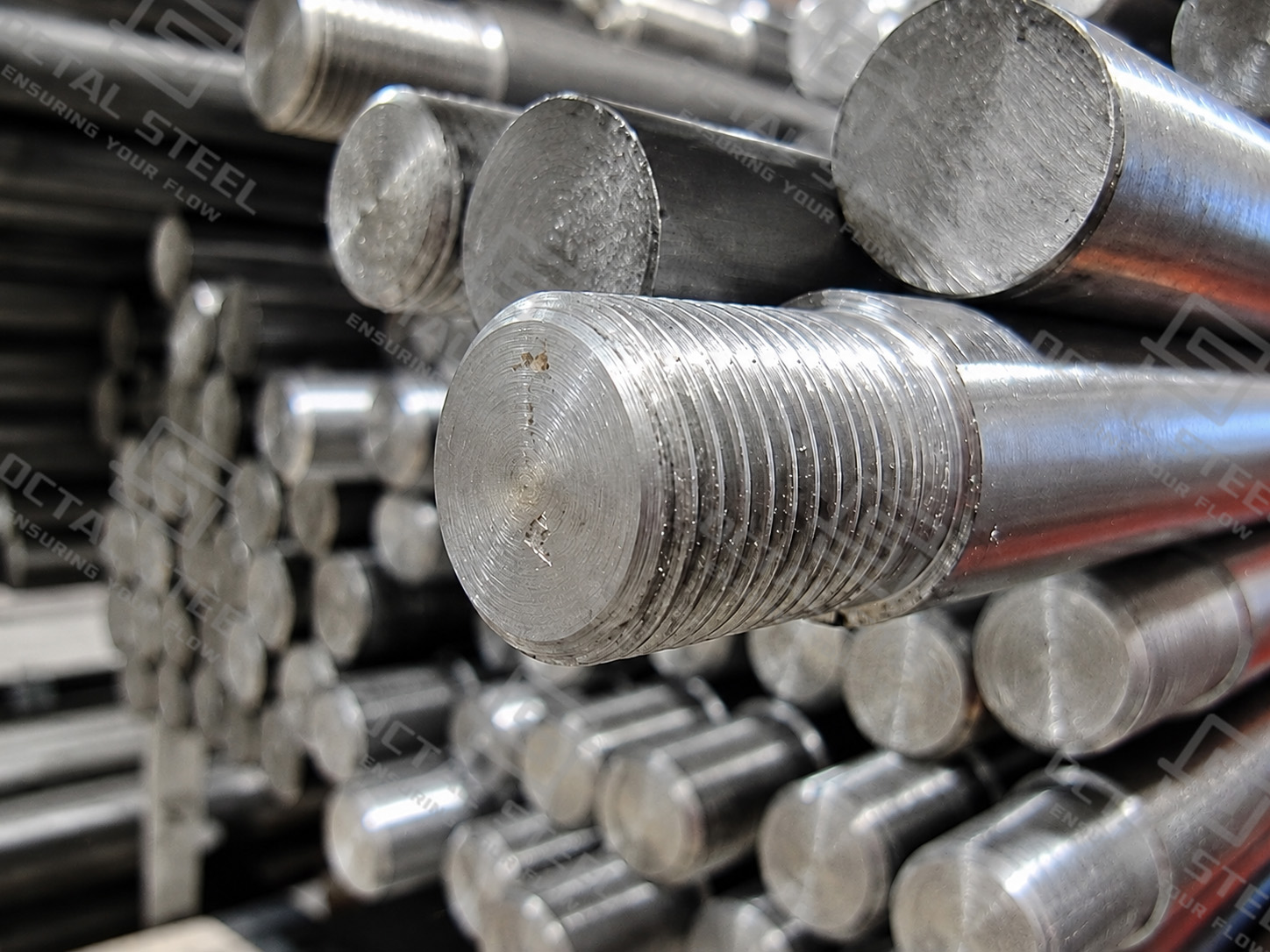
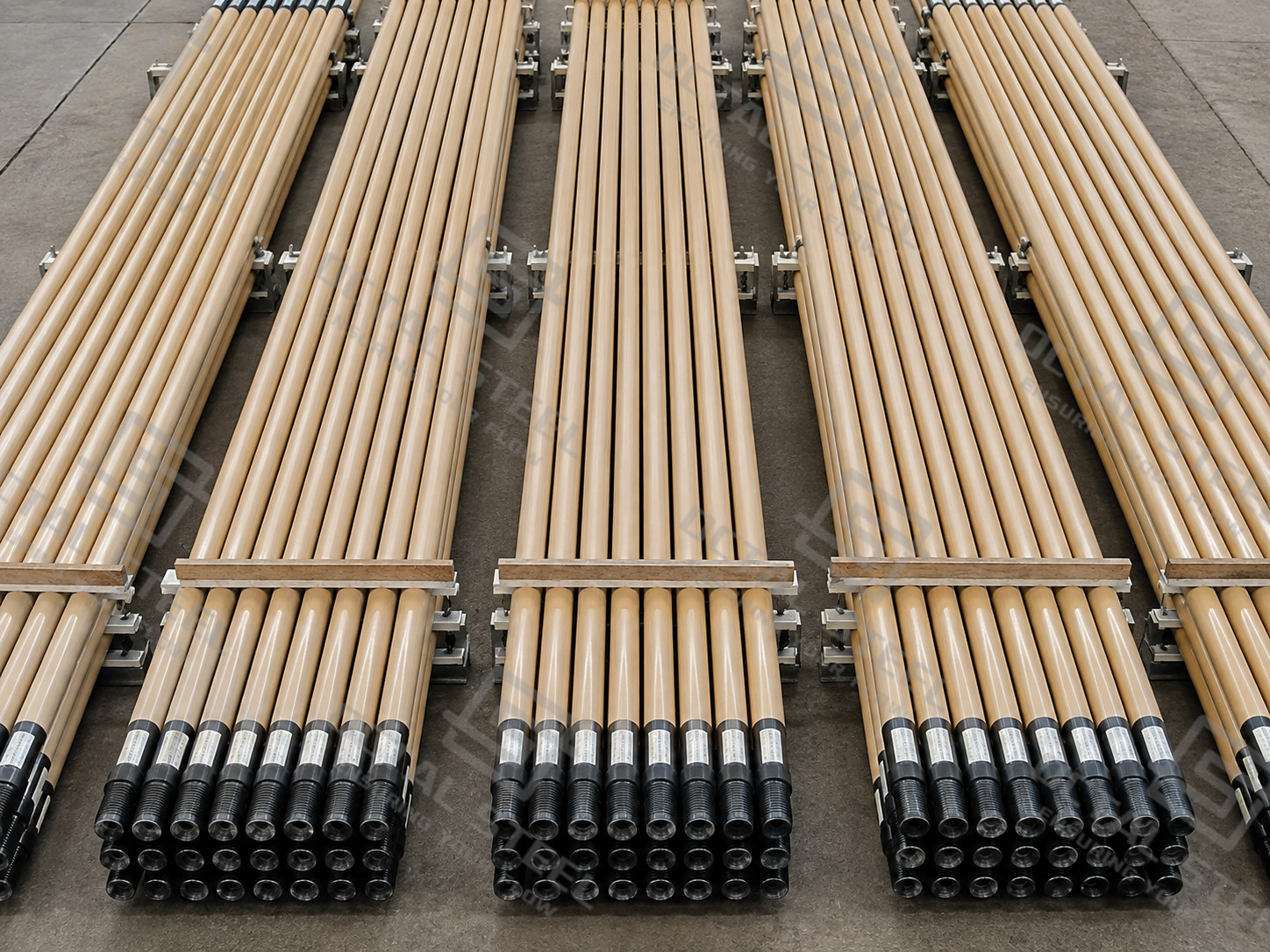
A polished rod has a simpler visible geometry than many downhole components, but its acceptance controls are demanding because the same component carries load, forms part of the dynamic seal and connects directly into the sucker rod system.
Manufacturing and release controls normally focus on the steel or alloy route, heat treatment where applicable, machining of the rod body and ends, thread production, surface finishing and final dimensional inspection. For coated or spray metal polished rod designs, coating preparation and finished surface condition become additional critical controls. API 11B remains the principal product-standard reference where specified.
For procurement, the useful evidence chain is:
material heat / lot → production identification → heat treatment or surface treatment → thread inspection → dimensional and surface inspection → rod marking → packing identification → shipment documents
Polished Rod Supply from Octal Steel
OCTAL STEEL supplies polished rods together with sucker rods, pony rods, sinker bars, couplings and related rod-string components, allowing diameter, length, material, end connection and mating parts to be coordinated within the same project specification. Supply can be arranged according to API 11B requirements where specified, with regular, spray-metal or other corrosion- and wear-resistant constructions selected according to the actual load, well-fluid condition and stuffing-box service.
Before quotation and production, OCTAL STEEL can review rod size, thread, coupling compatibility, material, surface treatment and service condition to reduce installation mismatch and connection problems. Required documentation can include material certificates, mechanical-test records, dimensional and thread inspection records, marking and lot traceability, giving the purchaser a complete supply route from technical confirmation and component matching through inspection, documentation and shipment.
FAQ
Q: What is the difference between a polished rod and a sucker rod?
A: A sucker rod forms most of the downhole rod string and transfers reciprocating motion to the pump. The polished rod is the surface-end rod that carries the string load while moving through the stuffing-box packing, so its straightness and sealing surface are particularly important.
Q: When is a spray metal polished rod used?
A: A spray metal polished rod is used where the sealing surface needs increased resistance to combined abrasion and corrosion. The base material, coating specification, working load and stuffing-box condition still need to be evaluated together.
Q: What information is needed to confirm polished rod size?
A: Confirm the rod OD, overall length, stroke, stuffing-box and clamp interface, end thread, mating coupling or sucker rod, and applicable standard. Diameter alone is not sufficient to establish interchangeability.
Q: Is every polished rod made to API 11B?
A: No. API 11B is an important industry specification for sucker rods and rod-related products, including polished rods, but compliance must be specified and supported by the applicable product documentation. API currently lists polished rods as a distinct API 11B product category.