Your Responsible Supplier Partner for Oil and Gas Products.

Steel Silo Cost: What Determines the Total Project Price?
Steel Silo Cost: What Determines the Total Project Price?
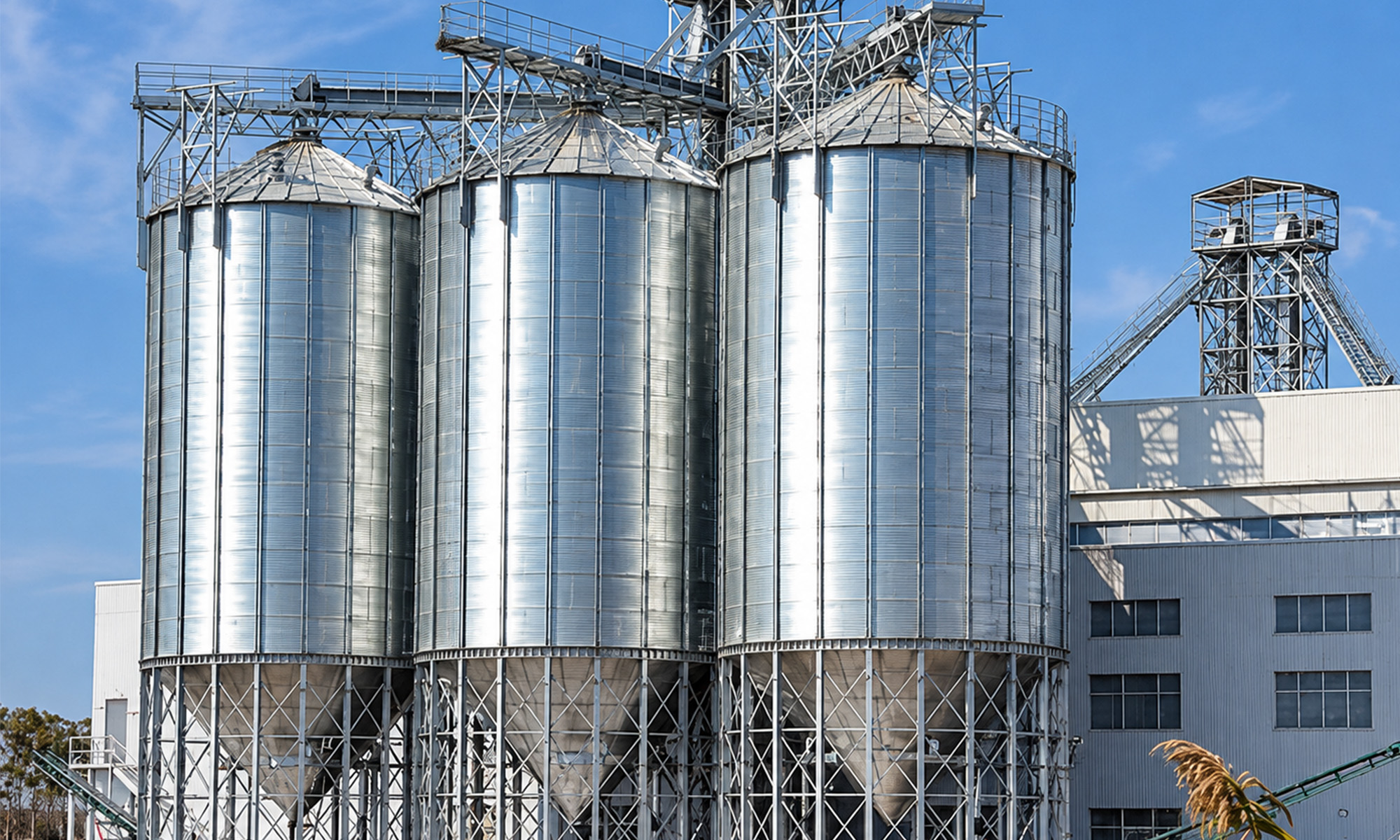
Steel silo cost is determined by storage capacity, material properties, structural configuration, design loads and the required material-handling systems. These factors influence silo dimensions, shell and hopper design, steel grade and thickness, corrosion protection, and the specifications of filling, discharge, dust collection and monitoring equipment. Fabrication requirements and auxiliary equipment costs vary according to the operating conditions, engineering standards and performance requirements of the project.
The total steel silo project cost is also determined by the defined supply scope. In addition to the silo structure, the project can include conveying equipment, bucket elevators, dust collectors, electrical controls, foundation works, transportation, installation and commissioning. Each component has specific technical requirements and interface conditions that must be coordinated with the silo design. The overall project cost therefore reflects the combined requirements for structural fabrication, auxiliary systems, engineering and delivery services.
What Is Included in the Total Steel Silo Project Cost?
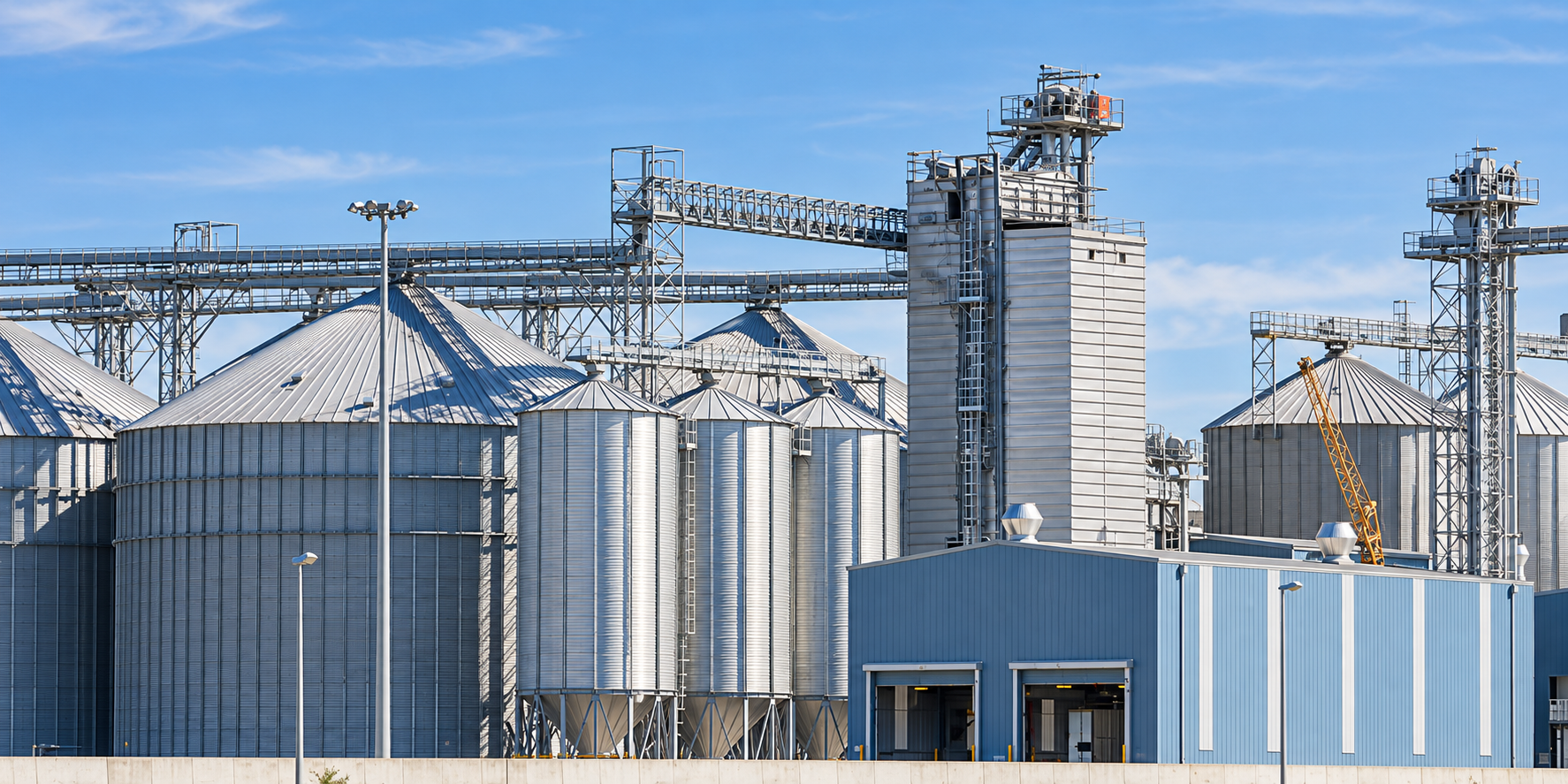
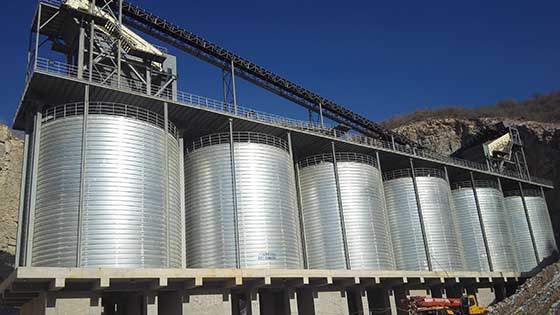
The total cost of an industrial steel silo system is determined by the relationship between the storage structure, material-handling equipment and project execution requirements. The silo shell, roof and bottom configuration establish the basic structural scope, while filling capacity, discharge performance and material characteristics determine the auxiliary equipment required for operation. These systems must be designed to work together. Changes to the silo dimensions, outlet arrangement or conveying capacity can affect equipment selection, structural interfaces, electrical controls and installation requirements.
The main cost areas span structural fabrication, material handling, dust collection, instrumentation, civil works, transportation and engineering documentation. Their contribution to the total project cost depends on the required operating capacity, stored material properties, site conditions and the scope of work assigned to the equipment manufacturer, installation contractor and project owner.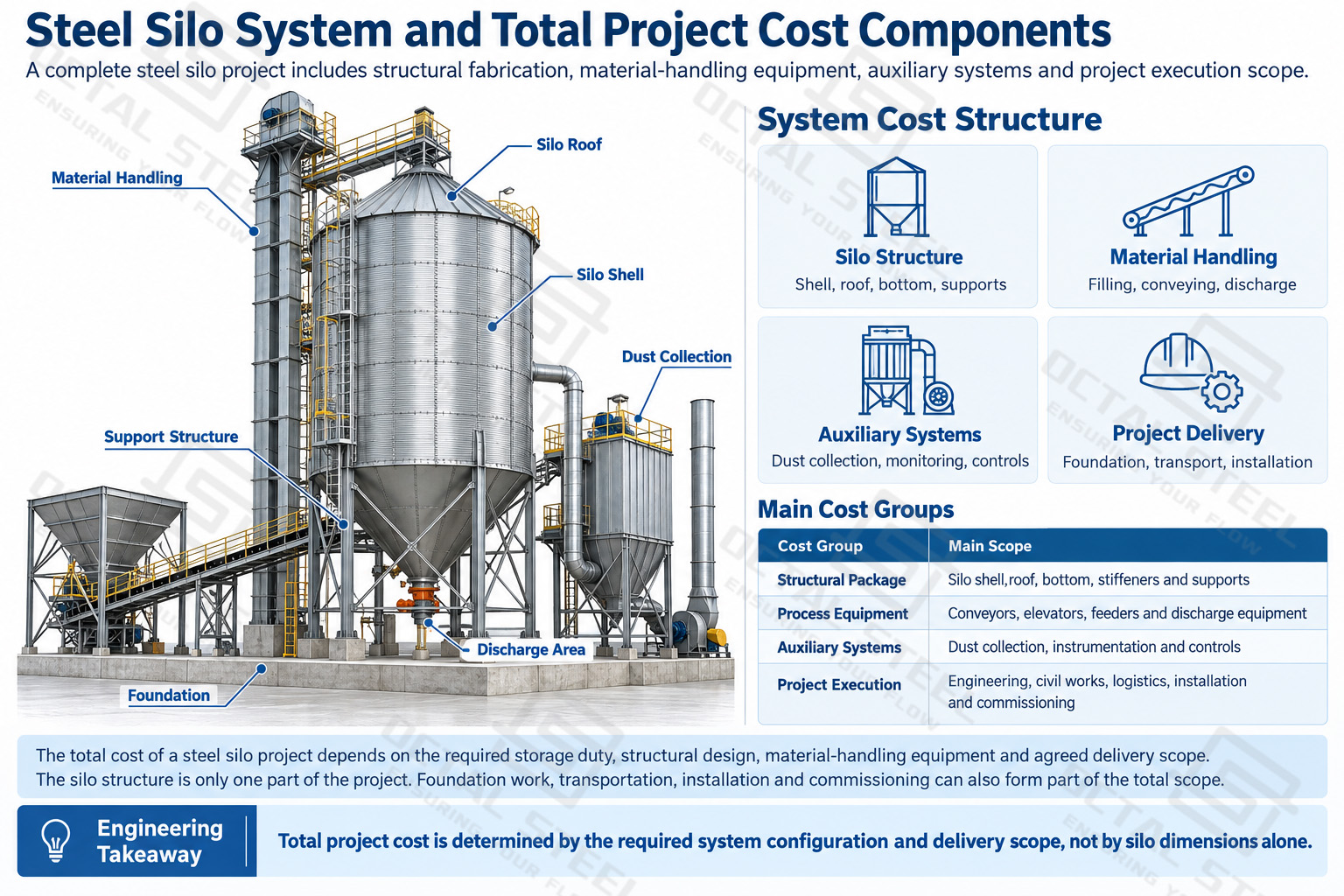
| Cost Component | Included Scope | Main Cost Drivers |
|---|---|---|
| Silo Structure | Shell, roof, bottom or hopper, stiffeners, supports, access platforms and structural connections | Capacity, dimensions, material grade, plate thickness, structural loads and construction method |
| Filling and Conveying Equipment | Belt conveyors, bucket elevators, screw conveyors, pneumatic conveying lines and inlet distributors | Throughput, conveying distance, elevation, material characteristics and equipment duty |
| Dust Collection and Venting | Roof filters, dust collectors, ductwork, vents and pressure-relief devices where required | Displaced airflow, dust characteristics, environmental limits and safety requirements |
| Discharge and Metering | Hoppers, outlets, gates, feeders, air slides, silo pumps and flow-assistance devices | Flowability, outlet arrangement, required discharge rate and feeding accuracy |
| Instrumentation and Controls | Level sensors, temperature monitoring, alarms, motor controls, PLC and interlocks | Monitoring requirements, automation level and integration with the plant control system |
| Foundation and Civil Works | Foundation design, concrete works, reinforcement, anchor bolts and site preparation | Foundation loads, soil conditions, site layout and local construction requirements |
| Transportation and Installation | Export packing, freight, unloading, lifting, assembly, equipment connection and commissioning | Shipment dimensions, destination, access conditions, installation method and labor requirements |
| Engineering and Documentation | Design calculations, fabrication drawings, interface drawings, inspection records and operating documentation | Project-specific design requirements, documentation scope and approval procedures |
Download:Steel Silo Project Cost Planning & Specification Checklist
The resulting project cost reflects the performance requirements of the complete system, not simply the specifications of individual components. Coordinating structural design, process equipment and control functions around the required operating conditions helps establish an appropriate configuration while avoiding oversized equipment and unnecessary modifications.
How Do Capacity and Dimensions Affect Steel Silo Cost?
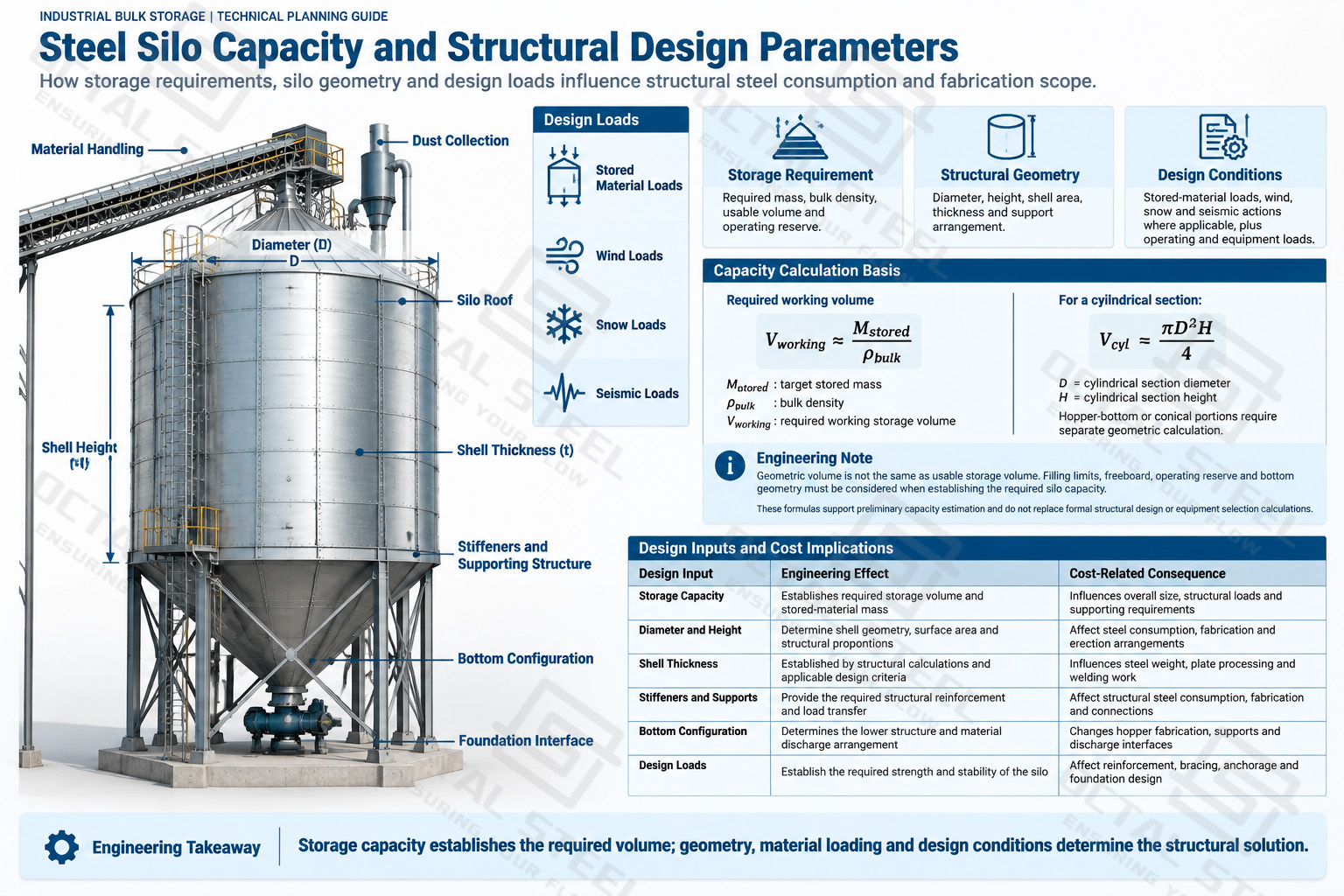
Storage capacity and structural dimensions are closely related, but they affect steel silo cost through different engineering requirements. Capacity establishes the volume and mass of material the silo must accommodate, while diameter, height, shell thickness and structural configuration determine how the storage space is formed and how the resulting loads are supported. The same nominal capacity can therefore require different amounts of steel, fabrication work and foundation support, depending on the selected geometry and operating conditions.
Storage Capacity and Usable Volume
Storage capacity directly affects steel silo cost by determining the required storage volume and the load imposed on the structure. A larger silo generally requires more steel for the shell, roof and bottom, while the increased material load can also affect shell thickness, structural reinforcement and foundation requirements.
The relationship between capacity and cost is not strictly proportional. The required steel quantity depends on the silo’s diameter, height, bottom configuration and the bulk density of the stored material. For capacity specified in metric tons, bulk density determines the volume required to store the material. For capacity specified in cubic meters, bulk density determines the weight of the stored material and its effect on structural design.
Diameter, Height and Structural Design
Diameter and height determine the silo’s overall geometry and directly influence shell area, steel consumption and structural stability. At a constant height, increasing the diameter increases the shell circumference and surface area. At a given diameter, increasing the height extends the shell and increases the material required for its construction. For silos with the same capacity, however, a change in diameter also changes the required height, so the final steel consumption depends on the overall dimensions rather than either measurement alone.
Shell thickness and reinforcement are determined by structural calculations rather than dimensions alone. Stored-material pressure, wind loads, seismic actions where applicable, roof loads and connected equipment loads influence the required plate thickness, stiffener arrangement, supporting members and anchorage. Thicker plates increase steel weight and can add to forming, handling and welding work, while additional stiffeners and bracing increase the quantity of structural steel and the associated fabrication requirements.
The bottom configuration also affects the overall cost. A flat-bottom silo and a hopper-bottom silo have different structural arrangements, fabrication requirements and discharge interfaces. Hopper-bottom designs require inclined plates, supporting structures and appropriately sized outlets, while flat-bottom designs require a suitable floor and unloading arrangement. The selected configuration must match the material’s flow characteristics and the required discharge performance. Structural loads and support arrangements also influence foundation design, connecting the silo’s structural specifications to the cost of civil works.
| Design Factor | Effect on Steel Silo Cost |
|---|---|
| Diameter and Height | Determine shell area, steel consumption, structural proportions and erection requirements. |
| Shell Thickness | Affects steel weight, plate processing, handling and welding work. |
| Stiffeners and Supporting Structure | Influence reinforcement requirements, structural steel consumption and fabrication work. |
| Bottom Configuration | Changes bottom fabrication, support arrangements, discharge equipment interfaces and foundation requirements. |
| Design Loads | Determine the required shell strength, reinforcement, bracing, anchorage and foundation design. |
How Does the Stored Material Affect Steel Silo Cost?
The properties of the stored material directly affect steel silo design, equipment selection and manufacturing requirements. Bulk density determines the stored-material load and required storage volume, while particle size, moisture content, flowability and abrasiveness influence hopper geometry, discharge arrangements and material-contact components. These properties also determine the requirements for dust collection, surface protection and operational monitoring. Consequently, silos with the same nominal capacity can require different structural specifications and auxiliary equipment depending on the material being handled.
Grain Silo Cost
Grain silo cost depends on storage capacity, grain bulk density, storage duration and the required intake and outloading rates. Flat-bottom silos are suited to bulk storage with infrequent complete discharge, while hopper-bottom designs support gravity-assisted emptying and more frequent turnover. This choice affects the bottom structure, supporting steelwork, foundation loads and discharge equipment.
Grain preservation requirements determine the auxiliary systems. Aeration fans and ducts regulate airflow through the stored grain, while temperature cables and monitoring systems track conditions within the grain mass. Grain cleaning and drying equipment adds to the system scope when these processes are part of the facility. Intake conveyors, bucket elevators and outloading equipment must also be sized for the required throughput in tonnes per hour, independently of the silo’s storage volume.
Cement Silo Cost
Cement silo systems handle fine powder that requires enclosed material transfer, controlled venting and reliable discharge.During pneumatic filling, displaced air carries airborne cement particles toward the roof vent and dust collector. Filter airflow capacity, cleaning arrangements, filling connections and high-level alarms must be matched to the filling rate and operating requirements. An undersized venting system can restrict filling, while inadequate dust collection can lead to cement escaping through vents or connection points.
Discharge performance depends on powder flow characteristics, moisture ingress, hopper geometry and outlet dimensions. Screw conveyors, air slides, aeration pads and pneumatic conveying systems serve different discharge arrangements and downstream processes. The selected feeder and flow-assistance equipment must achieve the required discharge rate while limiting material buildup, bridging and interruptions to the cement handling process.
Coal Silo Cost
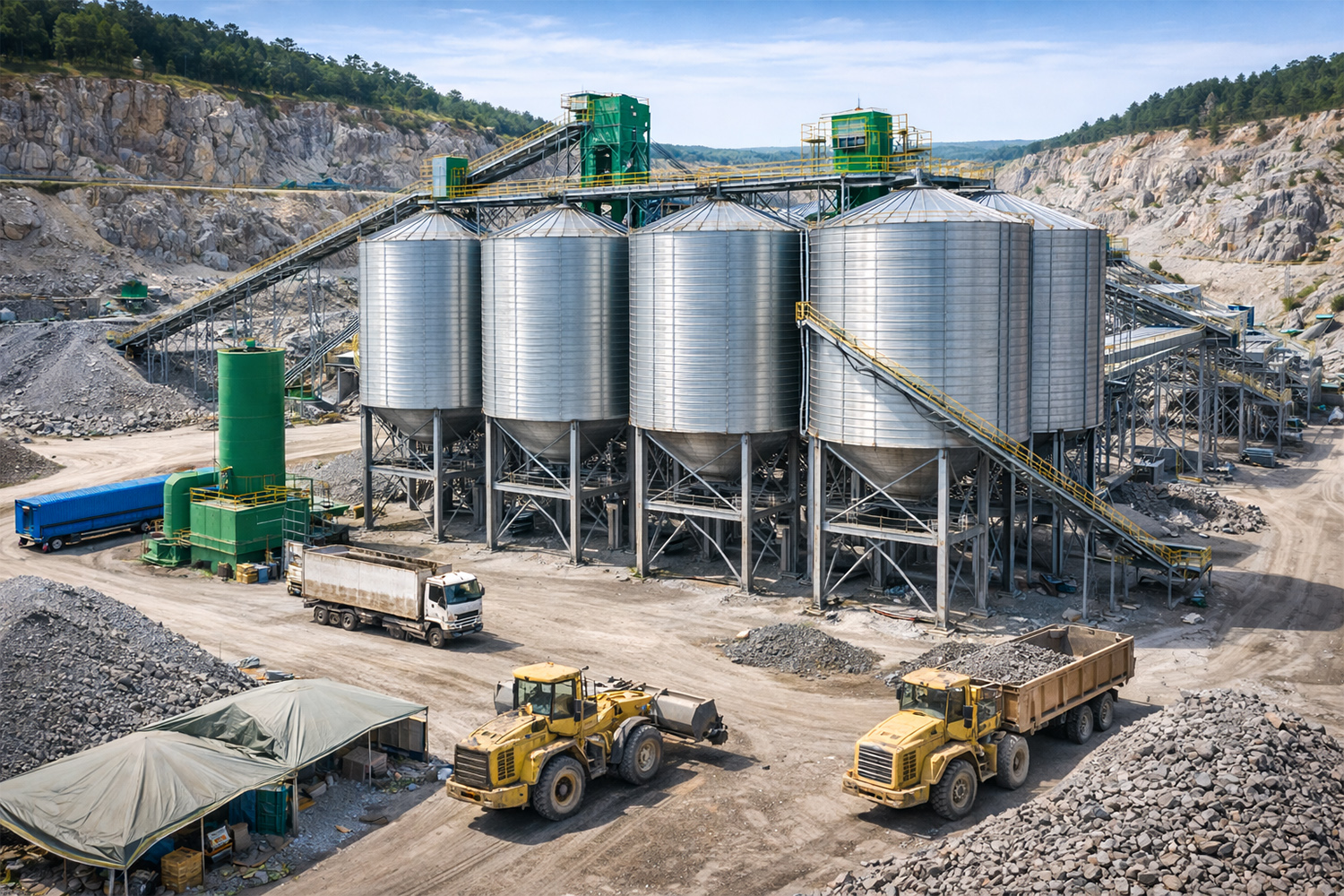
Coal silo design depends on the properties of the stored coal, including bulk density, moisture content, particle-size distribution, fines content and storage duration. These characteristics affect hopper geometry, outlet sizing, feeder selection and the risk of material bridging or blockage. Abrasive coal can also increase wear at impact zones, hopper outlets and material-transfer interfaces.
Dust control and fire or explosion protection require a project-specific risk assessment. Enclosed transfer points, suitable vent filters and dust extraction equipment help control airborne coal dust. Temperature or carbon monoxide monitoring, together with explosion-protection measures, should be specified according to the coal characteristics, applicable safety requirements and assessed site risks. The inlet distributor, hopper, outlet feeder and downstream conveyor must be designed as a coordinated material-flow system; increasing the outlet size alone does not guarantee reliable discharge.
Lime Silo Cost
Lime silo cost depends on the lime grade, moisture sensitivity, dust-control requirements and discharge performance. Quicklime and hydrated lime have different material properties and moisture-related handling requirements, which affect the selection of filling connections, sealing arrangements and surface protection. Where ambient temperature and humidity create condensation risks, insulation may also be required to protect storage conditions and maintain reliable operation.
Fine lime powder can accumulate or bridge when the hopper geometry and discharge arrangement do not match its flow characteristics. Hopper angle, outlet dimensions, screw feeders and flow-assistance devices must be selected according to the required feed rate and downstream process. Dust collection is also important during filling and transfer, particularly where fine particles can escape through vents or equipment connections. Surface protection and sealing details should reflect the actual material-contact conditions and operating environment.
Other Bulk Powders and Granular Materials
Steel silos also handle fly ash, slag powder, alumina, petroleum coke, biomass pellets and PVC granules. These materials differ in bulk density, particle-size distribution, moisture sensitivity and abrasiveness, affecting the storage volume required for a given mass, structural loading, inlet distribution and discharge arrangement. Fine mineral powders require particular attention to dust containment and vent filtration, while granular materials require suitable inlet distribution and outlet geometry to maintain the intended material flow.
Abrasive materials can require wear-resistant liners or reinforced details at impact zones, hopper transitions and discharge outlets. Moisture-sensitive materials need suitable sealing and environmental controls, while temperature-sensitive materials require operating conditions compatible with their storage requirements. Establishing the material’s bulk density, particle characteristics, moisture content and required throughput provides the engineering basis for selecting the silo structure, protective measures and auxiliary handling equipment.
How Do Silo Construction Methods and Insulation Affect the Price?
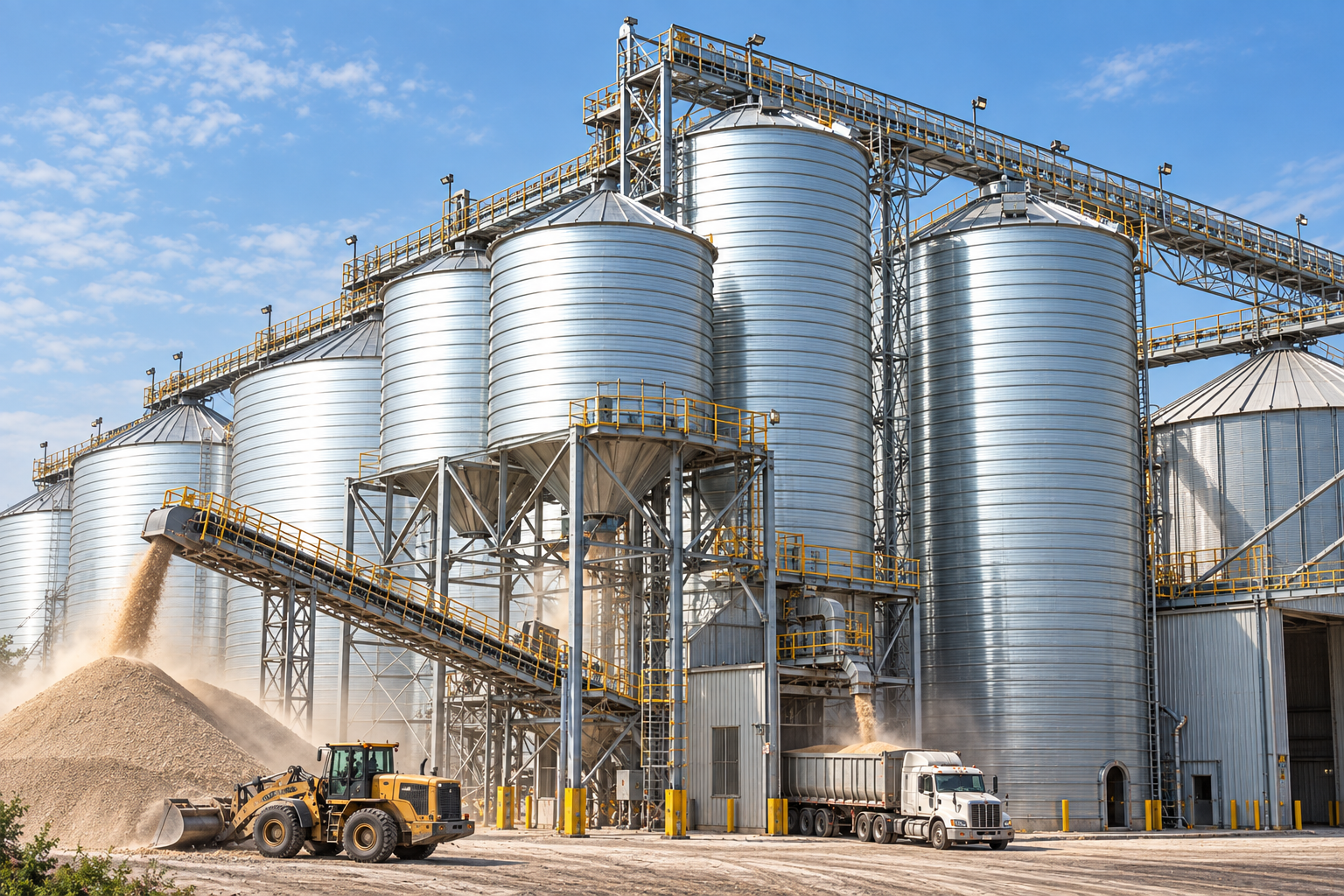
The construction method affects steel silo cost through fabrication processes, material utilization, transportation requirements and on-site assembly. Spiral-formed silos are manufactured by continuously forming steel coil into a cylindrical shell at the installation site, reducing the need to transport large prefabricated shell sections but requiring specialized forming equipment and sufficient working space. Welded silos involve plate preparation, welding, dimensional inspection and surface treatment, with costs influenced by the fabrication location, weld requirements and the size of the sections being transported. Bolted silos use prefabricated panels assembled at the destination, shifting more of the work toward panel production, connection preparation, sealing and site assembly.
These differences extend beyond the silo shell itself. The selected construction method affects how components are packaged, handled, joined and inspected, as well as the labor and equipment required during installation. Site accessibility, available lifting equipment, transportation restrictions and the required construction schedule can influence which arrangement is most practical. Insulation introduces additional material, cladding and installation requirements when temperature control or condensation prevention forms part of the design. The overall cost therefore needs to account for both the selected construction method and the conditions under which the silo will be delivered and erected.
| Construction Type | Construction Characteristics | Main Cost Drivers | Key Selection Considerations |
|---|---|---|---|
| Spiral-Formed Silo | The cylindrical shell is continuously formed from steel coil at the installation site. | Forming equipment, coil specifications, site setup and installation organization | Site access, forming space, capacity and the required shell and seam quality |
| Welded Silo | Steel plates or sections are joined by welding, with shop fabrication or field welding as specified. | Plate preparation, welding, inspection, coating and transport dimensions | Required geometry, fabrication quality plan, inspection scope and site access |
| Bolted Silo | Prefabricated panels are transported to the site and assembled using bolted connections. | Panel fabrication, joint sealing, fasteners, packing and assembly labor | Transport constraints, assembly sequence, connection alignment and sealing requirements |
| Insulated Steel Silo | An insulation layer and protective external cladding are incorporated into the silo structure. | Insulation material, cladding, support details and sealing around penetrations | Temperature variation, condensation risk, stored-material sensitivity and external exposure |
The economic advantage of a construction method depends on the balance between factory fabrication, transportation and site work. A design that reduces the shipment of oversized components may require more assembly at the destination, while a greater degree of factory fabrication can increase packing and transportation requirements. Welding and bolted connections also involve different inspection, sealing and installation procedures, which affect labor allocation and the construction schedule. These factors should be evaluated together when determining the total installed cost rather than considering fabrication cost in isolation.
Insulation should be assessed separately from the underlying shell construction method. Its specification depends on the stored material, operating temperature, ambient conditions and condensation risk. The insulation material, thickness, external cladding and treatment of joints and penetrations all contribute to the additional cost. Where insulation is unnecessary for the intended service conditions, including it adds material and installation work without a corresponding operational benefit.
How Do Foundation, Transportation and Installation Affect the Total Cost?
The total steel silo project cost extends beyond structural fabrication and equipment manufacturing. Foundation construction, transportation, lifting, on-site assembly and commissioning all contribute to the final project expenditure. The cost of these activities depends on the silo’s structural configuration, shipment dimensions, delivery destination, site conditions and the division of responsibilities between the equipment manufacturer and the project owner.
These requirements are closely connected during project planning. The silo’s support arrangement and operating loads determine the foundation design, while the selected construction method affects component dimensions, packing requirements and transportation arrangements. Site access, lifting capacity and available working space further influence the installation method, labor requirements and construction schedule. Coordinating these factors during the engineering stage helps establish a realistic project scope and reduces the risk of additional work during installation.
| Cost Component | Included Scope | Main Cost Drivers | Key Information Required |
|---|---|---|---|
| Foundation and Civil Works | Foundation design, concrete works, reinforcement, anchor bolts, drainage and site preparation | Structural loads, soil bearing capacity, settlement, groundwater conditions and site elevation | Silo loads, support arrangement, geotechnical data and site layout |
| Transportation and Export Logistics | Export packing, inland transport, port handling, ocean freight, customs-related arrangements and final delivery | Shipment dimensions, cargo weight, destination, transport restrictions and handling requirements | Delivery address, shipping dimensions, total weight and agreed delivery terms |
| Installation and Assembly | Unloading, lifting, shell or panel assembly, welding or bolted connections, and equipment alignment | Silo construction method, crane capacity, site access, working space and labor requirements | Installation method, site conditions, available lifting equipment and construction schedule |
| Electrical Connection and Commissioning | Electrical wiring, instrumentation connections, control integration and functional testing | Automation scope, equipment interfaces, testing requirements and site readiness | Electrical specifications, control requirements, commissioning scope and acceptance criteria |
The main cost risks often arise at the interfaces between different stages of project execution. When foundation construction, equipment supply and silo erection are handled by separate contractors, discrepancies in drawings, connection details or work responsibilities can lead to on-site modifications and additional labor. Clear technical documentation and defined responsibilities for each stage help prevent such issues and maintain consistency between the approved design and the completed installation.
Final Considerations for Steel Silo Cost
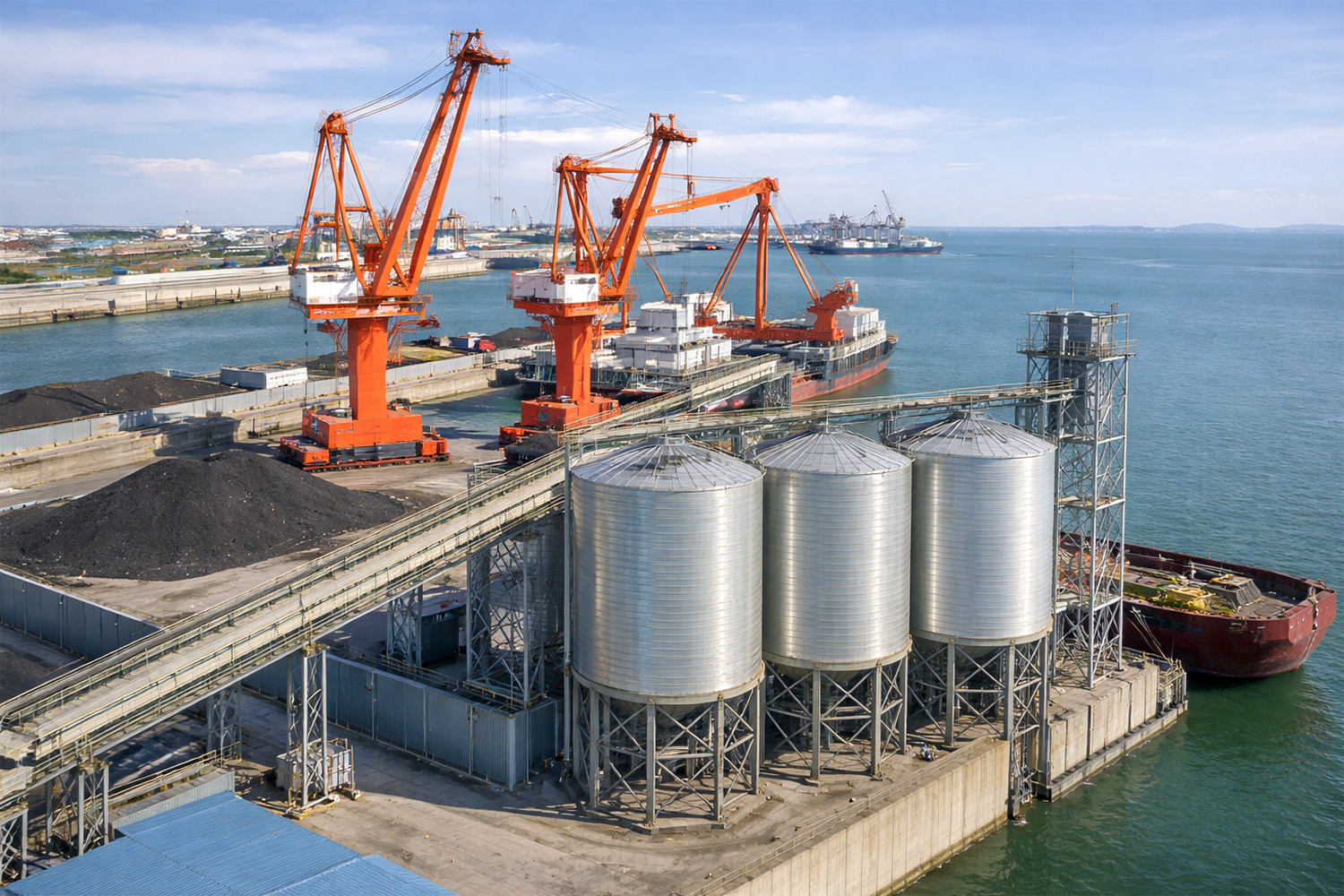
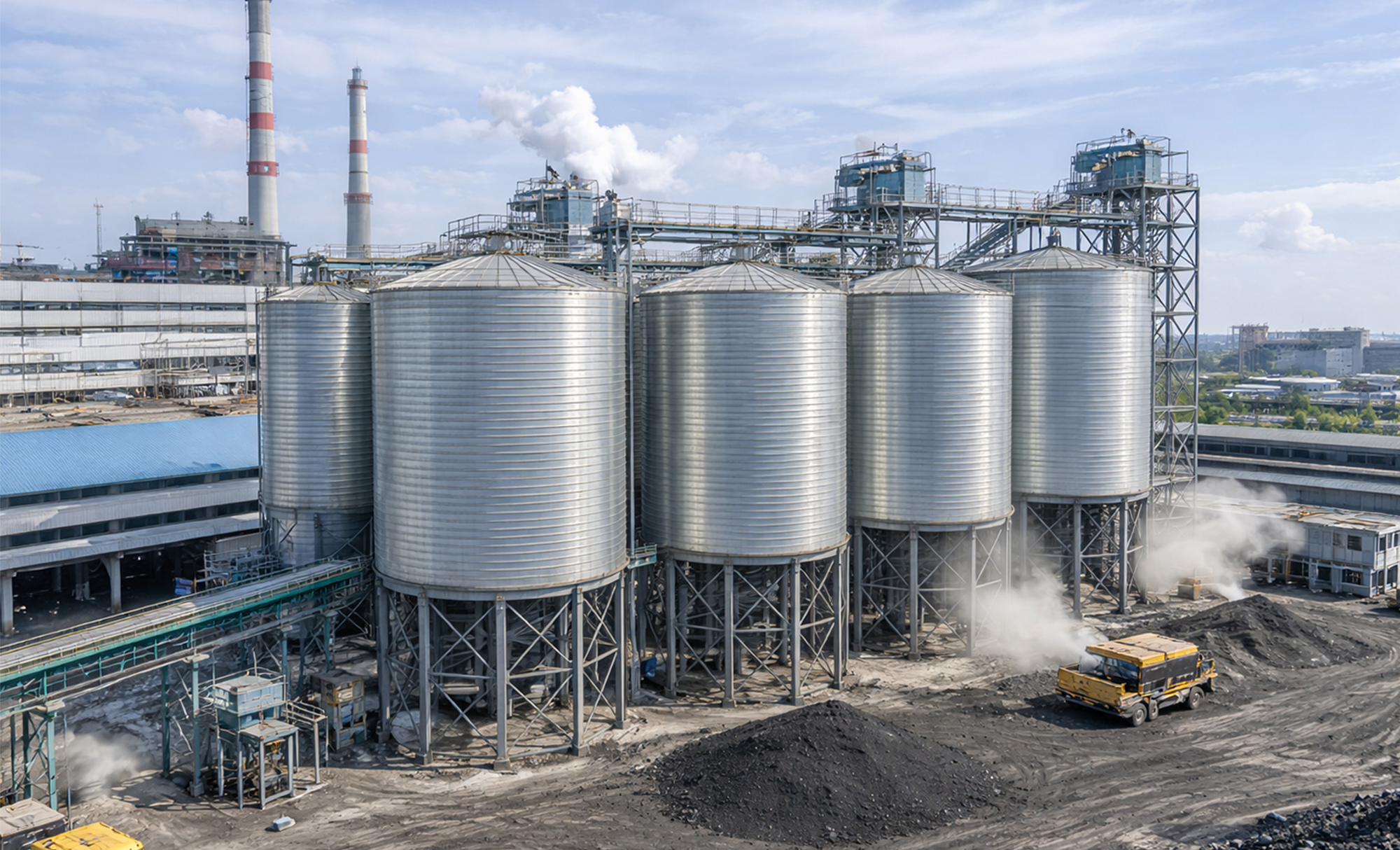
Steel silo cost reflects the combined requirements of structural fabrication, material handling and project execution. The final cost is shaped by the engineering specifications, equipment configuration and construction work required to meet the intended storage and operating conditions.
Establishing the appropriate configuration requires clear information on the stored material, required capacity, filling and discharge rates, silo dimensions, construction method and site conditions. Material data determines the storage and handling requirements, while structural loads, geotechnical conditions and equipment interfaces guide the design of the silo and its supporting systems. These inputs allow the structural specifications, auxiliary equipment and installation scope to be coordinated before manufacturing begins.
Octal Steel’s Steel Silo product category covers steel silo structures and related bulk material handling equipment, including conveying systems, lifting equipment, dust collection and discharge modules. The equipment configuration can be coordinated with the material properties, operating requirements and site conditions of each project.
FAQ
Q: What Determines the Total Cost of a Steel Silo Project?
A:The total steel silo project cost depends on storage capacity, material properties, structural design, construction method, auxiliary equipment, foundation work, transportation and installation. The final cost also depends on whether the project covers the silo structure alone or includes an integrated material-handling system.
Q:Why Do Steel Silos with the Same Capacity Have Different Costs?
A:Silos with the same nominal capacity can require different steel quantities, reinforcement and equipment configurations. Bulk density, diameter-to-height ratio, bottom design, discharge rate, corrosion protection and site loads all influence the structural specifications and overall system requirements.
Q:Does Steel Silo Cost Include Conveying Equipment, Foundation and Installation?
A:These items are included only when they form part of the agreed project scope. A complete system may cover conveyors, bucket elevators, dust collectors, discharge equipment, controls, foundation works, transportation, erection and commissioning, while a structure-only package covers a narrower scope.
Q: What Information Is Needed to Estimate Steel Silo Project Cost?
A:The main inputs are the stored material, bulk density, required storage capacity, number of silos, filling and discharge rates, construction type, site location and environmental conditions. The required auxiliary equipment and division of supply responsibilities must also be defined to establish the structural design, equipment configuration and installation scope.


Tags:steel silo
Related Products
Related Faqs
Recent Faqs

Rencent Articles


Hot Topic



Octal is located in China recognized as a leading supplier, distributor, and manufacturer union in providing piping solutions for oil and gas company. Product ranges in Steel Pipe, Casing and Tubing, Steel Plate, Sucker Rod, Steel Pipe Fittings, Valves, and Equipment for pipelines.
Contact Info
Unit 2544, 25/F, Tower A, Wanda Plaza, Wenfeng District, Anyang, Henan, China & Building A, No.18 Dirun Road, Zhengdong New District, Zhengzhou, Henan, China
+86 372 2157660 / +86 186 3727 1277
[email protected]