Your Responsible Supplier Partner for Oil and Gas Products.

Drill Pipe Specification
Hot Topic

Rencent Articles
Recent Resources
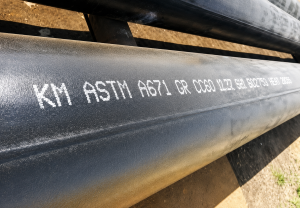
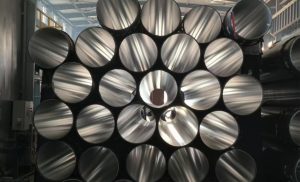
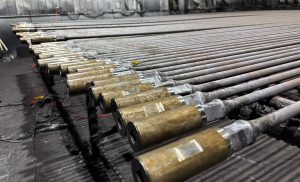
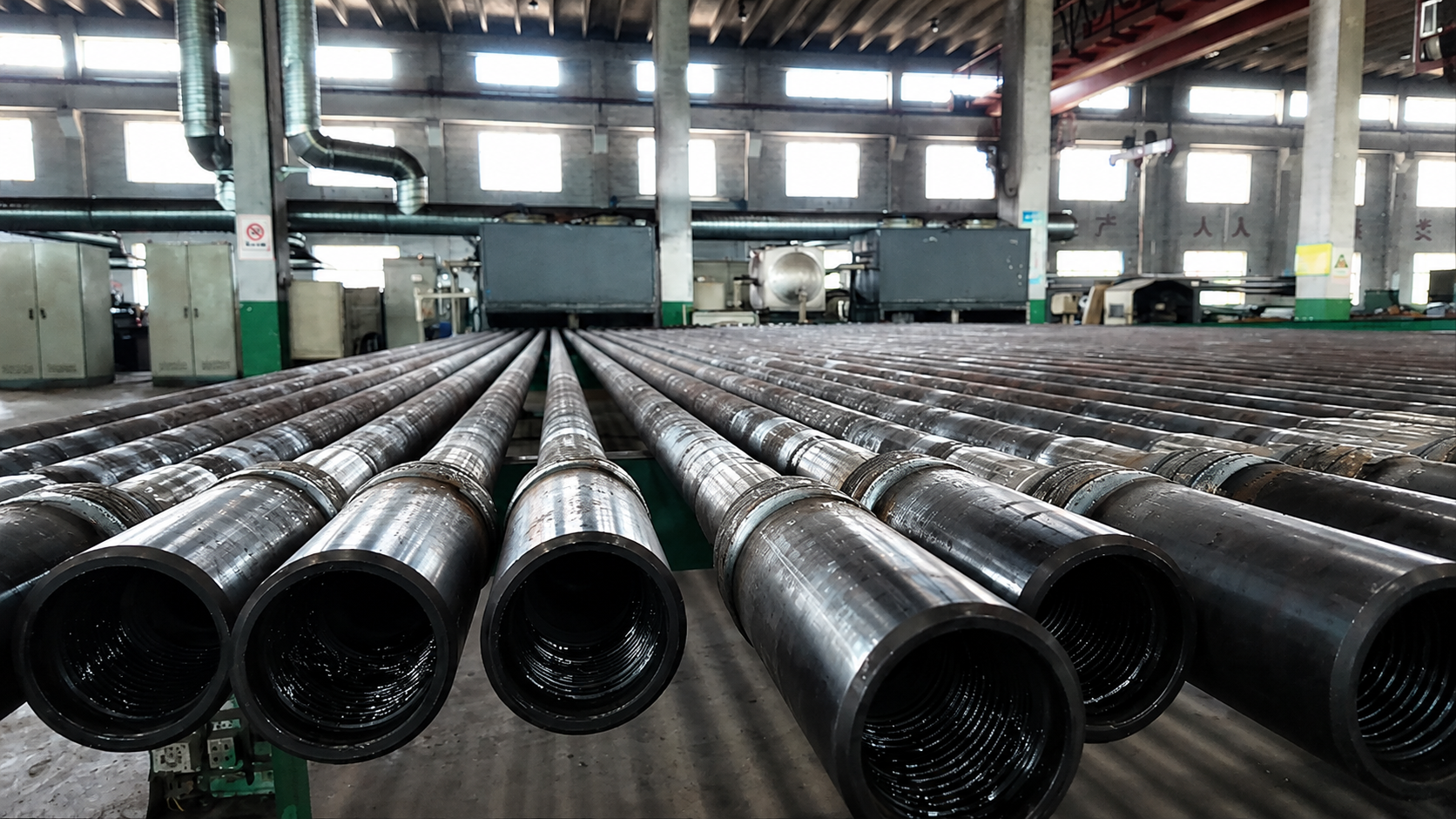
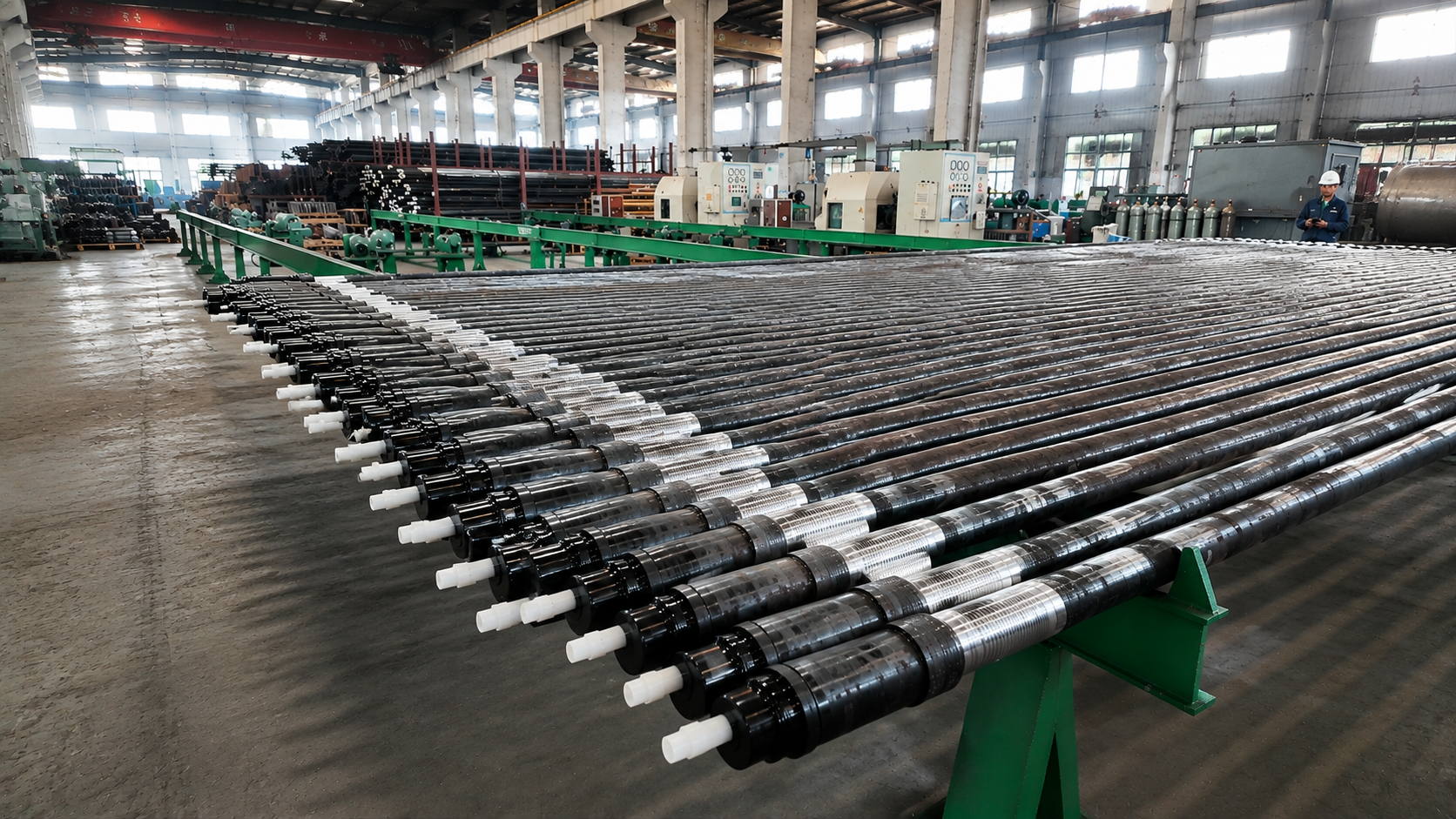
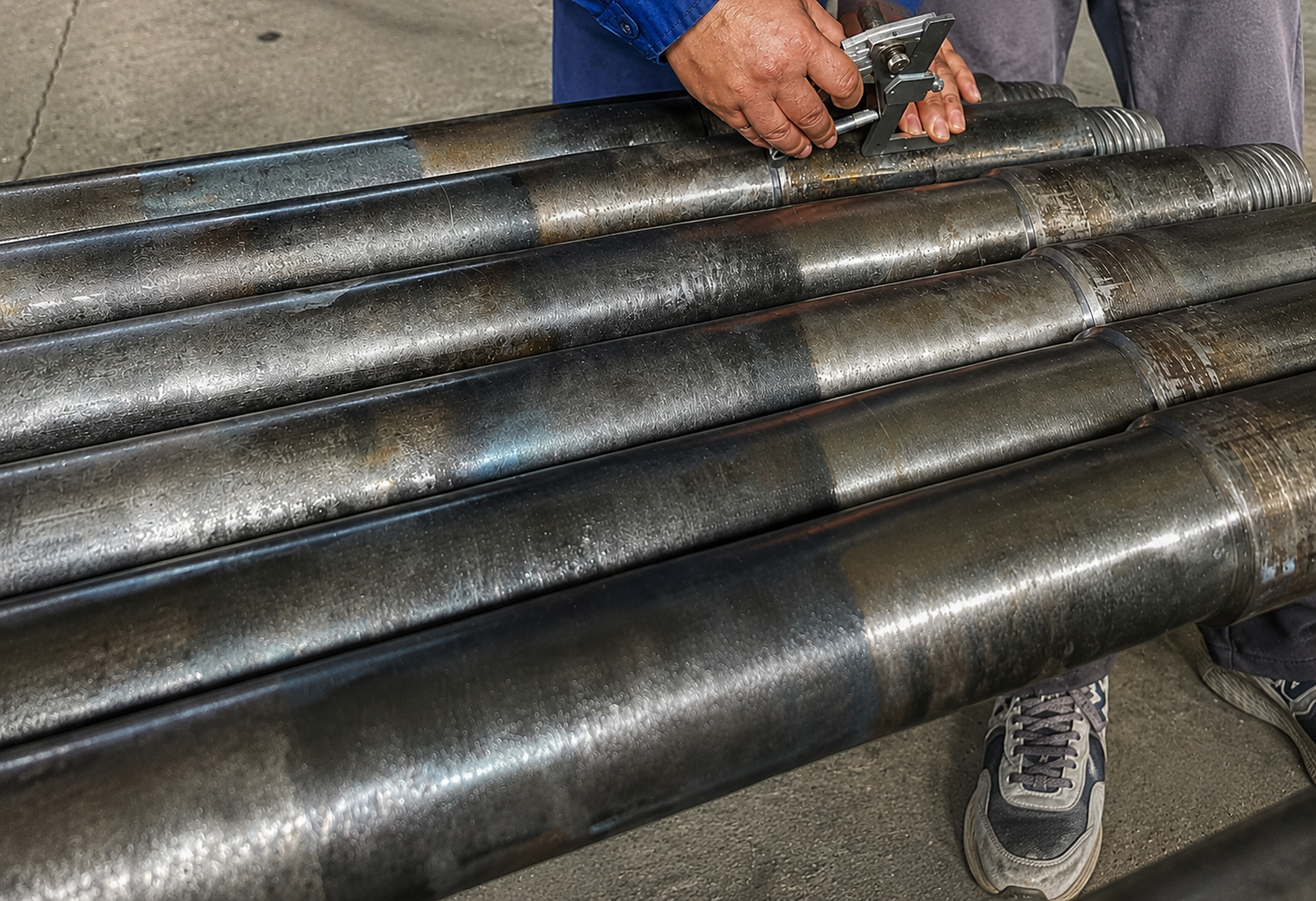
Drill Pipe Specification
Sizes: 2-3/8″ to 6-5/8″ OD with different wall thickness and weight options
Grades: E75, X95, G105 and S135 for various drilling load conditions
Connections: NC and FH series tool joint connections for torque transmission and sealing
Upset Types: EU, IU and IEU designs for pipe end reinforcement
Length Range: API R1, R2 and R3 classifications
Applications: Oil and gas wells, deep drilling and directional drilling operations
Drill Pipe Specification defines the complete technical requirements of a drill pipe used in oil and gas drilling operations, including outer diameter, wall thickness, nominal weight, steel grade, connection type, upset design and length range. These specifications determine the mechanical capability of the drill pipe, including torque transmission, tensile strength, hydraulic performance, fatigue resistance and service reliability under complex drilling conditions.
A drill pipe is a critical component of the drill string, consisting of a steel pipe body and threaded tool joints connected through friction welding. In service, drill pipe is continuously exposed to tension, torque, bending stress, internal pressure, external pressure and vibration, requiring accurate specification selection based on well depth, drilling method, hole size and operating environment.A complete drill pipe specification normally includes pipe body OD, wall thickness, nominal weight, steel grade, connection type, upset configuration and API length range. For example, a specification such as 5″ × 19.50 lb/ft × S135 × R2 × IEU × NC50 identifies the complete configuration of a drill pipe, including size, weight, material strength, length category, end reinforcement and tool joint connection.
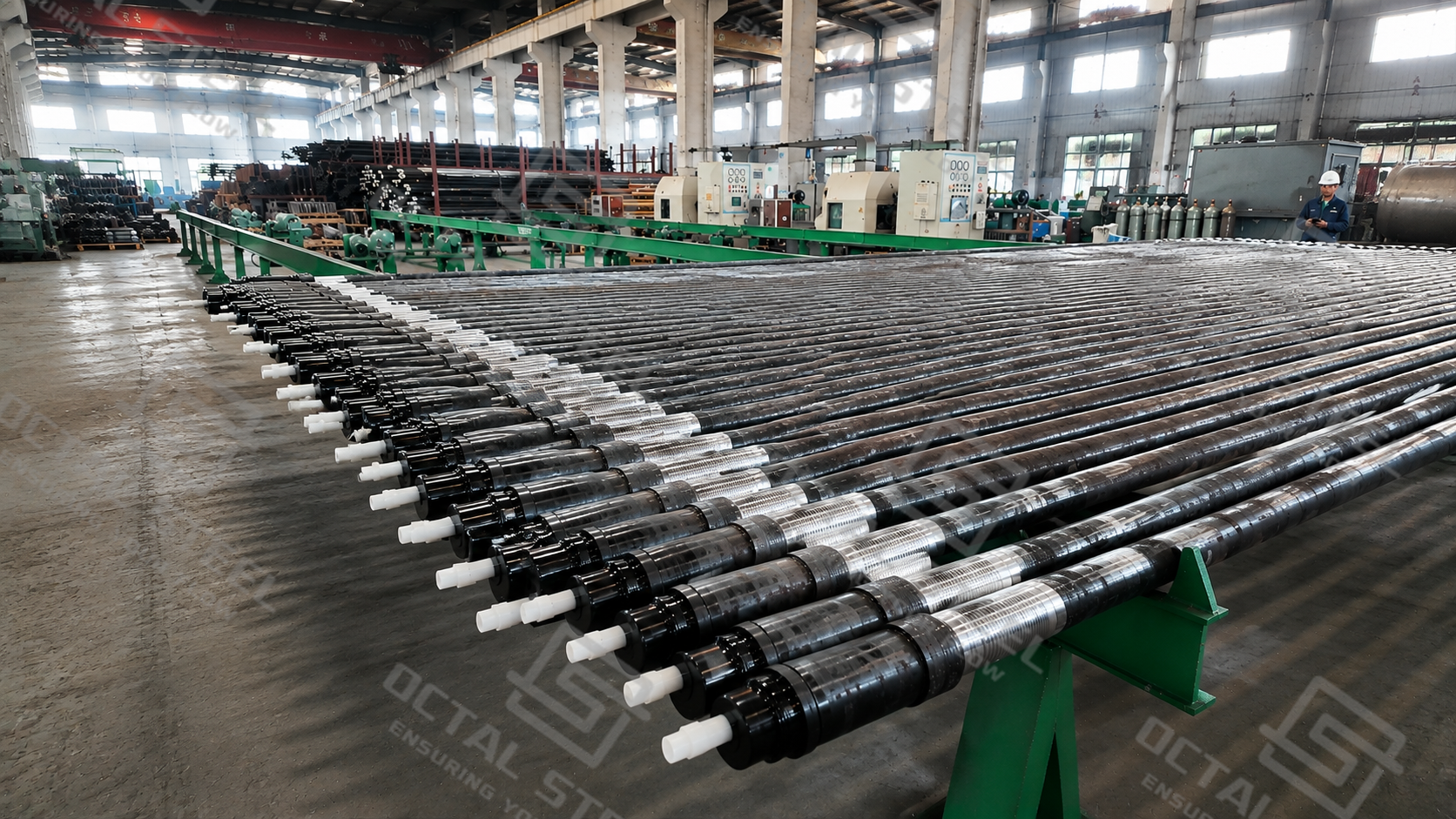
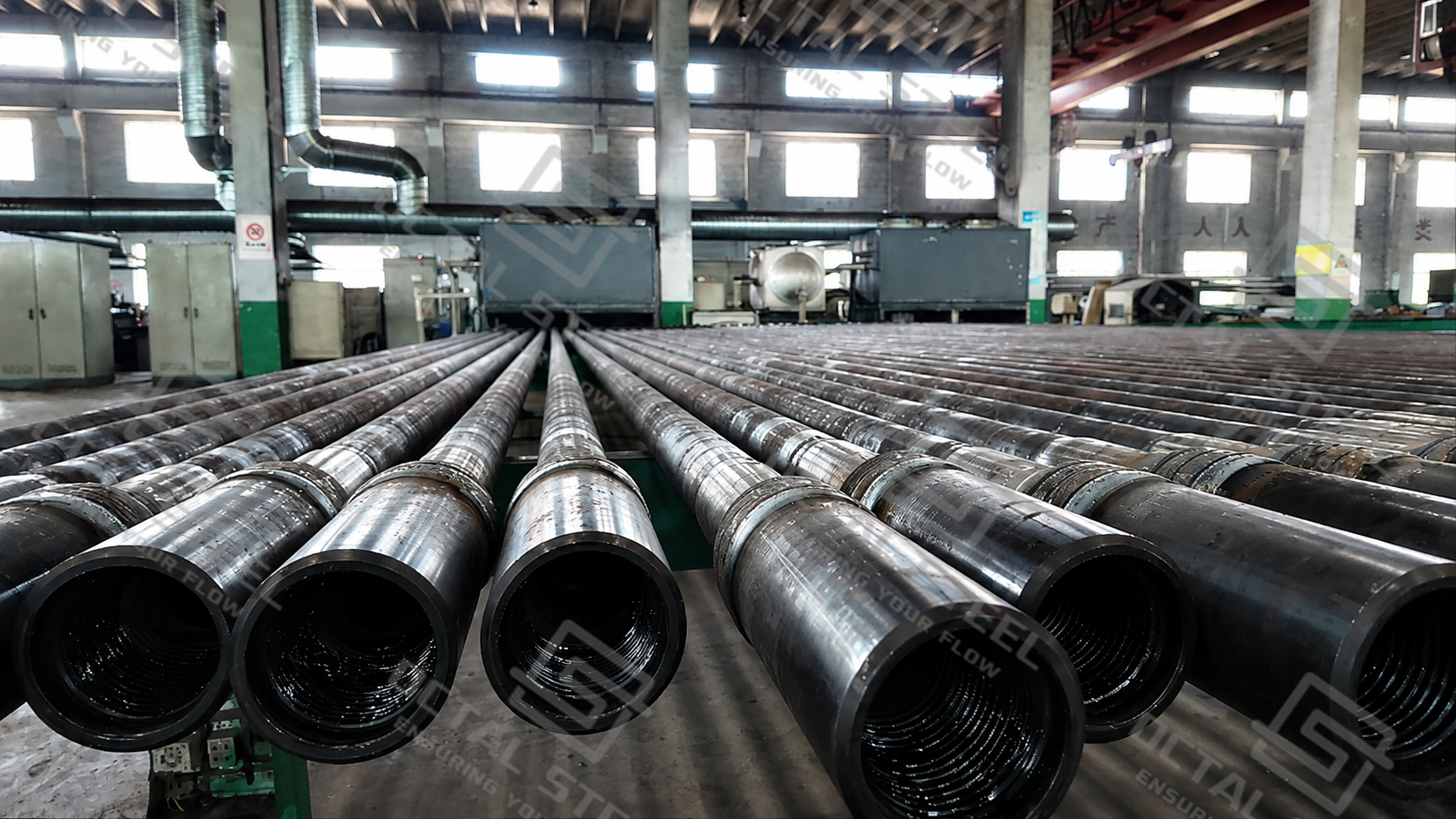
OctalSteel supplies API 5DP drill pipe with various sizes, grades and connection configurations for oil and gas drilling applications. Common specifications include 2-3/8″ to 6-5/8″ OD, grades such as E75, X95, G105 and S135, and API-compatible connections including NC series and FH series tool joints.
Drill Pipe Specification Components
A drill pipe specification is determined by multiple parameters rather than a single diameter value. Each specification item affects drilling performance and should be considered during engineering selection and purchasing.
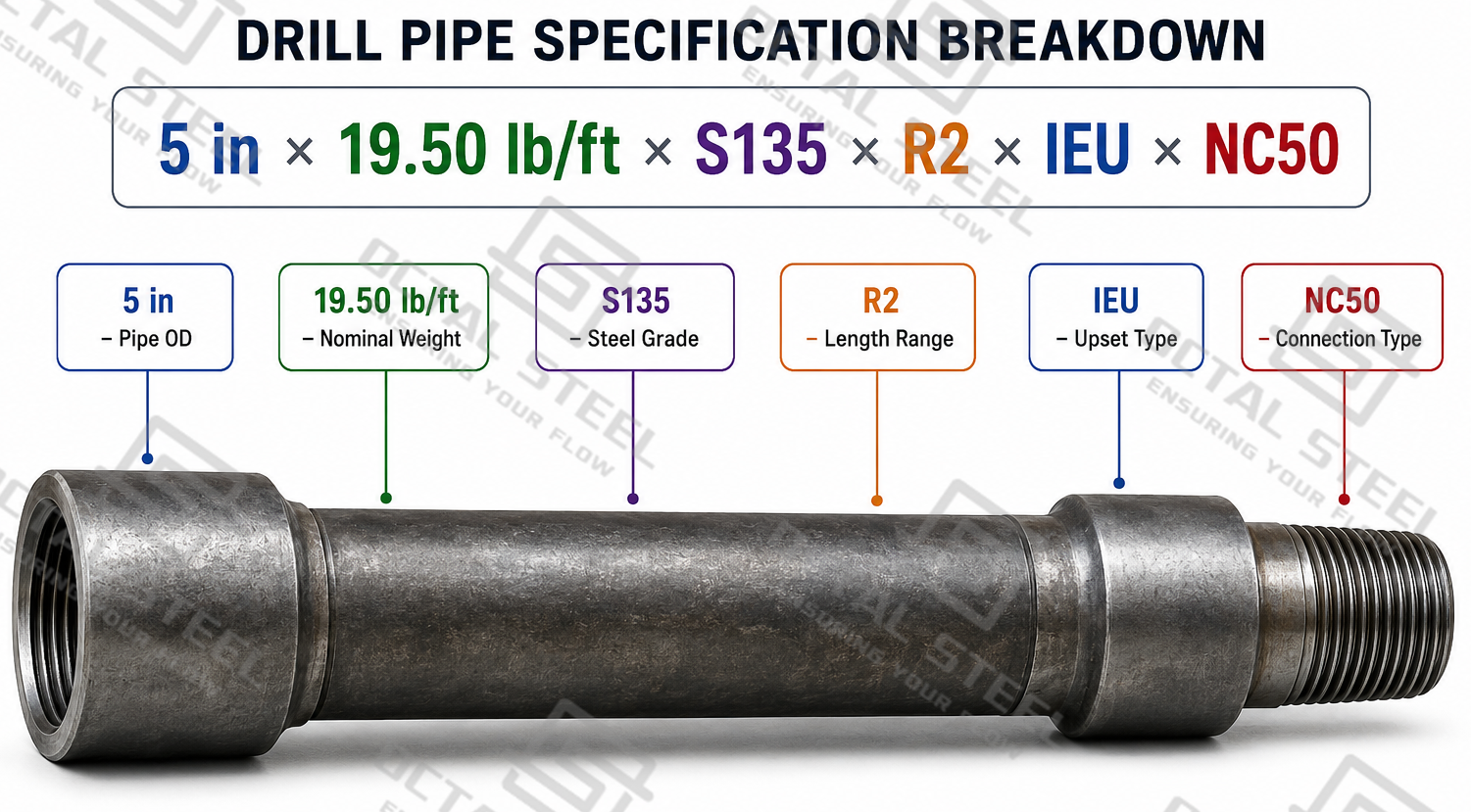
| Specification Item | Description | Influence on Drill Pipe Performance |
|---|---|---|
| Outer Diameter (OD) | Outside diameter of pipe body | Determines hole size compatibility and annular clearance |
| Wall Thickness | Thickness of pipe body wall | Affects pressure resistance and mechanical strength |
| Nominal Weight | Weight per foot of drill pipe | Used for drill string load calculation |
| Steel Grade | Material strength classification | Determines yield strength and tensile capability |
| Connection Type | Threaded tool joint design | Controls torque capacity and sealing performance |
| Upset Type | Thickened pipe end design | Improves connection strength and fatigue resistance |
| Length Range | R1, R2 or R3 classification | Defines handling length and drill string arrangement |
According to the drill pipe technical material, drill pipe consists of components including box connection, pin connection, pipe body, friction welding area, upset section and wear-resistant area. The drill pipe must withstand internal and external pressure, torque, bending moment and vibration during drilling operations.
Download:Drill Pipe Specification Performance Guide.pdf
API 5DP Drill Pipe Sizes and Dimensions
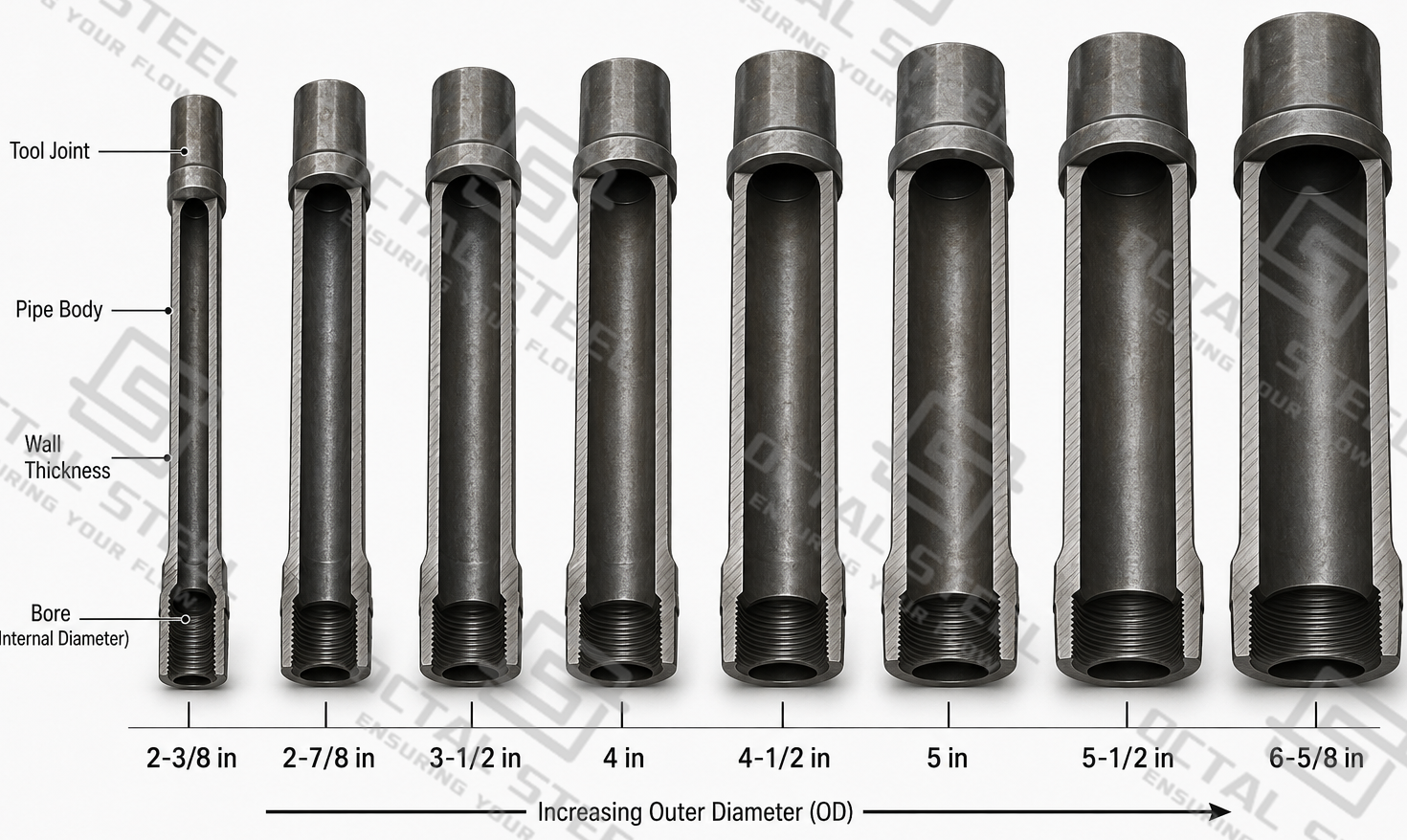
Drill Pipe Outer Diameter
Drill Pipe Size is mainly identified by the outside diameter of the pipe body. Different sizes are selected according to hole diameter, drilling depth, required flow performance and mechanical loading conditions.
| Drill Pipe Size | Pipe Body OD | Common Application |
|---|---|---|
| 2-3/8″ | 60.3 mm | Small diameter drilling |
| 2-7/8″ | 73.0 mm | Conventional drilling applications |
| 3-1/2″ | 88.9 mm | General oil and gas drilling |
| 4″ | 101.6 mm | Medium drilling operations |
| 4-1/2″ | 114.3 mm | Common production drilling |
| 5″ | 127.0 mm | Deep well and high torque drilling |
| 5-1/2″ | 139.7 mm | Heavy-duty drilling strings |
| 6-5/8″ | 168.3 mm | Large hole drilling applications |
The outside diameter determines the basic compatibility between the drill pipe and the wellbore. However, OD alone cannot define drill pipe performance. The final specification must also consider weight, grade, connection and upset design.
Typical API 5DP Drill Pipe Specifications
The following table shows common drill pipe configurations combining size, wall thickness, grade, upset type and connection.
| Pipe OD | Wall Thickness | Grade | Upset Type | Connection |
|---|---|---|---|---|
| 2-3/8″ | 7.11 mm | X, G, SS95, SS105 | EU | NC26 |
| 2-7/8″ | 9.19 mm | X, G, SS95, SS105 | EU | NC31 |
| 3-1/2″ | 9.35 mm | G, SS105 | EU | NC38 |
| 4″ | 8.38 mm | G, SS105 | IU | NC40 |
| 4-1/2″ | 8.56 mm | X, G, SS95, SS105 | EU | NC50 |
| 5″ | 9.19 mm | G, SS105 | IEU | NC50 |
| 5-1/2″ | 10.54 mm | X, G, SS95, SS105 | IEU | 5-1/2 FH |
| 6-5/8″ | 9.19 mm | X, G, SS95, SS105 | IEU | 6-5/8 FH |
Drill Pipe Wall Thickness and Nominal Weight
Wall thickness is a key factor affecting the strength and hydraulic characteristics of drill pipe. A thicker wall provides higher resistance against mechanical loading but reduces the internal flow area.
Common drill pipe descriptions combine OD and nominal weight.
Example:
5″ × 19.50 lb/ft Drill Pipe
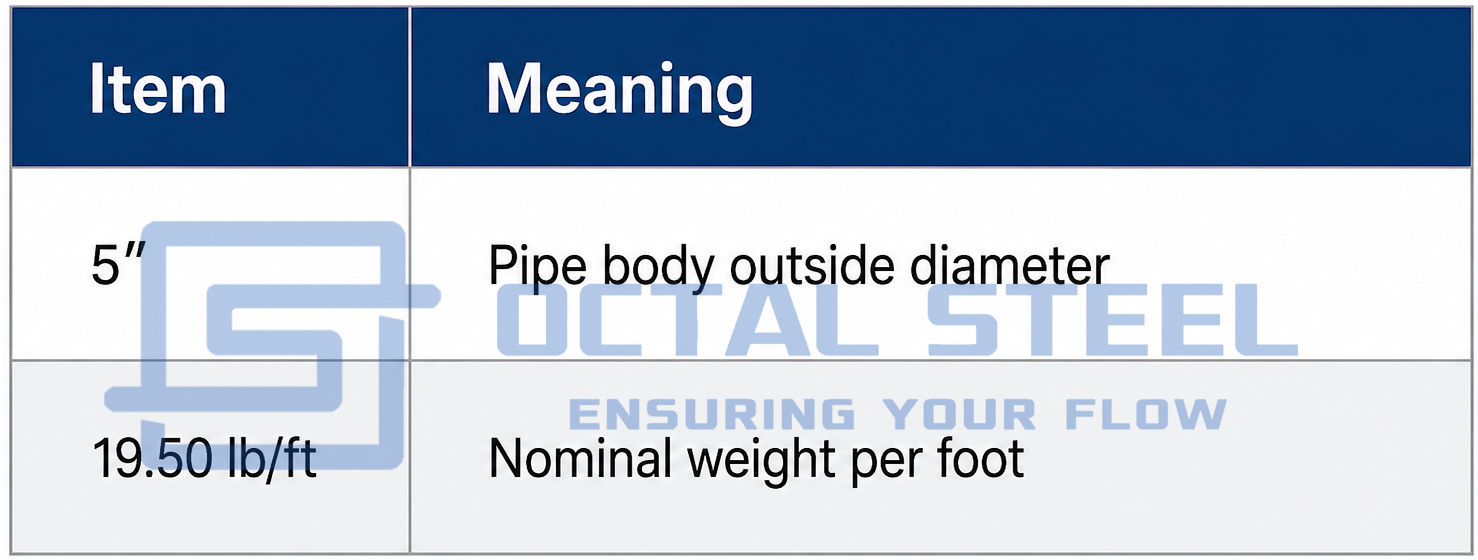
The nominal weight is used together with steel grade and connection type to calculate drill string performance.
However, OD alone cannot define the complete performance of drill pipe. Final specification selection should also consider wall thickness and nominal weight for pipe body strength and hydraulic performance, steel grade for tensile and yield capacity, connection type and upset design for torque transfer and fatigue resistance, and the drilling environment for overall service suitability. Only by matching these parameters together can a drill pipe specification meet the actual requirements of the drilling program.
Drill Pipe Length Range: R1, R2 and R3
API drill pipe length is classified into three standard ranges.
| Range | Length |
|---|---|
| R1 | 6.10–7.01 m |
| R2 | 8.84–9.75 m |
| R3 | 12.19–13.72 m |
R2 drill pipe is commonly selected for many drilling applications because it provides a practical balance between handling efficiency and connection frequency.
The technical document identifies:
- R1: 6.10–7.01 m
- R2: 8.84–9.75 m
- R3: 12.19–13.72 m
as standard drill pipe length categories.
Drill Pipe Grades and Mechanical Properties
Drill Pipe Grade defines the strength level of the drill pipe material and is one of the key factors determining the load capacity of a drill string. Different grades provide different levels of yield strength, tensile performance and resistance to mechanical loading, allowing drill pipe to be selected according to drilling depth, torque requirement, well trajectory and operating conditions.
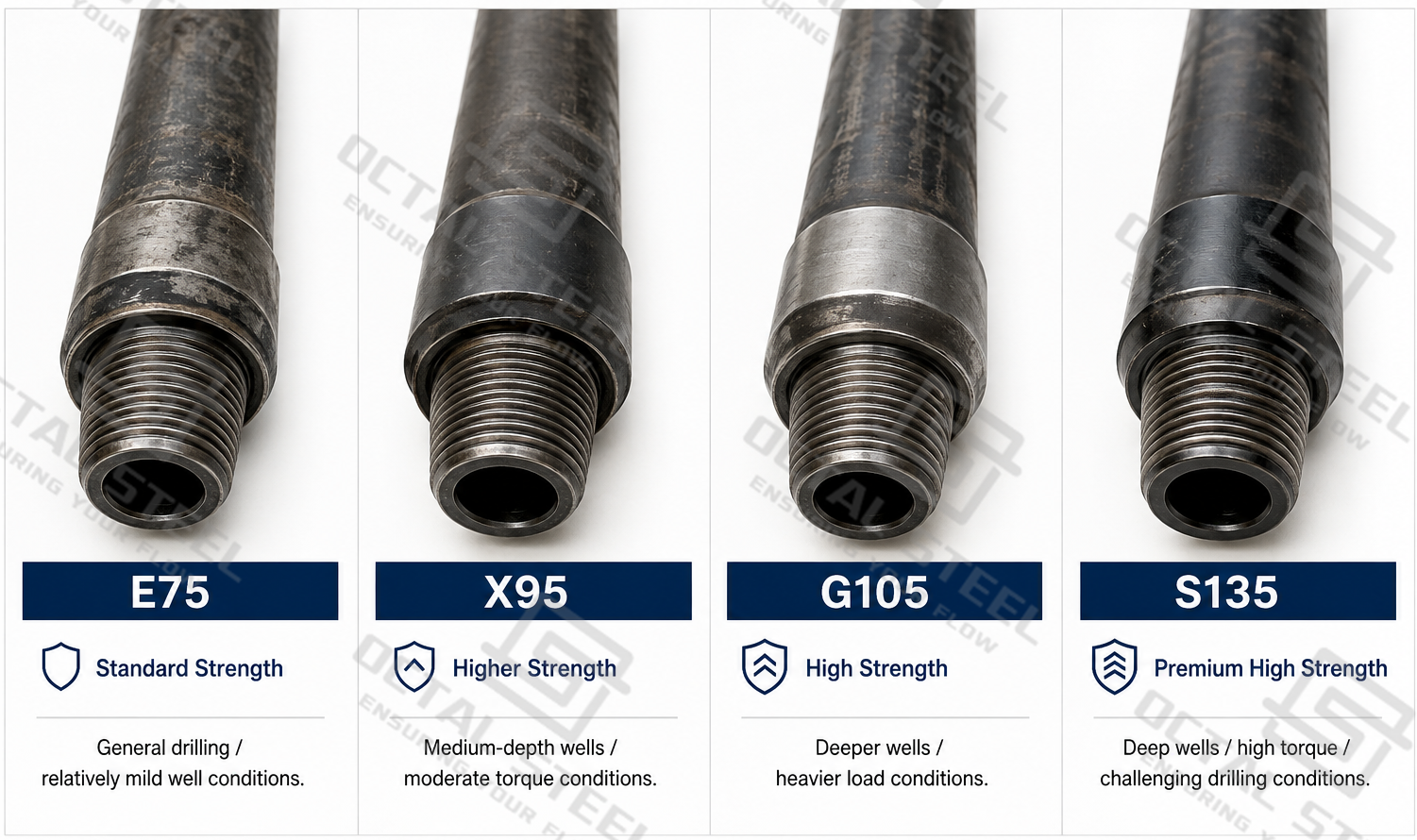
Common API drill pipe grades include E75, X95, G105 and S135. The grade designation generally indicates the minimum yield strength level of the material, expressed in ksi.
| Grade | Minimum Yield Strength | Typical Application |
|---|---|---|
| E75 | 75 ksi | Standard drilling conditions requiring moderate strength performance |
| X95 | 95 ksi | Applications requiring higher tensile capacity than standard grades |
| G105 | 105 ksi | Deep well drilling where increased load resistance is required |
| S135 | 135 ksi | High-load drilling conditions, including demanding and extended reach applications |
The selection of drill pipe grade should be based on the actual mechanical requirements of the drilling program rather than simply choosing the highest strength grade. Higher-strength grades can provide increased tensile capacity, but the final specification must also consider connection performance, fatigue loading, drilling environment and overall drill string design.
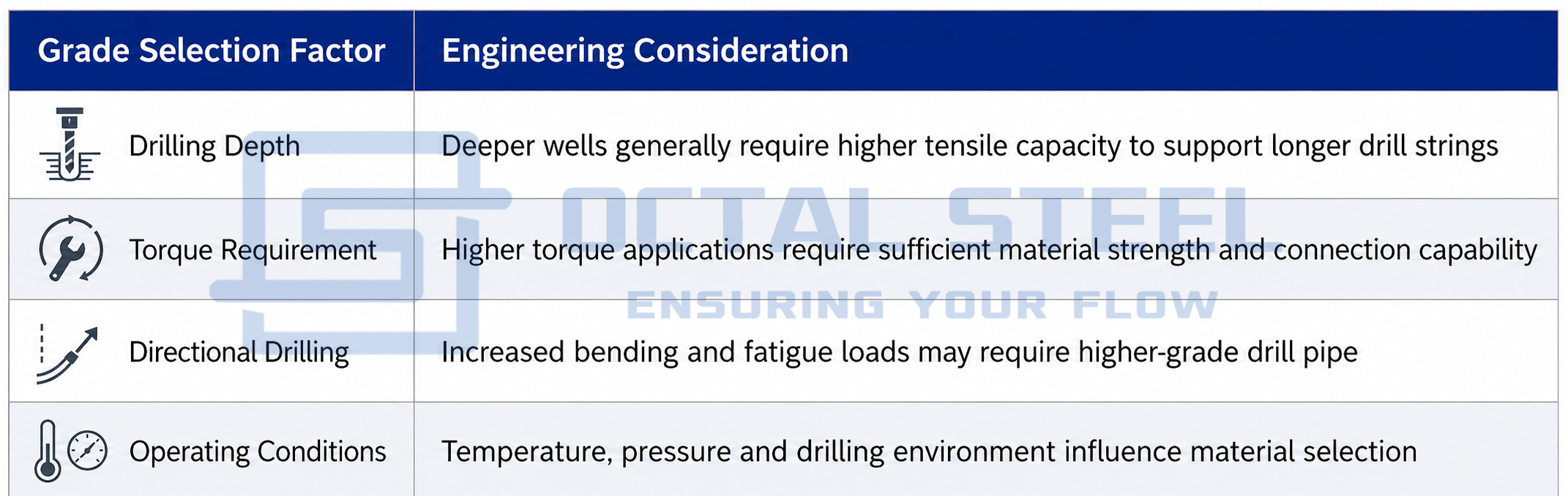
For example, E75 and X95 drill pipe are commonly used for standard and medium-load drilling applications, while G105 and S135 drill pipe are generally selected when drilling operations require higher strength levels, such as deeper wells, higher torque conditions or extended reach drilling.
OctalSteel supplies API 5DP drill pipe in multiple grades, including E75, X95, G105 and S135, with specifications selected according to project requirements and drilling conditions. The supplied technical document also identifies X95, G105, S135 and V150 as common drill pipe grades with corresponding yield strength and tensile strength requirements.
Drill Pipe Connection Types and Tool Joint Specifications
The connection is one of the most important parts of a drill pipe specification because it transfers torque and maintains sealing performance.
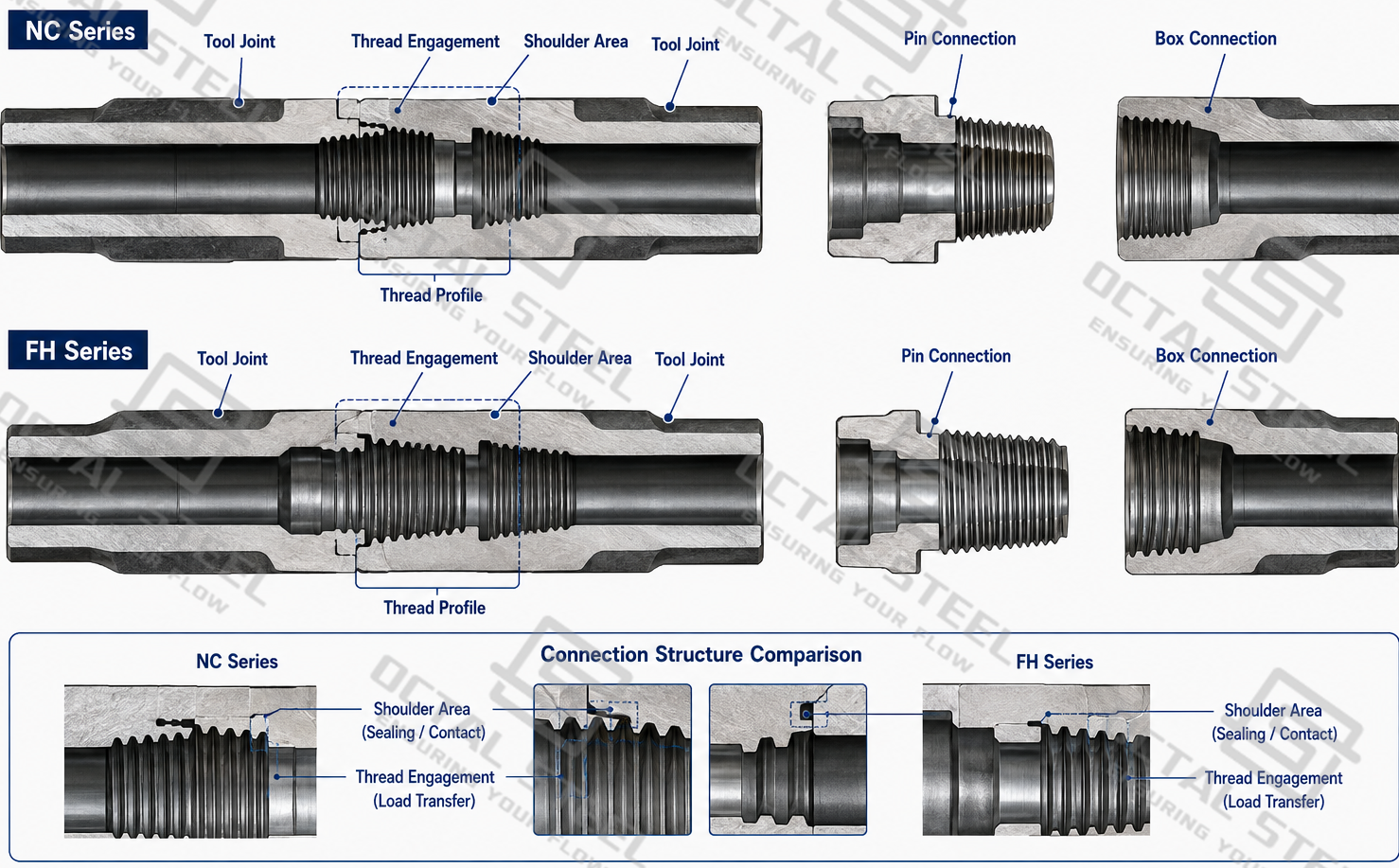
Common API connection types include:
| Connection Type | Typical Application |
|---|---|
| NC26 | Small diameter drill pipe |
| NC31 | 2-7/8″ drill pipe |
| NC38 | 3-1/2″ drill pipe |
| NC40 | 4″ drill pipe |
| NC46 | 4″–4-1/2″ drill pipe |
| NC50 | 5″ drill pipe |
| 5-1/2 FH | Large diameter drilling |
| 6-5/8 FH | Heavy-duty drilling |
According to the supplied technical data, different connections have specific pin and box tong space dimensions.
| Connection | Pin Tong Length | Box Tong Length |
|---|---|---|
| NC26 | 9″ | 10″ |
| NC31 | 9″ | 11″ |
| NC38 | 10″ | 12.5″ |
| NC40 | 9″ | 12″ |
| NC46 | 9″ | 12″ |
| NC50 | 9″ | 12″ |
| NC52 | 9″ | 12″ |
| 5-1/2 FH | 10″ | 12″ |
| 6-5/8 FH | 10″ | 13″ |
Drill Pipe Upset Types: EU, IU and IEU
The upset design reinforces the pipe end area where stress concentration occurs.
Common upset types include:
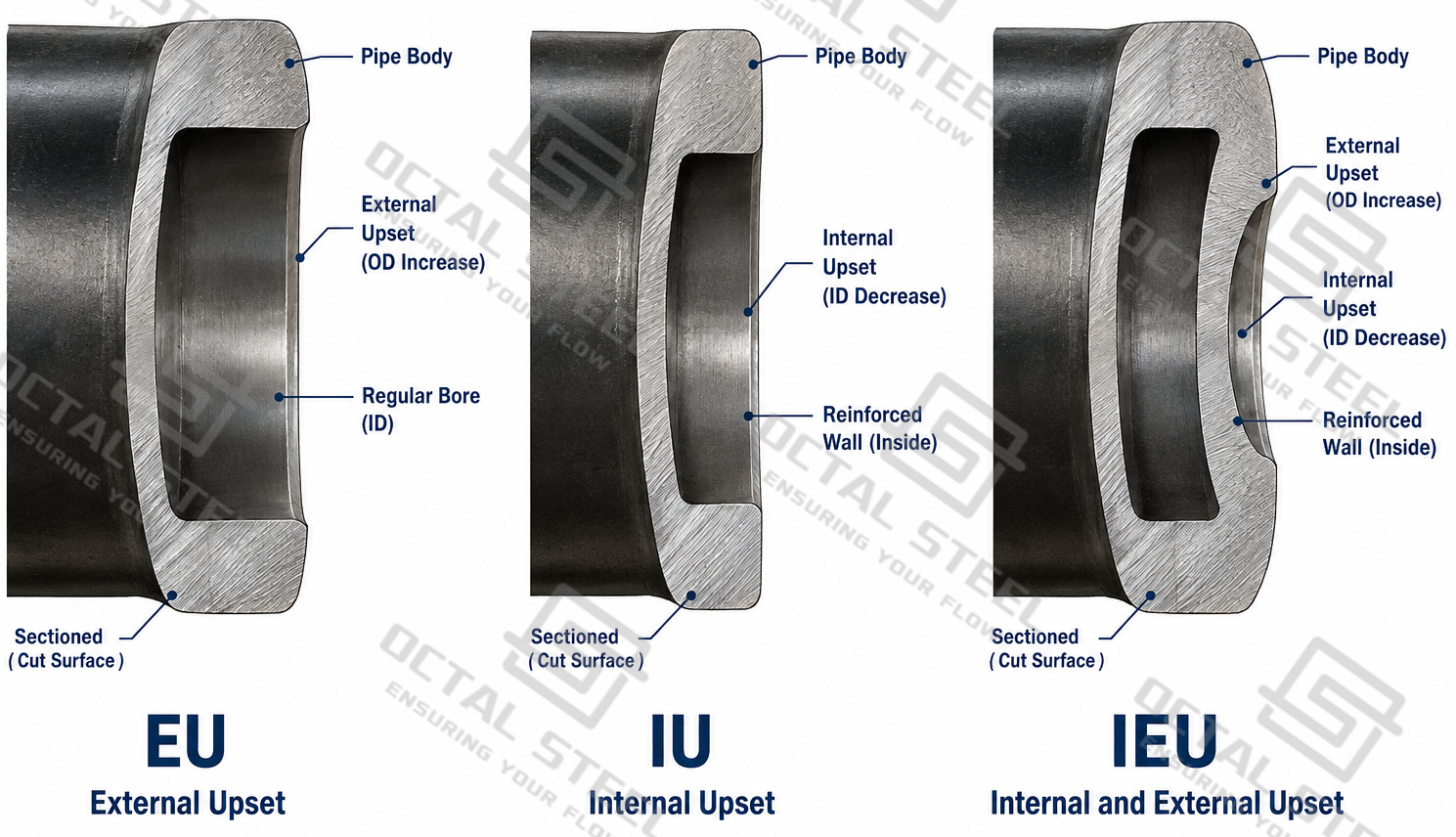
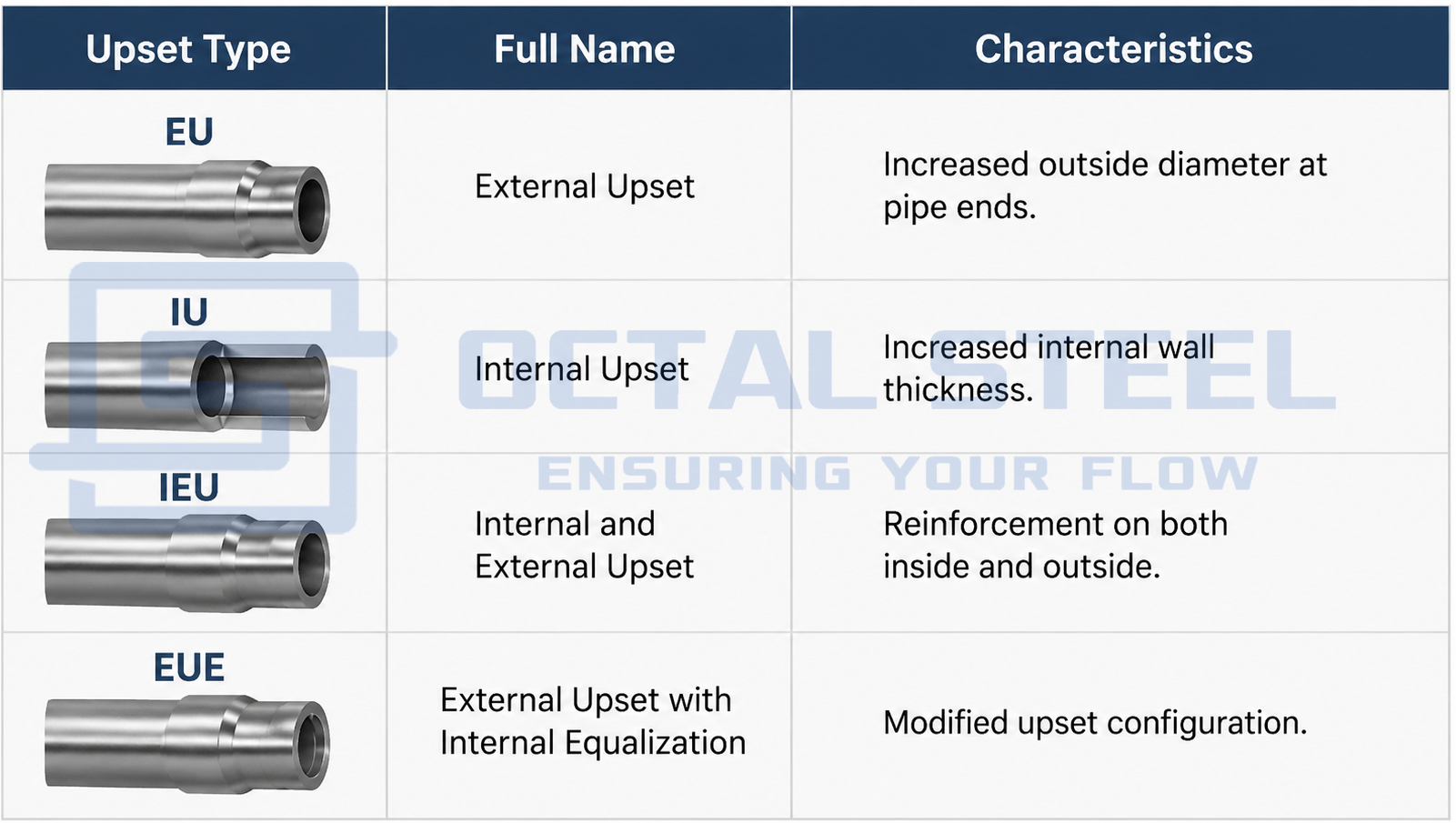
The supplied technical document identifies EU, IU, IEU and EUE as common drill pipe end configurations.
Download:API 5DP Drill Pipe Reference.pdf
Drill Pipe Manufacturing Process and Quality Inspection
The manufacturing quality of drill pipe directly affects fatigue resistance, connection reliability and service life during drilling operations. Because drill pipe is continuously exposed to tension, torque, bending stress and pressure cycles, each manufacturing stage requires strict control to ensure consistent mechanical performance.
The production process generally includes pipe body inspection, end upsetting, heat treatment, friction welding, tool joint machining, thread processing and final inspection. These stages work together to ensure that the finished drill pipe can meet the required dimensional, mechanical and connection requirements.
In practical production, several stages are especially important. End upsetting strengthens the pipe ends and improves connection load capacity. Heat treatment develops the required mechanical properties and hardness. Friction welding creates a reliable joint between the pipe body and tool joints. Thread processing finalizes the connection geometry so that the drill pipe can provide stable make-up, torque transmission and sealing performance in service.
Pipe Body and Connection Inspection
Quality inspection focuses on the areas that directly affect drill pipe performance, including pipe body integrity, weld quality and connection reliability.
For the pipe body, inspection methods such as ultrasonic testing (UT), electromagnetic inspection (EMI), dimensional inspection and hardness testing are used to verify wall thickness consistency, detect defects and confirm mechanical property stability.
For tool joints, inspection mainly focuses on thread profile, shoulder condition, connection dimensions and surface defects, ensuring that the connection can withstand repeated make-up, torque transmission and drilling loads.
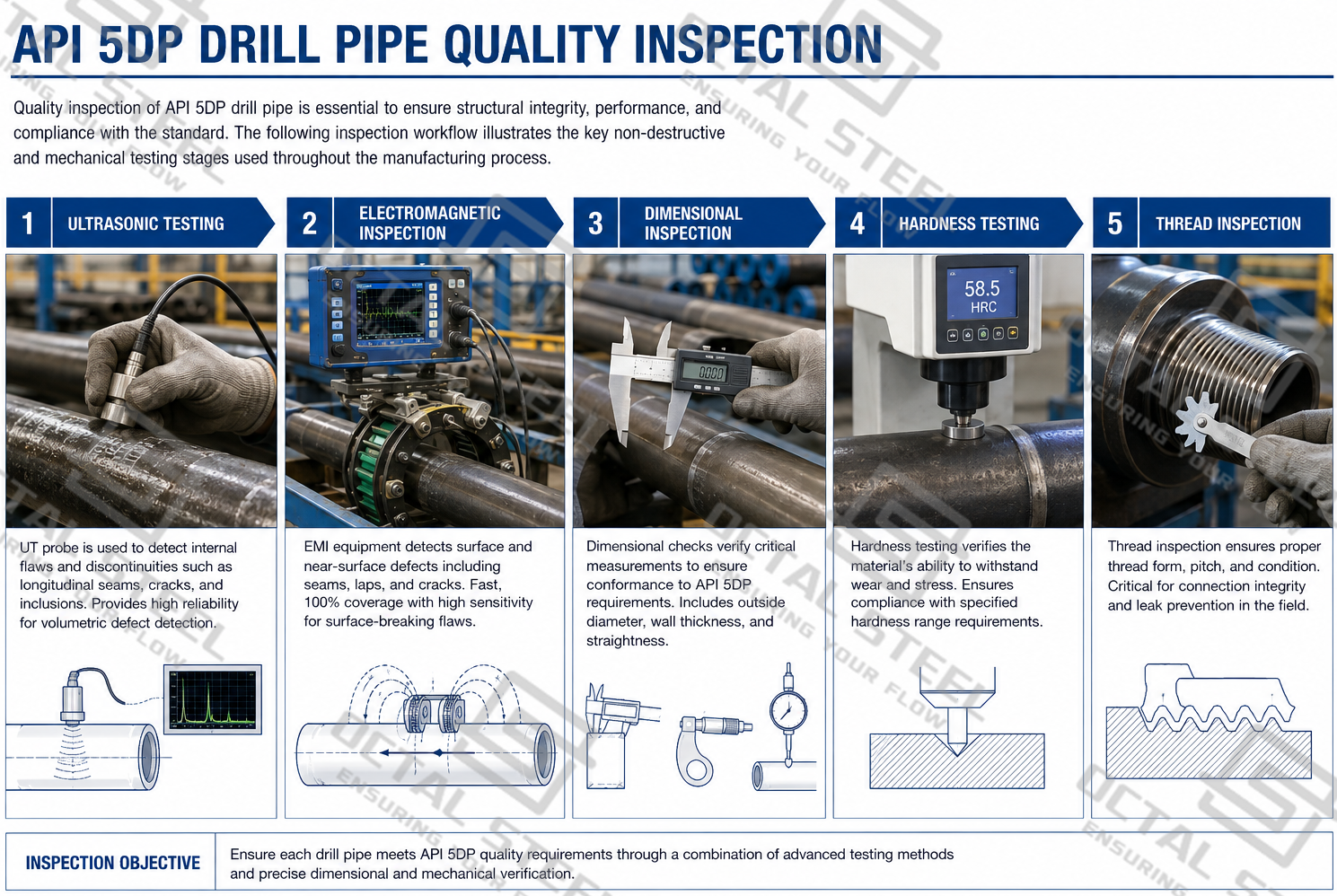
According to the uploaded technical document, common drill pipe inspection methods include EMI, MPI, UT and dimensional inspection, which are used to evaluate fatigue cracks, corrosion damage, wall thickness conditions and thread-related defects.
OctalSteel Quality Control
OctalSteel supplies API 5DP drill pipe with controlled manufacturing and inspection procedures covering material verification, dimensional control, connection inspection and quality documentation. This ensures that supplied drill pipe matches the required specification, including size, grade, connection type and length range.
How to Select the Right Drill Pipe Specification?
Before purchasing drill pipe, buyers should evaluate the drilling requirements and confirm the key specification parameters that directly affect performance and compatibility.
The main factors to consider include:
- Well Depth
Determines the required steel grade and strength level. Deeper wells generally require higher tensile capacity to support longer drill strings. - Hole Size
Determines the suitable drill pipe OD to ensure proper clearance between the drill string and wellbore. - Drilling Torque Requirement
Influences the selection of connection type, as the tool joint must provide sufficient torque capacity during drilling operations. - Hydraulic Requirement
Relates to wall thickness and internal diameter, which affect drilling fluid circulation performance and pressure loss. - Drilling Environment
Includes factors such as temperature, pressure, corrosion conditions and formation characteristics, which may influence material and specification selection. - Handling Requirement
Determines the suitable length range, such as R1, R2 or R3, according to transportation and operational requirements.
For deep wells, directional drilling or high-torque applications, higher-strength grades such as G105 and S135 are commonly considered. However, the final drill pipe specification should be selected based on the complete drilling condition rather than choosing the highest strength grade alone.
Download:API 5DP Drill Pipe Engineering Guide.pdf
OctalSteel API 5DP Drill Pipe Supply Capability
OctalSteel supplies API 5DP drill pipe for oilfield drilling applications with specifications configured according to project requirements. The supplied drill pipe covers different combinations of outer diameter, steel grade, connection type, upset design and length range, allowing customers to select suitable configurations according to drilling depth, load requirements and operating conditions.
Available options include drill pipe sizes from 2-3/8″ to 6-5/8″, common API grades such as E75, X95, G105 and S135, API length ranges including R1, R2 and R3, and connection configurations such as NC and FH series with EU, IU and IEU upset designs.
To support project verification and quality traceability, OctalSteel can provide relevant technical documents, including Mill Test Certificates (MTC), chemical composition records, mechanical property reports, dimensional inspection records and non-destructive testing reports. These documents help customers verify that the supplied drill pipe meets the specified requirements before delivery and field application.
With controlled manufacturing processes and specification-based production, OctalSteel supports drilling contractors, distributors and project suppliers requiring reliable API 5DP drill pipe solutions for oil and gas drilling operations.
FAQ
What information should be included in a drill pipe specification?
A complete drill pipe specification should include OD, wall thickness, nominal weight, steel grade, connection type, upset design and length range.
What is the most common drill pipe size?
5″ drill pipe is one of the most widely used sizes because it provides a balanced combination of strength, hydraulic performance and connection availability.
What is the difference between G105 and S135 drill pipe?
S135 provides higher minimum yield strength than G105 and is typically selected for higher tensile loads and more demanding drilling conditions.
What does NC50 mean on drill pipe?
NC50 refers to a rotary shouldered connection type commonly used for 5″ drill pipe configurations.
Why is upset type important in drill pipe selection?
Upset design reinforces the pipe end area, improving connection strength and reducing stress concentration during drilling operations.
The resource belongs to the product
X95 Drill Pipe
Click permalink to view detail & more descripton.
Social Share