Your Responsible Supplier Partner for Oil and Gas Products.

Cone Crushers Working Principle and Wear Parts Guide
Cone Crushers Working Principle and Wear Parts Guide
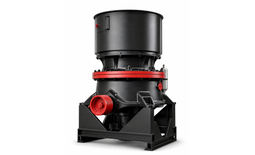
Cone Crushers are used in quarry, aggregate and mining production when crushed material needs controlled size, stable gradation and better particle shape after primary crushing. Many users searching for a cone crusher are not only looking for a machine name. They are trying to understand where the crusher fits in the crushing line, how the chamber works, what the machine is used for, and which parts affect long-term operation.
For a complete product selection page, users can continue to the main Cone Crushers page after understanding these basic decision points.
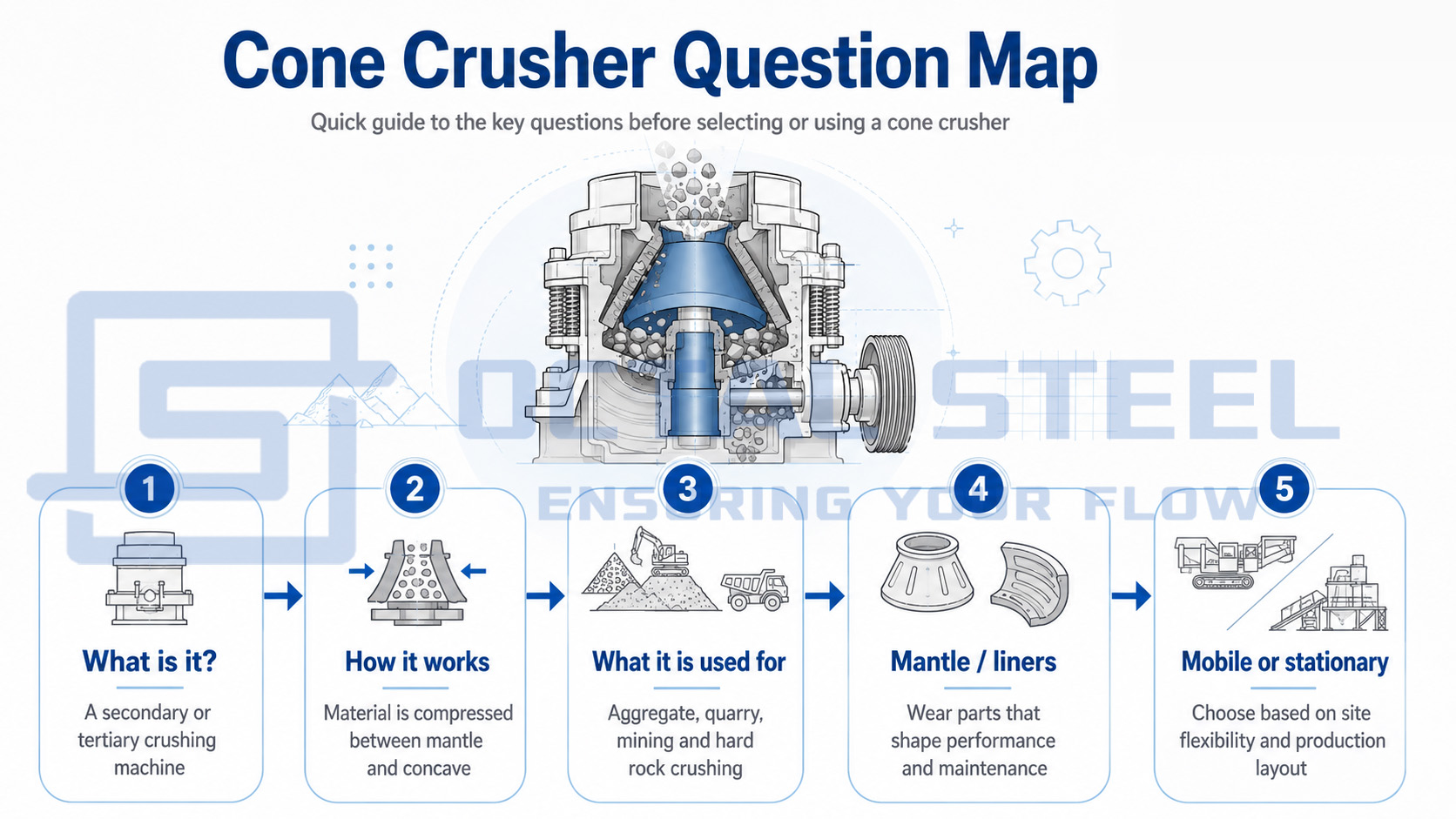
What Is a Cone Crusher?
A cone crusher is a compression crushing machine that reduces rock between a moving mantle and a fixed concave liner. Material enters from the top of the crushing chamber, is squeezed repeatedly, and exits once it becomes smaller than the discharge opening.
In most production lines, cone crushers are installed after jaw crushers or gyratory crushers. The primary crusher reduces large raw material first. The cone crusher then handles secondary or tertiary crushing, where output size, aggregate shape, liner wear and screening balance become more important.
Cone crushers are commonly used for granite, basalt, river pebble, limestone, iron ore and other medium-hard to hard materials. Compared with impact crushers, cone crushers are often selected when the plant needs compression crushing, stable gradation control and a wear pattern that can be planned through mantle and concave replacement.
What Is a Cone Crusher Used For?
A cone crusher is used when the production line needs controlled reduction after primary crushing. It is not normally the first machine to receive raw quarry stone. Its main role is to reduce already-crushed material into more controlled product sizes for screening, final aggregate production or further processing.
The machine can work in different crushing stages depending on the feed size, output target and screen circuit.
| Crushing Stage | Cone Crusher Role | Typical Site Condition | Key Control Point |
|---|---|---|---|
| Secondary Crushing | Reduces material after jaw crusher | Larger feed from primary crusher | Feed size, chamber intake, crushing load |
| Tertiary Crushing | Produces smaller aggregate before final screening | Controlled feed and tighter product size target | CSS, liner profile, screen return load |
| Fine Crushing | Supports smaller final product range | Pre-sized material and stable circuit | Chamber type, power load, fines control |
| Closed-Circuit Crushing | Works with vibrating screen and return conveyor | Oversize material returns for re-crushing | Screen opening, CSS balance, return load |
| Mobile Crushing | Used in movable or temporary crushing sites | Quarry face movement or contractor projects | Compact layout, feeding stability, spare parts access |
Download:Cone Crusher Used For
n aggregate plants, the cone crusher helps control the final product size range. In mining circuits, it prepares material for the next reduction stage. In hard rock applications, it is often selected because compression crushing can handle abrasive material more predictably than impact crushing, provided that the liners and chamber profile are matched correctly.
How Does a Cone Crusher Work?
A cone crusher works by using eccentric movement. The mantle moves inside the concave, creating a changing crushing gap. As material moves downward through the chamber, it is compressed several times until it is small enough to pass through the discharge side.
The working process is not only “rock in, smaller rock out.” Several control points decide whether the crusher can keep stable output.
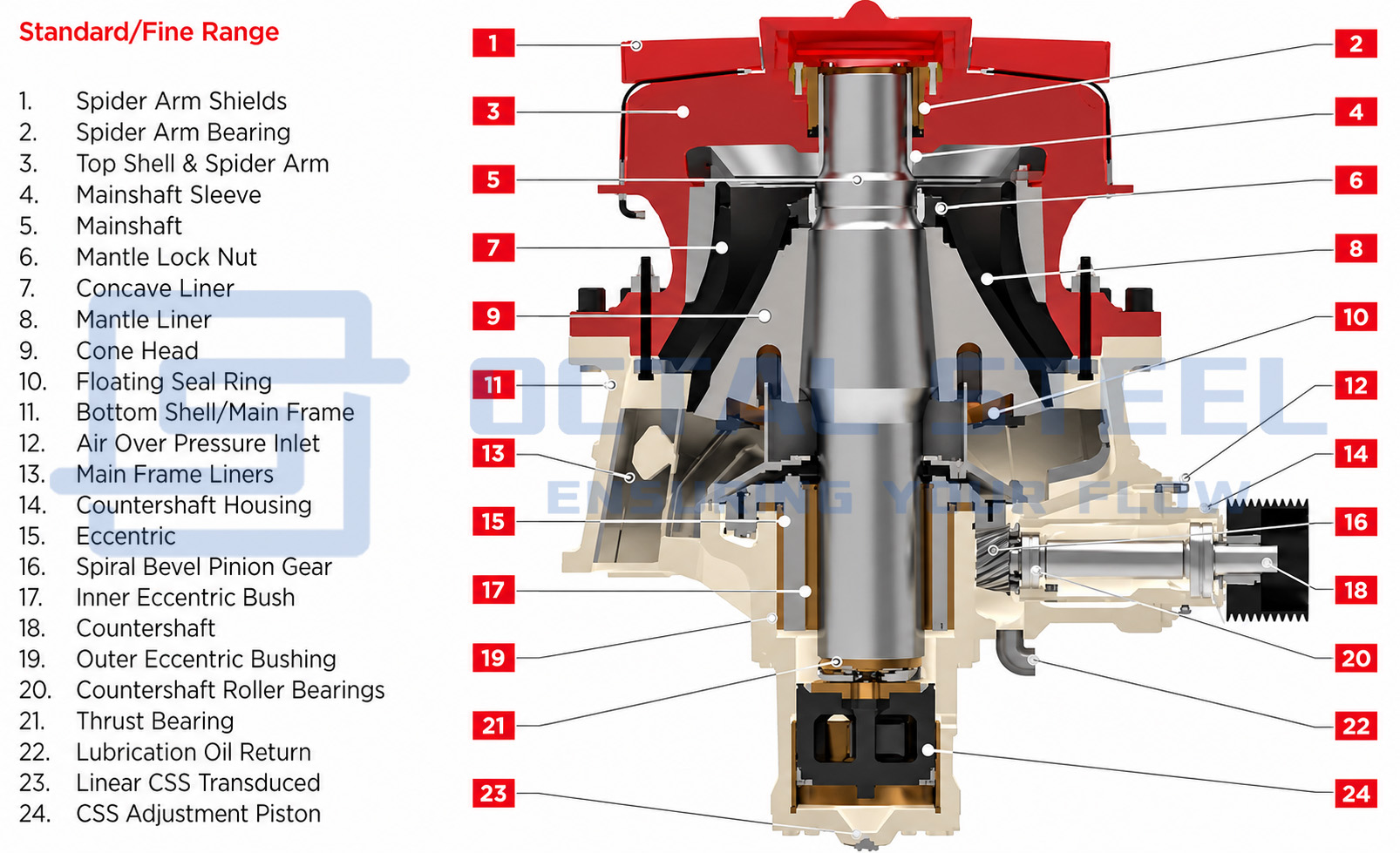
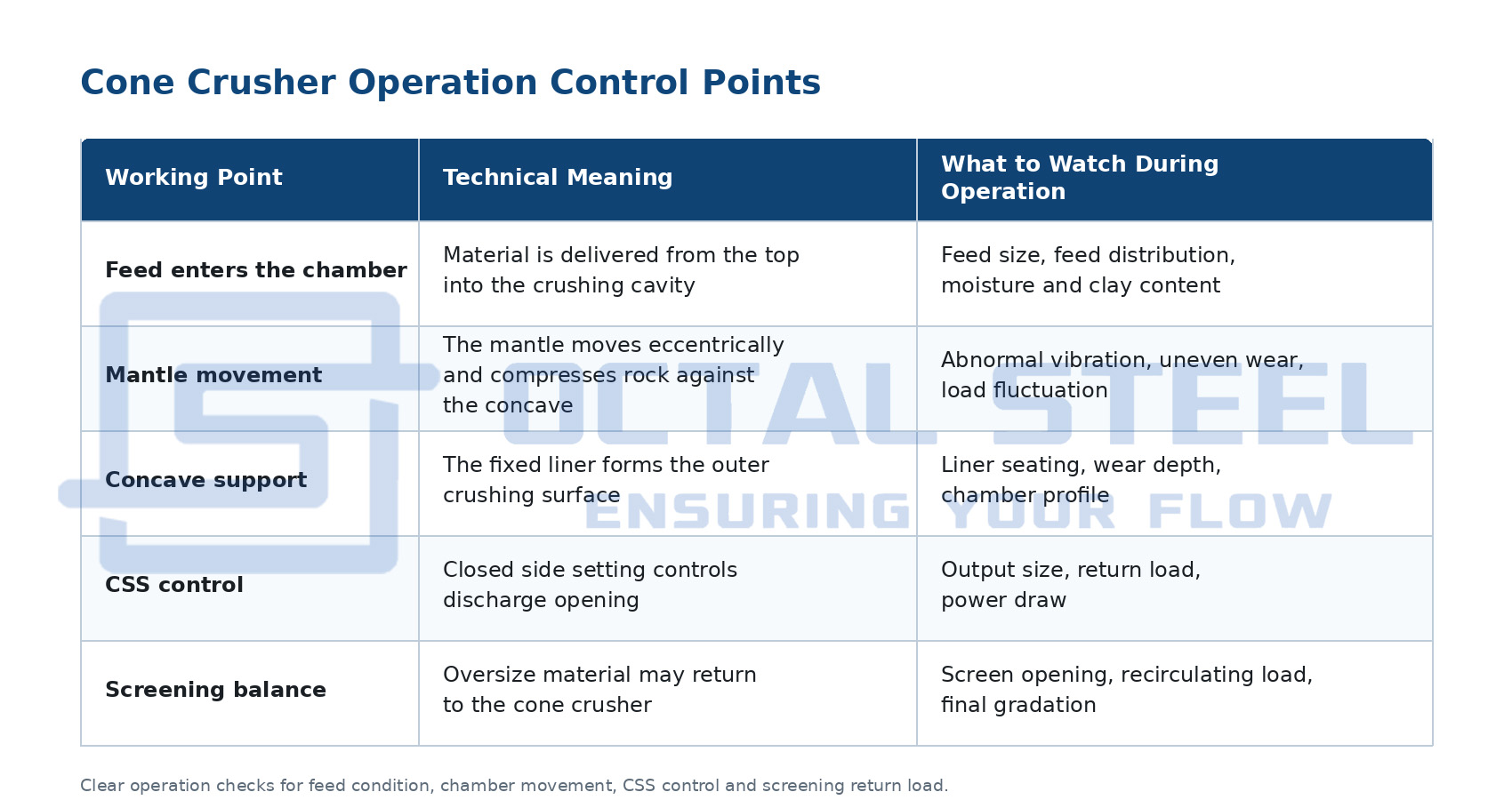
Download:How Does a Cone Crusher Work
CSS, or closed side setting, is the smallest gap between the mantle and concave at the discharge side. It directly affects output size, product gradation, machine load and recirculating material. A smaller CSS can produce finer material, but if the feed, chamber and screen are not matched, it may also increase power draw, liner wear and return load.
A cone crusher does not perform well when the feed is oversized, wet, sticky or unevenly distributed. Even a strong machine can show unstable capacity if the chamber is not filled correctly or if the downstream screen creates too much return material.
How a Cone Crusher Works in a Crushing Line
A cone crusher should be understood as part of a full production circuit, not as a single isolated machine. The upstream crusher, screen opening, return conveyor and finished product requirement all affect how the cone crusher performs.
A typical aggregate line may follow this route:
Feeder → Jaw Crusher → Cone Crusher → Vibrating Screen → Final Aggregate
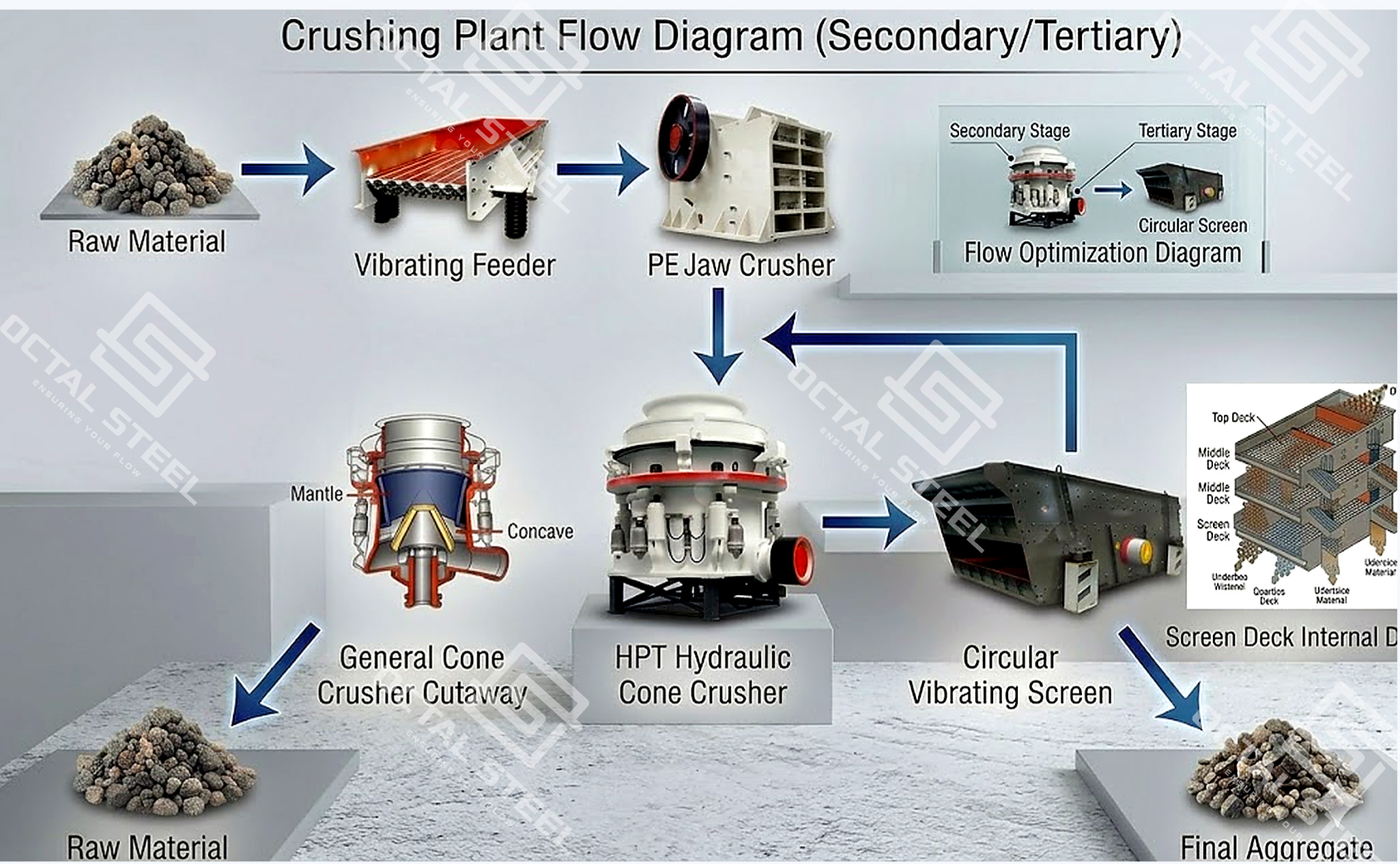
If the screen separates material efficiently, finished aggregate leaves the circuit and oversized material returns for another crushing cycle. This closed-circuit setup improves size control, but it also increases the importance of CSS, liner condition and chamber selection.
If the cone crusher discharge setting is too tight, the plant may create excessive fines and power load. If it is too open, too much oversize material may return to the crusher. The best setting depends on feed size, material hardness, chamber type and final product size.
Single Cylinder Cone Crusher
A Single Cylinder Cone Crusher uses one main hydraulic cylinder to support CSS adjustment, overload protection and cavity clearing. It is widely used in secondary, tertiary and fine crushing where the plant needs stable output size, simpler hydraulic control and practical maintenance.
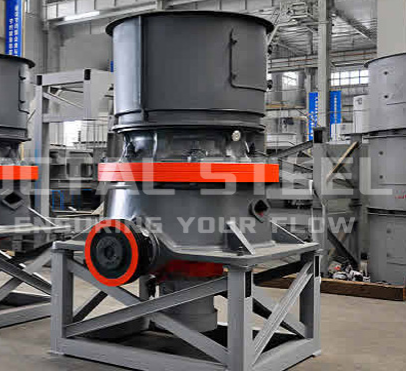
Compared with older spring cone crusher designs, the single cylinder hydraulic structure allows easier adjustment and faster chamber clearing when blockage or tramp material occurs. Compared with a multi-cylinder cone crusher, it has fewer hydraulic control points, which can make daily inspection and maintenance more straightforward.
A Single Cylinder Cone Crusher is often suitable for quarry and aggregate plants processing granite, basalt, river pebble, limestone and similar medium-hard to hard materials. It is especially useful when the project needs a balance between stable crushing performance, easier operation and controlled maintenance workload.
For model selection, the final configuration should still be checked by feed size, target capacity, material abrasiveness, CSS range, chamber type and liner replacement plan.
How to Choose a Cone Crusher Mantle
The mantle is the moving crushing surface inside the cone crusher. It works together with the concave liner to form the crushing chamber. Choosing the correct mantle is important because it affects reduction ratio, product shape, liner wear, power load and chamber stability.
A mantle should not be selected only by outside shape or part number. It must match the chamber profile, concave liner, feed condition and target output size.
| Part / Factor | Function in Crushing Chamber | Selection / Inspection Focus |
|---|---|---|
| Mantle | Moving crushing surface | Feed size, chamber profile, wear pattern, locking condition |
| Concave | Fixed crushing surface | Liner fit-up, wear depth, product shape control |
| Chamber Profile | Defines the reduction path | Coarse, medium or fine application requirement |
| CSS Range | Controls discharge size | Target product size and screen opening |
| Liner Material | Resists wear from rock contact | Abrasiveness of granite, basalt, river pebble or ore |
| Wear Pattern | Shows real operating condition | Uneven feeding, poor chamber filling, delayed replacement |
A worn mantle can change the actual chamber shape even if the machine setting looks normal. When product gradation drifts, return load increases or power draw changes abnormally, the mantle and concave wear profile should be checked together.
Cone Crusher Liners
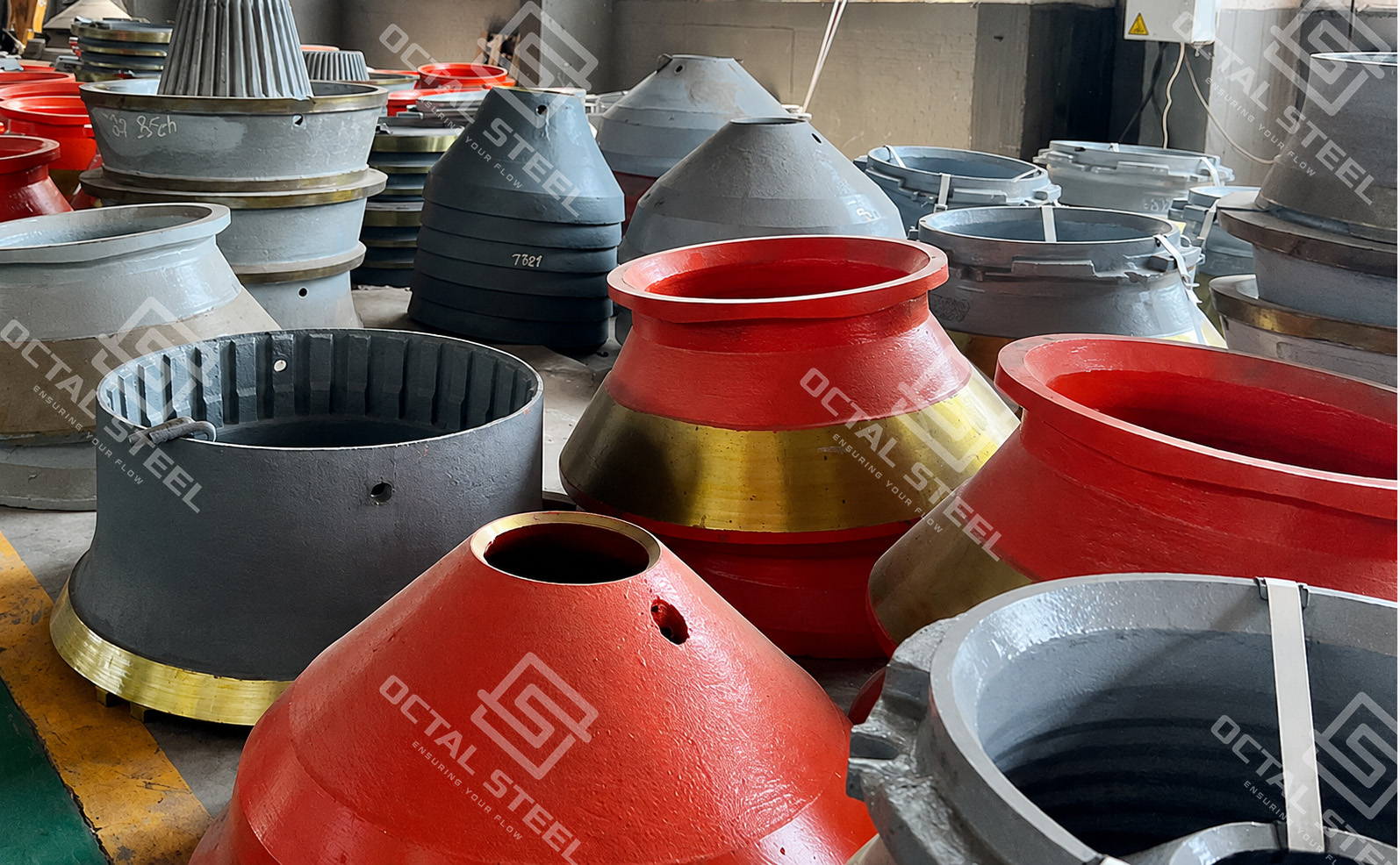
Cone crusher liners are the wear surfaces that shape the crushing chamber. The main liners are the mantle and concave. During operation, rock is continuously compressed against these surfaces, so liner wear is normal. The important point is whether the wear is controlled and monitored.
When cone crusher liners wear too far, the chamber profile changes. This can cause unstable product gradation, reduced capacity, higher recirculating load, poor aggregate shape and increased stress on the machine.
Good liner management should focus on wear profile, not only remaining thickness. Mantle and concave should be treated as one chamber set. Feed distribution, CSS stability and product gradation should also be reviewed during liner service life.
For abrasive rock, liner replacement should be part of the production plan. Waiting until the crusher stops often costs more than scheduled liner replacement.
Cone Crusher Wear Parts and Spare Parts
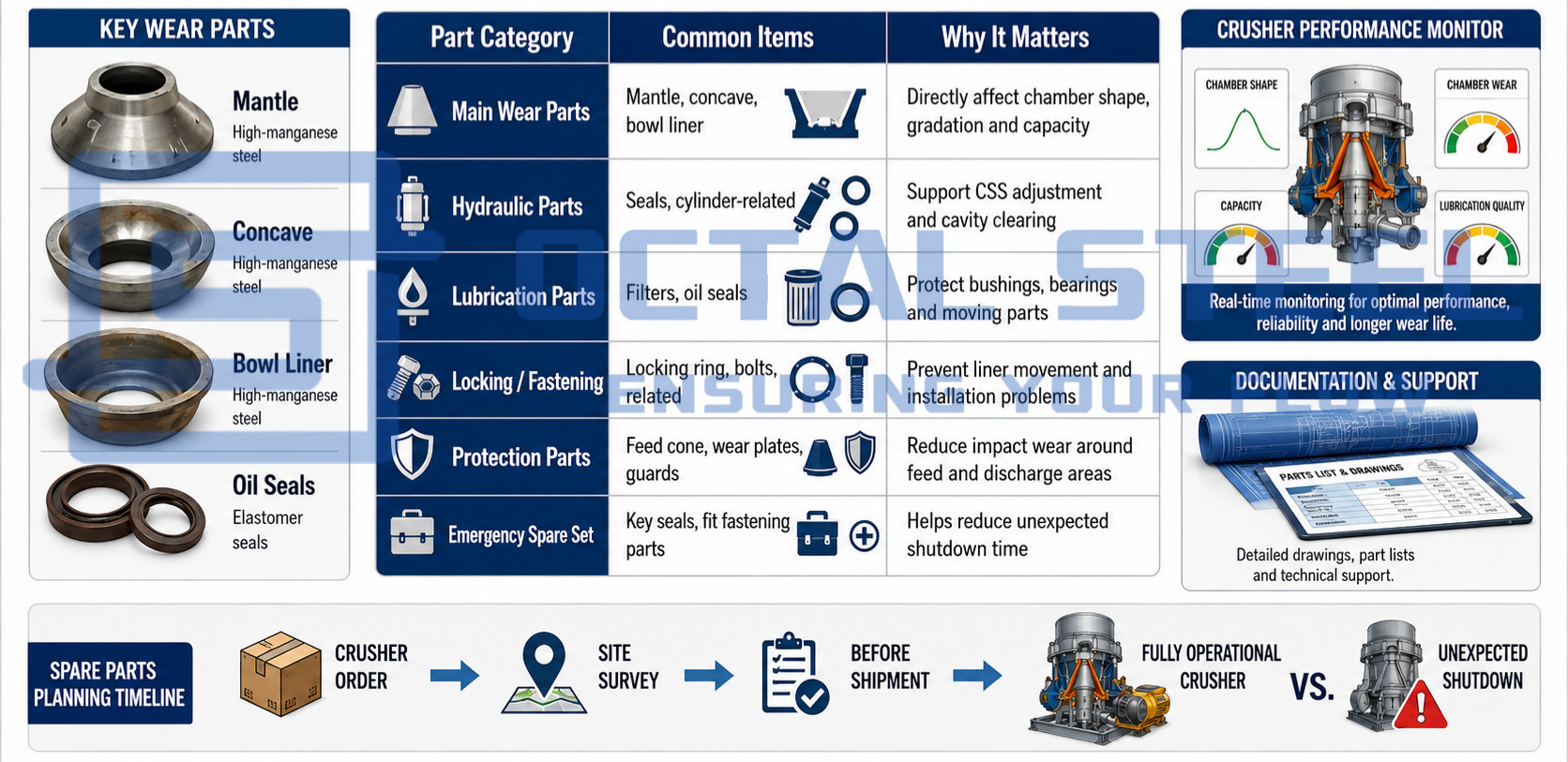
Cone crusher wear parts include the components that directly face crushing force, material impact, friction and operating contamination. Spare parts are prepared to reduce downtime when maintenance or unexpected failure occurs. Some items overlap, but their planning purpose is different.
Download:Cone Crusher Wear Parts and Spare Parts
Wear parts should match the crusher model, chamber type and material condition. A wrong liner profile may still install, but it can reduce production stability or create uneven wear. For hard rock crushing, manganese liner selection and wear pattern review are especially important.
For remote-site or export projects, spare parts should be planned before shipment. A plant in continuous production can lose much more from an unexpected shutdown than from preparing the correct spare package in advance.
Mobile Cone Crusher
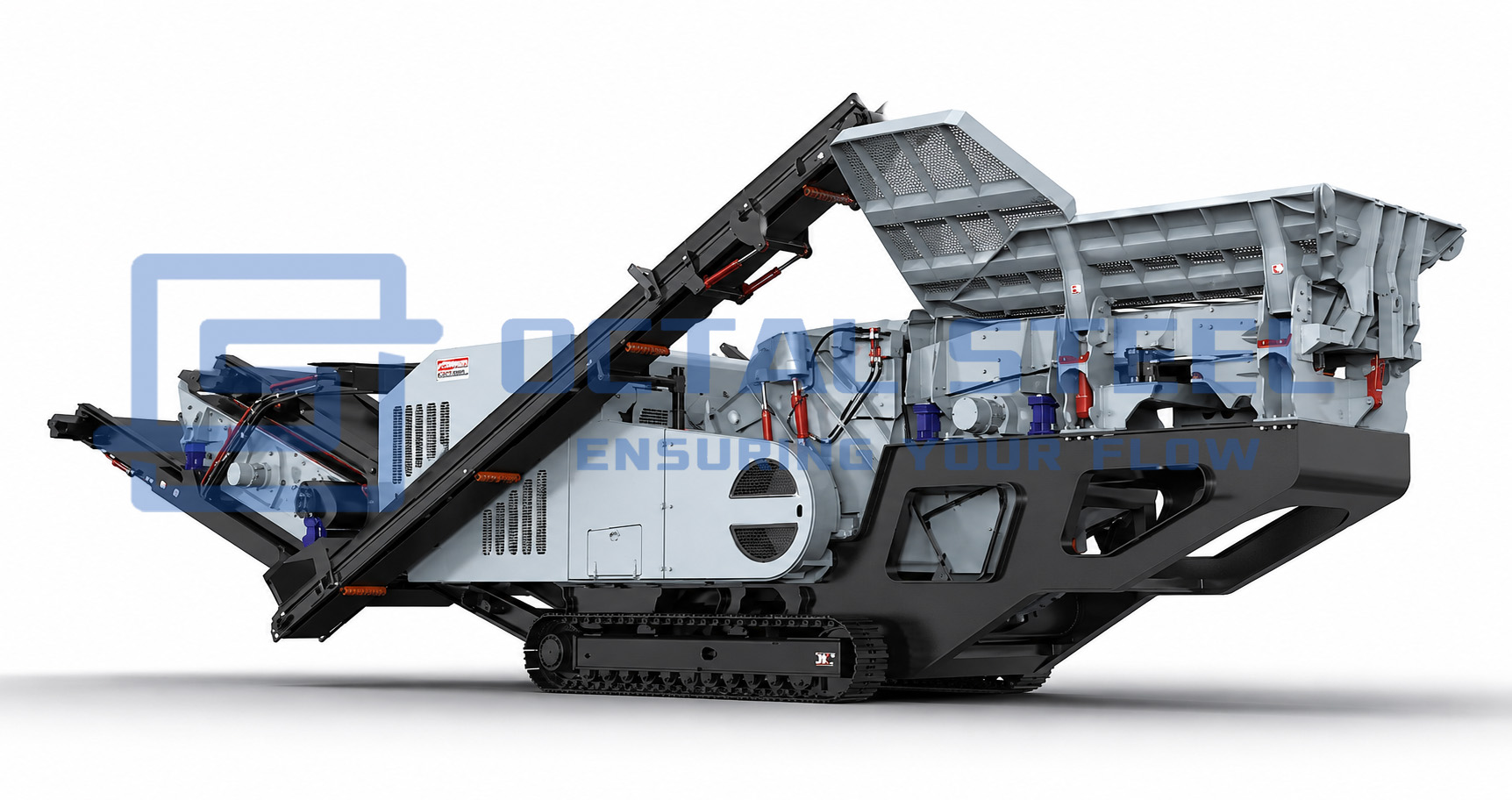
A mobile cone crusher is used when the crushing plant needs flexible relocation, shorter setup time or site-to-site operation. It can combine cone crushing, screening, return conveyor and onboard control into a compact mobile unit, depending on configuration.
A stationary cone crusher is usually better for long-term quarry or mining production where conveyors, screens, platforms, foundation and electrical systems are fixed. It gives the plant stronger layout stability and better integration with large screening systems.
| Item | Mobile Cone Crusher | Stationary Cone Crusher |
|---|---|---|
| Best Use | Temporary sites, contractor work, quarry face movement | Long-term quarry, aggregate or mining plant |
| Installation | Faster setup, less civil foundation work | Fixed foundation and integrated plant layout |
| Production Stability | Flexible but more layout-limited | Better for continuous high-volume production |
| Maintenance Access | Compact structure, access depends on mobile frame | Easier to design platforms and service space |
| Screening Match | Can combine screen and return conveyor | Better integration with larger screening systems |
| Project Focus | Mobility and fast deployment | Long-term efficiency and stable plant control |
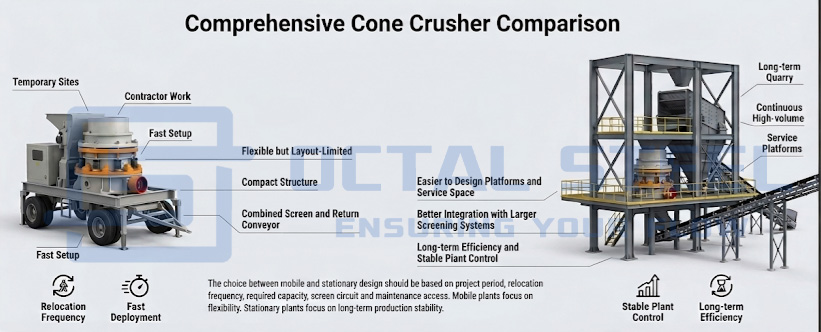
The choice between mobile and stationary design should be based on project period, relocation frequency, required capacity, screen circuit and maintenance access. Mobile plants focus on flexibility. Stationary plants focus on long-term production stability.
Cone Crusher for Sale: What Should Be Checked Before Comparing Price?
When users search for “cone crusher for sale,” price is only one part of the decision. Two machines with similar names may perform very differently if the feed size, chamber type, hydraulic system, motor configuration and spare parts support are different.
Before comparing offers, check these points:
- Maximum feed size
- Required output size
- Material hardness and abrasiveness
- Secondary or tertiary crushing position
- CSS adjustment range
- Chamber options
- Target capacity
- Mobile or stationary layout
- Wear parts availability
- Spare parts support
- Installation and maintenance access
A professional cone crusher offer should explain the working condition it is designed for. It should not only list a model name and motor power. For real production, the important question is whether the machine can accept the feed, reach the target product size, keep stable output and control wear cost.
When Should Cone Crusher Liners Be Replaced?
Cone crusher liners should be replaced before the chamber profile becomes too worn to control product size and production stability. A liner may still look usable from the outside, but the actual crushing profile may already be changed.
Replacement timing should be checked through:
- Liner wear profile
- CSS stability
- Product gradation change
- Return load increase
- Power load change
- Abnormal vibration
- Visual inspection during shutdown
- Maintenance records
If liner replacement is delayed too long, the crusher may still operate but produce less stable aggregate, consume more power and increase stress on related parts. This is why liner inspection should be connected with production data, not only visual wear.
FAQ
F1:What is a cone crusher?
A1:A cone crusher is a compression crusher used after primary crushing. It reduces rock between a moving mantle and a fixed concave.
F2:How does a cone crusher work?
A2:A cone crusher squeezes material inside the crushing chamber. The mantle moves eccentrically, and crushed material exits through the CSS-controlled discharge opening.
F3:What is a cone crusher used for?
A3:Cone crushers are used for secondary and tertiary crushing in quarry, mining, aggregate, road base and concrete aggregate production.
F4:What is CSS in a cone crusher?
A4:CSS means closed side setting. It is the smallest gap between the mantle and concave and controls output size, capacity and liner wear.
F5:How do I choose a cone crusher mantle?
A4:Choose the mantle by feed size, chamber type, CSS range, material hardness and target output size. It must match the concave liner.


Recent Faqs
Rencent Articles
Hot Topic

Custom Posts

Octal is located in China recognized as a leading supplier, distributor, and manufacturer union in providing piping solutions for oil and gas company. Product ranges in Steel Pipe, Casing and Tubing, Steel Plate, Sucker Rod, Steel Pipe Fittings, Valves, and Equipment for pipelines.
Contact Info
Unit 2544, 25/F, Tower A, Wanda Plaza, Wenfeng District, Anyang, Henan, China & Building A, No.18 Dirun Road, Zhengdong New District, Zhengzhou, Henan, China
+86 372 2157660 / +86 186 3727 1277
[email protected]