Your Responsible Supplier Partner for Oil and Gas Products.

HPY Multi-cylinder Hydraulic Cone Crusher
Recent Products

Rencent Articles



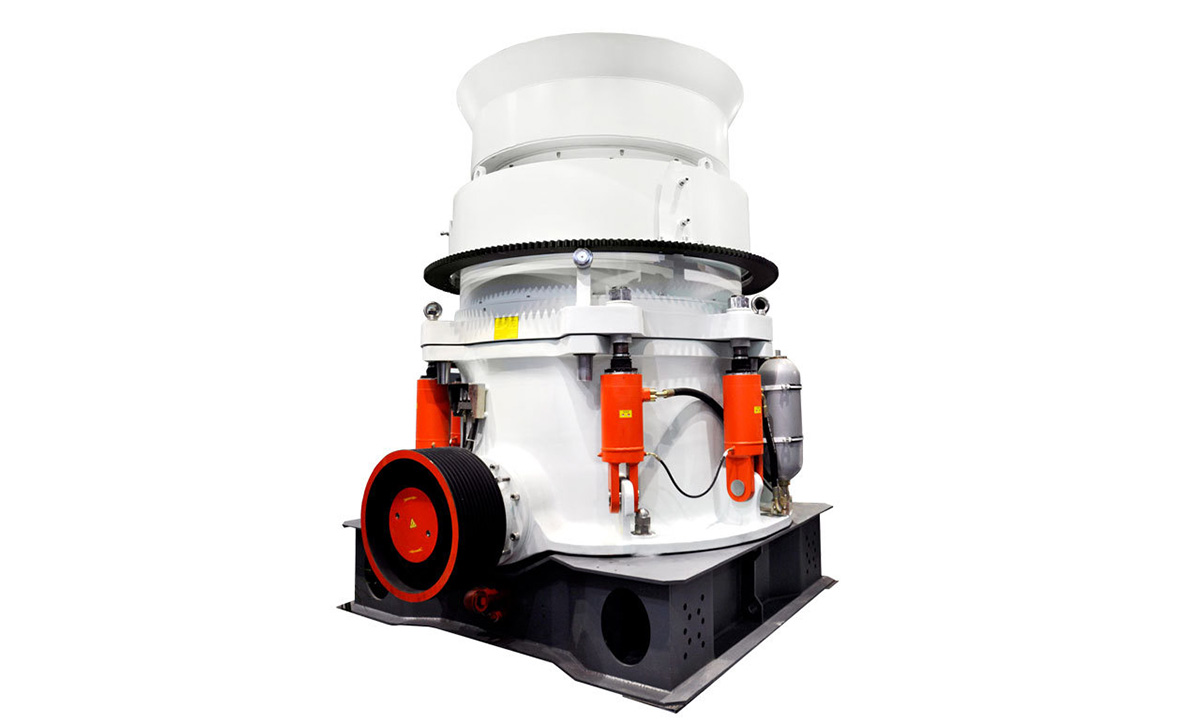
HPY Multi-cylinder Hydraulic Cone Crusher
Crushing Stage: Secondary, tertiary and fine crushing
Applicable Materials: Granite, basalt, river pebble, limestone, iron ore, copper ore
Feed Size: Up to 350 mm depending on model and chamber type
Output Size: 6 mm to 64 mm by CSS setting
Capacity Range: Approx. 20–3000 t/h
Models: HPY-100, HPY-200, HPY-300, HPY-400, HPY-500, HPY-800, HPY-1000, HPY-1250
Chamber Options: Coarse, medium, fine and extra-fine
Main Features: Hydraulic CSS adjustment, tramp iron release, hydraulic clearing, laminated crushing
HPY cone crusher for hard rock, aggregate and mining crushing.
Suitable for granite, basalt, manufactured sand, iron ore and closed-circuit screening plants.
The HPY Multi-cylinder Hydraulic Cone Crusher is built for secondary, tertiary and fine crushing of hard rock, high-strength aggregate and metallic ore. It combines laminated crushing, hydraulic CSS adjustment, tramp iron release and multiple chamber options to support stable particle size control in continuous aggregate and mining production lines.
On site, cone crusher performance is usually decided by the whole crushing circuit, not by one nameplate value. Feed size after the jaw crusher, feed grading, rock hardness, moisture, CSS setting, chamber type, liner wear, screen opening and return load will all change the actual output. When these conditions are matched correctly, the HPY cone crusher can help improve cubic particle shape, reduce unnecessary circulation load and keep the line running more steadily.
HPY multi-cylinder hydraulic cone crushers are used for quarry aggregate, manufactured sand, mining crushing, basalt and granite processing, iron ore crushing and construction material production. Coarse, medium, fine and extra-fine chambers can be selected according to feed opening, discharge size and final product requirement.
HPY Multi-cylinder Hydraulic Cone Crusher Specifications
| Item | Supply Scope / Technical Reference |
|---|---|
| Product Name | HPY Multi-cylinder Hydraulic Cone Crusher |
| Crushing Stage | Secondary crushing, tertiary crushing, fine crushing |
| Applicable Materials | Granite, basalt, diabase, river pebble, limestone, dolomite, iron ore, copper ore and other medium-hard to hard materials |
| Common Feed Size | Up to 350 mm depending on model and chamber type |
| Output Size | Commonly 6–64 mm depending on CSS and screening circuit |
| Capacity Range | Approx. 20–3000 t/h by model, CSS and plant configuration |
| Typical Models | HPY-100, HPY-200, HPY-300, HPY-400, HPY-500, HPY-800, HPY-1000, HPY-1250 |
| Chamber Options | Coarse, medium, fine, extra-fine; selected according to feed size and final product size |
| Adjustment Method | Hydraulic adjustment of discharge opening / CSS |
| Protection System | Tramp iron release and hydraulic clearing |
| Control System | Electric-hydraulic control, CSS monitoring, lubrication and operating status monitoring |
| Main Wear Parts | Mantle, concave, bowl liner, copper bushings, seals and related wear components |
| Plant Use | Stationary crushing plant, aggregate line, mining line, sand-making system, closed-circuit screening plant |
Capacity values are technical references. Actual output should be confirmed according to material hardness, bulk density, feed grading, moisture, chamber selection, CSS, screen size and open-circuit or closed-circuit operation.
Main Technical Parameters
The following table shows reference capacity under different tight-side discharge opening / CSS settings. These data help buyers compare model range and crushing output, but final selection should still be checked together with feed size, chamber type, screen opening and return load.
| Model | 6 mm | 8 mm | 10 mm | 13 mm | 16 mm | 19 mm | 22 mm | 25 mm | 32 mm | 38 mm | 45 mm | 51 mm | 64 mm |
|---|---|---|---|---|---|---|---|---|---|---|---|---|---|
| HPY-100 | 20–50 | 30–60 | 40–70 | 65–90 | 50–80 | 70–95 | 75–100 | 80–110 | 90–130 | — | — | — | — |
| HPY-200 | 40–70 | 60–100 | 80–120 | 130–180 | 110–150 | 140–190 | 150–200 | 160–220 | 180–235 | 200–250 | — | — | — |
| HPY-300 | — | 100–130 | 110–140 | 170–220 | 145–185 | 190–240 | 200–260 | 220–280 | 240–320 | 295–380 | 340–440 | — | — |
| HPY-400 | — | 115–150 | 130–175 | 220–280 | 180–230 | 240–320 | 270–345 | 280–370 | 310–430 | 360–490 | 400–550 | 450–630 | — |
| HPY-500 | — | 140–170 | 170–220 | 270–360 | 225–290 | 310–400 | 335–430 | 350–450 | 390–530 | 435–600 | 500–680 | 560–760 | — |
| HPY-800 | — | — | 235–330 | 370–500 | 300–420 | 420–540 | 450–590 | 490–710 | 530–780 | 580–920 | 660–1000 | 750–1150 | — |
| HPY-1000 | — | — | 440–590 | 580–910 | 500–760 | 680–930 | 720–970 | 770–1000 | 950–1220 | 1120–1350 | 1260–1450 | 1540–1820 | 1600–2100 |
| HPY-1250 | — | — | 630–840 | 840–1300 | 720–1080 | 980–1320 | 1040–1380 | 1100–1430 | 1360–1740 | 1600–1940 | 1800–2100 | 2200–2600 | 2600–3000 |
View the HPY cone crusher technical parameters in PDF format.
Unit: t/h s
Discharge opening: tight-side discharge opening / CSS, mm
For production line selection, Octal Steel recommends checking the feed opening, chamber type, CSS, screen size, return load, rock abrasiveness and required final aggregate size together before confirming the crusher model.
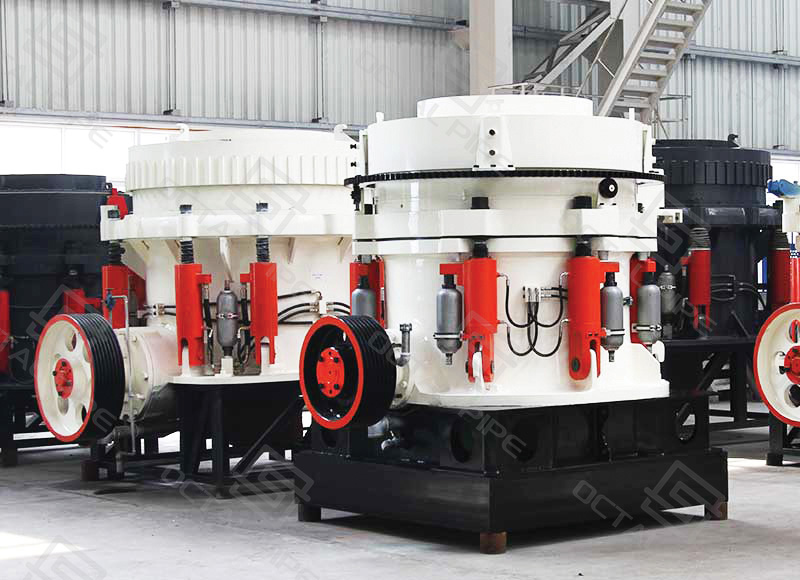
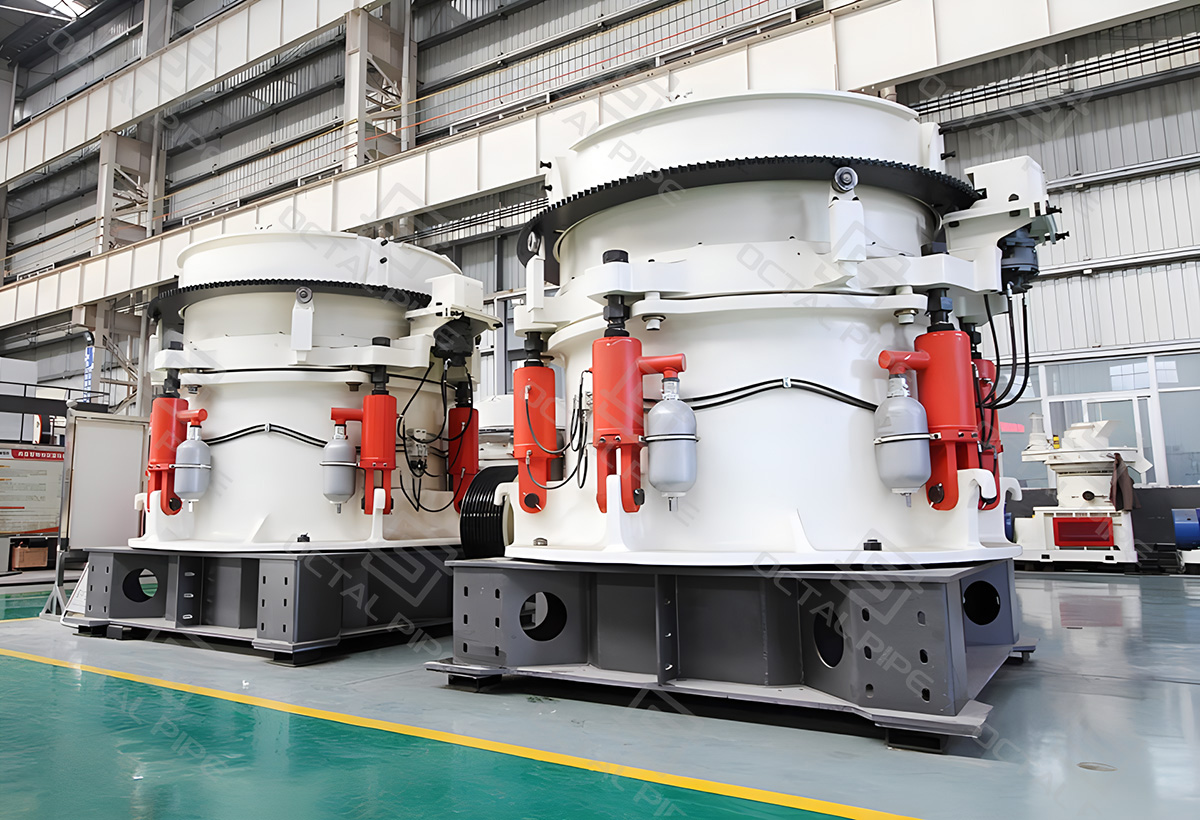
Key Design Advantages of HPY Cone Crusher
The HPY multi-cylinder hydraulic cone crusher uses a structure in which the eccentric bushing rotates around a fixed main shaft. This design improves main shaft strength and allows the machine to work under higher crushing force, which is important for hard ore, basalt, granite and continuous aggregate production.
Compared with spring cone crushers and conventional hydraulic cone crushers, the HPY series focuses more on high crushing force, fine crushing efficiency, hydraulic operation and stable chamber performance.
| Design Point | Practical Value in Operation |
|---|---|
| Compact body with high crushing force | Smaller installation footprint while maintaining strong crushing capacity, suitable for hard ore and high-strength aggregate. |
| Large eccentric throw and high crushing frequency | Supports finer crushing and higher fine-material output when CSS and screening circuit are correctly matched. |
| Laminated crushing chamber | Material is crushed by inter-particle compression, helping produce more uniform gradation and better cubic particle shape. |
| Lower liner wear under stable chamber load | The material layer protects the mantle and concave, reducing direct liner abrasion when feeding is stable. |
| Hydraulic CSS adjustment | The discharge opening can be adjusted accurately by hydraulic control, improving product size control and reducing manual workload. |
| Easier liner replacement | Hydraulic motor assistance can reduce labor during adjustment ring release and liner replacement. |
| Tramp iron release | Uncrushable material can pass through the chamber more safely, reducing shutdown risk caused by iron blockage. |
| Hydraulic clearing | Reduces the time and labor required to clear blocked material from the crushing chamber. |
| Optimized internal structure | Supports full-chamber feeding under suitable operating conditions, improving crushing efficiency and reducing energy waste. |
| Intelligent control system | The visible discharge opening concept and one-button operation simplify adjustment and operating control. |
| IoT service support | Remote service and operating data support can be configured for smarter maintenance and production monitoring. |
For plants that need stable output, finer product size and less manual adjustment, the HPY structure provides clear advantages in crushing force, hydraulic control and chamber efficiency.
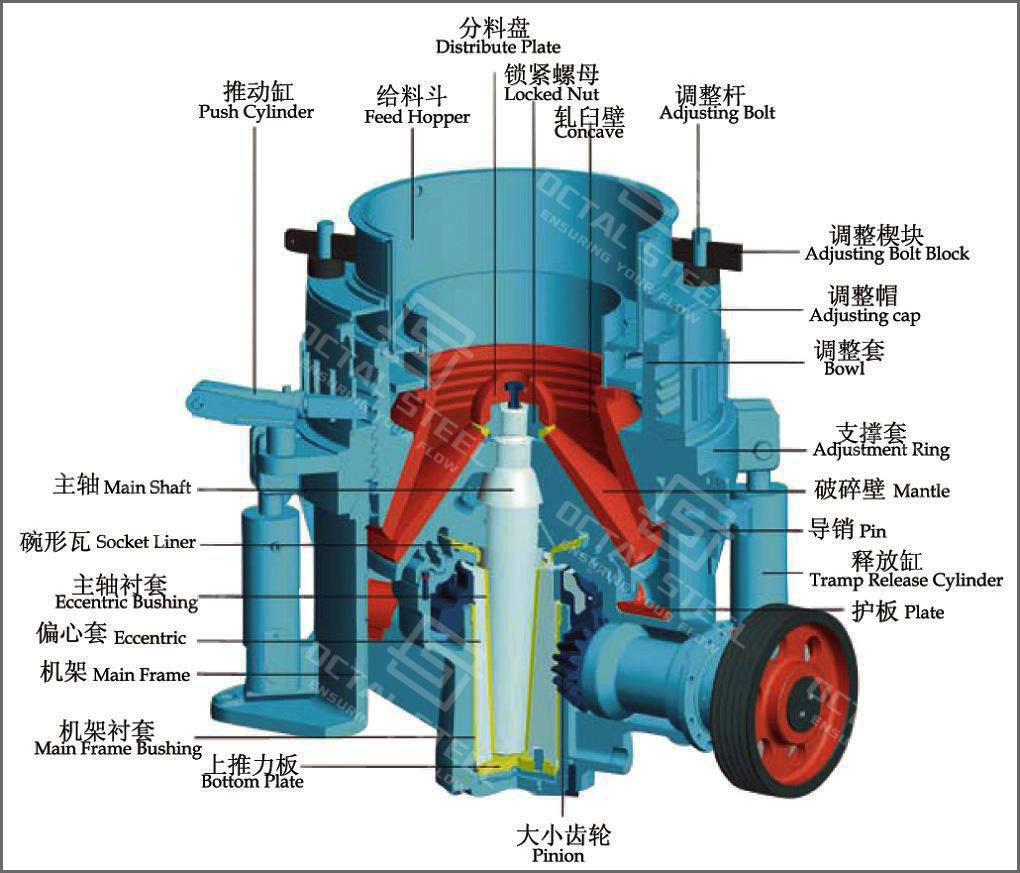
Working Principle of HPY Hydraulic Cone Crusher
The HPY hydraulic cone crusher works through compression crushing and laminated crushing. Its fixed main shaft and eccentric bushing structure help improve crushing force, chamber stability and fine crushing efficiency.
• Fixed main shaft and eccentric bushing structure
The eccentric bushing rotates around the fixed main shaft, driving the mantle to move periodically inside the crushing chamber. This structure improves main shaft rigidity and supports high-power crushing for hard rock and abrasive materials.
• Compression crushing between mantle and concave
Material entering the chamber is squeezed, bent and fractured between the mantle and concave until it reaches the set discharge size.
• Laminated crushing for better particle shape
When the chamber is properly filled, particles are compressed against each other, not only against the liners. This helps produce more uniform gradation, better cubic particle shape and lower direct liner wear.
• Fine and ultra-fine crushing performance
A larger eccentric throw and higher crushing frequency helps increase fine material generation when the CSS and screening circuit are correctly matched.
• Support for more crushing, less grinding
In mining and ore-processing applications, finer crushing before grinding can help reduce grinding load and improve the overall crushing-grinding process balance.
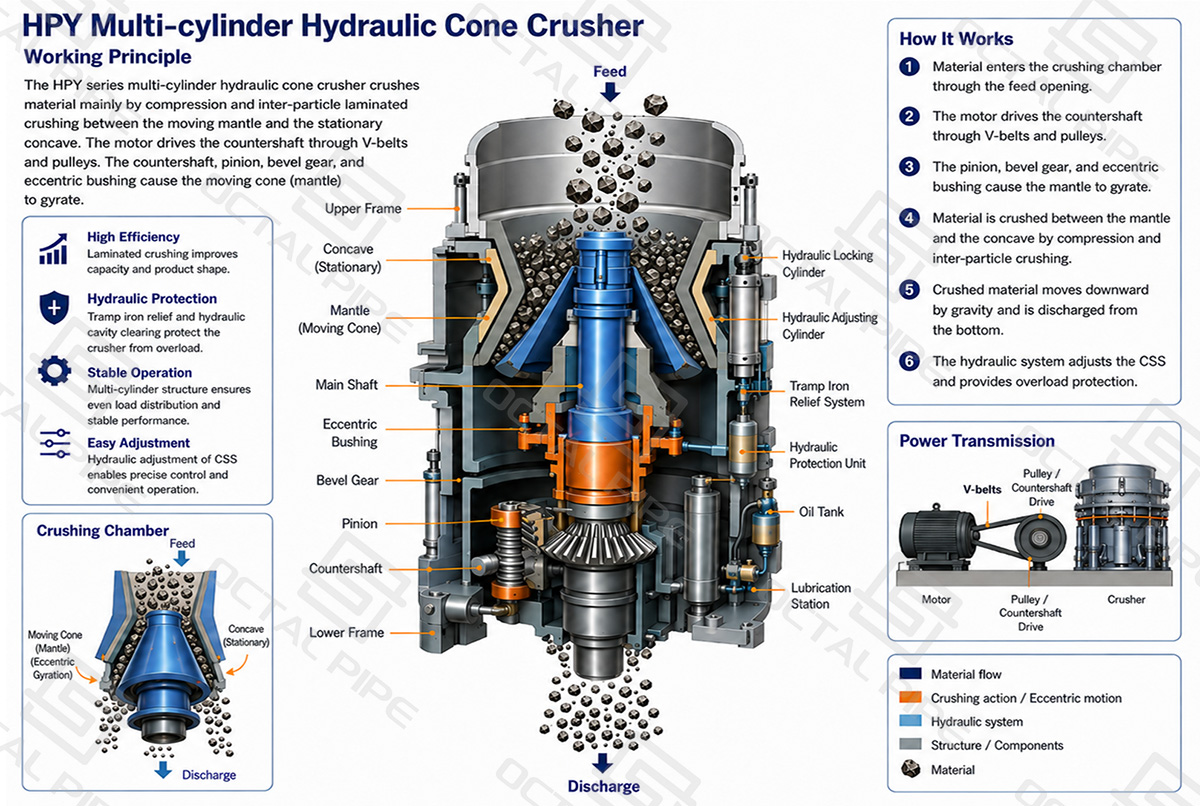
Crushing Chamber and CSS Selection
The crushing chamber decides how the HPY cone crusher works inside the plant. Coarse chambers are used when the crusher receives larger feed from a jaw crusher or gyratory crusher. Fine and extra-fine chambers are selected when the plant needs smaller aggregate size, better particle shape or preparation before sand making.
The CSS controls the discharge opening. A smaller CSS can produce finer material, but it also increases crushing pressure, liner wear and return load from the screen. A larger CSS can improve throughput but may not meet the final product size.
In a closed-circuit system, the cone crusher, vibrating screen and return conveyor should be selected together. Excessive return load can make the crusher look strong on paper but unstable on site. For hard rock such as granite, basalt and diabase, controlled feeding is especially important. Intermittent feed, segregation or empty chamber operation can reduce liner life and cause uneven product shape.
For the full selection workflow, read our guide on how to choose a cone crusher by feed size, CSS, chamber type, capacity target and screening circuit.
For HPY model data, view the HPY cone crusher model selection guide.
Hydraulic Protection, Lubrication and Intelligent Control
A cone crusher works under heavy load, dust, vibration and changing feed conditions. Hydraulic, lubrication and control systems directly affect operating reliability.
The HPY multi-cylinder hydraulic system supports three important functions: discharge opening adjustment, overload protection and hydraulic clearing. When uncrushable material enters the chamber, the hydraulic system can release pressure to reduce the risk of serious mechanical damage. After release, the machine can return to the original setting more quickly than old spring-type structures.
Lubrication control is equally important. Oil temperature, oil pressure, oil flow and cleanliness should be monitored during operation. Poor lubrication can damage bushings, gears and bearings, especially when the crusher works under high load or in dusty quarry conditions.
The intelligent control system can support operating status monitoring, CSS adjustment, lubrication condition monitoring and abnormal alarm functions. For projects requiring smarter service support, IoT-based monitoring can be configured to help track operation data, maintenance status and production stability.
Wear Parts, Maintenance and Stable Output
For buyers, the operating cost of a cone crusher is not only electricity. Liner wear, shutdown time, return load, oil maintenance and spare parts availability can be more important over long-term operation.
The main wear parts of the HPY cone crusher include mantle, concave, bowl liner and related internal components. Liner life depends on rock abrasiveness, feed grading, CSS, chamber type, moisture and whether the crusher is operated under stable feed. Too much fine material in the feed may increase packing risk. Oversized feed may cause uneven load and liner damage.
A practical maintenance plan should include:
• Regular checking of liner wear and CSS
• Monitoring oil temperature, pressure and flow
• Inspection of hydraulic hoses and cylinders
• Checking abnormal vibration and noise
• Cleaning dust around lubrication and electrical systems
• Keeping mantle, concave, seals, filters and critical wear parts in stock
Octal Steel can support chamber selection and spare parts planning according to the crushing line layout. For export projects, the first-year spare parts list should be confirmed together with the machine model, because wear parts should be ready before continuous production begins.
Applications of HPY Multi-cylinder Hydraulic Cone Crusher
Granite and basalt aggregate production
In hard rock aggregate plants, the HPY multi-cylinder hydraulic cone crusher is usually installed after primary jaw crushing for secondary or tertiary crushing. For granite, basalt and diabase lines, it can help produce graded aggregate such as 10–20 mm, 20–30 mm or other road and concrete aggregate sizes.
In actual operation, the feed often comes from a jaw crusher through a surge bin or belt conveyor. Stable chamber feeding and the right CSS setting are important because hard rock with irregular feed size can quickly increase liner wear and return load if the chamber is not matched correctly.
River pebble and manufactured sand lines
River pebble is hard, rounded and wear-resistant, so it often creates higher wear pressure on sand-making equipment. The HPY cone crusher can be placed before the VSI sand maker to reduce feed size and make the incoming material more stable.
For manufactured sand production, this step helps reduce oversized material entering the sand maker, lowers VSI wear, and improves production continuity when the line needs both crushed stone and machine-made sand.
Iron ore and metallic ore crushing
In mining projects, the HPY hydraulic cone crusher can be used for secondary or tertiary crushing before screening, grinding or beneficiation. The key selection points are feed size, ore hardness, abrasiveness, required capacity, screen size and liner wear rate.
For high-strength ore, the crusher should not be selected only by capacity range. The crushing chamber, motor load, liner material and closed-circuit return ratio need to be checked together, otherwise the plant may face high circulation load and unstable output.
Limestone and dolomite processing
For limestone and dolomite, the HPY cone crusher can work with higher throughput under stable feeding conditions. It is suitable for road base aggregate, concrete aggregate and raw material preparation where product grading needs to stay consistent.
In softer stone lines, the main concern is often not crushing force, but product size control, dust generation and screen matching. A suitable chamber and CSS can help reduce unnecessary over-crushing while keeping the required aggregate size.
Closed-circuit screening plants
In closed-circuit crushing, the cone crusher works together with a vibrating screen and return conveyor. Oversized material is returned to the cone crusher until it reaches the required product size.
This layout is common when the plant needs tighter control of final aggregate size. The return load should be watched carefully: if too much material keeps circulating, actual capacity will drop, liner wear will increase, and the crusher may run under unstable load even when the model looks large enough on paper.
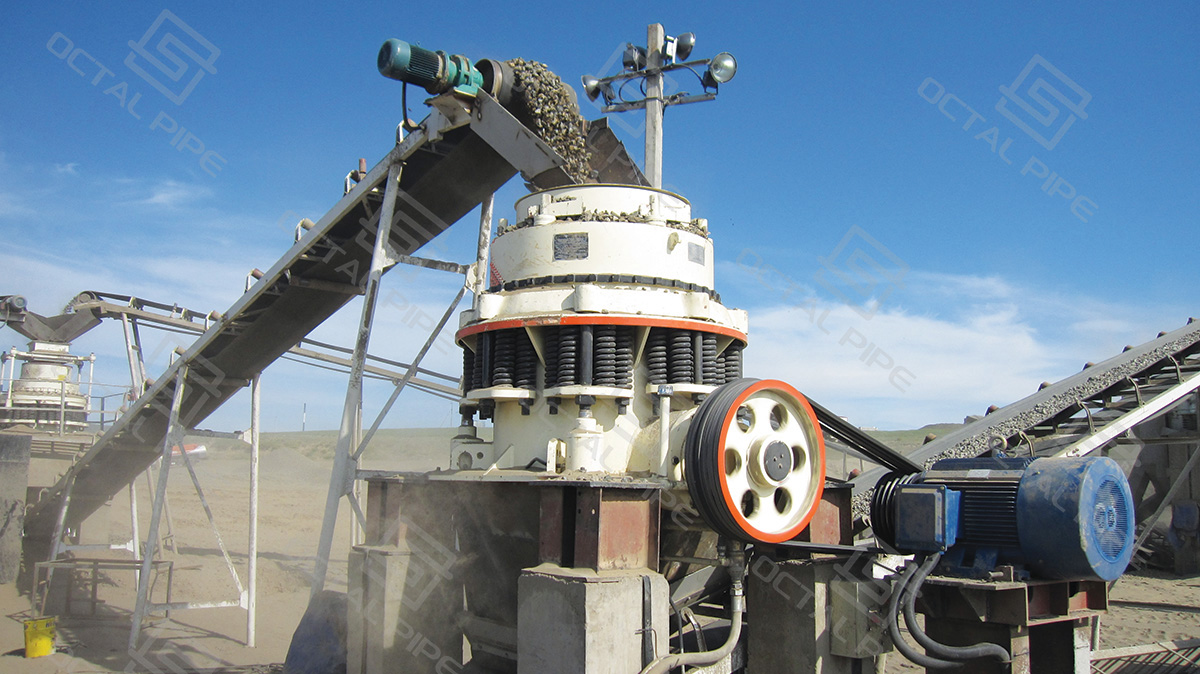
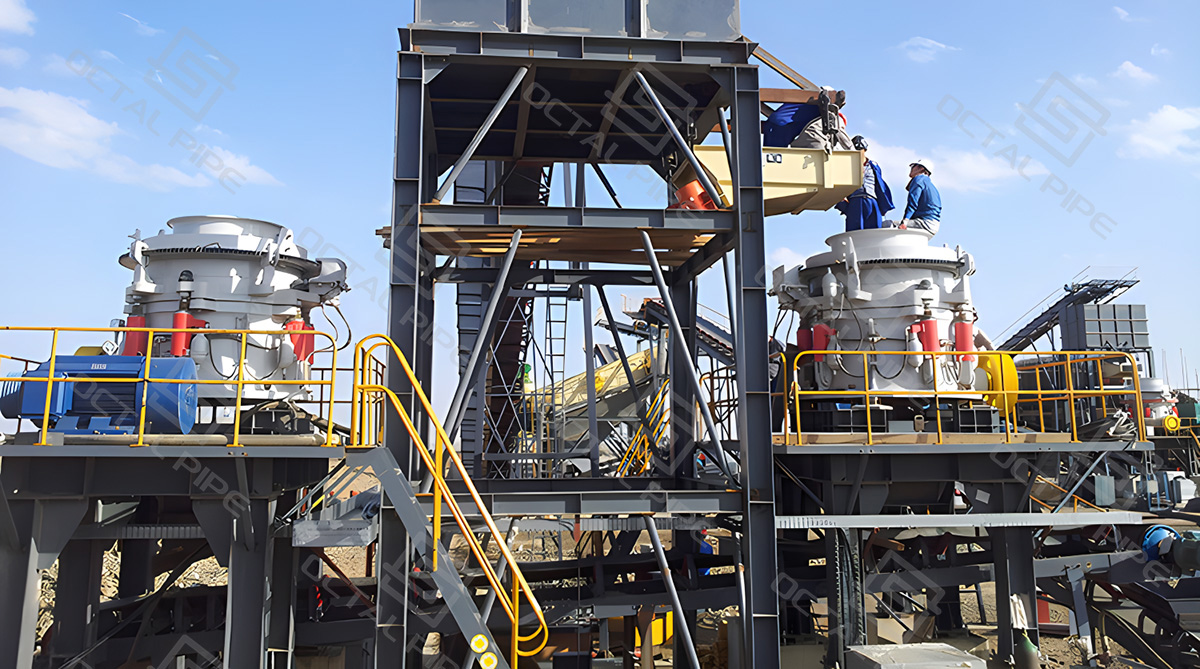
Why Choose Octal Steel for HPY Cone Crusher
Octal Steel focuses on matching the crusher to the real production line, not only selling a model number. Before selection, we review feed size, material hardness, required final product, capacity target, screen configuration, installation space and spare parts plan.
For export projects, our support can include machine selection, technical layout review, motor and control configuration, wear parts recommendation, packing plan and shipment document preparation. This helps the buyer reduce the risk of choosing a crusher that is too small, too coarse or difficult to maintain after installation.
The advantage is practical: one crusher should fit the line, the product size and the maintenance plan. A correct HPY cone crusher model can help improve crushing stability, reduce liner cost, control return load and keep the aggregate or mining plant closer to its designed output.
FAQ
Q1:How do I choose the right HPY Multi-cylinder Hydraulic Cone Crusher model?
Choose the model by checking feed size, required output size, capacity target, rock hardness, chamber type, CSS, screen opening and return load. Capacity should not be confirmed by model number alone, because the same crusher can perform differently in open-circuit and closed-circuit plants.
Q2:What does CSS mean in an HPY cone crusher?
CSS means closed side setting, or tight-side discharge opening. It is the smallest discharge gap between the mantle and concave, and it directly affects product size, capacity, liner wear and return load. A smaller CSS gives finer output, but it may reduce throughput and increase wear.
Q3:What materials can HPY hydraulic cone crusher process?
HPY hydraulic cone crusher is suitable for medium-hard to hard materials, including granite, basalt, diabase, river pebble, limestone, dolomite, iron ore and copper ore. For highly abrasive rock, buyers should pay extra attention to chamber selection, liner material and spare parts planning.
Q4:Is HPY cone crusher suitable for manufactured sand production?
Yes. HPY cone crusher can be used before VSI sand making to reduce feed size and stabilize material entering the sand maker. For river pebble, granite or basalt sand-making lines, this helps reduce VSI wear, improve feed consistency and support better final sand production.
Q5:What spare parts should be prepared with an HPY cone crusher order?
Buyers should prepare mantle, concave, bowl liner, seals, lubrication filters, hydraulic parts and key wear components. For continuous quarry or mining operation, the first-year spare parts list should be confirmed together with the crusher model, chamber type and working hours.