Your Responsible Supplier Partner for Oil and Gas Products.

Pony rod
Recent Products

Rencent Articles






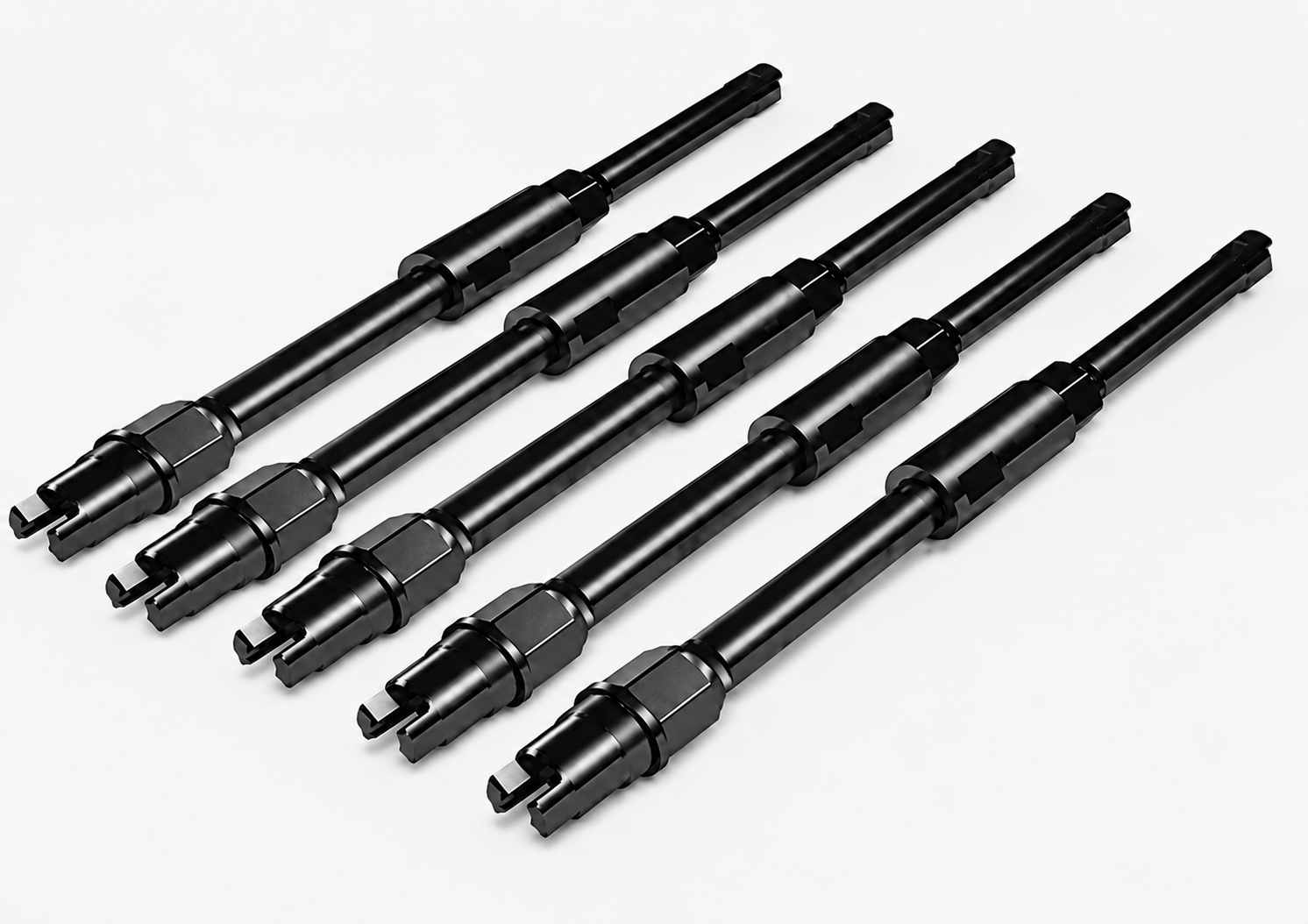
Pony rod
Length Range: Representative pony rod lengths include 2 ft, 4 ft, 6 ft, 8 ft and 10 ft; project-specific lengths can be specified.
Body Diameter: Common configurations include 3/4 in., 7/8 in. and 1 in., matched to the adjoining sucker rod section.
Material & Grade: Carbon steel or alloy steel with Grade C, K, D or project-specified construction selected for load and service conditions.
Application: Used for short-length adjustment and cyclic load transfer within sucker rod strings in oilfield rod-lift systems.
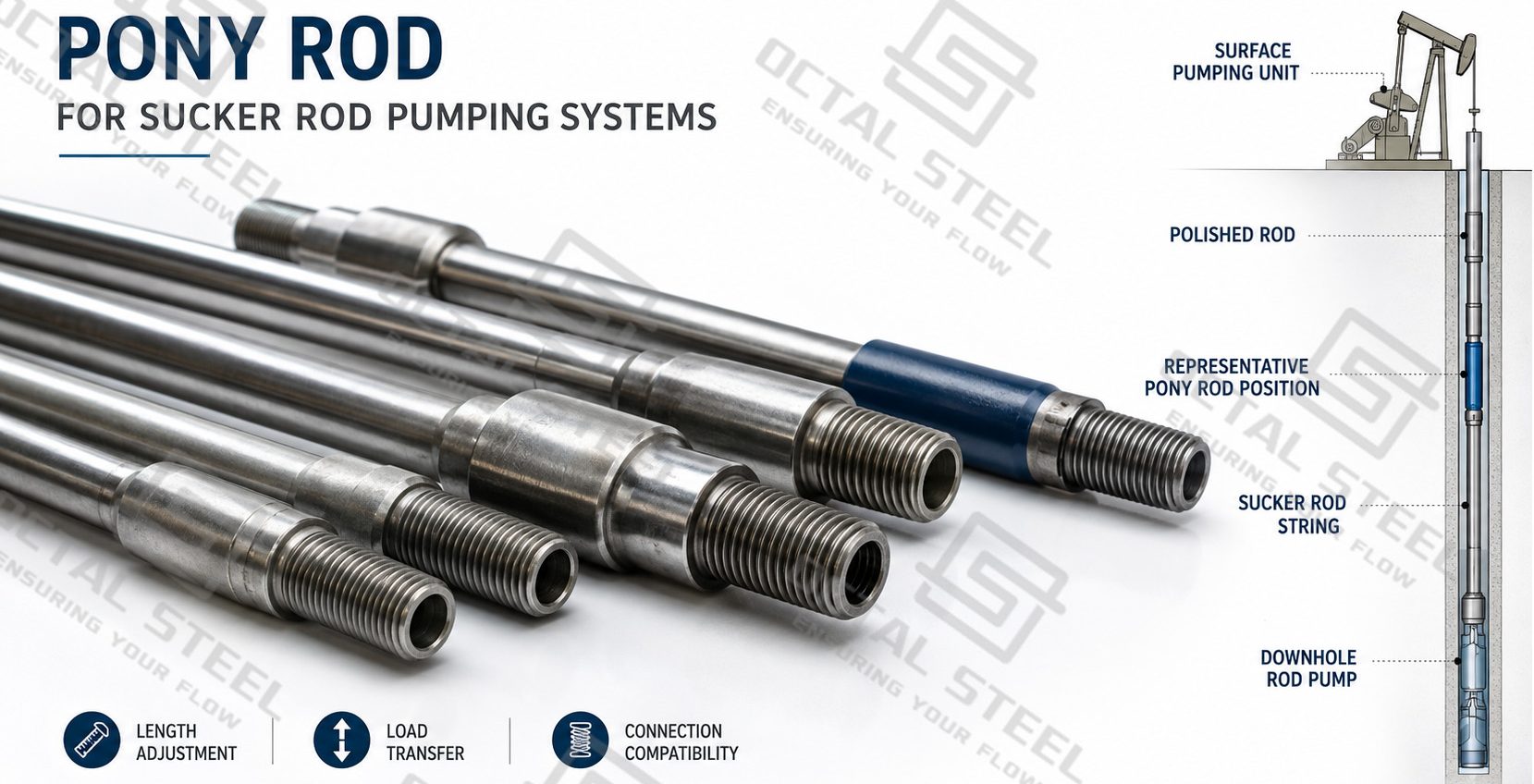
Pony rod sections manufactured from carbon steel, alloy steel or project-specified corrosion-resistant steel, with threaded end connections and a load-carrying rod body, provide short-length adjustment within a sucker rod string in rod-lift and sucker rod pumping systems. Installed as a shorter string member where the required assembled rod length cannot be achieved by standard full-length rods alone, an oilfield pony rod maintains the same basic load-transfer function while allowing the rod string to be matched to well depth, polished-rod position and pumping-system geometry. Steel pony rods are used in conventional, corrosive or higher-load artificial-lift service, with the final configuration determined by rod diameter, required pony rod length, grade, thread form and coupling compatibility.
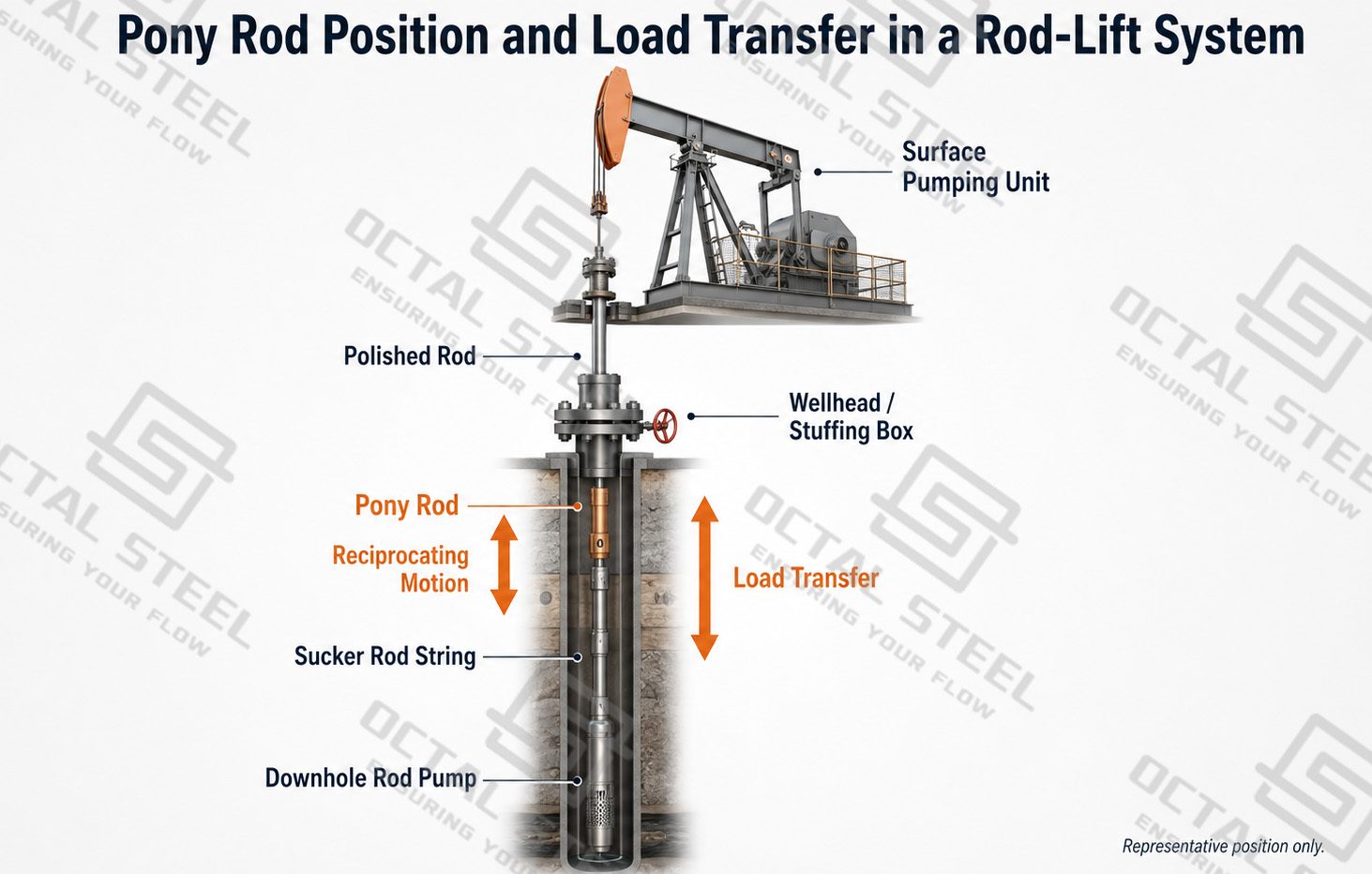
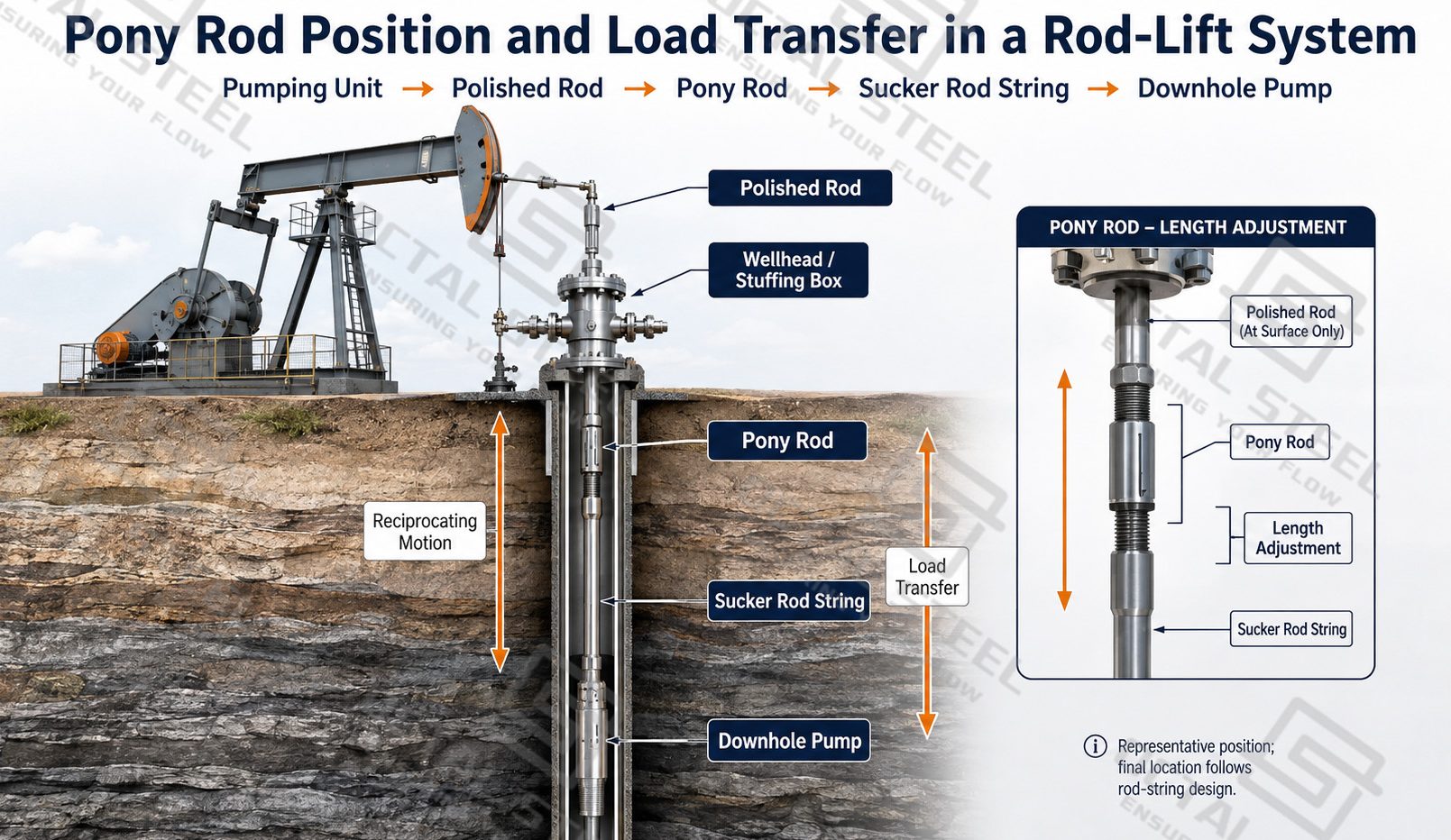
During operation, the pony rod reciprocates with the sucker rod string and transfers cyclic tensile and dynamic loads between connected rod sections as motion passes from the surface pumping unit through the polished rod and into the downhole pump. The pony rod therefore functions not only as a length-adjustment member, but also as an active load-carrying component in the rod string. OCTAL STEEL supplies pony rods for oilfield artificial-lift applications, with API Spec 11B requirements applied where specified, and coordinates rod length, body diameter, material or grade, threaded connection and mating components according to the approved rod-string specification.
Pony Rod Specifications and Ordering Data
The main difference between a pony rod and a standard sucker rod is its shorter length, not a different operating principle. Industry product data commonly uses several short length increments so that engineers can obtain the required rod-string length without introducing an unnecessarily long adjustment section. Representative industry configurations include 2, 4, 6, 8 and 10 ft pony rods, while additional lengths may be specified for particular projects.
| Specification Item | Typical Selection Basis |
|---|---|
| Product | Pony Rod |
| Application | Length adjustment and load transfer within a sucker rod string |
| Applicable Standard | API Spec 11B where specified |
| Construction | Steel rod body with threaded connection sections at both ends |
| Representative Body Diameters | Common configurations include 3/4 in., 7/8 in. and 1 in.; other sizes depend on the rod-string specification |
| Representative Pony Rod Lengths | 2, 4, 6, 8 and 10 ft industry configurations; project-specific lengths may also be specified |
| Grade | Selected according to mechanical loading, corrosion exposure and rod-string design |
| Material | Carbon steel or alloy steel according to required grade and service condition |
| End Connection | Matched to the adjoining sucker rod and pony rod coupling |
| Main Selection Inputs | Length, rod diameter, grade, load, well depth, produced-fluid condition, thread and coupling compatibility |
| Documentation | Material identification, dimensions, inspection and traceability records as specified |
The dimensions above are representative configurations rather than a fixed OCTAL STEEL inventory range. Final pony rod sizes, lengths and dimensions should follow the approved project datasheet and the dimensions of the adjoining sucker rod components. Body diameter should be matched to the adjoining sucker rod section, with any additional size confirmed according to rod-string design, grade, load requirement and coupling compatibility.
How a Pony Rod Works in a Sucker Rod String
A sucker rod pumping system converts the reciprocating movement generated by the surface pumping unit into movement of the downhole rod pump. The polished rod transfers this movement through the wellhead and into the sucker rod string. The pony rod becomes part of that same mechanical load path.
Pumping Unit → Polished Rod → Pony Rod / Sucker Rod String → Downhole Pump
Its special role is length adjustment. Full-length sucker rods are normally supplied in standardized lengths, but the required installed rod-string length does not always equal an exact multiple of those lengths. A shorter pony rod fills the remaining distance so that the rod string reaches the required assembled length and the downhole pumping system can be positioned according to the well design. This length-adjustment function is the defining engineering purpose of a pony rod.
Once installed, however, the pony rod is not merely a spacer. During every pumping cycle it moves with the rest of the rod string and experiences cyclic tensile loading. A short rod with the correct nominal length but an incompatible grade, diameter or thread can therefore create a weak transition in the string. Length adjustment and mechanical compatibility must be considered together.
Pony Rod and Sucker Rod in the Same Rod String
A pony rod is a shorter member of the sucker rod family, but its purpose in the rod string is different from that of a standard full-length sucker rod. Standard sucker rods form most of the load-transmitting string between the surface pumping equipment and the downhole pump, while pony rods provide shorter length increments that allow the assembled string to reach the required overall length.
Both components operate in the same reciprocating load path and use threaded end connections to join adjacent rod-string components. A pony rod therefore cannot be treated simply as a short spacer. Its body diameter, grade, mechanical properties, thread configuration and coupling compatibility must remain suitable for the section of the sucker rod string in which it is installed.
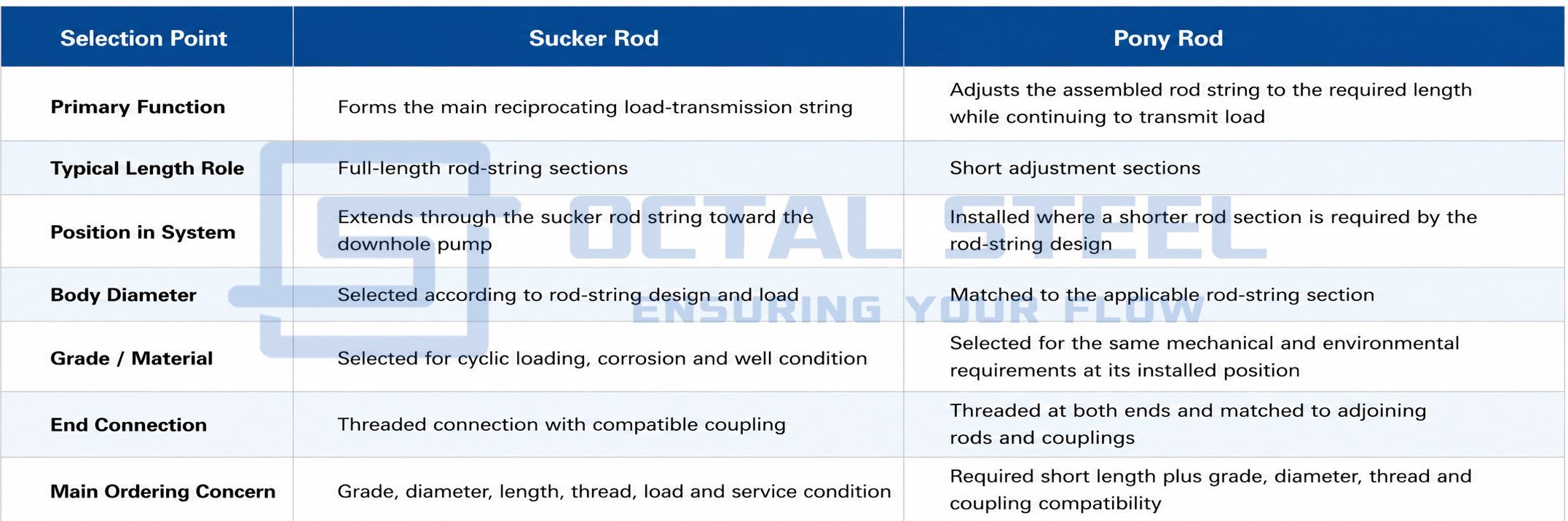
The important distinction is therefore length and system function rather than basic load-transfer principle. A sucker rod provides the main continuous rod-string length; a pony rod supplies the shorter increment needed to complete that string. Once connected, both are exposed to repeated rod-lift loading, so the shorter component must not introduce an incompatible material, diameter or connection into the load path.For a focused comparison of their length, grade and rod-string roles, see the sucker rod and pony rod differences technical note.
Pony Rod Sizes, Lengths and Connection Compatibility
Pony rod length is selected from the difference between the required rod-string length and the length already provided by the full-length sucker rods. Several pony rods can also be combined when the required adjustment cannot be achieved with one available length. The final configuration must preserve the designed rod-string geometry rather than simply add the nearest short rod.
Body diameter should normally remain compatible with the rod-string section in which the pony rod is installed. An inappropriate diameter transition changes the load distribution and also affects the required coupling and thread configuration. This is why pony rod dimensions should be reviewed together with the sucker rod schedule rather than ordered as an isolated dimensional item.
Connection compatibility is equally important. Both ends of the pony rod connect into the rod string through the specified threaded arrangement and mating pony rod coupling or sucker rod coupling. The purchaser should therefore confirm rod diameter, pin/thread configuration and mating component before production. Thread geometry and connection dimensions are part of the API Spec 11B rod-related product framework where that standard is specified.
In practical purchasing terms, three dimensions must agree:
Rod body → threaded end → mating coupling.
A nominally correct pony rod length does not compensate for an incorrect thread or coupling combination.
Pony Rod Grades, Materials and Mechanical Service
A steel pony rod normally follows the grade and mechanical requirements of the sucker rod string section in which it is installed. Because it reciprocates with the complete string, its selection is governed by cyclic load, corrosion exposure, well depth, connection loading and fatigue resistance rather than short length alone.
API-related rod systems commonly distinguish Grade C, Grade K and Grade D service categories, while additional high-strength or special-service rod constructions may be specified for more demanding wells. OCTAL STEEL’s existing sucker rod and pony rod technical content also identifies C, K and D as principal grades associated with different mechanical and operating conditions.
| Grade / Service Direction | Typical Engineering Use | Main Selection Focus |
|---|---|---|
| Grade C | Light-to-moderate mechanical loading under controlled or non-aggressive corrosion conditions | Cyclic load, fatigue duty, rod diameter and connection compatibility |
| Grade K | Rod-lift service where corrosion resistance is a more important selection factor | Produced-fluid chemistry, corrosion severity, load level and fatigue |
| Grade D | Moderate-to-higher mechanical loading where greater rod strength is required | String load, well depth, stress range, connection loading and corrosion condition |
| Higher-strength / Special Construction | More demanding load or environmental conditions where specified by the rod-string design | Mechanical properties, fatigue performance, material route and complete string compatibility |
Pony rod grade should normally be reviewed together with the adjacent sucker rods. Installing a short rod with adequate tensile strength but an incompatible grade, thread or coupling does not produce a properly matched rod string. The final selection therefore combines pony rod material + body diameter + required length + connection + well environment.
Selection by Rod-Lift Operating Condition
A useful Pony Rod specification begins with the well condition and then determines grade, diameter, length and connection.
Conventional rod-lift wells. The main requirement is normally to obtain the required rod-string length while maintaining the same diameter, compatible grade and thread system as the adjacent sucker rods. Excess strength or a special corrosion-resistant construction is unnecessary unless the service condition requires it.
Corrosive wells. Produced water, CO₂, H₂S and other corrosive conditions can reduce rod fatigue life when corrosion damage develops under cyclic loading. Material or grade selection should therefore be based on the actual corrosion mechanism, chemical inhibition program and mechanical stress rather than the well depth alone.
High-load or deeper wells. Increasing suspended rod-string weight raises the loading carried by the upper sections of the string. A pony rod installed in this load path must have mechanical properties and connection capacity compatible with the surrounding rod design.
Existing rod-string adjustment or workover. When pony rods are added to an existing string, the correct length is only one part of the check. Existing rod diameter, grade, thread condition, coupling type and the required installed string length should be confirmed before selecting the replacement or adjustment rod.
This operating-condition approach also reflects the way current industrial rod-selection information separates products by well depth, corrosion condition and mechanical loading rather than only by nominal diameter.
Download:Pony Rod Engineering Guide.pdf
Manufacturing and Quality Control
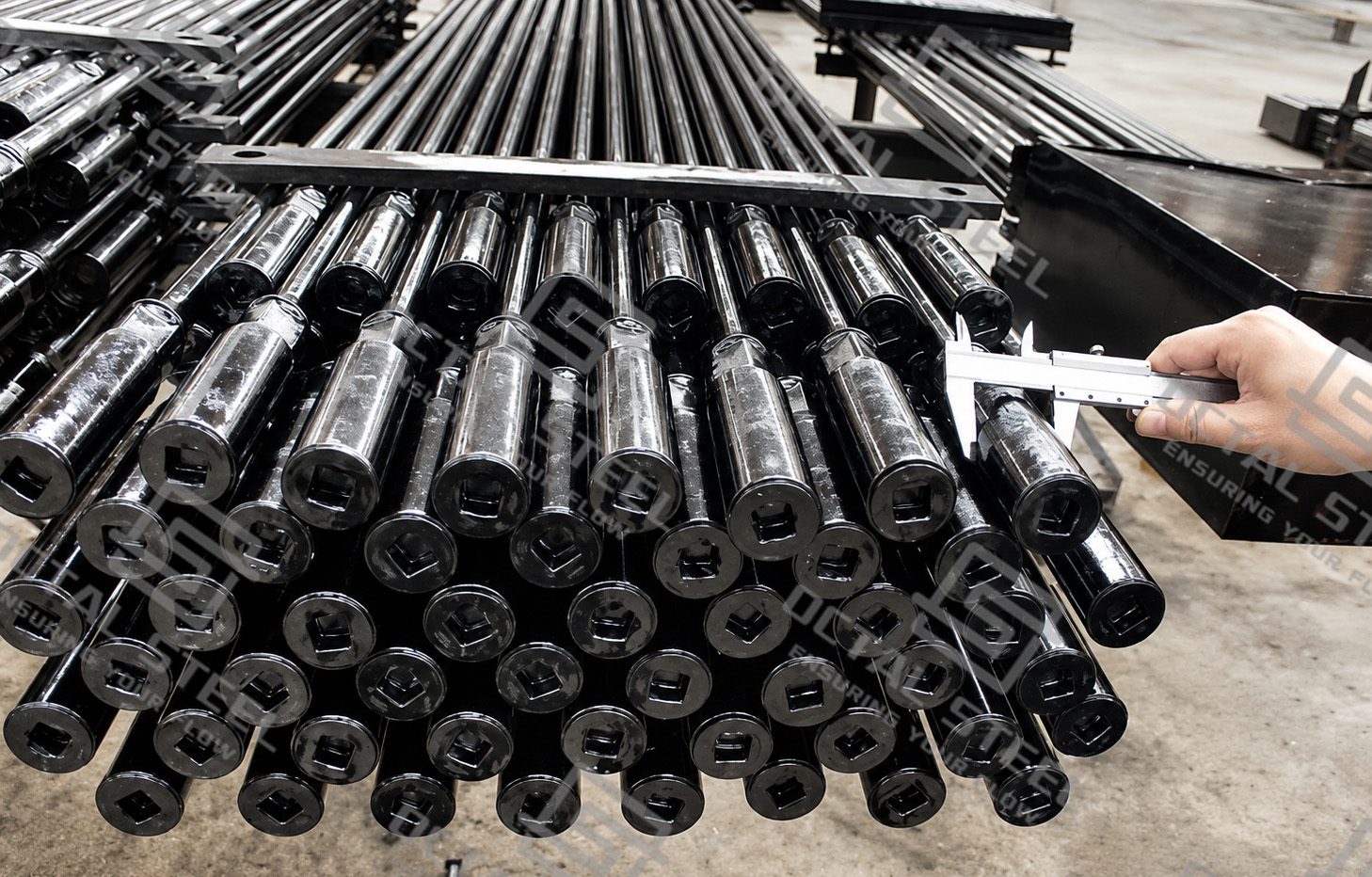
Pony rods carry the same reciprocating load path as the adjacent sucker rods, so manufacturing control is concentrated around the areas most likely to influence fatigue and connection reliability.
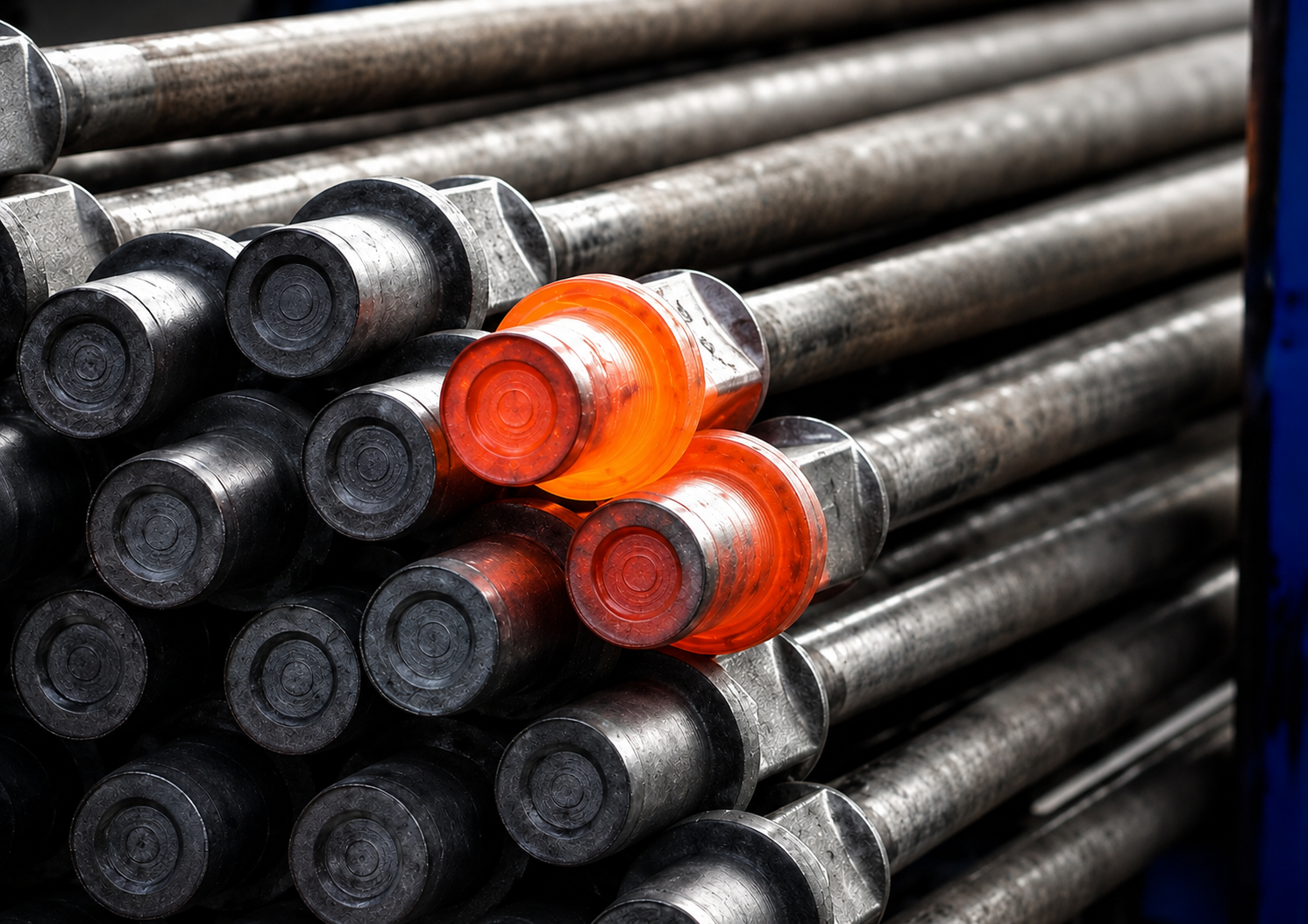
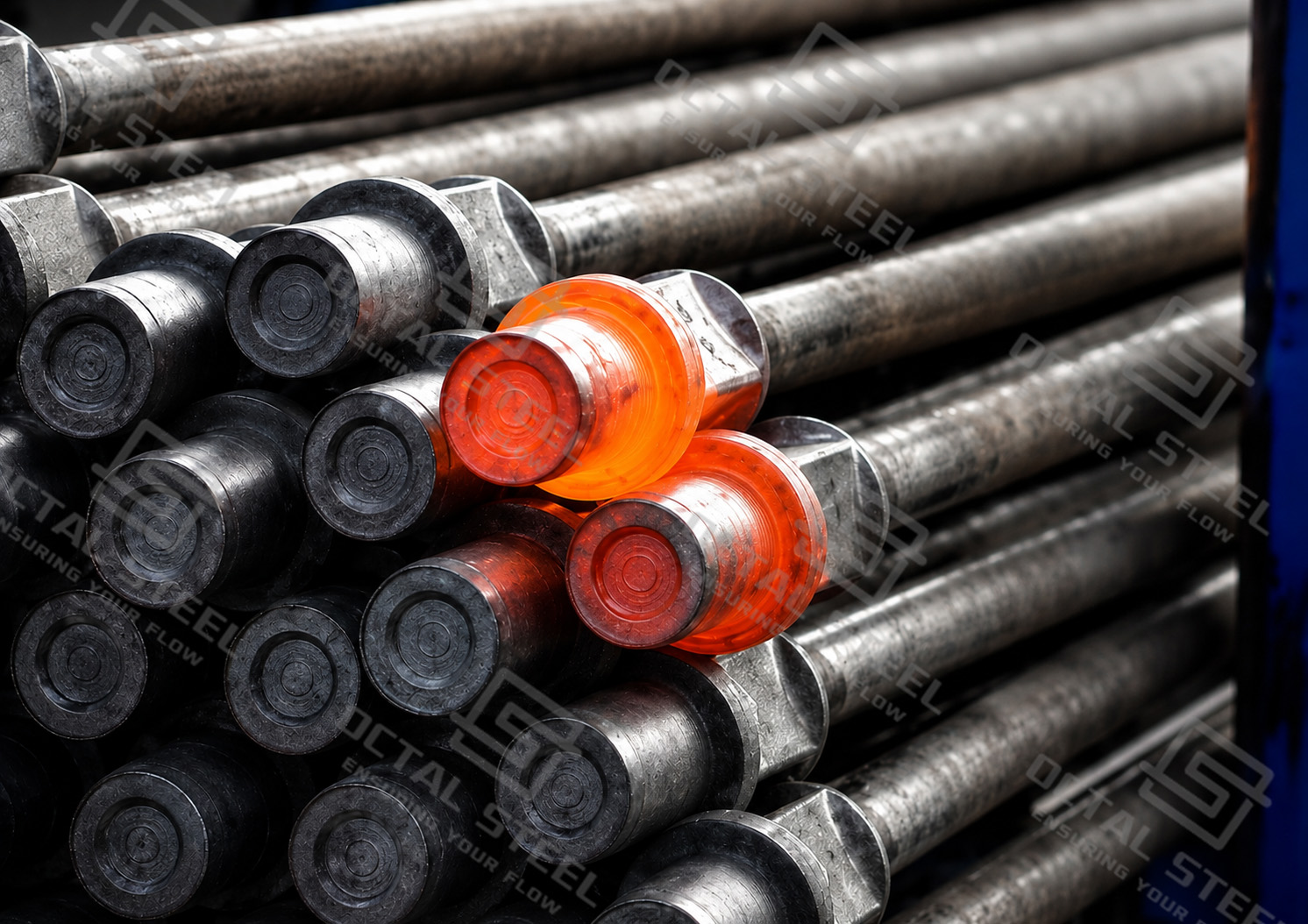
Production normally begins with identified steel material selected for the specified grade. The rod body is processed to the required straightness and mechanical condition, while the end sections are formed and machined to create the specified connection geometry. Heat treatment is applied according to the material and grade route where required, followed by thread production, dimensional verification and surface inspection. Industry manufacturing literature places particular emphasis on rod straightening, surface-defect inspection, end upsetting, heat treatment, thread manufacture, gauging, thread protection and transportation protection because defects in these areas can directly affect fatigue performance or connection reliability.
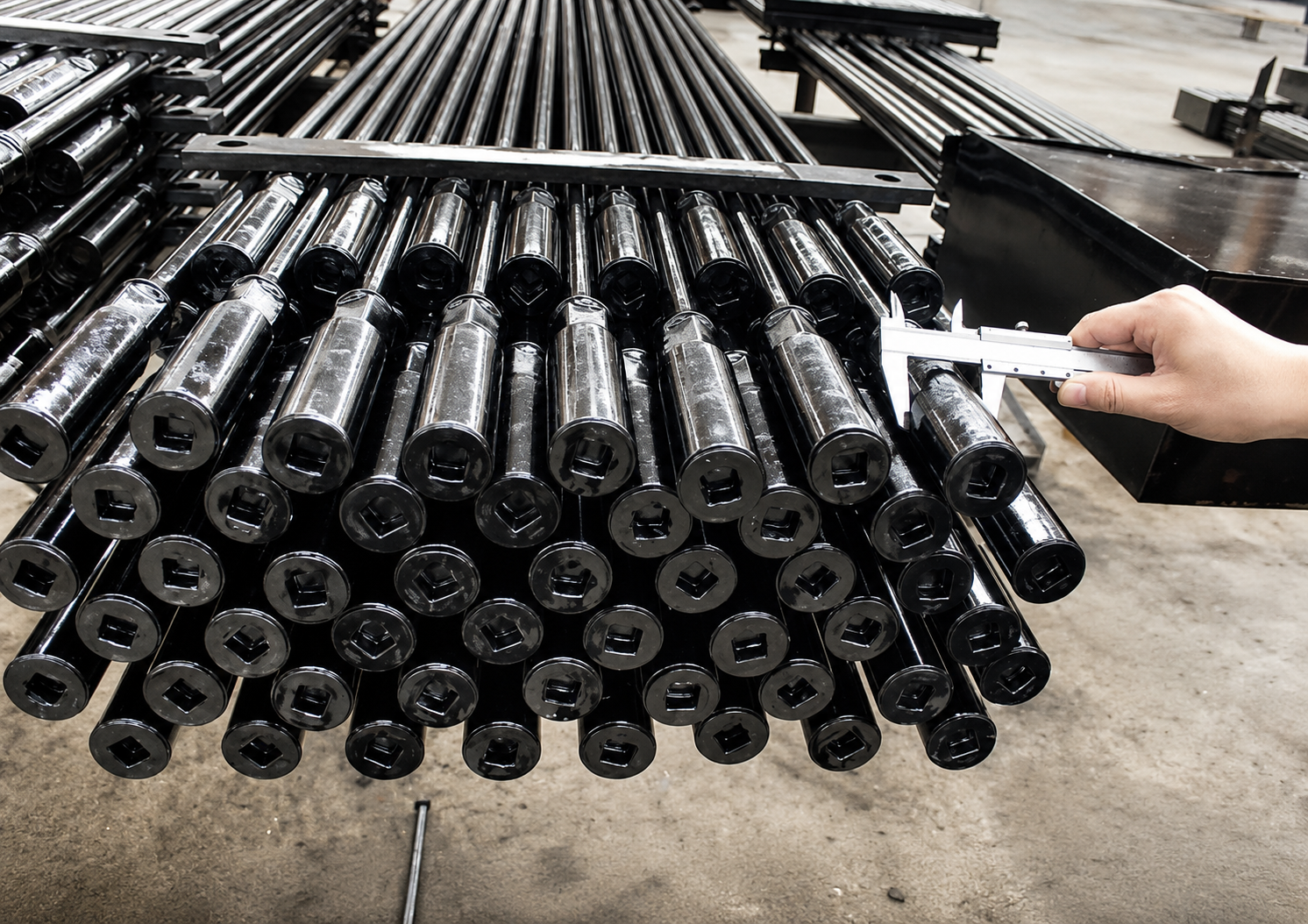
Inspection should therefore concentrate on material identity, rod-body dimensions, straightness, end geometry, thread dimensions, surface condition and marking. Threaded ends also need protection during packing and transportation because impact damage, corrosion or contamination before installation can compromise an otherwise acceptable connection.
For project supply, material certificates, dimensional and thread inspection records, product marking and lot traceability can be coordinated according to the purchase specification.
Pony Rod Applications in Sucker Rod Pumping Systems
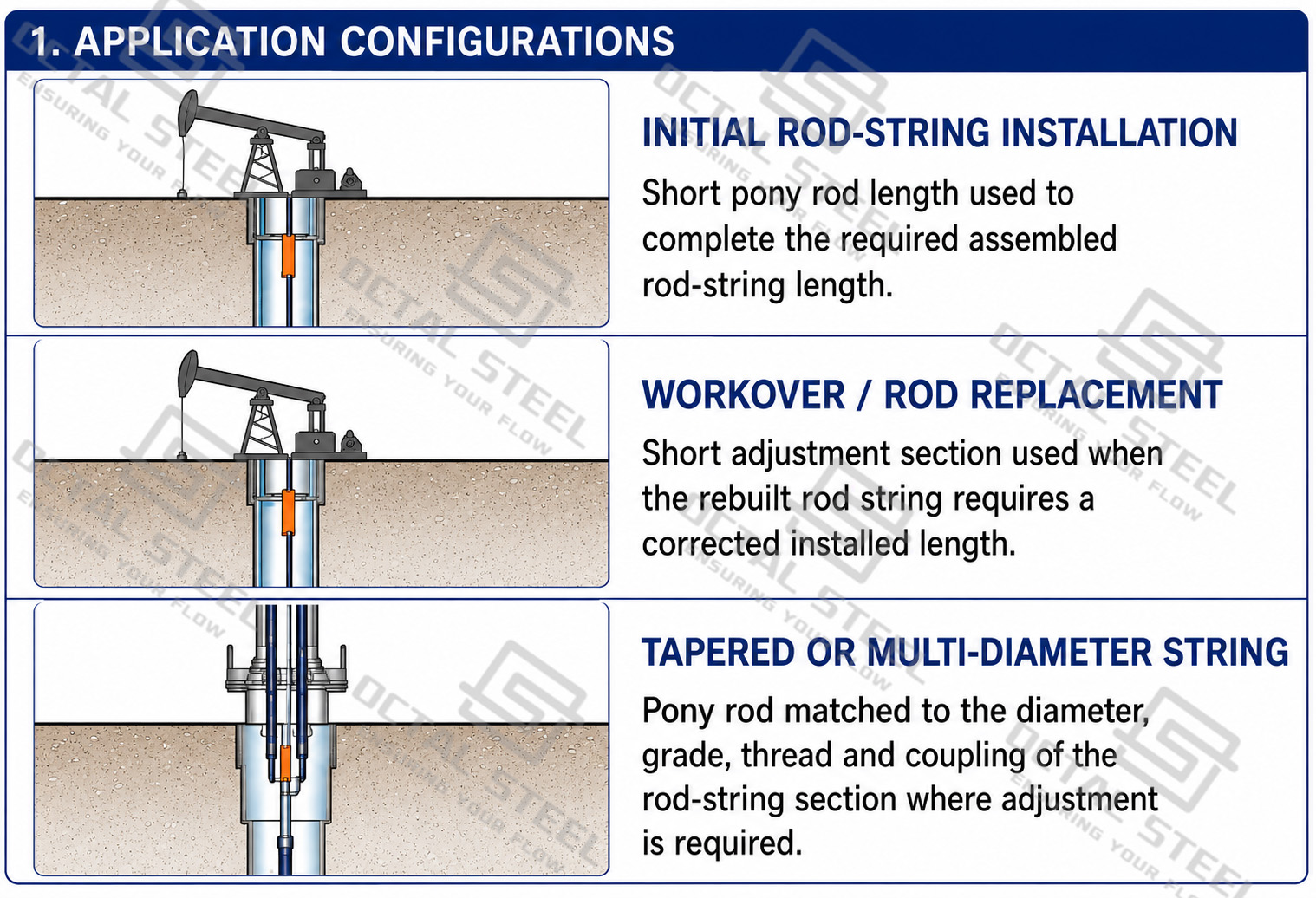
Pony rods are used when the required sucker rod string length cannot be obtained with standard full-length sucker rods alone. Their main purpose is to provide shorter length increments while maintaining a continuous mechanical connection between the polished rod, sucker rod string and downhole pump.
The most common use is final rod-string length adjustment during initial installation. After the main sucker rods have been assembled, one or more pony rods can be added to obtain the required overall string length and pumping-system position.
Pony rods are also used during workover and rod-string replacement when rods are removed, replaced or rearranged and the rebuilt string requires a shorter adjustment section. In these cases, the pony rod must match the adjoining sucker rods in body diameter, grade, thread configuration and coupling connection.
In tapered or multi-diameter sucker rod strings, a pony rod can be selected for the specific rod section where length adjustment is required. The final configuration therefore depends not only on the required pony rod length, but also on its position in the rod string and compatibility with the surrounding components.
Pony Rod Project Supply and Technical Support
OCTAL STEEL supplies pony rods as part of rod-lift and sucker rod pumping system requirements. Supply can be coordinated with sucker rods, polished rods, couplings, pony rods, sinker bars and related rod-string components, allowing rod diameter, required short length, grade, end connection and mating components to be reviewed within the same project specification. API Spec 11B requirements can be applied where specified.
Before quotation or production, the technical confirmation can cover the required pony rod length, body diameter, material or grade, thread configuration, mating coupling, surrounding sucker rod specification and well service condition. Project documentation can include material identification, dimensional and thread inspection records, marking and lot traceability as specified. This creates a more reliable supply sequence from rod-string requirement → component matching → inspection → documentation → shipment, rather than selecting the pony rod by length alone.
Download:Pony Rod Manufacturing Inspection Project Supply Guide.pdf
FAQ
Q: How is the correct pony rod length determined?
A: It is selected from the remaining length required after the full-length sucker rods are arranged in the rod string. The selected pony rod or combination of pony rods must also remain compatible with the required diameter, grade and connections.
Q: Should a pony rod use the same grade as the adjoining sucker rods?
A: It should be mechanically compatible with the rod-string section in which it is installed. Grade selection depends on cyclic load, corrosion exposure, well conditions and the surrounding sucker rod design.
Q: Can several pony rods be connected together?
A: Multiple short rods may be used when the required string adjustment cannot be achieved with one available length, provided the resulting connections, rod dimensions and load path comply with the approved rod-string design.
Q: What information is required when ordering an API 11B pony rod?
A: Specify the required standard, body diameter, pony rod length, grade or material, end/thread configuration, mating coupling, quantity and relevant service conditions. Documentation and inspection requirements should also be stated in the purchase specification.