Your Responsible Supplier Partner for Oil and Gas Products.

NACE MR0175 Pipe
NACE MR0175 Pipe
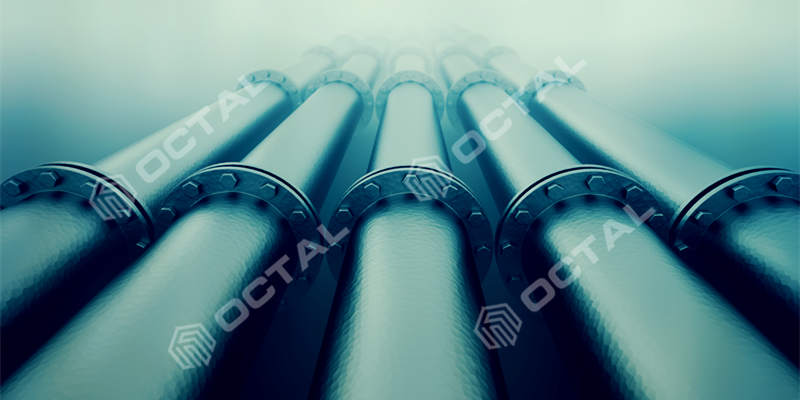
NACE MR0175 pipe refers to steel pipe qualified for sour service environments where hydrogen sulfide (H₂S) may cause hydrogen-related cracking and corrosion damage. These pipes are selected according to NACE MR0175/ISO 15156 requirements, which define material qualification guidelines for oil and gas production equipment exposed to H₂S-containing environments.
Unlike a conventional carbon steel pipe specification that mainly defines chemical composition, mechanical properties and dimensions, sour-service pipe selection also considers the actual operating environment, including H₂S partial pressure, temperature, chloride concentration, pH, stress level and production conditions.
Common sour-service pipe applications include production flowlines, gathering systems, separators, wellhead equipment, process piping and other oil and gas facilities where H₂S exposure may create risks such as:
• Sulfide Stress Cracking (SSC)
• Hydrogen-Induced Cracking (HIC)
• Stress-Oriented Hydrogen-Induced Cracking (SOHIC)
The suitable pipe grade and treatment condition should be determined according to both the required material performance and the specific sour-service environment.
What is NACE
NACE MR0175, also known as ISO 15156, defines material requirements for equipment and piping used in H₂S-containing oil and gas production environments. The standard provides guidelines for selecting materials that can resist hydrogen-related damage mechanisms, including sulfide stress cracking (SSC) and other forms of cracking associated with sour service conditions.
The organization develops technical guidance and standards to help industries manage corrosion risks in demanding environments, particularly in oil and gas, chemical and energy applications.
One of the most widely referenced NACE standards is NACE MR0175, also known as ISO 15156, which provides material requirements for equipment used in H₂S-containing oil and gas production environments. This standard helps operators and engineers select suitable materials for sour-service applications where corrosion and hydrogen-related cracking risks may occur.
You could find NACE MR0175 standard specification from here.
NACE MR0175 or ISO 15156 Scope
NACE MR0175, also known as ISO 15156, defines requirements for selecting and qualifying materials used in oil and gas production environments containing hydrogen sulfide (H₂S). The standard applies to equipment and piping where material failure caused by hydrogen-related cracking or corrosion could affect operational safety and environmental protection.
The standard provides guidelines for evaluating material suitability based on factors such as material type, chemical composition, mechanical properties, heat treatment condition and service environment. It is widely referenced in sour-service applications, including oil and gas production facilities and related processing systems.
Cracking Types
Hydrogen sulfide (H₂S) in sour-service environments can increase the risk of hydrogen-related cracking in steel materials. NACE MR0175/ISO 15156 addresses material requirements to reduce susceptibility to several cracking mechanisms, including:
| Cracking Type | Description |
|---|---|
| Sulfide Stress Cracking (SSC) | Hydrogen-assisted cracking that occurs when susceptible steel is exposed to H₂S under tensile stress. |
| Stress Corrosion Cracking (SCC) | Cracking caused by the combined effect of corrosive environment and applied or residual stress. |
| Hydrogen-Induced Cracking (HIC) | Internal cracking caused by hydrogen accumulation within the steel structure. |
| Stress-Oriented Hydrogen-Induced Cracking (SOHIC) | Hydrogen-related cracking that develops along stress directions, often associated with tensile stress. |
| Stepwise Cracking | Progressive internal cracking that may occur through linked hydrogen-induced cracks. |
The actual cracking risk depends on the combination of material properties, hardness, microstructure, stress level and sour-service environment.
How to Select NACE MR0175 Qualified Materials
Materials qualified according to NACE MR0175/ISO 15156 are selected for defined H₂S-containing environments where resistance to hydrogen-related cracking is required. Qualification does not mean the material is suitable for every sour-service condition; the operating environment must be evaluated together with the material characteristics.
Material selection normally considers:
• Material category (carbon steel, low-alloy steel or corrosion-resistant alloy);
• Chemical composition and impurity control;
• Heat treatment condition and hardness level;
• Mechanical properties;
• H₂S partial pressure, temperature, chloride concentration and stress conditions.
NACE MR0175/ISO 15156 is commonly referenced together with material standards such as API, ASTM and ASME specifications to determine whether a specific pipe material is suitable for sour-service applications.
Equipment that applied with NACE MR0175
NACE MR0175/ISO 15156 applies to equipment used in oil and gas production environments where exposure to hydrogen sulfide (H₂S) may affect material performance. The standard is commonly referenced for components that require resistance against hydrogen-related cracking and sour-service corrosion risks.
Typical applications include:
• Oil and gas production equipment, such as wellhead components, downhole equipment and artificial lift systems;
• Sour-service processing equipment, including gas treatment facilities and equipment handling H₂S-containing fluids;
• Steel pipes, fittings and piping systems used for transporting oil, gas, produced water and multiphase fluids in sour environments.
For sour-service piping systems, the selected pipe and fittings need to meet both the applicable product specification and the required sour-service conditions. This is why NACE MR0175 qualification is often considered together with standards such as API 5L, ASTM and ASME during material selection.
NACE Carbon Steel Pipes
Carbon and low-alloy steels are among the most commonly used materials for NACE MR0175 sour-service piping systems due to their balance of strength, availability and cost efficiency. Under NACE MR0175/ISO 15156, these materials must meet specific requirements to reduce the risk of hydrogen-related cracking when exposed to H₂S-containing environments.
Carbon steels used in sour-service applications generally contain carbon as the primary strengthening element, together with controlled amounts of manganese and residual alloying elements. Additional elements such as silicon or aluminum may be intentionally added during steelmaking for deoxidation and improved material quality.
For many carbon and low-alloy steel applications covered by NACE MR0175, material qualification focuses on controlling factors that influence sour-service performance, including:
• Chemical composition, especially elements that may affect cracking susceptibility;
• Heat treatment condition, which determines microstructure and hardness;
• Mechanical properties, including strength and toughness;
• Hardness level, which is closely related to sulfide stress cracking (SSC) resistance.
A commonly referenced hardness limit for many carbon and low-alloy steels in sour-service applications is 22 HRC maximum. This limitation is based on industry experience, laboratory evaluation and correlations between material condition, hardness, heat treatment and SSC performance. For some alloy systems, such as chromium-molybdenum steels, different hardness limits may apply depending on the material category and qualification requirements.
When carbon and low-alloy steel pipes and fittings are supplied for NACE MR0175 service, additional testing requirements such as SSC or HIC testing depend on the material type, service environment and purchase specification. Any specified qualification testing must be completed and documented as part of the material acceptance process.
Carbon Steel Pipe Standards for NACE Service
Carbon steel and low-alloy steel pipes used for NACE MR0175/ISO 15156 sour-service applications may be supplied according to different product standards. The applicable standard and grade depend on the piping system, service conditions and project requirements.
| Pipe Standard | Typical Grades / Scope |
|---|---|
| API 5L Seamless Pipe | Grade B, X42 , X52, X60, X65 |
| ASTM A53 Pipe | Grade A, Grade B |
| ASTM A106 Seamless Pipe | Grade A, B, C |
| ASTM A333 Pipe | Grade 1, Grade 6 |
| ASTM A524 Pipe | Grade 1, Grade 2 |
| ASTM A381 Pipe | Class 1, Y35 to Y65 |
| ISO 3183-3 Pipe | Grade L245 to L450 |
| API 5CT Casing and Tubing | J55, K55, L80, T95 and other qualified grades |
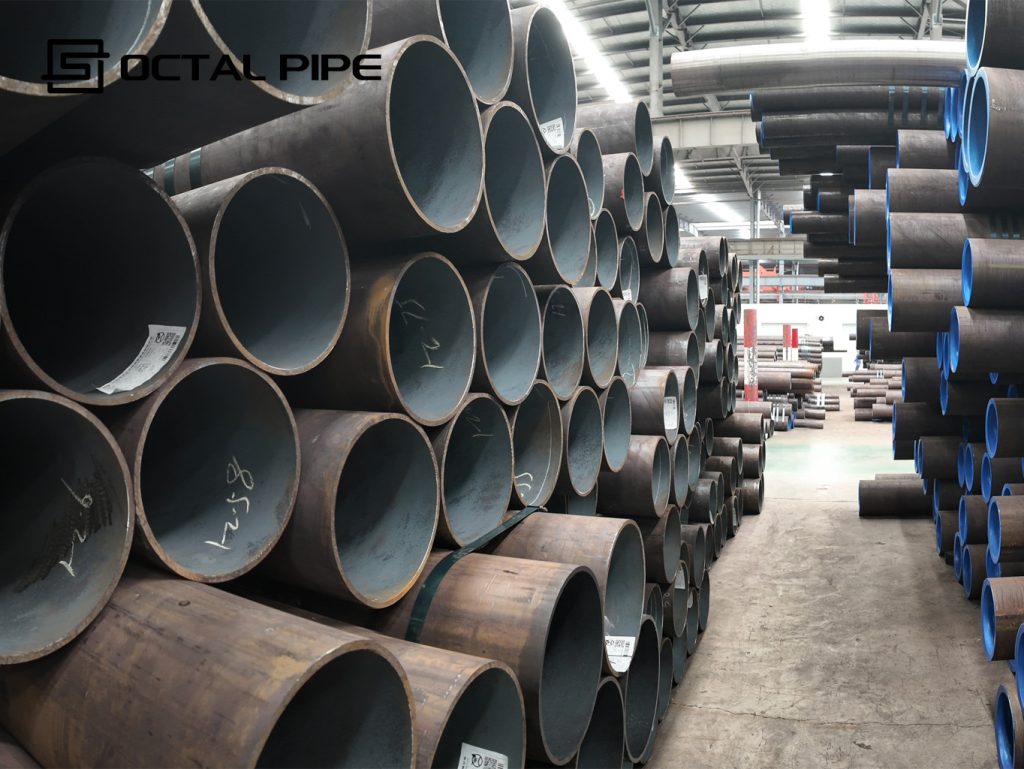
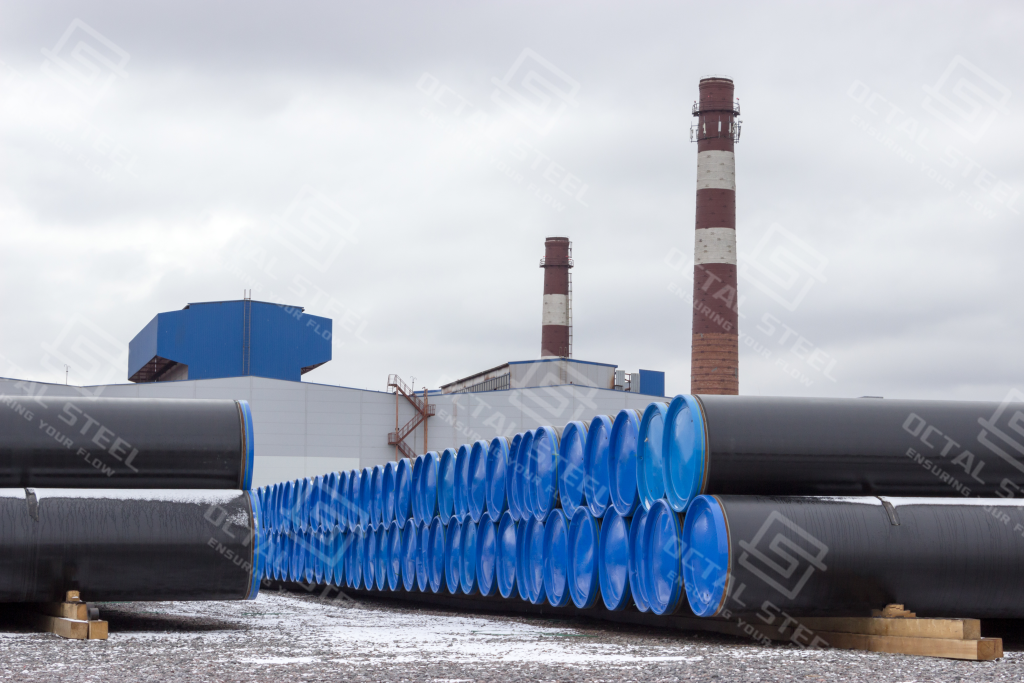
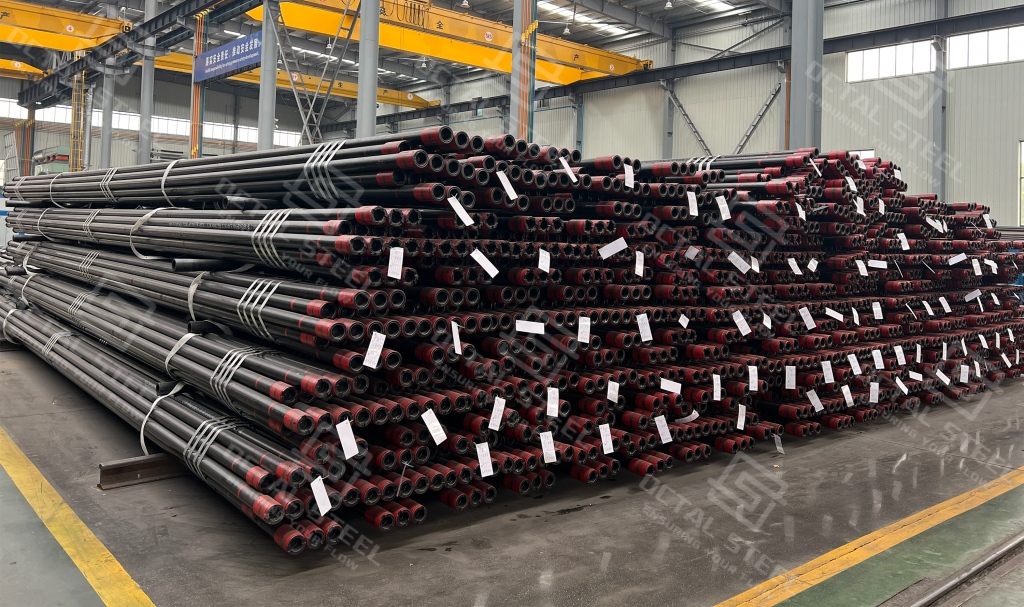
NACE MR0175 Pipe and Fittings
NACE MR0175 qualified pipes and fittings are supplied according to the applicable product standards, with additional material controls for sour-service applications. The main technical considerations include chemical composition, mechanical properties, hardness control and manufacturing condition.
Chemical Composition
For carbon and low-alloy steel pipes used in sour-service applications, controlling impurity elements is important because inclusions and segregation can increase susceptibility to hydrogen-related cracking.
Typical chemical controls include:
| Element | Typical Requirement |
|---|---|
| Sulfur (S) | ≤ 0.002% for highly controlled sour-service applications |
| Phosphorus (P) | ≤ 0.020% |
| Carbon (C) | Controlled according to material grade and strength requirements |
Alloying elements such as chromium (Cr), molybdenum (Mo), nickel (Ni) and manganese (Mn) may be adjusted according to the selected steel grade to achieve the required strength, toughness and corrosion performance.
The exact chemical limits depend on the applicable material specification, such as API 5L, ASTM or API 5CT, together with the requirements of NACE MR0175/ISO 15156.
Mechanical Properties and Hardness Control
Mechanical properties are specified according to the selected pipe standard and grade. In sour-service applications, hardness control is especially important because excessive hardness may increase the risk of sulfide stress cracking (SSC).
Typical requirements for carbon and low-alloy steels include:
| Property | Typical Requirement |
|---|---|
| Yield Strength | According to selected API 5L, ASTM or API 5CT grade |
| Tensile Strength | According to product specification |
| Hardness | Common limit: ≤ 22 HRC for many carbon and low-alloy steel applications |
| Heat Treatment | Controlled to achieve required microstructure and hardness |
For example, API 5L grades commonly used in sour-service applications may include:
| Grade | Minimum Yield Strength |
|---|---|
| B | 245 MPa |
| X42 | 290 MPa |
| X52 | 360 MPa |
| X60 | 415 MPa |
| X65 | 450 MPa |
The final mechanical requirements depend on the selected grade, wall thickness, heat-treatment condition and project specification.
NACE Test Methods
For sour-service steel pipes, plates and fittings, additional testing may be required to evaluate resistance against hydrogen-related cracking. The commonly referenced tests include Hydrogen-Induced Cracking (HIC) and Sulfide Stress Cracking (SSC) testing.
Hydrogen-Induced Cracking (HIC) Test
HIC testing evaluates the susceptibility of steel to internal cracking caused by hydrogen absorption in H₂S-containing environments. During the test, specimens are exposed to a controlled sour environment, and the internal crack development is evaluated after testing.
HIC testing requirements depend on the material type, service condition and project specification. When HIC resistance is required, the test results are normally included as part of the material qualification and inspection documentation.
Sulfide Stress Cracking (SSC) Test
SSC testing evaluates the resistance of steel to cracking caused by the combined effects of hydrogen sulfide exposure and tensile stress. The test is commonly performed under controlled sour-service conditions with applied stress to assess whether the material can withstand cracking during operation.
SSC resistance is influenced by several factors, including material composition, heat treatment condition, hardness, microstructure and residual stress. For this reason, hardness control and proper material qualification are important parts of sour-service pipe selection.
NACE MR0175 pipe and fittings Applications
NACE MR0175/ISO 15156 qualified pipes and fittings are mainly used in oil and gas production systems where hydrogen sulfide (H₂S)-containing fluids may affect material performance. Typical applications include sour gas pipelines, production facilities, wellhead systems, flowlines and processing equipment handling produced fluids.
The standard is generally considered for environments where the H₂S partial pressure reaches or exceeds 0.003 MPa (0.05 psi) in accordance with the applicable sour-service criteria. The actual requirement depends on the operating conditions and material selection basis.
In some low-pressure applications, operators may determine that NACE MR0175 requirements are not required based on the specific service environment and project evaluation. Examples may include:
Factors Affecting Sulfide Stress Cracking (SSC)
Sulfide Stress Cracking (SSC) is influenced by the interaction between material condition, hydrogen environment and applied stress. Meeting NACE MR0175/ISO 15156 requirements improves material suitability for sour service, but actual performance still depends on the operating conditions and manufacturing control.
| Factor | Influence on SSC Risk |
|---|---|
| Chemical composition | Alloying elements and impurity levels affect steel cleanliness, microstructure and resistance to hydrogen-related cracking. |
| Heat treatment and microstructure | Improper heat treatment may increase hardness or create unfavorable structures that reduce SSC resistance. |
| Material hardness | Higher hardness levels generally increase susceptibility to SSC, especially in carbon and low-alloy steels. |
| Hydrogen concentration in aqueous phase | Higher hydrogen absorption increases the possibility of internal damage and cracking. |
| H₂S partial pressure | Higher H₂S partial pressure increases sour-service severity and hydrogen charging potential. |
| Total tensile stress | Applied and residual stresses provide the driving force required for crack initiation and propagation. |
| Temperature | Temperature affects corrosion reactions, hydrogen diffusion and material behavior. |
| Exposure time | Longer exposure to sour environments increases the opportunity for hydrogen-related damage. |
| Chloride and halide ions | Chlorides may accelerate corrosion processes and increase cracking risk in certain environments. |
| Oxidizing agents and secondary fluids | Additional chemical species may change corrosion behavior and influence material performance. |
| Cold working and manufacturing deformation | Residual stress from cold working or processing may affect SSC susceptibility. |
Although NACE MR0175/ISO 15156 qualified materials are selected for sour-service environments, successful performance also requires proper material selection, design, fabrication, installation and operating control. Unsuitable processing conditions or excessive stress levels can still affect the long-term reliability of corrosion-resistant materials.
Why Choose OctalSteel for NACE MR0175 Pipe?
OctalSteel focuses on controlling the key factors that affect sour-service pipe supply, including material traceability, specification matching and quality documentation. Each order can be coordinated according to the required pipe standard, grade, inspection scope and project documentation requirements to help customers reduce material selection and delivery risks.
With experience supplying industrial steel products, OctalSteel supports NACE MR0175 pipe projects with complete quality records, including MTC, heat number traceability, chemical composition, mechanical test results and inspection documentation. Additional requirements such as third-party inspection, hardness verification and project-specific testing can also be arranged according to customer needs.
FAQ
Q1: What standards can be used for NACE MR0175 pipe?
A1: NACE MR0175/ISO 15156 does not replace the product standard of the pipe. NACE requirements are usually applied together with standards such as API 5L, ASTM A106, ASTM A333 and API 5CT to confirm whether the selected material is suitable for sour-service conditions.
Q2: What factors affect the sour-service performance of NACE MR0175 pipe?
A2: Sour-service performance depends on the interaction between material composition, heat treatment, hardness, microstructure, stress level and H₂S environment. Proper control of these factors helps reduce risks such as sulfide stress cracking (SSC) during service.
Q3: Can standard API 5L pipe be used for NACE MR0175 service?
A3: Yes, some API 5L grades may be qualified for sour-service applications when they meet the required material, hardness, testing and documentation requirements. The suitability depends on the actual H₂S environment and project specification, not only the pipe grade.
Q4: What additional tests are required for NACE MR0175 pipe?
A4: Testing requirements depend on the material type and service conditions. Common requirements may include hardness testing, SSC testing, HIC testing, chemical analysis, mechanical testing and third-party inspection when specified by the project.
Q5: What information should be confirmed before ordering NACE MR0175 pipe?
A5: A complete purchase specification should include the pipe standard, grade, size, wall thickness, service environment, H₂S condition, testing requirements, inspection scope and documentation requirements to ensure the supplied pipe matches the intended application.
More Technical Articles Related NACE Pipe:
Sour Service
API 5L PSL1 and PSL2 differences
API 5L PSL1 Pipe Specification
Chemical Effects to Pipe


Tags:Line PipeSeamless pipeSteel pipe
Related Products
Related Resources
Recent News
Hot Topic

Octal is located in China recognized as a leading supplier, distributor, and manufacturer union in providing piping solutions for oil and gas company. Product ranges in Steel Pipe, Casing and Tubing, Steel Plate, Sucker Rod, Steel Pipe Fittings, Valves, and Equipment for pipelines.
Contact Info
Unit 2544, 25/F, Tower A, Wanda Plaza, Wenfeng District, Anyang, Henan, China & Building A, No.18 Dirun Road, Zhengdong New District, Zhengzhou, Henan, China
+86 372 2157660 / +86 186 3727 1277
[email protected]