Your Responsible Supplier Partner for Oil and Gas Products.

Sucker Rod 4142
Hot Topic



Rencent Articles

Recent Resources
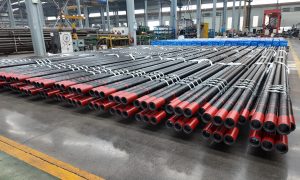
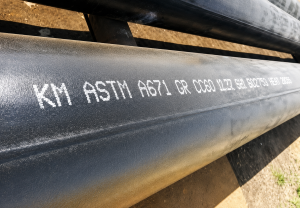
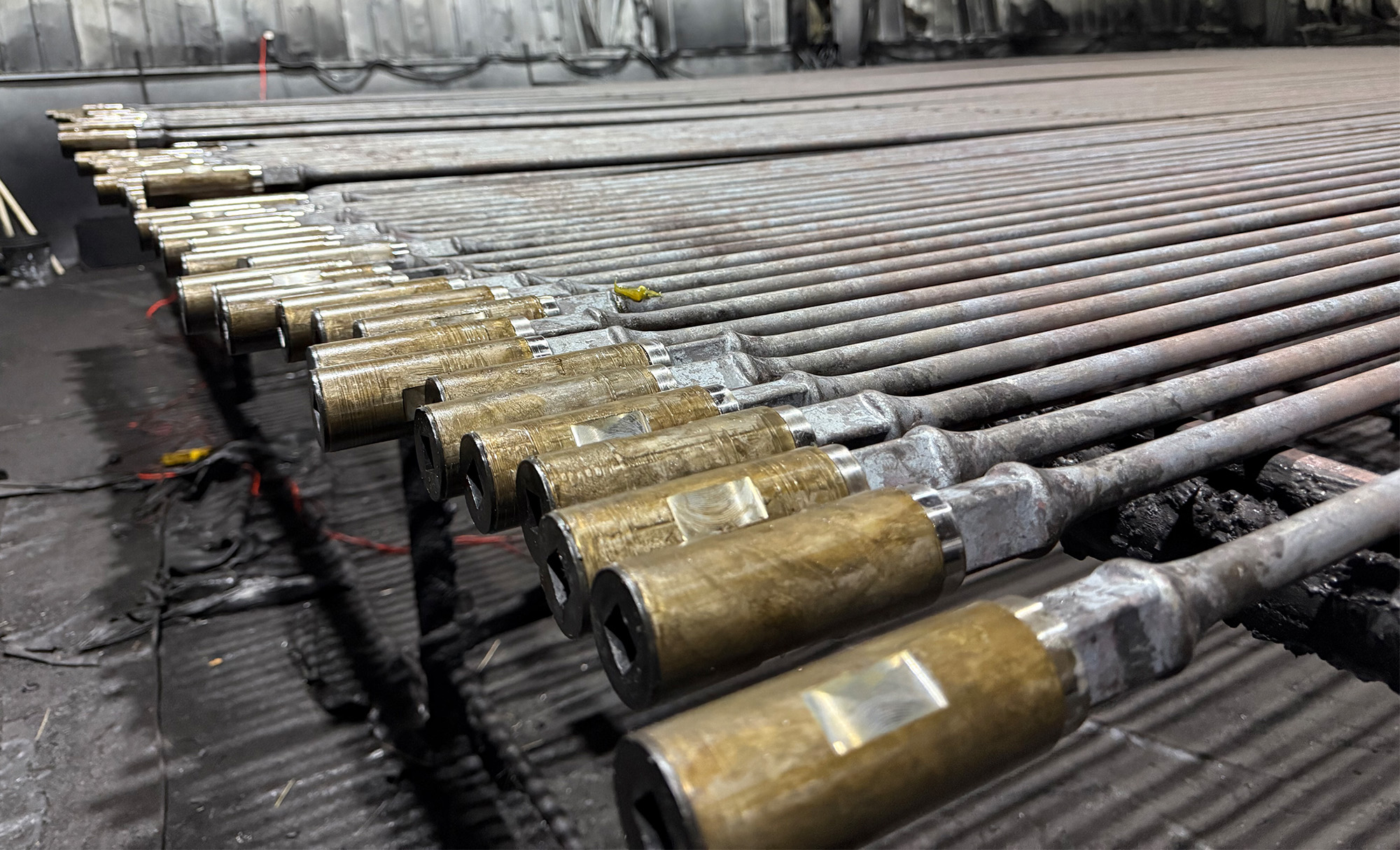
Sucker Rod 4142
Material Route: AISI 4142 / 4142M Cr-Mo alloy steel for Grade D Alloy sucker rod service.
API Grade Control: Reviewed under API 11B Grade D Alloy, with finished strength verified by test records.
Strength Range: Grade D sucker rods are commonly controlled at 115,000–140,000 psi tensile strength.
Chemical Basis: Typical 4142M chemistry includes 0.38–0.45% C, 0.80–1.20% Cr and 0.15–0.25% Mo.
Supply Range: Solid sucker rod, pony rod, 25 ft / 30 ft lengths, PIN × PIN / PIN × BOX connections.
Sucker Rod 4142 refers to a finished sucker rod made from AISI 4142 / 4142M chromium-molybdenum alloy steel, commonly used in API 11B Grade D Alloy sucker rod applications. In this designation, 4142 identifies the material route, not the finished API grade. Typical 4142M chemistry is built around about 0.38–0.45% carbon, 0.80–1.20% chromium and 0.15–0.25% molybdenum, giving the steel a higher-carbon Cr-Mo basis for heat-treatment response and Grade D strength control. For finished rods, the strength identity still needs to be verified by mechanical test records, with Grade D sucker rods commonly reviewed within the 115,000–140,000 psi tensile strength range.
For 4142 sucker rod, the most critical checks are the MTC chemistry, heat-treatment condition and finished tensile test result, because the AISI 4142M material route must be proven on the final rod rather than assumed from the steel name. In reciprocating lift or PCP service, the pin end, thread root, shoulder area and coupling fit should be reviewed together, since these areas carry repeated tensile load, torque transfer and fatigue-sensitive stress during rod string operation.
What Does 4142 Mean in Sucker Rod Material?
In sucker rod 4142, the number 4142 identifies the alloy steel material route. It does not replace the API 11B finished rod grade. AISI 4142M sucker rod belongs to the Cr-Mo alloy steel family, with higher carbon content than 4130-type material and a composition designed for heat-treatment response.
This distinction is important because API 11B Grade D Alloy describes the finished sucker rod strength category, while AISI 4142M describes the steel route used to reach that performance after proper processing. A complete review of 4142M sucker rod material should include:
- API 11B grade, such as Grade D Alloy
- Rod diameter and standard length
- Heat treatment route
- Tensile strength and yield strength record
- Thread and pin-end inspection
- Coupling type and connection match
- Heat number, MTC and rod marking
- Packing list and bundle identity
For this reason, 4142M sucker rod material should be read together with finished mechanical properties and inspection records. The material route explains the alloy basis; the test records and traceability package confirm the finished rod.
AISI 4142M Chemical Composition and Alloying Logic
AISI 4142M chemical composition is built around carbon, chromium and molybdenum. The material is commonly treated as a higher-carbon Cr-Mo alloy steel sucker rod route. Carbon provides the strength foundation, while chromium and molybdenum improve hardenability, temper resistance and strength stability after heat treatment.
| Element | Typical Range | Alloy Function | Review Meaning in 4142 Sucker Rod |
|---|---|---|---|
| Carbon, C | 0.38–0.45% | Provides the main strength and hardness response after heat treatment. | Higher carbon supports Grade D Alloy strength, but hardness and toughness still need mechanical test verification. |
| Chromium, Cr | 0.80–1.20% | Improves hardenability and through-section strength consistency. | Helps the rod body achieve more stable strength after heat treatment, especially in larger rod sizes. |
| Molybdenum, Mo | 0.15–0.25% | Supports temper resistance, hardenability and strength stability. | Important for keeping strength response more stable after tempering and during high-load rod service. |
| Manganese, Mn | 0.50–1.10% | Contributes to strength and steelmaking control. | Supports base strength and helps maintain consistent steelmaking behavior. |
| Silicon, Si | 0.15–0.37% | Acts as a deoxidizing element and provides secondary strengthening. | Helps steel cleanliness and supports stable mechanical response. |
| Vanadium, V | 0.04–0.09% where specified | Supports grain refinement and strengthening in modified 4142M routes. | Should be checked against the actual MTC when the material is supplied as modified 4142M. |
| Phosphorus, P | ≤ 0.025% typical max. | Controlled residual element. | Lower P helps reduce brittleness risk and protects toughness-sensitive performance. |
| Sulfur, S | ≤ 0.025% typical max. | Controlled residual element. | Lower S helps improve cleanliness and reduce fatigue-sensitive weakness. |
| Cr + Mo route | Cr-Mo alloy system | Defines AISI 4142M as a chromium-molybdenum alloy steel. | Confirms that 4142M is a material route, while API 11B Grade D Alloy is the finished rod strength identity. |
Download:AISI 4142M Sucker Rod Chemical Composition and Alloy Function
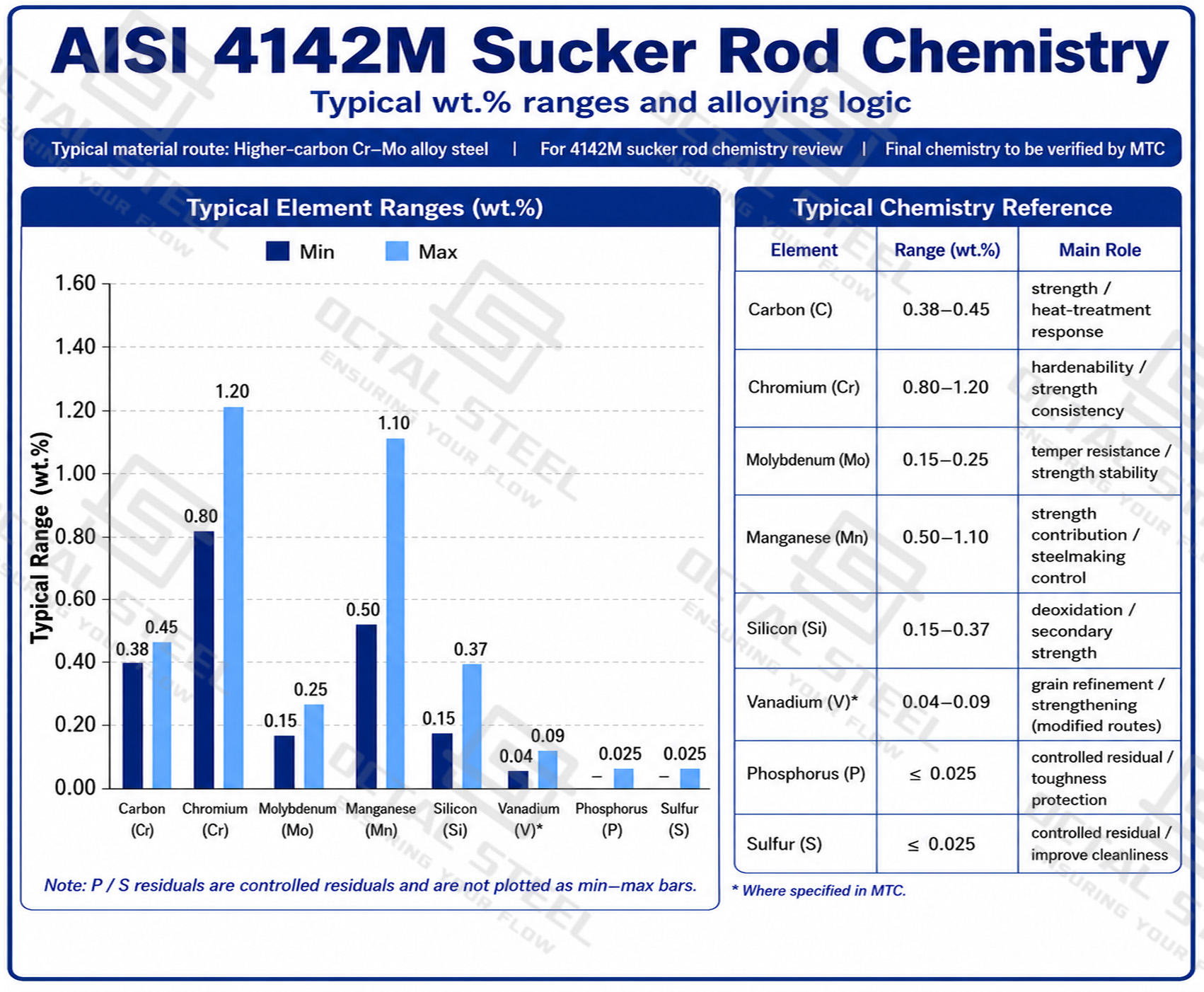
For 4142 Grade D Alloy sucker rod, the strength check should match three records: the MTC chemistry, the heat treatment route, and the finished mechanical test result. If the tensile strength, yield strength, hardness review and rod marking are consistent, the rod can be verified as a finished API 11B Grade D Alloy product rather than only an AISI 4142M material item.
Mechanical Strength and API 11B Grade D Alloy Control
API 11B Grade D Alloy sucker rod is commonly associated with high-strength finished rods in the Grade D range. AISI 4142M can be used as the Cr-Mo alloy steel route for this strength category, but the material name itself does not prove finished rod performance.
The finished rod should be reviewed by mechanical test records, heat treatment evidence, thread inspection and coupling verification. For Grade D sucker rods, tensile strength is commonly controlled in the 115,000–140,000 psi range. When 4142M is used in Grade D Alloy service, the key point is to connect the steel chemistry with actual finished-rod strength and inspection records.
| Technical Item | Control Point | Why It Matters |
|---|---|---|
| AISI 4142M | Cr-Mo alloy steel material route | Defines the chemistry basis for hardenability and heat-treatment response. |
| API 11B Grade D Alloy | Finished sucker rod strength category | Confirms the rod is reviewed as an API 11B finished product. |
| Mechanical test | Tensile strength, yield strength, elongation and hardness where required | Verifies actual strength after heat treatment. |
| Heat treatment record | Normalizing, tempering or specified heat-treatment route | Links material chemistry to final rod performance. |
| Thread and coupling inspection | Pin end, thread root, shoulder area and coupling fit | Controls connection fatigue and rod string compatibility. |
Download:API 11B Grade D Alloy and AISI 4142M Strength Control Sheet
For 4142 Grade D Alloy sucker rod, a clear strength record is more useful than a material label. The finished rod should show consistency between material chemistry, API grade, heat treatment, mechanical properties, thread condition and traceability records.
Why 4142 Sucker Rod Is Used in Rod Pumping Systems
4142 sucker rod is mainly used where the rod string needs controlled strength and stable heat-treatment response under repeated load. In reciprocating rod lift and PCP applications, the rod body is exposed to cyclic tensile load, while the pin end, thread root, shoulder area and coupling connection may carry additional stress concentration.
Typical working conditions include:
- Reciprocating rod lift in medium-depth wells: the rod string works under repeated upstroke and downstroke load, so tensile strength, heat-treatment consistency and pin-end fatigue control become important.
- PCP drive strings with torque transfer: the sucker rod must carry both axial load and rotational torque, making thread fit, coupling match and shoulder contact more sensitive.
- Wells with higher fluid load or longer stroke settings: increased pump load can raise cyclic stress along the rod body and concentrate stress near the upset end and connection area.
- Deviated or side-contact wellbores: rod body and coupling contact against tubing can increase wear risk, especially when reduced-diameter or slim-hole couplings are used.
- Inhibited non-corrosive to mildly corrosive service: 4142M may be considered where strength control is required, but CO₂, H₂S or chloride-bearing fluids still need separate corrosion review.
- Rod strings requiring pony rod adjustment: pony rods, coupling type and rod marking should match the main rod string so the final assembly remains traceable from MTC to packing list.
AISI 4142M gives a practical Cr-Mo material basis for Grade D Alloy sucker rod service. Its value is strongest when heat treatment, tensile strength, thread inspection and coupling match are controlled as one finished product record. If CO₂, H₂S, chloride-bearing fluid or severe corrosion is present, corrosion condition, inhibition method and material suitability should be reviewed separately. 4142M should not be treated as a universal corrosion-resistant sucker rod material.
4142 Sucker Rod Supply Range
A complete 4142 sucker rod supply range is normally reviewed as a rod-string package, not as a single rod body. The technical scope should connect API 11B grade, AISI 4142 / 4142M material route, rod diameter, standard length, pony rod adjustment, connection design, coupling type and traceability records.
| Item | Available / Reference Scope | Technical Meaning |
|---|---|---|
| Product scope | Solid sucker rod, pony rod, polished rod-related components | Covers the main rod string parts and length-adjustment components. |
| Standard and grade | API 11B, Grade D Alloy | Defines finished rod strength category and acceptance basis. |
| Material route | AISI 4142 / AISI 4142M | Cr-Mo alloy steel route for Grade D Alloy sucker rod service. |
| Size and length | 5/8 in to 1-3/4 in; 25 ft / 30 ft; pony rod 2–10 ft | Selected by rod load, pump design, string layout and well depth. |
| Connection and coupling | PIN × PIN / PIN × BOX; Class T, full size, reduced diameter or slim hole coupling | Must match rod string design, tubing clearance and wear condition. |
| Traceability records | MTC, heat number, mechanical test, rod marking and packing list | Confirms material identity, finished rod strength and shipment consistency. |
For finished 4142 sucker rod, the supply scope should keep rod size, material grade, connection design, coupling type and document records consistent. This is especially important when solid sucker rods, pony rods and matching couplings are combined in one rod-string package for reciprocating lift or PCP service.
Thread, Coupling and Fatigue-Sensitive Areas
The finished performance of AISI 4142M sucker rod is not determined by rod body strength alone. In rod pumping systems, the connection area often becomes one of the most fatigue-sensitive zones because geometry, machining condition, shoulder contact and coupling fit can create local stress concentration.
Key fatigue-sensitive areas include:
- Pin end
- Thread root
- Shoulder area
- Wrench square transition
- Coupling face
- Rod body near the upset end
- Reduced diameter or slim hole coupling interface
Thread inspection should cover profile condition, pin-end surface, shoulder contact and connection fit. Coupling review should include coupling type, tubing clearance, wear condition and rod string compatibility. In PCP or torque-sensitive service, coupling match becomes more important because torque transfer and cyclic load may act together.
For Grade D Alloy 4142M sucker rod, the connection area should be reviewed together with heat treatment and mechanical test data. A strong rod body cannot fully compensate for unclear thread quality or mismatched coupling design.
4142 vs 4130 / 4140 / 4330 Sucker Rod Material
4142M is often compared with 4130, 4140 and 4330 because these materials may all appear in alloy steel sucker rod discussions. The comparison should focus on alloy design, carbon level, heat-treatment response, rod load, torque level, fatigue risk and connection control.
| Material Route | Alloy Logic | Main Review Focus |
|---|---|---|
| 4130 / 4130M | Cr-Mo low alloy steel | Balanced strength and heat-treatment response for moderate-load service. |
| 4140 | Higher-carbon Cr-Mo alloy steel | Higher strength potential than 4130; review hardness and toughness. |
| 4142 / 4142M | Modified higher-carbon Cr-Mo alloy route | Grade D Alloy direction; review tensile range, fatigue behavior and heat treatment. |
| 4330 / 4330M | Ni-Cr-Mo alloy steel | Higher-load and toughness-sensitive service; review Ni-Cr-Mo chemistry and traceability. |
Download:4142 vs 4140 vs4130vs 4330 Sucker Rod Material Comparison
For a 4142 vs 4130 sucker rod, 4142 vs 4140 sucker rod, or 4142 vs 4330 sucker rod comparison, the material name alone is not enough. The useful review points are:
- Rod load and pump depth
- Reciprocating or PCP application
- Torque level and connection stress
- Thread and coupling design
- Heat treatment record
- Tensile strength and hardness control
- MTC and heat-lot traceability
- Corrosion condition and inhibition plan where applicable
4142M provides a higher-carbon Cr-Mo material route for Grade D Alloy sucker rod service. Compared with 4130, it has stronger high-strength potential after controlled heat treatment. Compared with 4330M, it does not use the same nickel-bearing Ni-Cr-Mo route, so the final material choice should depend on actual rod load, toughness demand, corrosion condition, coupling design and inspection records.
Inspection Points for 4142 Sucker Rod
Inspection for 4142 sucker rod should verify whether the finished rod matches the same technical identity from material chemistry to connection release. For AISI 4142M, the key check is not only the Cr-Mo alloy route, but also whether API grade, tensile strength, heat treatment, thread condition, coupling type and traceability records remain consistent.
| Inspection Point | What to Check | Why It Matters |
|---|---|---|
| Material chemistry | C, Cr, Mo, Mn, Si and controlled P / S residuals | Confirms the AISI 4142M / Cr-Mo material route. |
| Mechanical properties | Tensile strength, yield strength, elongation and hardness where required | Verifies API 11B Grade D Alloy strength identity. |
| Heat treatment record | Normalizing, tempering or specified heat-treatment route | Links alloy chemistry to final strength, toughness and hardness response. |
| Rod body condition | Diameter, straightness, surface condition and visible defects | Reduces risk during handling, installation and rod-string operation. |
| Thread and coupling match | Pin end, thread root, shoulder area, coupling type and fit | Controls fatigue-sensitive connection areas and tubing clearance. |
| Traceability records | MTC, heat number, rod marking, bundle identity and packing list | Keeps material identity, finished rod strength and shipment records aligned. |
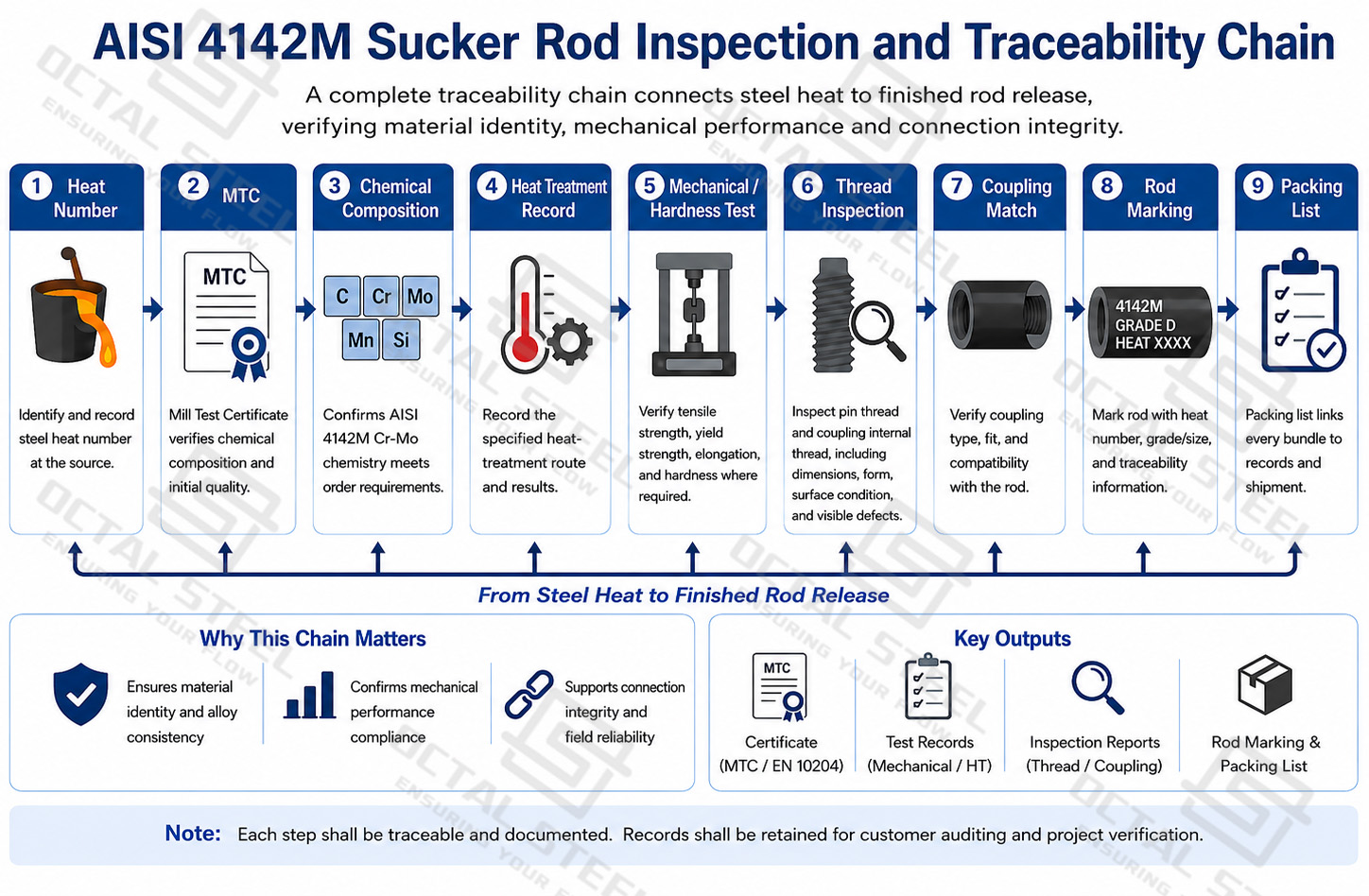
A practical traceability chain for 4142 sucker rod should connect:
- Heat number
- MTC
- Mechanical test record
- Heat treatment record
- Thread inspection
- Coupling match
- Rod marking
- Packing list
When these records show the same material grade, API grade, size, connection and coupling information, the finished rod can be verified as a complete API 11B rod product rather than only a general alloy steel material.
Octal Steel Supply and Documentation Capability for 4142 Sucker Rod
Octal Steel supports 4142 sucker rod, pony rod and coupling supply with material grade, API grade, rod size, connection design, coupling selection and documentation managed as one technical package. For AISI 4142M sucker rod, the practical value is the consistency between material chemistry, Grade D Alloy strength, heat treatment, thread inspection, coupling type and traceability records.
For 4142 sucker rod supply, the technical review can include:
- AISI 4142M / 4142 alloy steel material route
- API 11B Grade D Alloy strength identity
- Rod diameter and standard rod length
- Pony rod lengths for rod-string adjustment
- PIN × PIN / PIN × BOX connection design
- Class T, full-size, reduced diameter or slim hole coupling
- MTC and heat number traceability
- Mechanical test and heat treatment records
- Thread inspection and coupling match
- Rod marking, bundle marking and packing-list consistency
When the MTC, heat number, mechanical test record, rod marking, bundle identity and packing list show the same material grade, API grade, size, connection and coupling information, the finished rod can be verified as a complete API 11B Grade D Alloy rod product. This consistency is especially important when 4142M is used for PCP service, reciprocating rod lift or fatigue-sensitive connection conditions.
FAQ
1.What is 4142 sucker rod?
4142 sucker rod refers to a finished sucker rod made from AISI 4142 / 4142M chromium-molybdenum alloy steel. In this term, 4142 identifies the material route, while the finished rod is usually reviewed by API 11B Grade D Alloy, mechanical test records, heat treatment, thread inspection and heat-lot traceability.
2.Is AISI 4142M the same as API 11B Grade D Alloy?
No. AISI 4142M is a Cr-Mo alloy steel material designation, while API 11B Grade D Alloy is the finished sucker rod strength category. Grade D rods are commonly reviewed within a 115,000–140,000 psi tensile strength range, so the finished rod still needs tensile test, yield strength, heat treatment record, thread inspection and MTC verification.
3.Why is 4142M used for Grade D Alloy sucker rods?
4142M contains higher carbon with chromium and molybdenum, giving the steel a stronger basis for hardenability, temper resistance and heat-treatment response. This makes it suitable for Grade D Alloy sucker rod service where rod body strength, pin-end fatigue, thread-root stress and coupling fit need to be controlled together.
4.What records should verify a 4142 sucker rod?
A 4142 sucker rod should be verified by MTC chemistry, API grade, tensile strength, yield strength, heat treatment record, thread inspection, coupling match, rod marking and packing list. These records should show the same material grade, size, connection and finished rod identity, not just a general AISI 4142M material name.