Your Responsible Supplier Partner for Oil and Gas Products.

FAQ
Recent Faqs
Rencent Articles
Hot Topic
Custom Posts
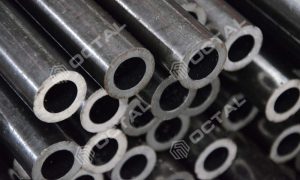
Differences between ASTM A53 B and ASTM A106 B Steel Pipe
Differences of ASTM A53 B and ASTM A106 B. ASTM A53 B covers ERW, Seamless and Galvanized steel pipe. A106 B covers only seamless steel pipe for high temperature service.
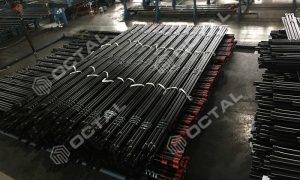
Differences Between API 5CT N80-1 and N80Q
API 5CT N80-1, N80Q differences for Casing pipe and Tubing on the impact strength, heat treatment and Non-Destructive test. N80Q is higher than N80-1.
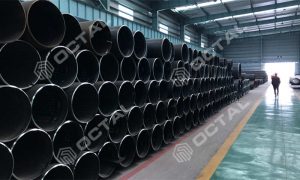
LSAW Pipe and SSAW Pipe Specifications, Differences
The differences between LSAW pipe and SSAW pipe. LSAW pipe welding in longitudinal, SSAW pipe welding in spiral, LSAW quality is better than SSAW.
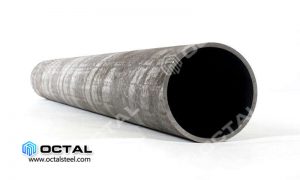
Differences Between Seamless Steel Pipe and Welded Steel Pipe
The differences between the seamless steel pipe and welded steel pipe, on performances, manufacturing processes, applications, sizes.
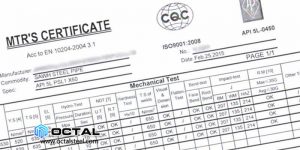
The differences between EN 10204 3.1 and 3.2 MTC
BS EN 10204:2004 is British Standard that related to different types of inspection documents for steel metal products. There are 4 types for EN 102024, 2.1, 2.2, 3.1 and 3.2, the later two types are the mostly used in steel pipe and plates products, so here we will mainly introduce the major differences between two […]
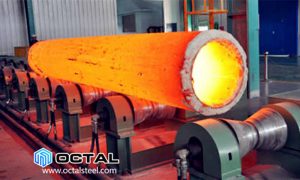
Heat Treatment Method in Steel Pipe Industry
Heat treatment methods for carbon and alloy steel pipe includes normalizing, annealing, tempering, quenching. It will improve the material performances.
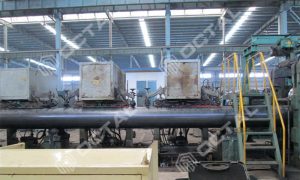
Differences between ERW and HFW Steel Pipe
In welded steel pipe production, ERW (Electric Resistance Welded) pipe and HFW (High-Frequency Welded) pipe are two closely related but distinct concepts. ERW refers broadly to the electric resistance welding process, which may use low, medium, or high-frequency currents to generate heat and form the weld. Within this category, HFW pipe is a specific subset […]
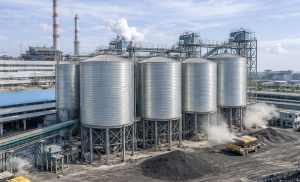
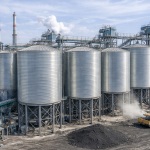
How Do Steel Silos Work?
Steel silo operates by separating bulk-material receiving from downstream consumption. Material is conveyed into the upper part of the silo and accumulates under gravity, while the cylindrical shell and bottom structure contain the stored material and carry the resulting loads. When material is required downstream, it moves toward one or more outlets at the lower […]
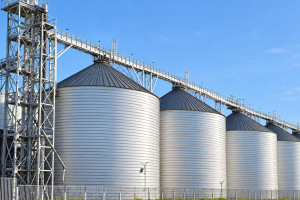
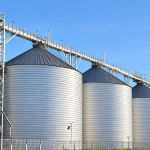
What Are Steel Silos Used For?
Steel silos are vertical storage structures made primarily from structural or galvanized steel, typically formed as cylindrical shells with a flat or conical bottom depending on the material and discharge arrangement. They are designed for the bulk storage of dry granular and powdered materials, with the steel shell carrying the loads generated by the stored […]
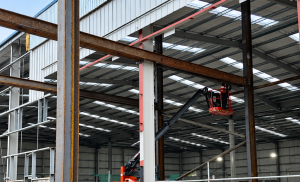
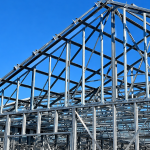
How to Construct a Steel Building?
Steel building construction converts structural steel components into complete load-bearing structures through design, fabrication and installation. The process begins with defining project requirements and selecting a suitable structural system based on building function, load conditions, span requirements and service environment. Structural members such as columns, beams, bracing systems, secondary members and connection assemblies are then […]
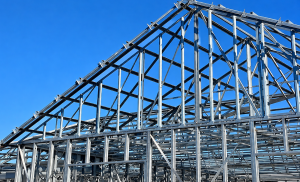
What Is Steelwork?
Steelwork refers to fabricated structural assemblies formed by processing and assembling steel components into load-bearing structures for industrial, commercial and infrastructure projects. These assemblies are produced from structural steel members, including beams, columns, plates, channels and hollow sections, through processes such as cutting, forming, machining, welding and connection assembly according to specific project requirements. Each […]
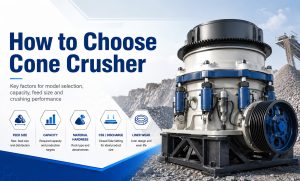
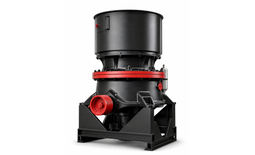
How to Choose Cone Crusher
A cone crusher should not be selected by capacity alone. In a real crushing plant, the correct model depends on feed size after primary crushing, target product size, CSS closed side setting, chamber type, rock hardness, moisture, liner wear, screen return load and the position of the crusher in the whole circuit. This is why […]

Octal is located in China recognized as a leading supplier, distributor, and manufacturer union in providing piping solutions for oil and gas company. Product ranges in Steel Pipe, Casing and Tubing, Steel Plate, Sucker Rod, Steel Pipe Fittings, Valves, and Equipment for pipelines.
Contact Info
Unit 2544, 25/F, Tower A, Wanda Plaza, Wenfeng District, Anyang, Henan, China & Building A, No.18 Dirun Road, Zhengdong New District, Zhengzhou, Henan, China
+86 372 2157660 / +86 186 3727 1277
[email protected]