Your Responsible Supplier Partner for Oil and Gas Products.

How to Choose OCTG Material for Casing and Tubing?
How to Choose OCTG Material for Casing and Tubing?
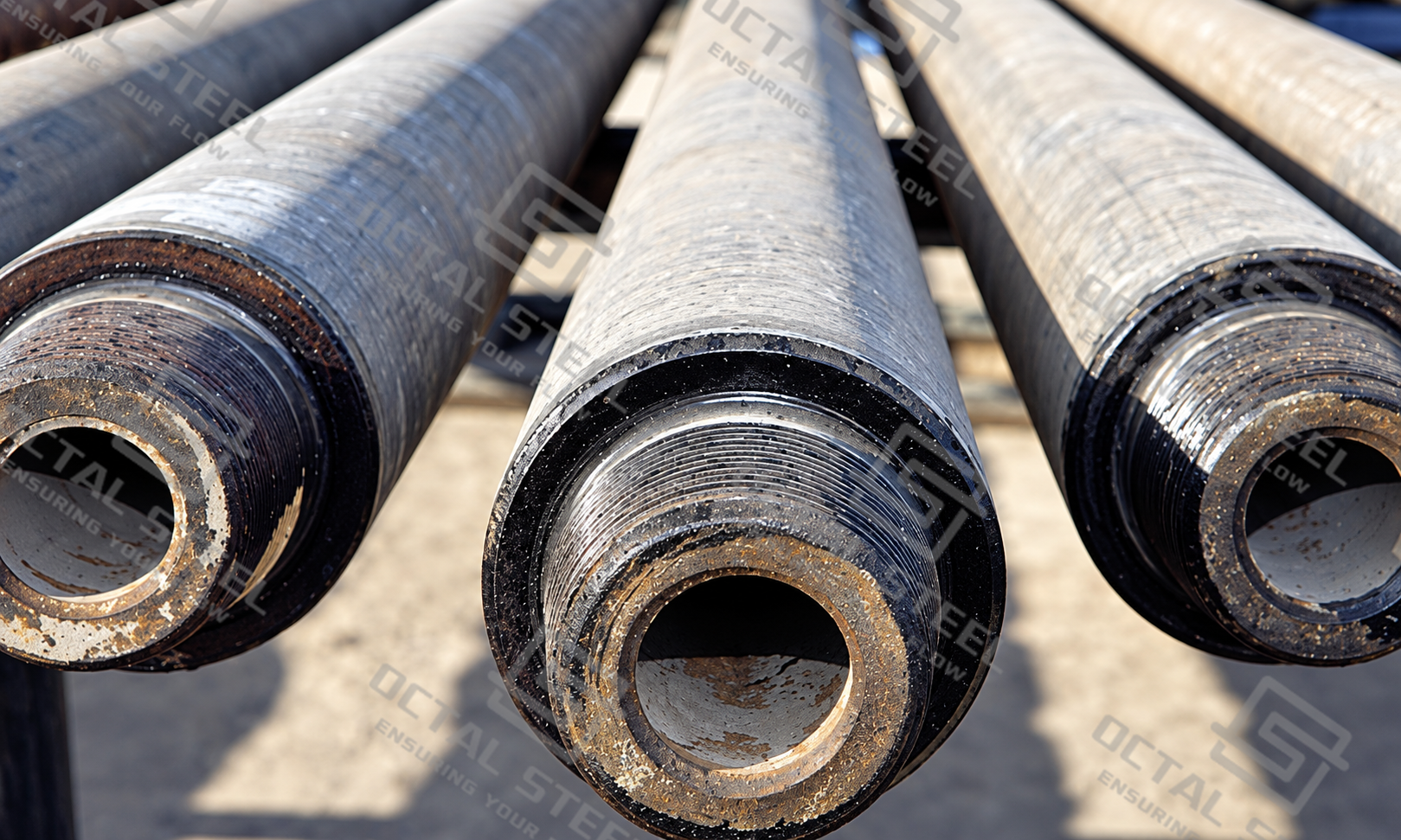
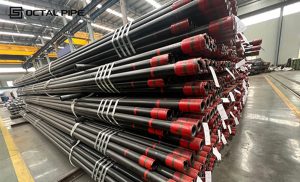
OCTG(Oil Country Tubular Goods)covers the tubular products used to drill, construct and produce an oil or gas well. The main product groups are drill pipe, casing and tubing. Casing supports and isolates the wellbore, while tubing forms the production or injection conduit inside the casing string. For casing and tubing, API 5CT is the principal product specification covering pipe dimensions, material grades, end finishes and technical delivery requirements. ISO 11960 provides the corresponding international framework for steel casing and tubing.
OCTG casing and tubing are available in a wide range of steel grades, including J55, K55, N80, L80, C90, R95, T95, P110, C110, C125 and Q125, together with chromium-bearing material routes such as L80 3Cr, 9Cr and 13Cr for specific corrosive environments. These grades are not simply a progression from “low” to “high” quality. They address different combinations of mechanical strength, heat treatment, hardness control, corrosion exposure and cracking resistance. API added C125 and specific provisions for high-collapse products to API 5CT in 2025, reflecting the increasingly demanding load envelopes used in modern wells.
OCTG material selection should be based on the actual service conditions of the well rather than on a simple comparison of grade names. A material with sufficient tensile strength may still be unsuitable when collapse is the controlling design factor, and a higher-strength grade may not be the correct choice in environments dominated by H₂S-related cracking or severe corrosion. In practice, the final material decision needs to consider pipe function, mechanical loading, downhole chemistry, temperature, service life, connection performance and inspection requirements together.
What OCTG Material Selection Covers
Material selection for OCTG is more specific than choosing between carbon steel and alloy steel.
The first distinction is the tubular’s function in the well. Production casing, intermediate casing and tubing can experience very different combinations of pressure, axial load and fluid exposure. Tubing normally sees produced or injected fluids directly, so CO₂, H₂S, chlorides, water production and treatment chemicals can have a much greater influence on its material choice. Casing may instead be controlled by external pressure, cementing conditions, axial string weight and long-term well integrity.
For the relationship between the different OCTG products, dimensions and applications, see Octal Steel’s OCTG steel casing pipe and tubing overview.
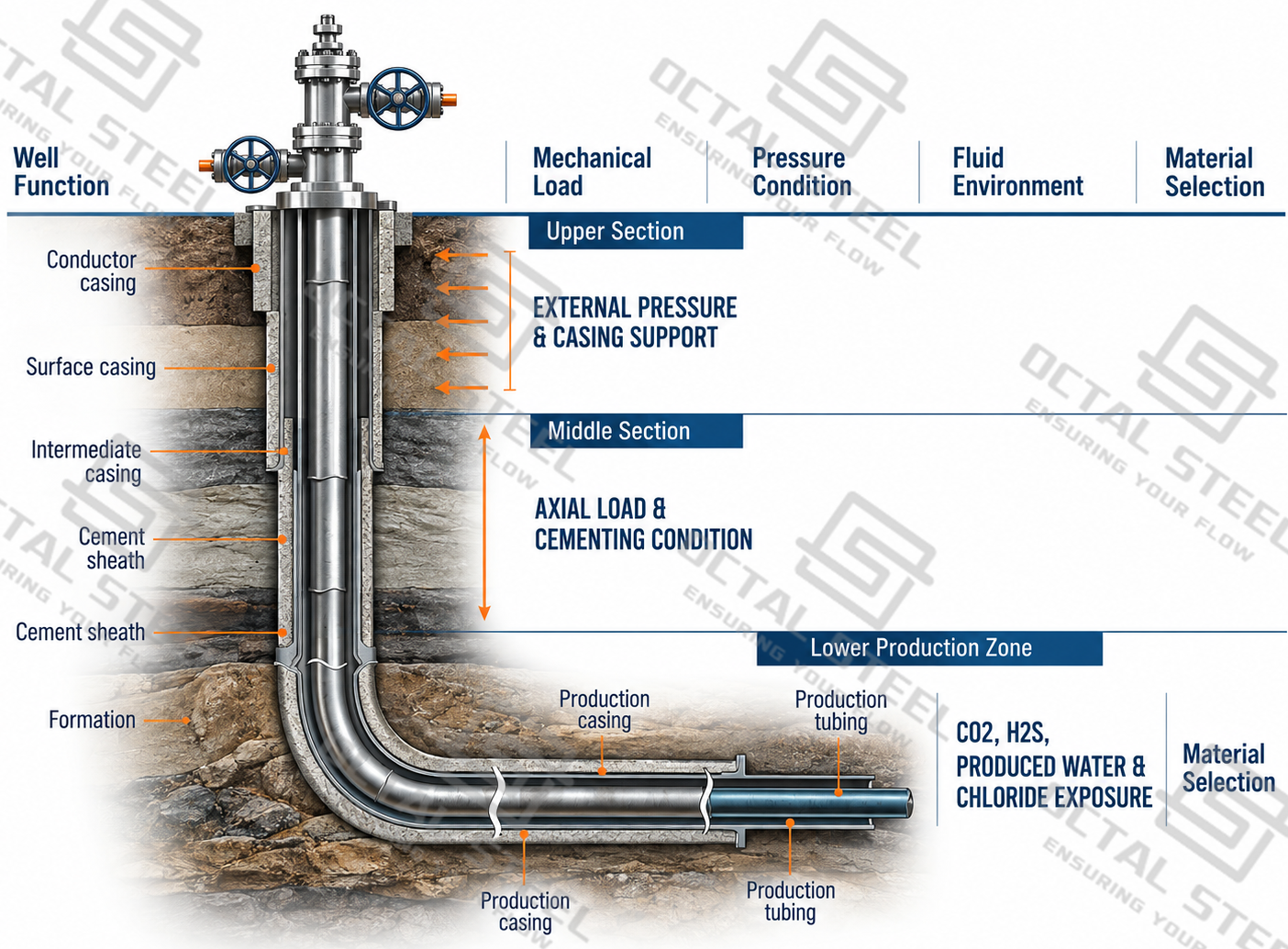
A useful material review therefore starts by defining what the pipe must do before comparing grade names.
| Design Input | Why It Affects OCTG Material Selection |
|---|---|
| Product type | Casing and tubing experience different loads and fluid exposure |
| Setting / tubing depth | Influences axial load and pressure profile |
| OD and wall thickness | Strongly affect collapse and internal-pressure resistance |
| Internal and external pressure | Establish burst and collapse design cases |
| H₂S exposure | May introduce sulfide stress cracking and other hydrogen-related cracking risks |
| CO₂ and produced water | Influence corrosion rate and material/corrosion-control strategy |
| Chloride content | Becomes important when evaluating chromium-bearing and CRA materials |
| Temperature | Affects corrosion behaviour, cracking susceptibility and operating loads |
| Well trajectory | Can add bending, contact and connection loading |
| Design life | Influences whether corrosion allowance, inhibition or CRA is economically acceptable |
This distinction is important because an API 5CT grade is only one part of the finished casing or tubing design.
Download:API 5CT OCTG Material Selection Engineering Guide.pdf
Mechanical Loads Define the Required Strength Level
Well depth is useful information, but it is not a material specification.
The pipe has to withstand the actual combination of collapse, internal pressure and axial loading expected during running, cementing, completion, production, stimulation and workover. ISO/TR 10400 provides calculation methods for properties including axial strength, internal-pressure resistance and collapse resistance for tubular products manufactured to standards such as API 5CT and ISO 11960.
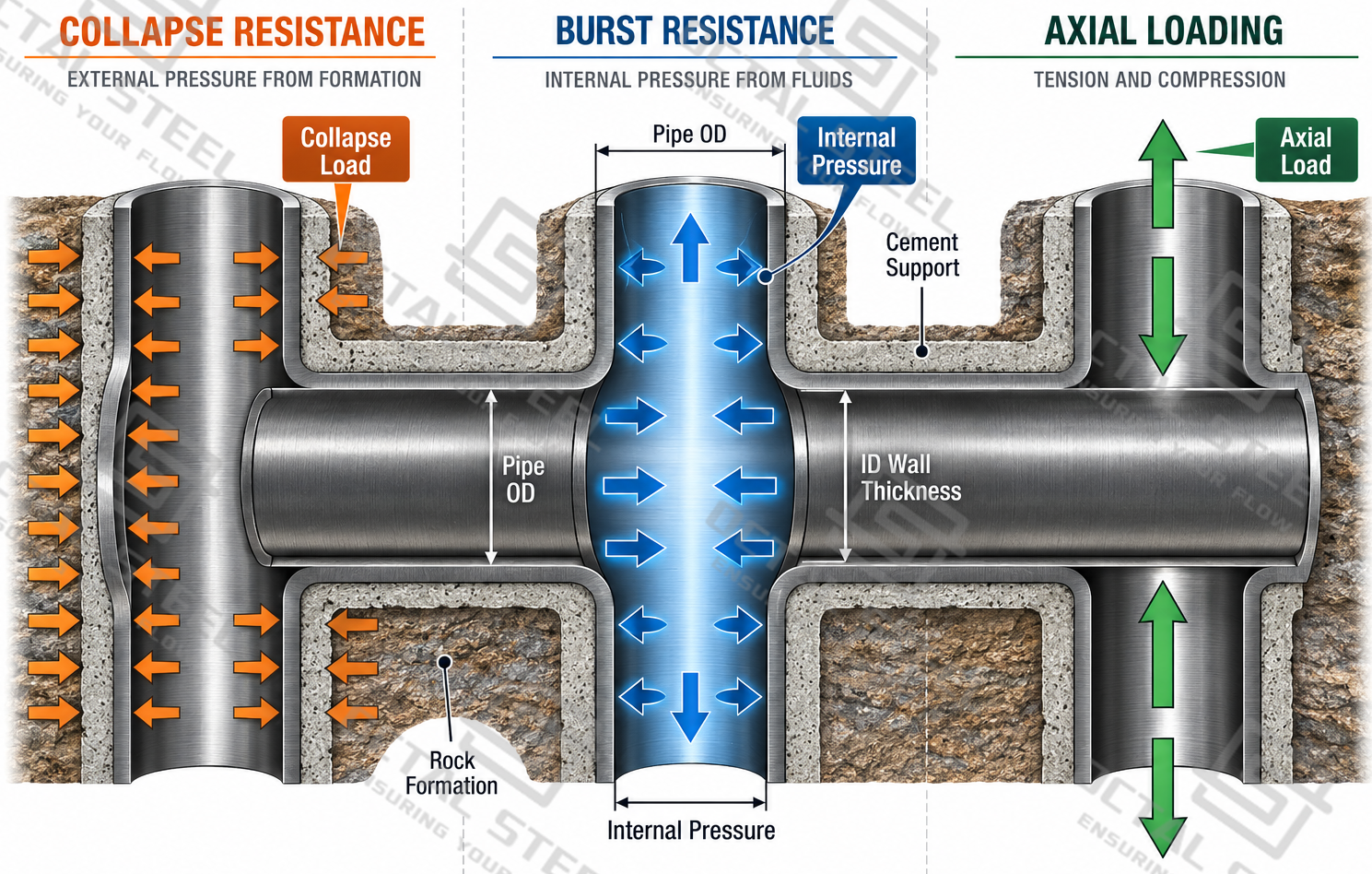
Collapse becomes critical when the external pressure acting on the pipe is greater than the supporting internal pressure.
Yield strength contributes to collapse performance, but it is not the only variable. Outside diameter, wall thickness, D/t ratio, dimensional condition and axial loading also influence the result. Increasing from one API grade to another without reviewing the pipe geometry can therefore give a misleading impression of the actual collapse margin.
This distinction is now particularly relevant because API 5CT contains dedicated provisions for high-collapse tubulars. The 2025 Addendum defines requirements for products whose qualified collapse rating exceeds the standard external-pressure resistance calculated under the applicable API framework.
For wells with severe external-pressure conditions, the purchase specification should identify the required collapse performance rather than relying on a high grade designation alone.
Internal Pressure and Burst
Production pressure, injection pressure, stimulation pressure and well-control scenarios can all create significant pressure differential across the pipe wall.
Material yield strength and wall thickness work together here. A P110 pipe with one wall thickness and a P110 pipe with another weight do not provide the same pressure capacity simply because the grade marking is identical.
That is why grade and pipe weight should be selected as a combination, not independently.
Axial Load
Casing must carry the suspended weight of the string during installation and can subsequently experience additional loads caused by pressure and temperature changes. Tubing can also be subjected to tension or compression from packer restraint, pressure cycling and thermal expansion.
Deviated and extended-reach wells add bending and contact loads that can further change the demand on both the pipe body and the connection.
The output of the mechanical review should therefore be a required load envelope. Only then does it make sense to compare suitable API 5CT grades.
H₂S Service and Sour-Service Material Requirements
H₂S-containing wells require a separate material review because the presence of hydrogen sulfide can change the acceptable strength, hardness and metallurgical condition of casing and tubing. In an aqueous environment, susceptible steels may be exposed to sulfide stress cracking and other hydrogen-assisted damage mechanisms, particularly when tensile stress and unfavorable environmental conditions occur together.
For OCTG selection, H₂S concentration alone is not enough to define material suitability. The assessment should include the H₂S partial pressure, pH, temperature, chloride level, water phase and applied stress, together with the material grade, heat-treatment condition and hardness limits. These parameters determine whether a conventional API 5CT grade can be used directly or whether a more tightly controlled sour-service material route is required.
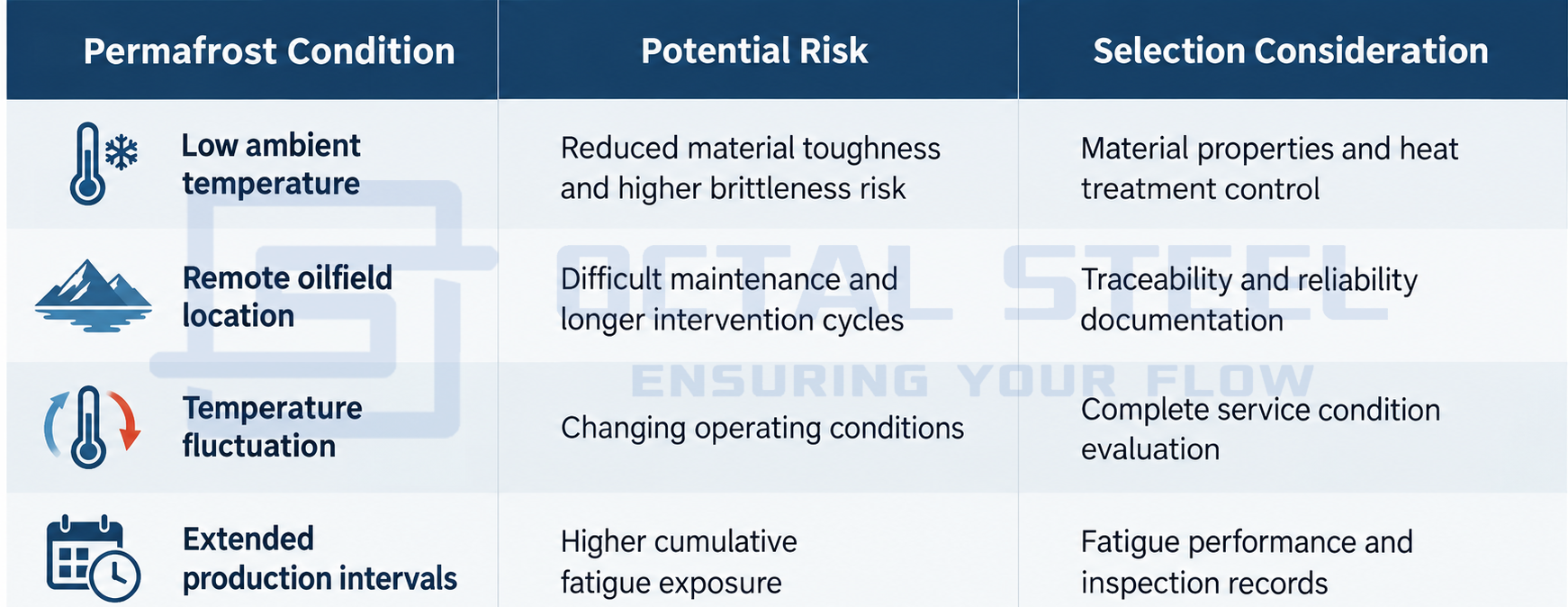
L80 Type 1, C90, T95 and C110 may be evaluated for sour-service applications under the applicable material and environmental requirements, but their suitability still depends on the defined well conditions. Grade designation alone does not establish sour-service performance.
ISO 15156 / NACE MR0175 should therefore be used together with the API 5CT product specification when the casing or tubing will operate in an H₂S-containing production environment. API 5CT defines the tubular product and material requirements, while the sour-service assessment establishes whether that material condition is appropriate for the intended environment.
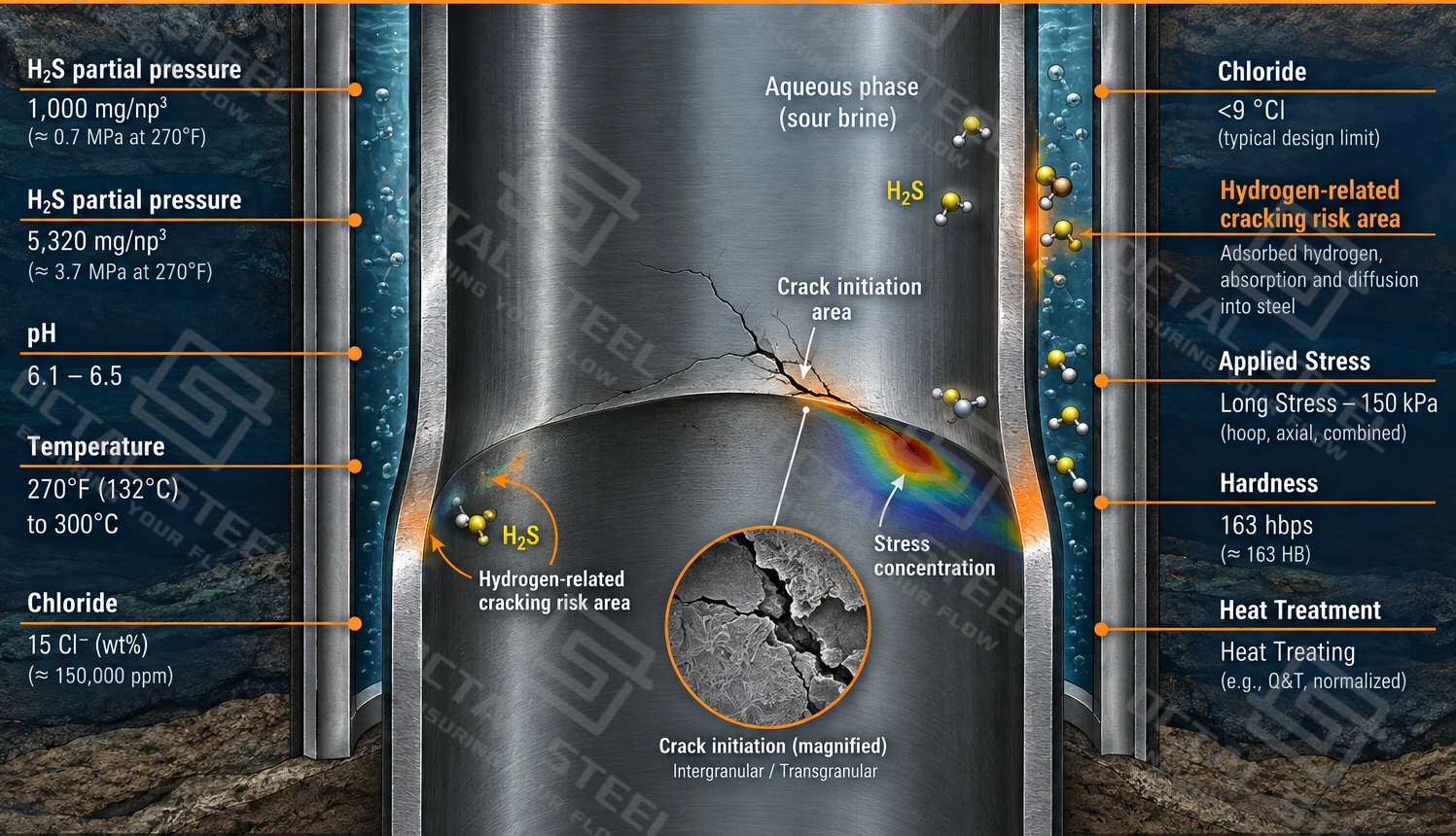
For procurement, the RFQ should identify the expected H₂S condition, temperature, water chemistry and applicable sour-service standard instead of specifying only a steel grade. This gives the manufacturer enough information to confirm the material type, heat treatment, hardness control and required inspection documentation.
Download:H2S Sour Service and OCTG Material Qualification Guide.pdf
How CO₂, Produced Water and Chlorides Affect OCTG Material Selection
For OCTG casing and tubing, material selection is influenced not only by mechanical load but also by the fluids that contact the pipe during production or injection. This is especially important for production tubing, which may remain in direct contact with produced water, CO₂, chlorides and treatment chemicals for long periods. These conditions can determine whether a conventional API 5CT carbon or low-alloy steel is sufficient, or whether a chromium-bearing grade or corrosion-resistant alloy should be evaluated.
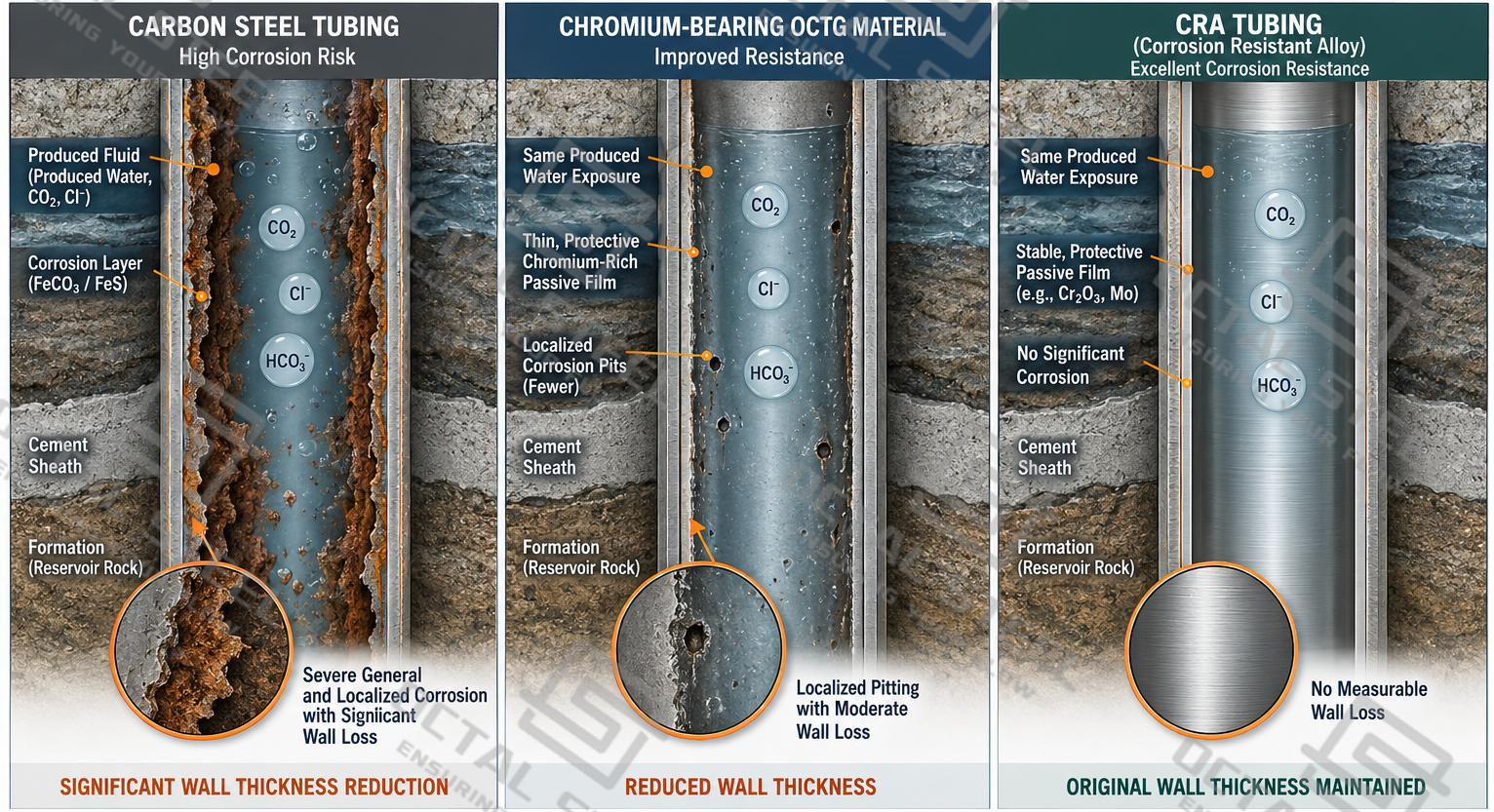
CO₂ becomes a material-selection concern when it is present together with an aqueous phase. Under these conditions, carbon and low-alloy steels can experience progressive internal corrosion and wall loss. For tubing, this can reduce the available wall thickness over time and affect the pressure margin expected during the planned service life.
The severity of the environment cannot be judged from CO₂ concentration alone. Produced-water chemistry, chloride concentration, temperature, flow conditions, water production, pressure and corrosion-inhibitor performance all influence the corrosion behaviour of the OCTG string.
| Service Factor | Why It Matters for Casing and Tubing |
|---|---|
| CO₂ | Can drive internal corrosion when an aqueous phase is present |
| Produced water | Provides the electrolyte required for corrosion reactions |
| Chlorides | Increase the severity of the environment and become particularly important when Cr-bearing or CRA materials are considered |
| Temperature | Changes corrosion behaviour and material operating limits |
| Flow conditions | Can affect corrosion rate, protective scale stability and local attack |
| Corrosion inhibitor | May reduce corrosion but depends on reliable chemical treatment and distribution |
| Required service life | Determines how much wall loss and maintenance risk can be accepted |
Where corrosion can be controlled within the required service life, conventional API 5CT steel may still be suitable with corrosion allowance, monitoring and inhibitor treatment.
API 5CT also includes several L80 material types, including Type 1, 3Cr, 9Cr and 13Cr. These materials have different corrosion behavior and should not be treated as interchangeable simply because they share the L80 designation. Higher-chromium grades may be considered as corrosion severity increases.
For more severe or long-life corrosive service, the material selection may move to CRA casing or tubing. The final choice should be based on the actual CO₂, produced-water chemistry, chloride level, temperature and corrosion-control strategy, rather than on CO₂ concentration alone.
Selecting API 5CT Grades for Casing and Tubing
After the required mechanical performance and downhole environment have been defined, the next task is to select an API 5CT grade that matches those conditions. For casing and tubing, the grade affects strength, heat-treatment condition, hardness control and suitability for specific service environments, so it should be selected together with pipe size, wall thickness and well conditions.
The table below shows how the main API 5CT grade groups are typically considered during OCTG material selection. It is intended as a screening reference, while the final choice still needs to be verified against the actual load and service environment.
| API 5CT Grade / Material Route | Main Selection Consideration | What Should Be Verified |
|---|---|---|
| H40 / J55 / K55 | Conventional casing or tubing where required mechanical loads can be satisfied | Collapse, internal pressure, axial load and actual well environment |
| N80 Type 1 / N80Q | Higher mechanical demand than lower-strength routes | Required heat-treatment condition, load margin and corrosion environment |
| L80 Type 1 | Controlled material route often evaluated where sour-service requirements apply | Actual H₂S environment and ISO 15156 applicability |
| L80 3Cr | Mildly corrosive downhole environment | CO₂, produced water, H₂S, chloride and temperature |
| L80 9Cr / 13Cr | Chromium-bearing route for more demanding corrosive service | Fluid chemistry, H₂S limits, chloride and temperature |
| C90 / T95 / C110 | Higher-strength controlled material routes for demanding service | Mechanical requirement plus sour-environment qualification where applicable |
| R95 / P110 | High mechanical loading | Whether the environment permits the selected material condition |
| C125 / Q125 | Very high mechanical demand | Collapse, toughness, connection performance, environment and project-specific requirements |
API’s 2025 Addendum added C125 to API 5CT 11th Edition, while ISO 11960:2020 does not currently include this grade. This is why OCTG purchase specifications should identify both the grade and the governing standard edition, rather than relying on the grade name alone.
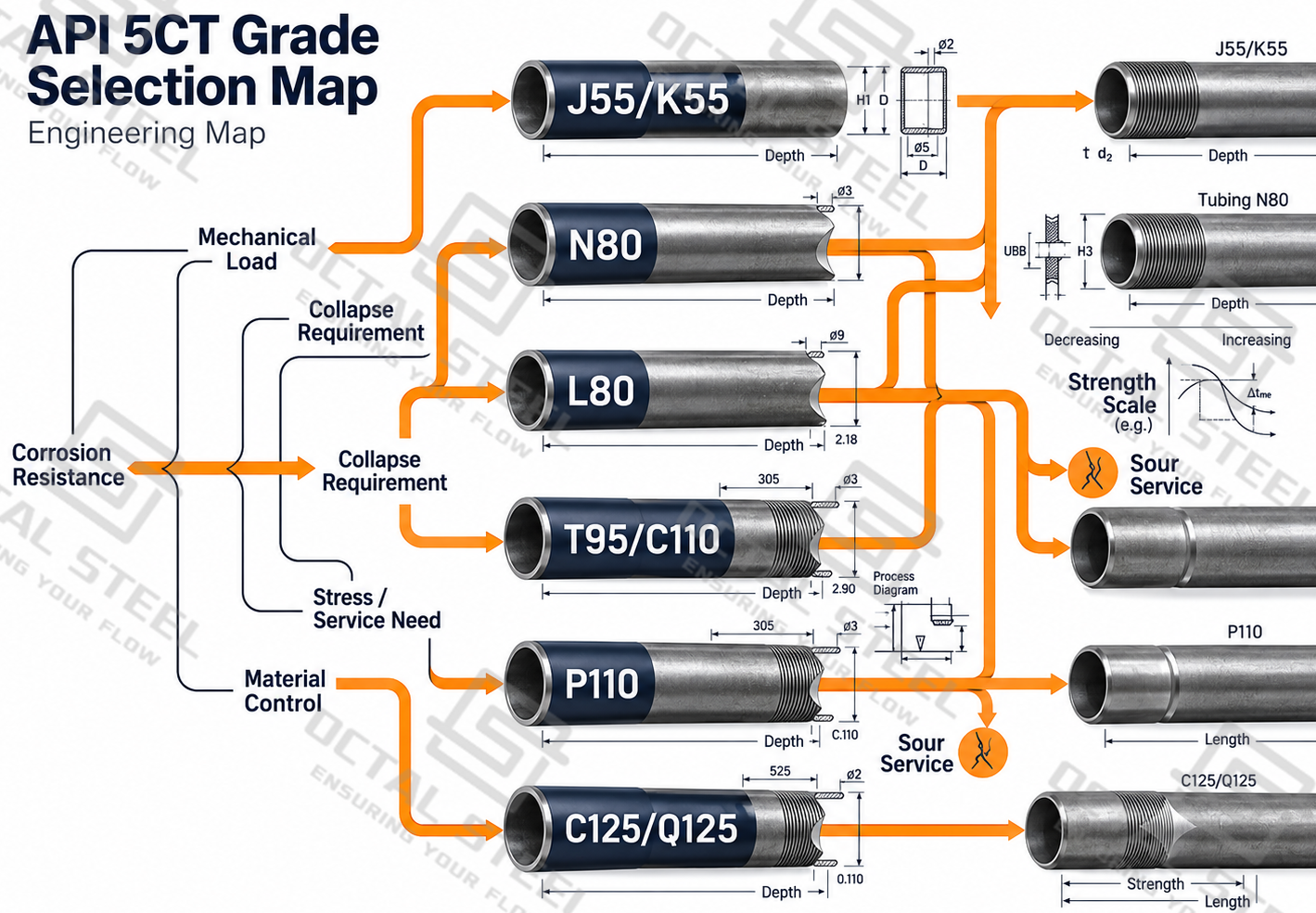
In practice, grade selection should balance the required mechanical load capacity with the actual service environment. A higher-strength grade is only suitable when its material condition,
When Chromium-Bearing or CRA OCTG Is Required
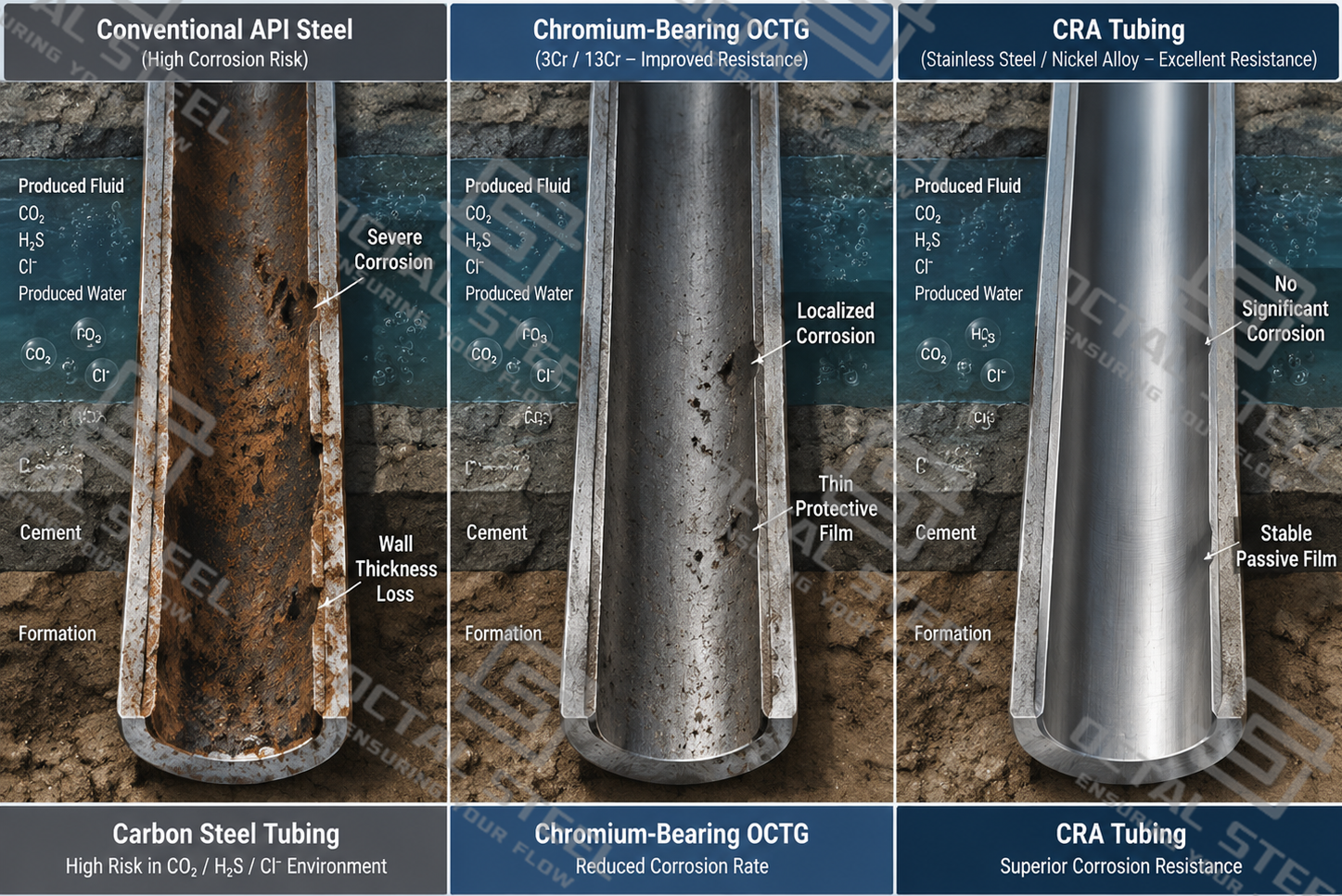
For casing and tubing, conventional API 5CT carbon or low-alloy steel is suitable for many wells, but it may not provide enough corrosion resistance in more aggressive production environments. When CO₂, H₂S, chlorides, temperature and produced-water chemistry create excessive corrosion or cracking risk, the material selection may need to move toward chromium-bearing steel or a corrosion-resistant alloy.
Chromium-bearing grades such as 3Cr, 9Cr and 13Cr are commonly evaluated when better resistance to CO₂-related corrosion is required. Their suitability still depends on the complete downhole environment, particularly H₂S, chloride content and operating temperature.
For more severe service, CRA casing and tubing may be considered. ISO 13680:2024 and API 5CRA cover corrosion-resistant alloy tubular products, including stainless steel and nickel-based alloy material routes used for demanding well conditions.
The choice between conventional API 5CT steel, chromium-bearing material and CRA should therefore be based on expected corrosion performance, cracking risk, service life and corrosion-control strategy. Higher alloy content alone does not determine the correct material.
The Connection Must Match the Selected Material
The pipe body is not the only load-carrying and pressure-containing part of an OCTG string.
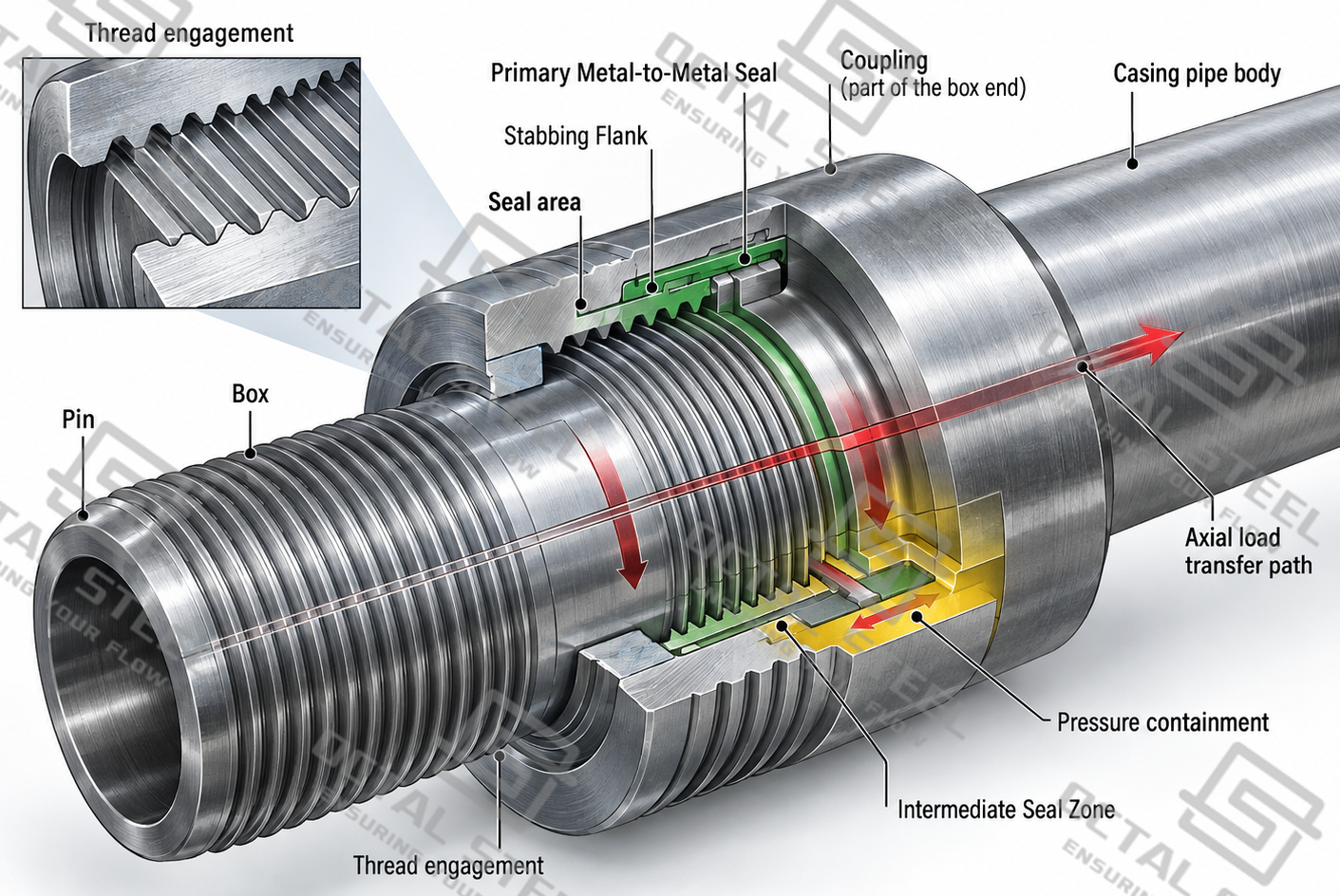
Casing and tubing connections have to maintain structural capacity and sealing performance during make-up, running and service. ISO 11960 recognizes API connection forms including short round casing, long round casing, buttress casing, non-upset tubing, external-upset tubing and integral-joint tubing.
Higher pipe-body strength does not automatically provide higher connection capacity.
A well may meet the required pipe-body tension or internal-pressure rating while the connection becomes the limiting element under combined pressure, tension, compression or bending.
For qualified connection designs, ISO 13679 specifies testing used to evaluate galling tendency, sealing performance and structural integrity. The standard also notes that not every possible operating scenario, such as the influence of corrosive fluids, is covered by the connection test programme.
For demanding wells, the purchase decision should therefore review the pipe body and connection as one system.
Where Coatings Fit in OCTG Material Selection
Internal or external coatings can reduce corrosion, friction, scale deposition or handling damage in suitable applications, but a coating should not be used to conceal an unsuitable base-material decision.
The useful selection order is:
base material suitability → environment → coating compatibility → application quality → inspection → handling.
For example, a corrosion-control coating may reduce the exposure of carbon steel to produced fluids, but it does not turn a base material that is unsuitable for an H₂S cracking environment into a qualified sour-service material.
This separation is also useful in the purchase specification. API grade, coating system, coating thickness/acceptance criteria and coating inspection records should be specified as separate requirements rather than compressed into one product description.
OCTG Material Selection for Different Well Conditions
The following matrix shows how the material decision changes according to the dominant engineering problem.
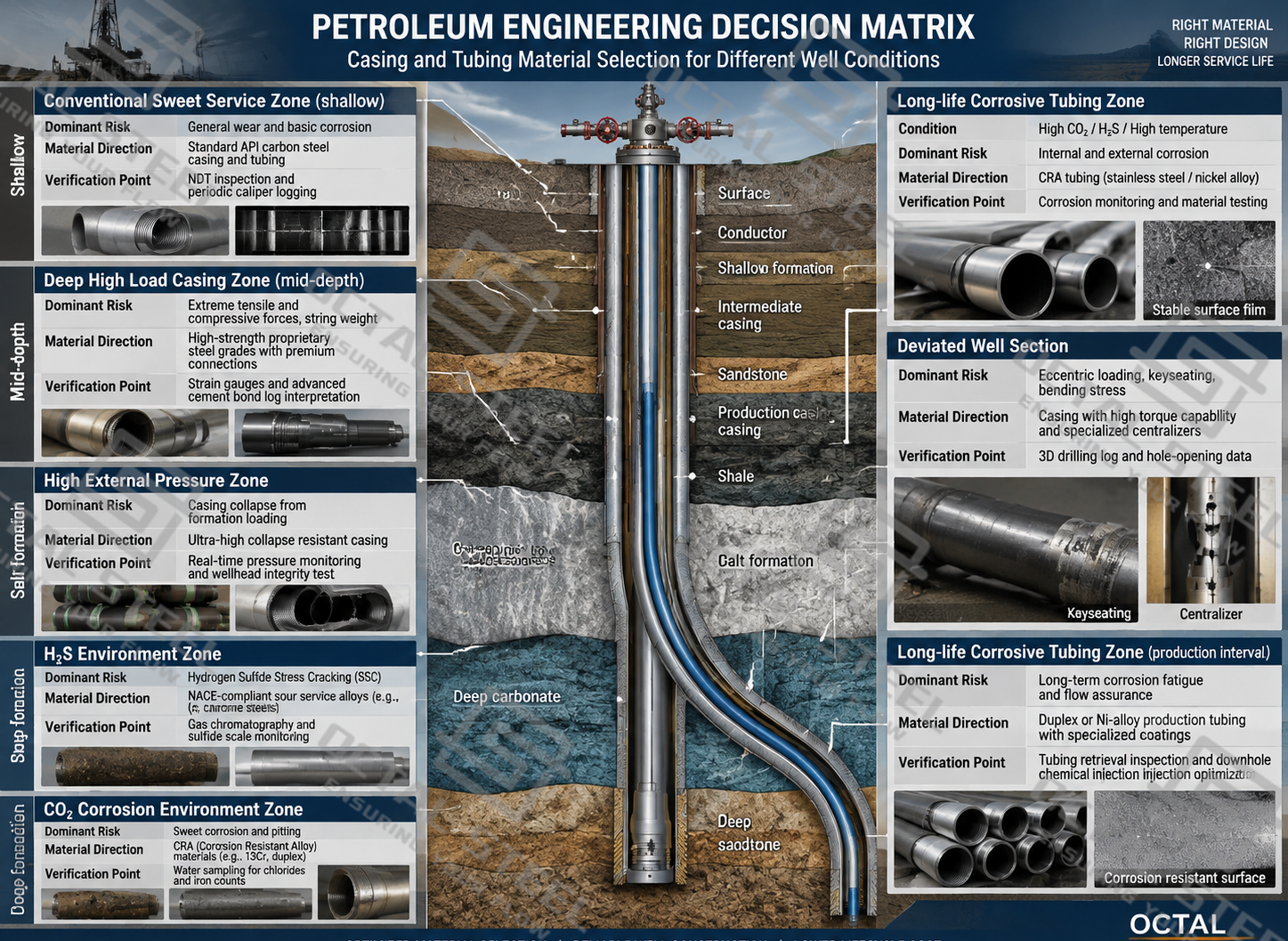
The same well can therefore contain several OCTG grades.
Surface casing, intermediate casing, production casing and production tubing do not see identical pressure, mechanical load or fluid chemistry. Applying one grade to an entire well because it appears to be the “strongest” option removes the engineering distinction between those strings.
Matching OCTG Grade to Service Conditions
Higher-strength OCTG grades are required when casing or tubing must carry greater axial, pressure or collapse loads, but strength alone does not determine whether a material is suitable for the well. Corrosion exposure, H₂S service, connection performance and pipe geometry must also be considered.
The exact material type and heat-treatment condition should also be specified. For example, N80 Type 1 and N80Q have different manufacturing and heat-treatment requirements, while the L80 family includes Type 1 and chromium-bearing materials such as 3Cr, 9Cr and 13Cr. These materials should not be treated as interchangeable simply because they share the same grade designation.
The purchase specification should therefore identify the API 5CT grade, material type where applicable, governing standard edition and any project-specific requirements. This gives the manufacturer a clearer basis for confirming the material, manufacturing route and inspection requirements.
OCTG Material Selection and Supply from Octal Steel
Octal Steel supplies casing and tubing against API 5CT requirements and project specifications, with material selection based on the actual combination of grade, dimensions, connection, service environment and inspection scope.
For conventional wells, the review may focus primarily on pipe weight, mechanical loading and API grade. Sour or corrosive service requires more information. H₂S, CO₂, chloride, temperature and the expected production environment should be identified before confirming whether a conventional API 5CT steel, chromium-bearing material or CRA route is appropriate.
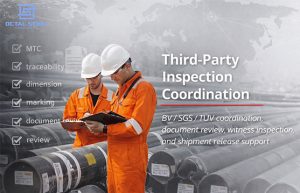
The same principle applies to inspection. Grade marking alone is not sufficient for release. Heat and lot identification, material test data, dimensional results, applicable NDT records, hydrostatic testing and connection inspection should remain traceable to the supplied pipe and shipping documentation.
This approach keeps material selection connected to the conditions the casing or tubing will actually see in the well rather than treating OCTG grade selection as a simple comparison of minimum strength.
FAQ
How do you choose the correct OCTG material?
Start with the casing or tubing function, then define collapse, internal pressure and axial-load requirements together with H₂S, CO₂, water chemistry, chloride and temperature. The material family and API grade can then be screened against both the mechanical load and service environment.
Is P110 always better than N80 or L80 because it has higher strength?
No. P110 provides a higher mechanical-strength route, but material suitability also depends on corrosion and cracking conditions, pipe geometry and connection performance. A lower-strength but environmentally suitable material may be the correct choice for another section of the same well.
Which OCTG material should be used for H₂S service?
There is no single API grade that is automatically suitable for every H₂S environment. Material selection should be checked against the actual service conditions and the applicable requirements of ISO 15156/NACE MR0175.
When should CRA tubing or casing be considered?
CRA should be evaluated when conventional carbon or low-alloy OCTG, together with practical corrosion-control measures, cannot provide the required corrosion or cracking performance over the intended service life. Material selection then needs to consider the full fluid chemistry and temperature rather than CO₂ or H₂S concentration alone.


Tags:API 5CT Casing and TubingCasing and tubingOCTG pipeOil and Gas
Related Products
Related Resources
Recent Faqs
Rencent Articles
Hot Topic
Custom Posts

Octal is located in China recognized as a leading supplier, distributor, and manufacturer union in providing piping solutions for oil and gas company. Product ranges in Steel Pipe, Casing and Tubing, Steel Plate, Sucker Rod, Steel Pipe Fittings, Valves, and Equipment for pipelines.
Contact Info
Unit 2544, 25/F, Tower A, Wanda Plaza, Wenfeng District, Anyang, Henan, China & Building A, No.18 Dirun Road, Zhengdong New District, Zhengzhou, Henan, China
+86 372 2157660 / +86 186 3727 1277
[email protected]