Your Responsible Supplier Partner for Oil and Gas Products.

Cone Crushers
Recent Products
Rencent Articles
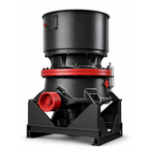



Cone Crushers
Crushing Stage: Secondary, tertiary and fine crushing
Crusher Types: Single-cylinder hydraulic cone crusher and multi-cylinder hydraulic cone crusher
Applications: Quarrying, mining, aggregate production and hard-rock crushing
Suitable Materials: Granite, basalt, limestone, river pebble, iron ore and other hard materials
Key Features: Hydraulic CSS adjustment, hydraulic cavity clearing and stable product size
Main Parts: Mantle, concave, main shaft, hydraulic cylinder and lubrication system
Support: Model selection, crushing-chamber recommendation, wear parts and spare parts supply
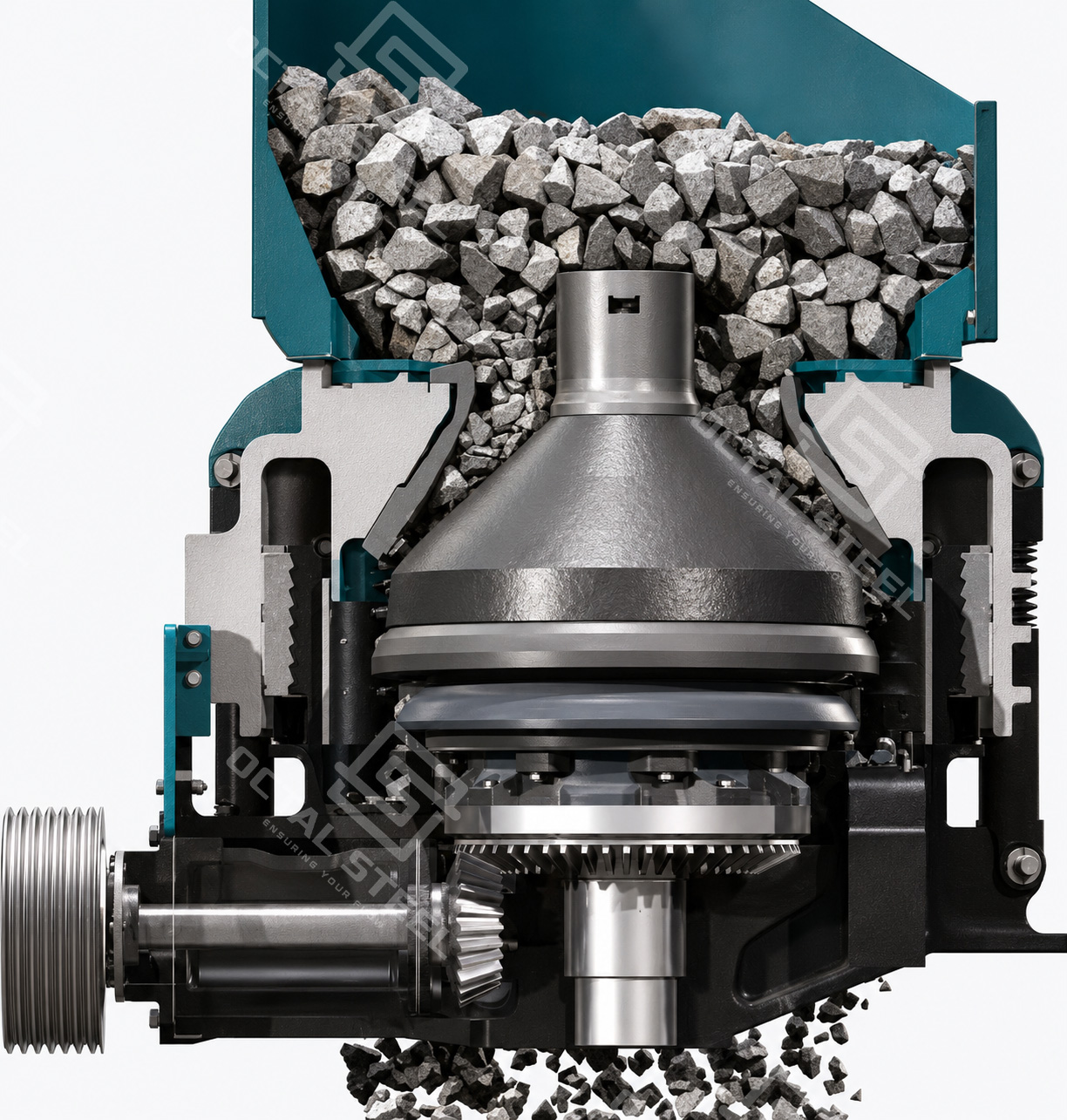
Cone crushers are used after primary crushing when the production line needs controlled particle size, stable capacity and better aggregate shape. In quarry, mining and aggregate production, the key selection points are not only machine price or motor power. A suitable cone crusher should match the feed size, material hardness, crushing stage, chamber type, CSS, capacity target, liner wear condition and downstream screening requirement.
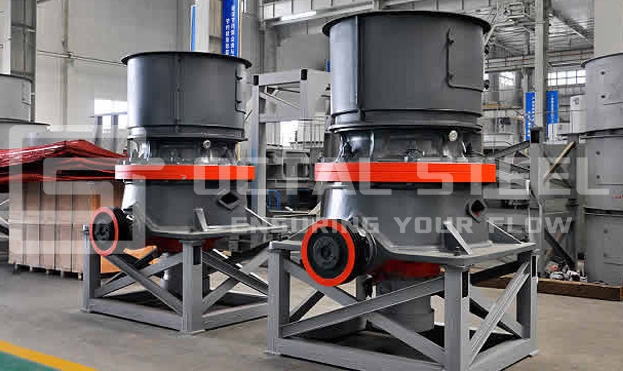
OCTA STEEL supplies cone crushers for secondary crushing, tertiary crushing and fine crushing in hard rock, basalt, granite, river pebble, limestone and mineral processing applications. The product range can be configured for fixed crushing plants, mobile crushing stations and complete aggregate production lines.
Why Cone Crusher Selection Matters
A cone crusher works inside a full crushing circuit. If the feed material is too large, too wet, poorly graded or unevenly distributed, even a high-power machine may suffer from unstable output, uneven liner wear or frequent blockage. This is why professional cone crusher selection should start from the working condition, not only from the model name.
For buyers, the practical question is:Can this cone crusher accept my feed size, reach my target output size, hold stable capacity, and keep wear cost under control?
Cone Crusher Selection Checklist
| Selection Point | What to Confirm | Why It Matters |
|---|---|---|
| Feed size | Maximum feed size after primary crushing | Oversized feed may cause blockage |
| Material hardness | Granite, basalt, limestone, ore | Affects wear and capacity |
| Crushing stage | Secondary, tertiary or fine crushing | Determines chamber type |
| CSS | Required closed side setting | Controls output size |
| Capacity | Tons per hour target | Affects model selection |
| Product shape | Cubical aggregate requirement | Important for concrete/asphalt aggregate |
Single Cylinder Hydraulic Cone Crusher
A single cylinder hydraulic cone crusher is a cone crusher designed with one main hydraulic cylinder integrated with the main shaft support, discharge adjustment, overload protection and cavity clearing functions. It is commonly used for secondary crushing, medium crushing and fine crushing after the primary jaw crusher, especially in quarry, aggregate and hard rock crushing plants where stable output size and practical maintenance are required.

In practical applications, single cylinder cone crushers are commonly used for granite, basalt, river pebble, limestone, iron ore and other medium-hard to hard materials. They offer a balanced solution for projects that need consistent crushing performance, easier operation and lower daily maintenance pressure.
Specifications
The following data provides the basic model specifications and reference capacity ranges for single cylinder hydraulic cone crushers. Final model selection should be confirmed according to material type, feed size, required output size and plant configuration.
Basic Model Specifications
| Model | Cavity Type | Maximum Inlet Size (mm) | Minimum Outlet Size (mm) | Maximum Installed Power (kW) |
|---|---|---|---|---|
| CS420 | S1 Extra Coarse | 240 | 22 | 90 |
| S2 Medium Coarse | 200 | 19 | ||
| CH420 | H1 Fine | 135 | 10 | 90 |
| H2 Medium Fine | 65 | 8 | ||
| H3 Extra Fine | 38 | 4 | ||
| CS430 | S1 Extra Coarse | 360 | 25 | 160 |
| S2 Medium Coarse | 300 | 22 | ||
| S3 Coarse | 235 | 19 | ||
| CH430 | H1 Fine | 185 | 13 | 160 |
| H2 Medium Fine | 90 | 10 | ||
| H3 Extra Fine | 50 | 6 | ||
| CS440 | S1 Extra Coarse | 450 | 35 | 250 |
| S2 Medium Coarse | 400 | 29 | ||
| S3 Coarse | 300 | 25 | ||
| CH440 | H1 Fine | 215 | 16 | 250 |
| H2 Medium Fine | 110 | 13 | ||
| H3 Extra Fine | 70 | 8 | ||
| CS660 | S1 Extra Coarse | 560 | 41 | 315 |
| S2 Medium Coarse | 500 | 38 | ||
| CH660 | H1 Fine | 275 | 16 | 315 |
| H2 Medium Fine | 135 | 16 | ||
| H3 Extra Fine | 65 | 13 | ||
| CH870 | H1 Fine | 300 | 22 | 560 |
| H2 Medium Fine | 155 | 19 | ||
| H3 Extra Fine | 80 | 10 | ||
| CH890 | H1 Fine | 370 | 25 | 750 |
| H2 Medium Fine | 195 | 22 | ||
| H3 Extra Fine | 85 | 10 |
| Model | Feed Port Size (mm) |
Minimum Discharge Opening (mm) |
Recommended Max Motor Power (kW) |
Machine Weight (t) |
|---|---|---|---|---|
| HD100 | 50 | 10 | 90 | 6.5 |
| HD100S | 200 | 20 | 90 | 8.0 |
| HD200 | 70 | 10 | 160 | 10.5 |
| HD200S | 250 | 25 | 160 | 12.0 |
| HD300 | 130 | 15 | 220 | 14.5 |
| HD300S | 280 | 25 | 220 | 18.0 |
| HD500 | 220 | 25 | 400 | 29.0 |
| HD500S | 380 | 50 | 400 | 35.0 |
| HD800 | 450 | 25 | 560 | 63.0 |
| HD800S | 560 | 50 | 630 | 68.0 |
Reference Capacity by Tight-Side Discharge Opening
The following table shows reference capacity ranges under different tight-side discharge openings. Actual capacity may vary with material hardness, feed grading, moisture content, chamber selection and operating conditions.
| Model | 10 mm | 15 mm | 20 mm | 25 mm | 30 mm | 40 mm | 45 mm | 50 mm | 60 mm | 70 mm | 80 mm |
|---|---|---|---|---|---|---|---|---|---|---|---|
| HD100 | 45-55 | 60-70 | 80-90 | 85-95 | – | – | – | – | – | – | – |
| HD100S | – | 80-90 | – | 105-115 | – | 120-130 | 145-165 | 155-175 | – | – | – |
| HD200 | 70-90 | 80-105 | 100-125 | 135-150 | – | 160-175 | 185-200 | – | – | – | – |
| HD200S | – | – | – | 110-140 | – | 140-170 | 180-210 | 200-230 | 230-260 | – | – |
| HD300 | – | 135-155 | 160-180 | 190-210 | 210-235 | 240-260 | – | – | – | – | – |
| HD300S | – | – | – | 170-190 | 170-210 | 210-255 | 235-275 | 255-296 | – | – | – |
| HD500 | – | – | – | 240-260 | 270-290 | 350-370 | – | – | – | – | – |
| HD500S | – | – | – | – | – | – | – | 325-375 | 400-450 | 450-500 | 600-800 |
| HD800 | – | – | – | 400-540 | 600-900 | 800-990 | 900-1100 | 1000-1200 | – | – | – |
| HD800S | – | – | – | – | – | – | – | 950-1300 | 1100-1500 | 1200-1650 | 1300-1900 |
Download:Cone Crusher Model Specifications and Capacity Reference
How Cone Crushers Work
A cone crusher crushes rock by compression. The mantle moves eccentrically inside the concave, and material is squeezed in the crushing chamber until it becomes smaller than the discharge opening. This compression crushing method is different from impact crushing, which relies more on high-speed impact and blow bars.
The main working parts include:
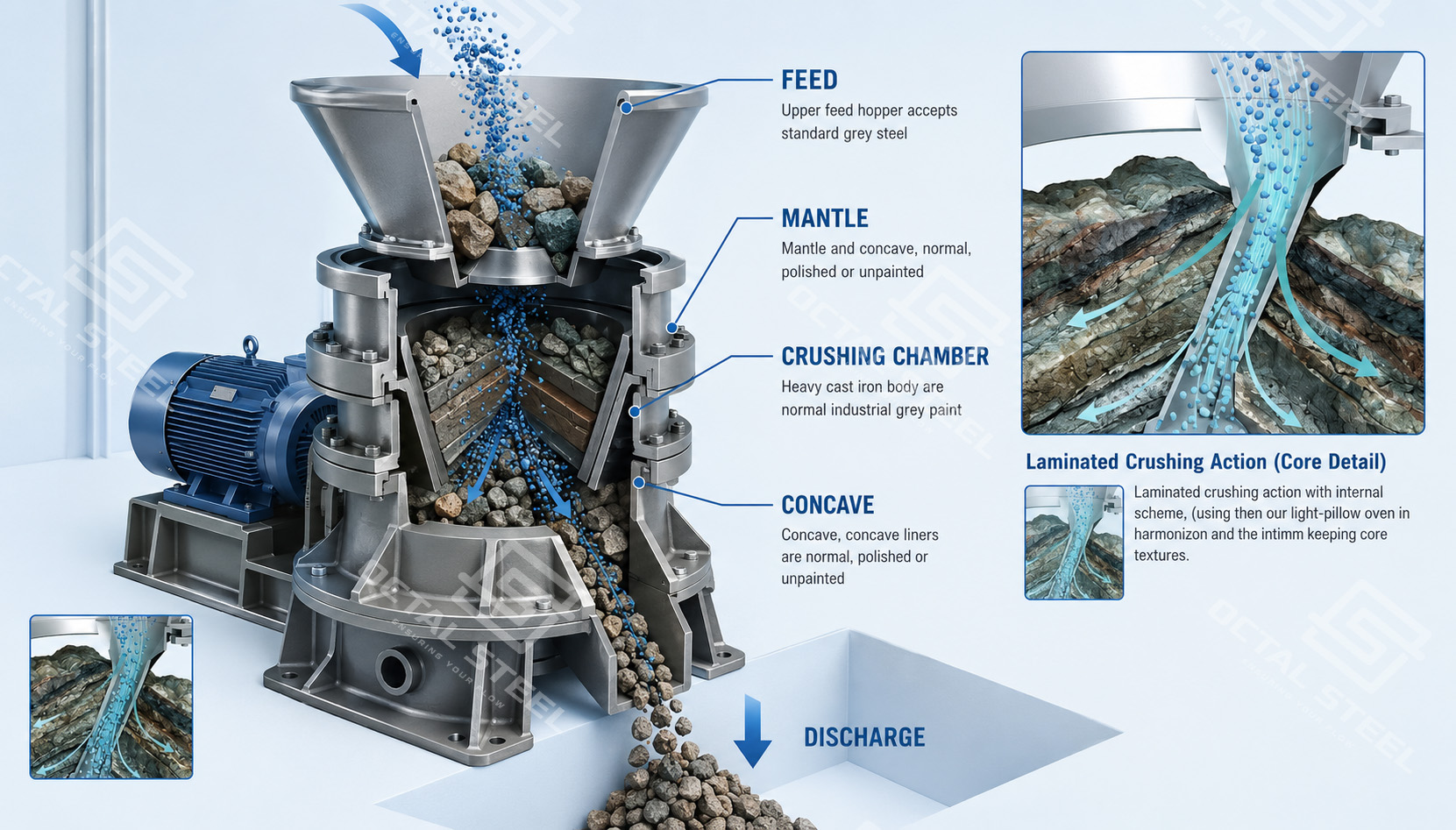
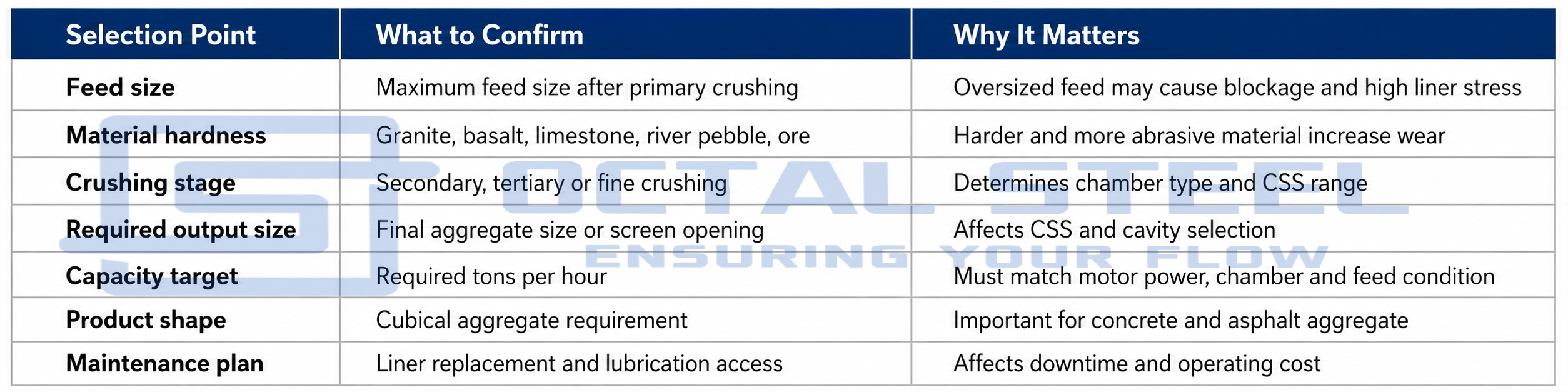
FLS emphasizes automation for feed control, setting adjustment, lubrication monitoring and hydraulic parameter monitoring, which shows that modern cone crusher pages should explain not only “crushing,” but also operation control and maintenance stability.
Download:Cone_Crusher_Working_Principle_Data_Sheet_Octal_Pipe_Balanced
Feed Size, CSS and Capacity Control
The three most important operating parameters for cone crushers are feed size, CSS and capacity.
CSS means closed side setting. It is the smallest distance between the mantle and concave during the crushing cycle. CSS directly affects output size, product gradation, machine load and production capacity. FLS uses closed side setting options and capacity at a defined CSS in its cone crusher comparison table, which proves CSS is a key parameter customers expect to see in a professional product page.
The feed material should be controlled before entering the cone crusher. Cone crushers are not ideal for dirty, unprepared or oversized feed. Cone crushers work best with clean, pre-sized material where precision and cubical output are required.
| Parameter | Engineering Meaning | What Happens If Ignored |
|---|---|---|
| Feed size | Maximum rock size entering chamber | Blockage and liner stress |
| CSS | Closed side setting | Poor gradation or overload |
| Chamber type | Coarse / medium / fine cavity | Wrong output shape |
| Capacity | Actual tons per hour | Unstable operation |
| Feed distribution | Even feeding into chamber | One-side liner wear |
Cone Crushers for Secondary and Tertiary Crushing
Cone crushers are mainly used in secondary and tertiary crushing. In a hard rock plant, the jaw crusher or gyratory crusher handles primary size reduction. The cone crusher then reduces the material further and improves product shape before screening or final stockpiling.
Secondary Crushing
In secondary crushing, the cone crusher receives material from the primary crusher. The goal is to reduce the rock to a size suitable for screening or further crushing. This stage usually requires stable feed control, suitable chamber selection and reliable liner life.
Tertiary Crushing
In tertiary crushing, the cone crusher works closer to the final product size. CSS control, chamber type and liner condition become more important because they affect product gradation and aggregate shape. For high-spec aggregate production, tertiary cone crushing is often linked with closed-circuit screening.
Hard Rock and Aggregate Production
Cone crushers are widely used for granite, basalt, river pebble, limestone, iron ore and other hard or abrasive materials. For abrasive rock, manganese liner selection, chamber wear profile and regular liner replacement planning should be reviewed before order confirmation.

Single Cylinder vs Multi Cylinder Cone Crusher
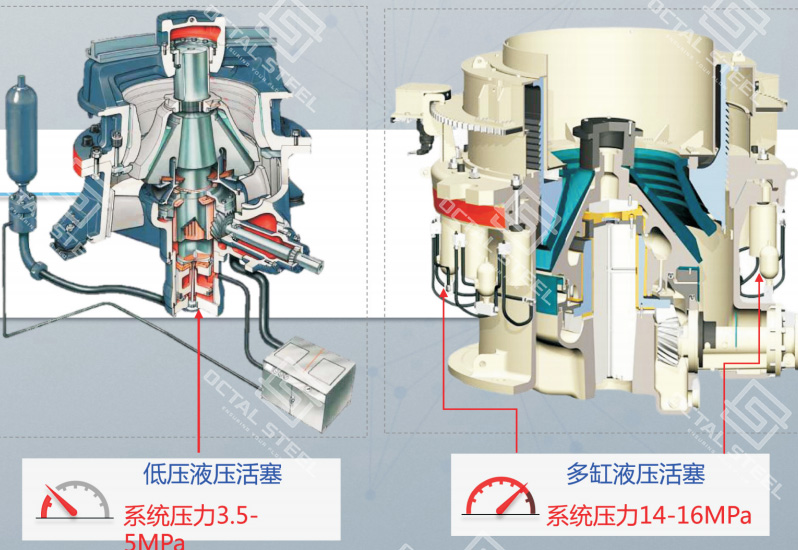
Single cylinder and multi cylinder cone crushers are both used for secondary, tertiary and fine crushing, but they are designed for different production priorities. The main difference is not only the number of hydraulic cylinders, but also how the crusher controls adjustment, overload protection, crushing force, maintenance workload and production stability.
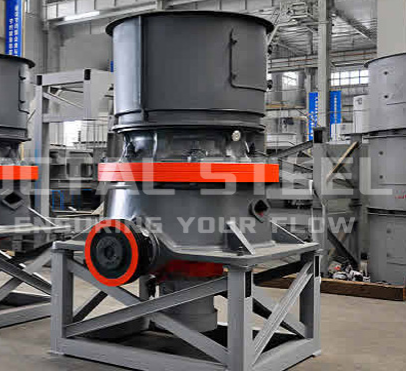
A single cylinder cone crusher uses one main hydraulic cylinder to support CSS adjustment, overload protection and cavity clearing. Its structure is more compact, with fewer hydraulic control points and simpler daily maintenance. It is suitable for quarry, aggregate and medium-hard to hard rock production lines where stable output, easier operation and practical maintenance are important.
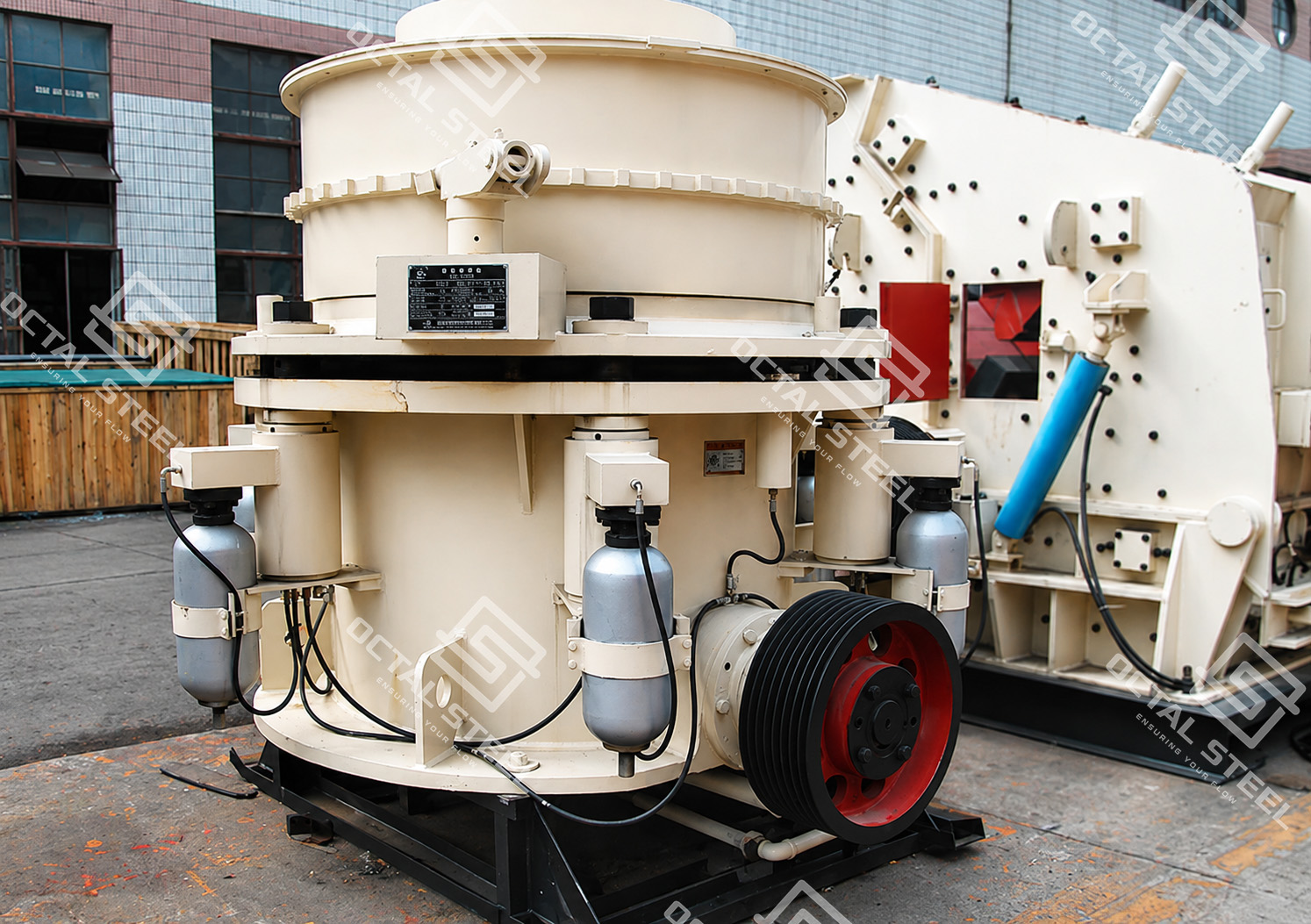
A multi cylinder cone crusher uses several hydraulic cylinders around the crushing chamber. This design can provide stronger clamping force, more precise hydraulic control and better stability under high-load crushing conditions. It is often selected for larger production lines, harder or more abrasive materials, and projects that require higher capacity or more precise product gradation.
| Item | Single Cylinder Cone Crusher | Multi Cylinder Cone Crusher |
|---|---|---|
| Hydraulic Structure | One main hydraulic cylinder | Multiple hydraulic cylinders around the chamber |
| Adjustment Method | Hydraulic CSS adjustment with simpler control | More precise hydraulic adjustment and locking control |
| Overload Protection | Hydraulic release and cavity clearing | Multi-point hydraulic protection and stronger clamping |
| Crushing Force | Suitable for medium to hard rock crushing | Better for high-load and more demanding crushing conditions |
| Maintenance | Fewer hydraulic points, easier daily inspection | More components to inspect and maintain |
| Application | Quarry, aggregate, secondary and tertiary crushing | Large-capacity plants, hard rock and high-output production |
| Buyer Focus | Stable output, easier operation, lower maintenance complexity | Higher crushing force, tighter control, larger capacity potential |
Download:Single Cylinder vs Multi Cylinder Cone Crusher

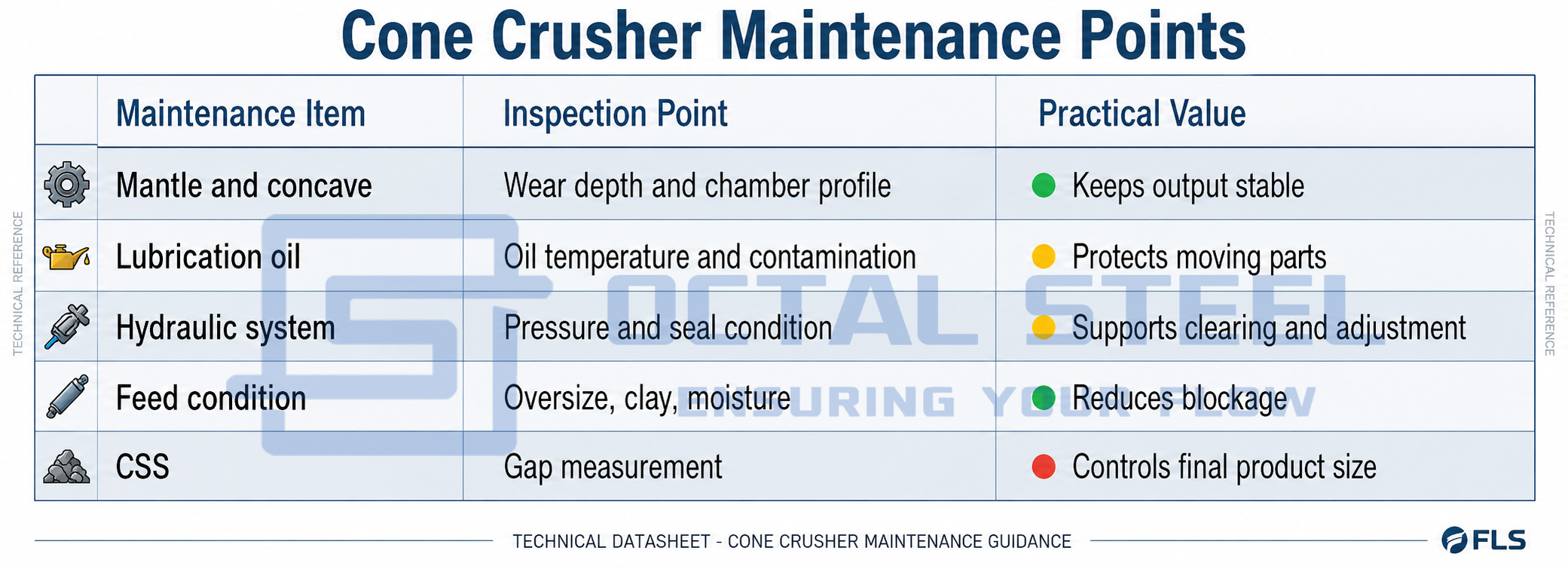
Main Wear Parts and Maintenance Points
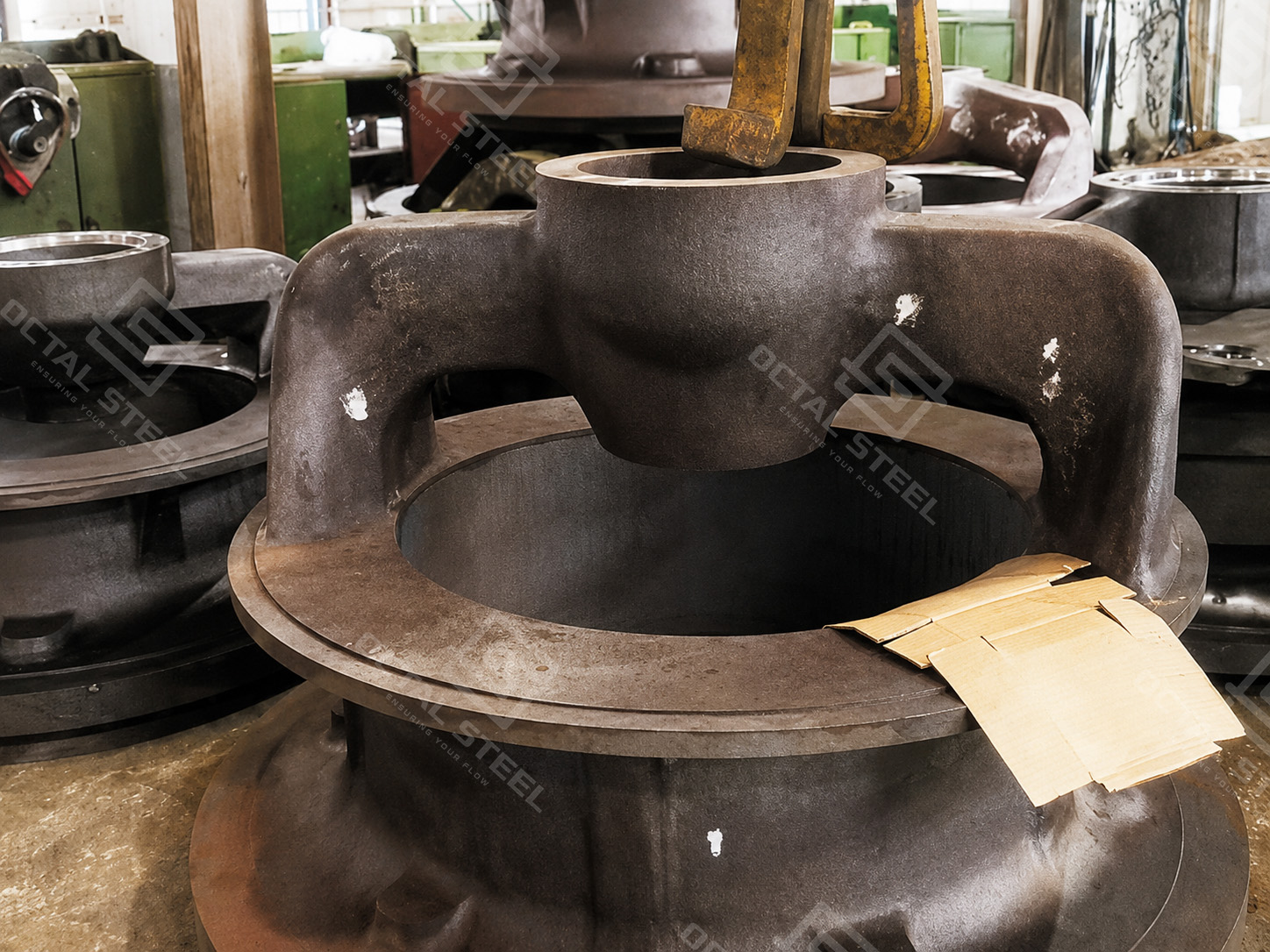
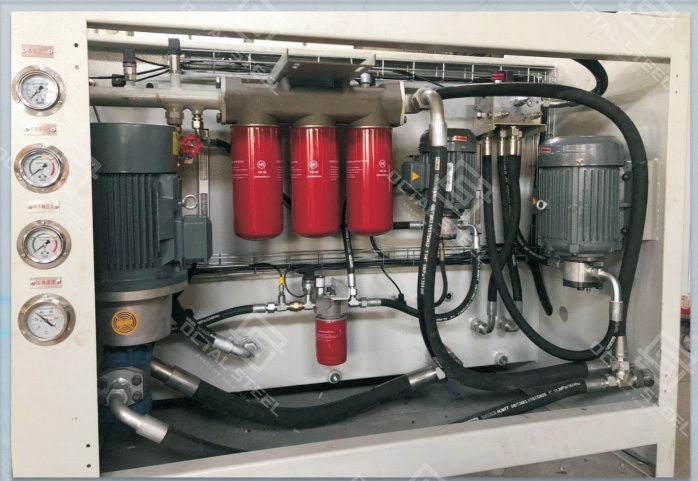
Cone crusher performance depends heavily on wear part condition. The mantle and concave form the crushing chamber, and their wear profile changes the actual CSS and product gradation. If liners are used too long, the crusher may still run, but output shape, capacity and power draw can become unstable.
OCTA STEEL can support wear part matching according to material type, chamber type and production target. For abrasive materials such as basalt, granite and river pebble, liner life should be treated as part of the operating cost, not only as a spare part issue.
OCTA STEEL Cone Crusher Supply and Service
OCTA STEEL supplies cone crushers for quarry, mining and aggregate production projects. The service is not limited to selling one machine. We help customers review material type, feed size, crushing stage, target output size, required capacity, plant layout and maintenance requirements before model selection.
Our support can include:
- Single cylinder hydraulic cone crusher supply
- Cone crusher model selection
- Chamber and cavity recommendation
- Crushing plant flow design support
- Matching with jaw crusher, vibrating screen and conveyor system
- Wear parts and spare parts supply
- Installation and commissioning guidance
- Export packing and shipment support
For project buyers, this means the cone crusher is selected according to the full production line, not only by motor power or machine weight.
FAQ
Q1:What is a cone crusher used for?
A1:A cone crusher is mainly used for secondary and tertiary crushing of rock, ore and aggregate. It is suitable when the production line needs controlled output size, stable capacity and better particle shape after primary crushing.
Q2:What is a single cylinder cone crusher?
A2:A single cylinder cone crusher is a hydraulic cone crusher that uses one main hydraulic cylinder for adjustment, cavity clearing and overload protection. It is commonly used in quarry, mining and aggregate production lines.
Q3:What is CSS in a cone crusher?
A3:CSS means closed side setting. It is the smallest gap between the mantle and concave during crushing and directly affects output size, capacity, power load and product gradation.
Q4:Is a cone crusher suitable for primary crushing?
A4:Cone crushers are usually not the first choice for primary crushing. They are more commonly used after a jaw crusher or gyratory crusher for secondary and tertiary crushing.
Q5:How should I choose a cone crusher model?
A5:You should confirm material hardness, maximum feed size, required output size, capacity target, crushing stage, chamber type, liner wear condition and plant layout before choosing a model.
Social Share