Your Responsible Supplier Partner for Oil and Gas Products.

ASTM A333 Pipe Specification
Hot Topic
Rencent Articles
Recent Resources
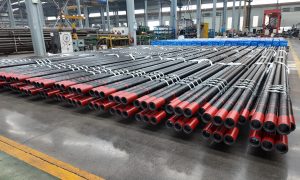
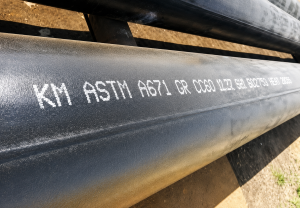
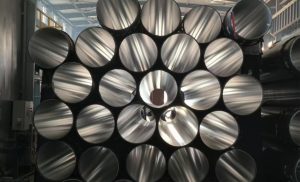
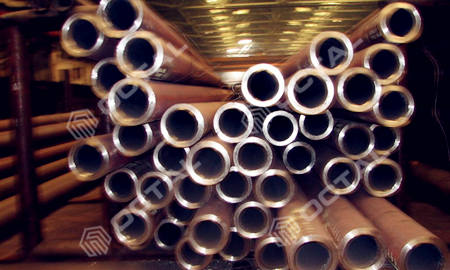
ASTM A333 Pipe Specification
Standard: ASTM A333 / ASME SA333
Grade: Grade 6, Grade 1, Grade 3, Grade 8, Grade 10
Type: Seamless, ERW / Welded
OD: 1/8” to 24”, or customized
WT: SCH 10 to SCH XXS
Length: SRL, DRL, 20ft, 40ft, fixed length
Ends: Plain, beveled, threaded if required
Coating: Black painting, varnished, FBE, 3LPE, galvanized
Testing: Chemical, tensile, Charpy impact, hydrostatic / NDE
ASTM A333 Pipe Specification
ASTM A333 pipe is a seamless or welded carbon and alloy steel pipe specified for low-temperature service and piping systems where notch toughness must be verified. It is used when ordinary carbon steel pipe may not provide enough toughness under cold operating conditions, such as refinery cold-service lines, petrochemical piping, gas processing units, LNG / LPG utility piping and cold-region pipeline systems.
Among ASTM A333 grades, ASTM A333 Grade 6 pipe is one of the most commonly used low-temperature carbon steel pipes. It is mainly a low-carbon manganese-silicon steel: carbon is controlled to support weldability, manganese helps balance strength and toughness, silicon works as a deoxidizing element, while phosphorus and sulfur are limited to reduce brittleness risk. Together with normalizing or equivalent controlled heat treatment, this material route helps the pipe meet low-temperature Charpy impact toughness requirements.
In procurement documents, ASTM A333 may appear as:
- ASTM A333 pipe
- ASTM A333 Grade 6 pipe
- ASTM A333 Gr 6 pipe
- ASME SA333 Grade 6 pipe
- Low temperature carbon steel pipe
- LTCS pipe
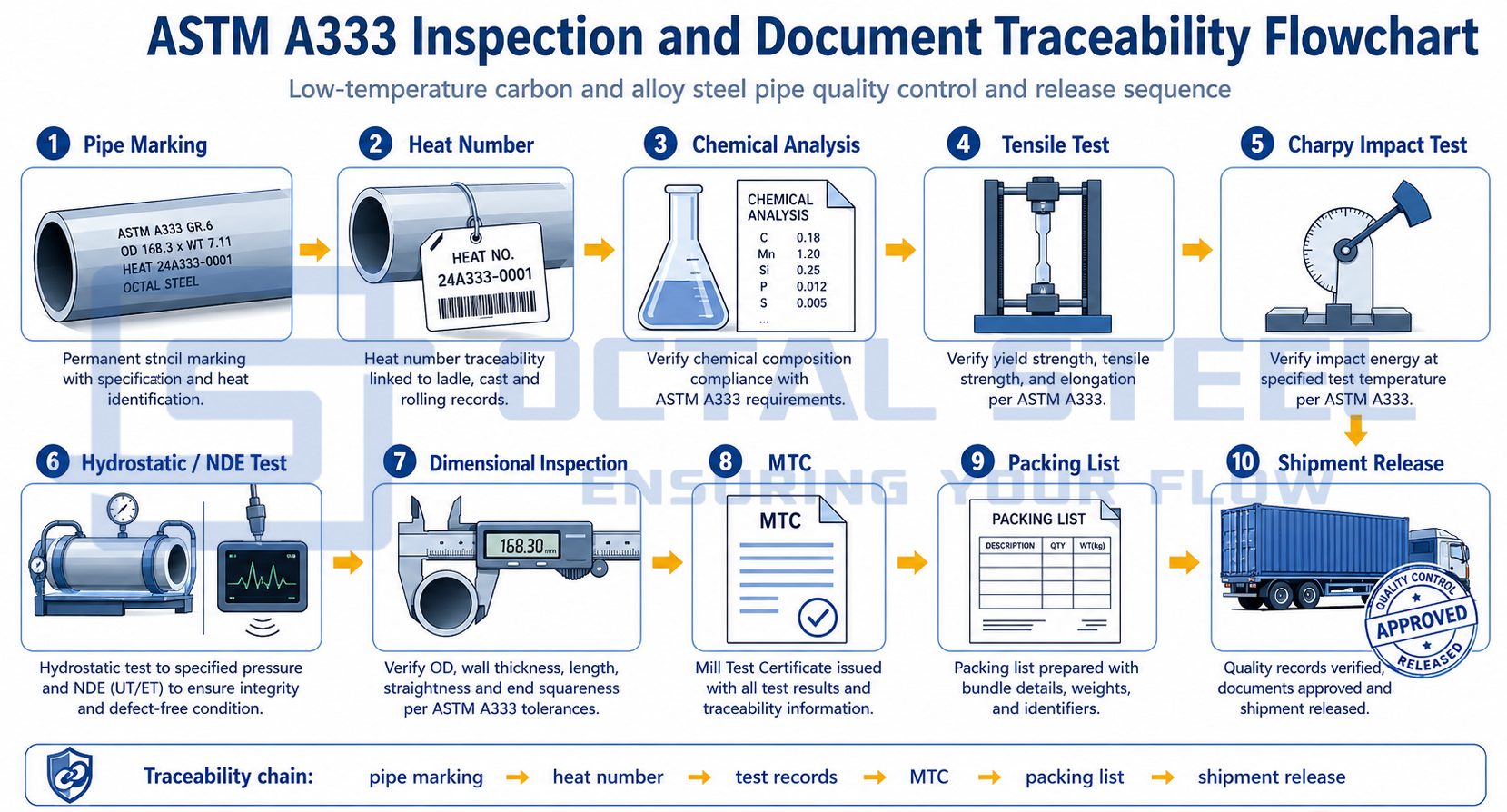
For engineering and inspection review, the main points are grade, manufacturing type, heat treatment condition, impact test temperature, mechanical properties and MTC traceability. The delivered pipe should be traceable from pipe marking to heat number, chemical analysis, tensile test, Charpy impact test and final packing list.
ASTM A333 Pipe Specification
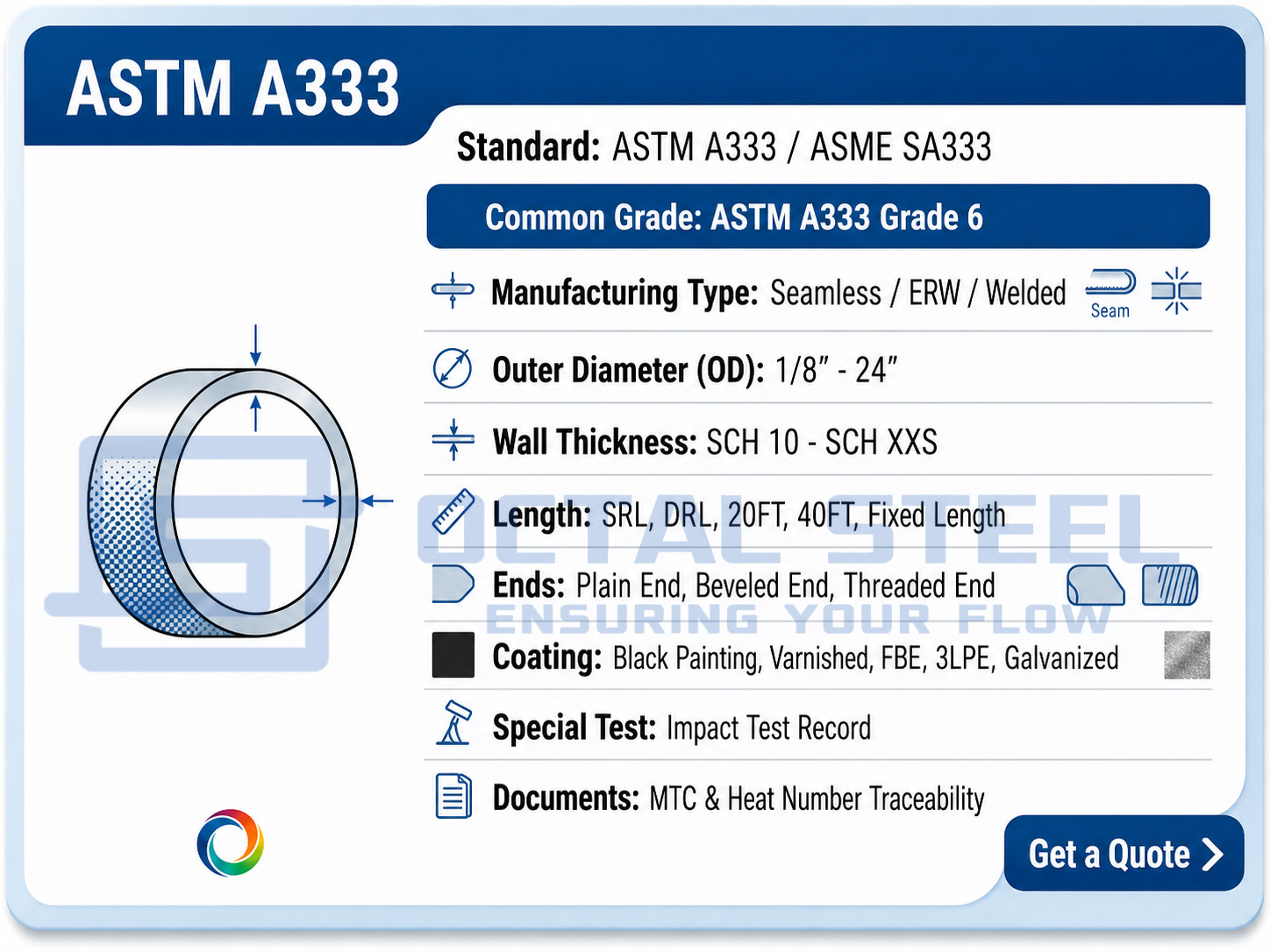
Standard: ASTM A333 / ASME SA333
Product: Low-Temperature Carbon and Alloy Steel Pipe
Common Grade: ASTM A333 Grade 6
Manufacturing Type: Seamless, ERW / Welded
Outer Diameter: 1/8” – 24”
Wall Thickness: SCH 10, SCH 20, SCH 40, SCH STD, SCH 80, SCH XS, SCH 160, SCH XXS
Length: SRL, DRL, 20FT, 40FT, Fixed Length
Ends: Plain End, Beveled End, Threaded End if required
Coating: Black Painting, Varnished, FBE, 3LPE, Galvanized, as project required
Inspection: Chemical Analysis, Tensile Test, Charpy Impact Test, Hydrostatic Test or NDE
Documents: MTC, Heat Number Traceability, Impact Test Record, Packing List
ASTM A333 Grade 6 Pipe
ASTM A333 Grade 6 pipe is a low-temperature carbon steel pipe used for pressure piping where impact toughness is required. It is one of the most common grades in ASTM A333 because it offers practical weldability, available size range, and verified low-temperature performance for many industrial piping systems.
Typical applications include:
- Refinery low-temperature lines
- Petrochemical cold-service piping
- Gas processing units
- LNG / LPG utility and auxiliary piping
- Cold-region pipeline construction
- Pressure piping requiring Charpy impact test records
For ASTM A333 Grade 6 orders, the pipe should be supplied with records that connect heat number, chemical composition, tensile result, impact test, pipe marking, and packing list. This traceability is important during project inspection, site receiving, and third-party document review.
ASTM A333 Grade 6 Chemical Composition
Chemical composition is one of the first items checked on the MTC. For low-temperature service, phosphorus and sulfur control is especially important because these elements may affect toughness and steel cleanliness.
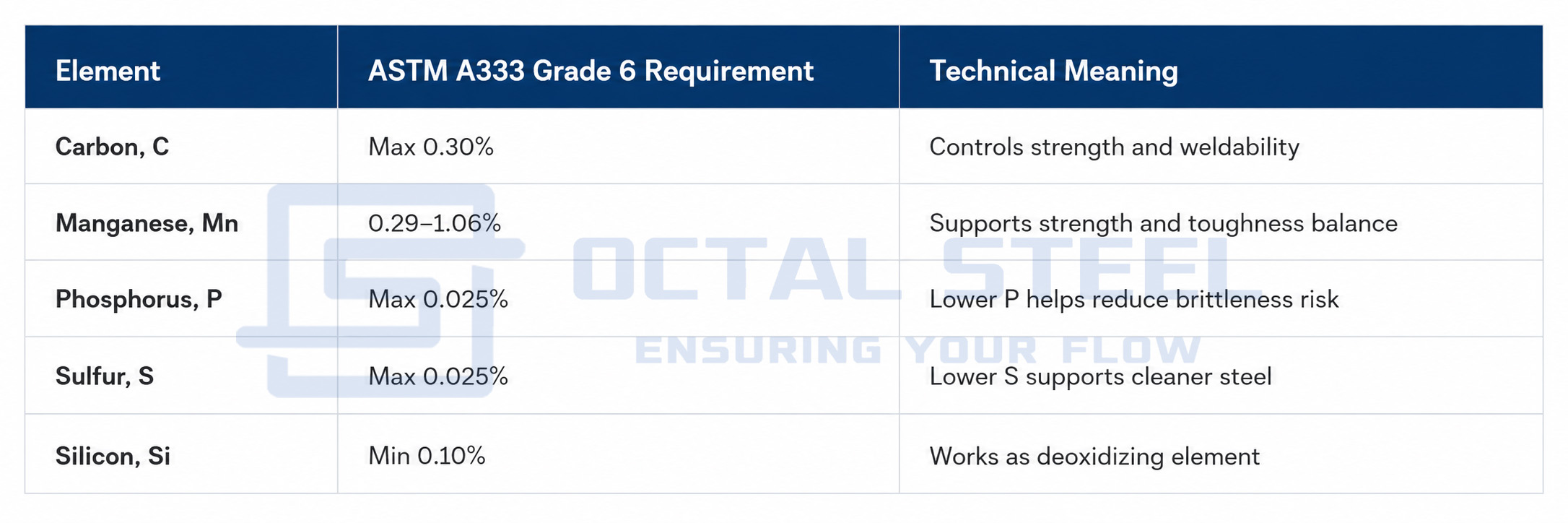
For low-temperature pipe, chemical composition should not be treated as only a formality. The heat analysis must match the grade requirement, and the heat number should be traceable from pipe marking to the MTC.
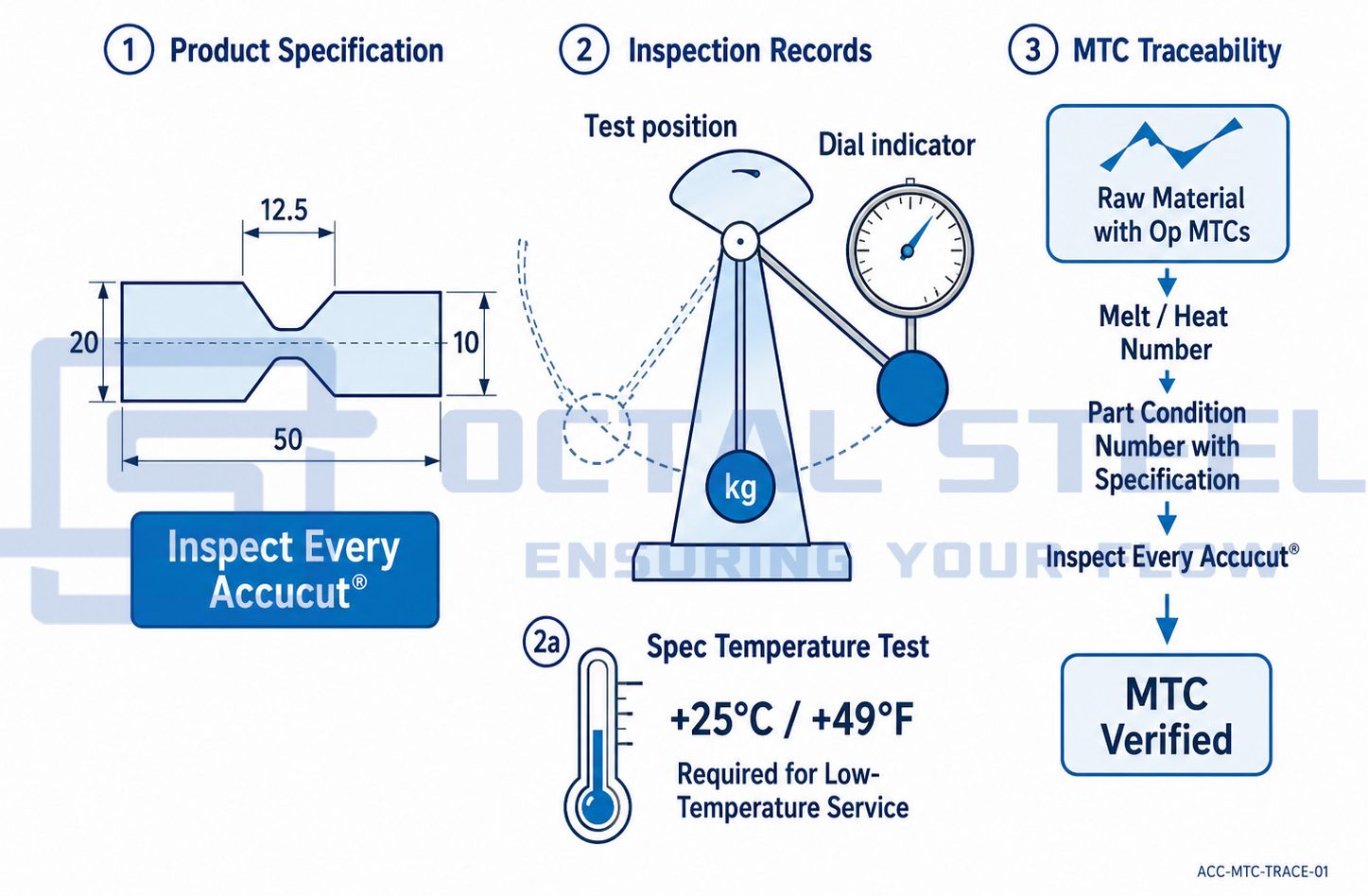
Mechanical Properties and Impact Test
Mechanical properties confirm the basic strength level of the pipe. The Charpy impact test verifies low-temperature notch toughness, which is the main reason ASTM A333 is selected instead of ordinary carbon steel pipe.
| Property | ASTM A333 Grade 6 Typical Requirement | Inspection Meaning |
|---|---|---|
| Yield Strength | Min 240 MPa / 35 ksi | Confirms resistance to permanent deformation |
| Tensile Strength | Min 415 MPa / 60 ksi | Confirms minimum load-bearing capacity |
| Elongation | Per standard and specimen condition | Indicates ductility before fracture |
| Charpy Impact Test | Required at specified test temperature | Verifies low-temperature notch toughness |
| Hydrostatic / NDE Test | As required by standard and PO | Confirms pipe integrity before delivery |
ASTM A333 Grade 6 is commonly associated with low-temperature impact testing around −45°C / −50°F, but the exact test temperature and acceptance criteria should follow the project specification and purchase order. For critical low-temperature service, the impact test record should be reviewed together with heat number, wall thickness, test specimen direction, and MTC.
Download:Mechanical properties and impact test
Testing and Inspection Requirements
ASTM A333 pipe inspection should focus on low-temperature performance, pipe integrity, dimensional control, and document traceability. The inspection chain should clearly connect each pipe to its heat number and test results.
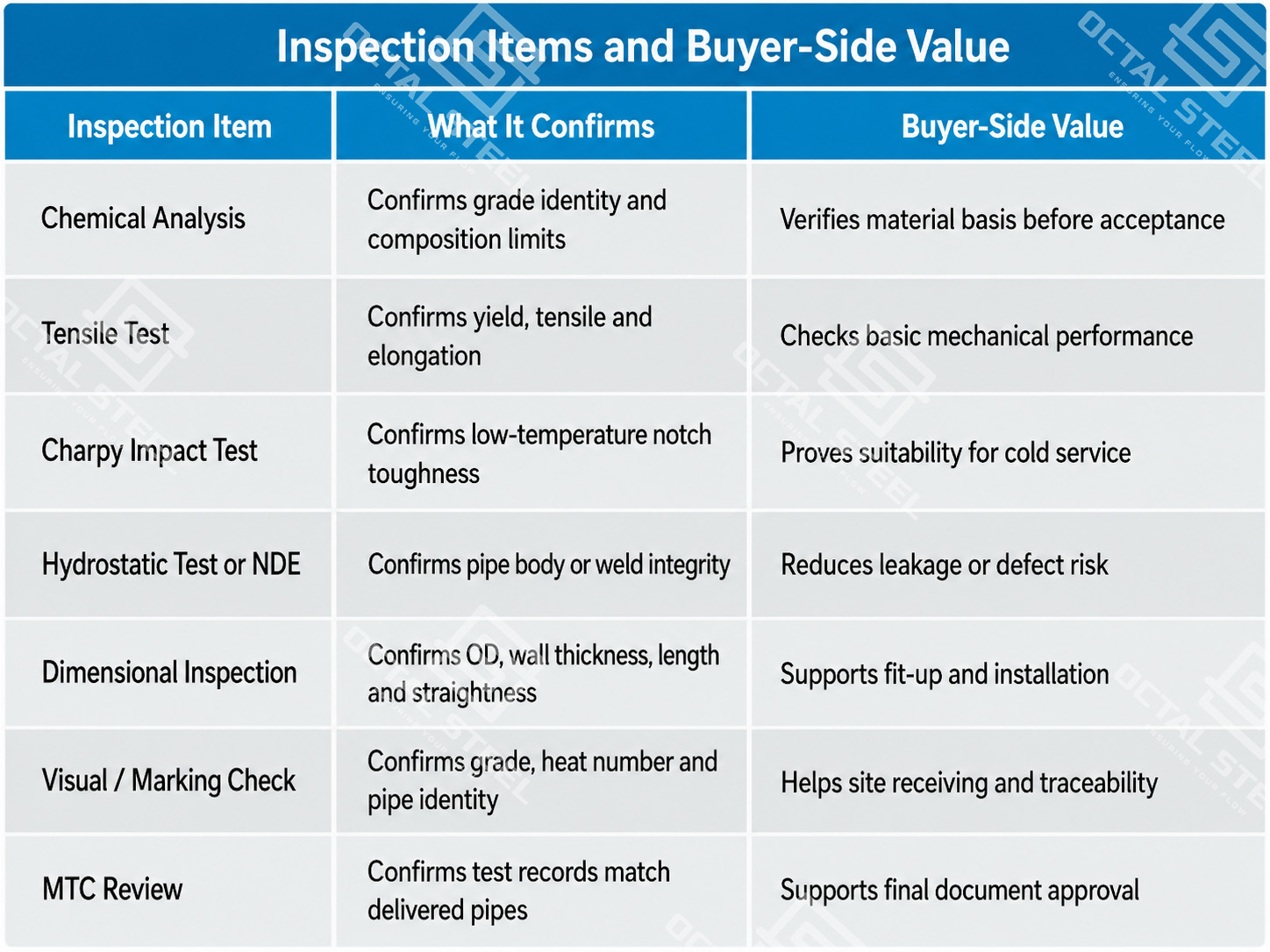
For export projects, the document package should include MTC, chemical analysis, tensile test result, Charpy impact test record, hydrostatic or NDE report, dimensional inspection summary, packing list, and heat number traceability.
Download:ASTM A333 pipe testing and inspection
ASTM A333 vs ASTM A106
ASTM A333 and ASTM A106 are both carbon steel pipe specifications, but they are selected for different service conditions. ASTM A333 is used for low-temperature service where impact toughness must be verified. ASTM A106 is mainly used for high-temperature carbon steel pipe service.
| Item | ASTM A333 Pipe | ASTM A106 Pipe |
|---|---|---|
| Main Service | Low-temperature service | High-temperature service |
| Key Acceptance Point | Charpy impact toughness | High-temperature pressure service |
| Common Grade | ASTM A333 Grade 6 | ASTM A106 Grade B |
| Testing Focus | Impact test, tensile, hydro/NDE | Tensile, flattening/bending, hydro/NDE |
| Typical Use | Cold-service piping, LNG-related lines, cold-region pipelines | Steam, refinery, boiler and process piping |
| Main Risk if Misused | Brittle fracture in low-temperature service | Not intended as low-temperature impact-tested pipe |
This comparison is important because ASTM A106 Grade B and ASTM A333 Grade 6 may look similar in basic strength level, but their service purpose is different. If the project requires low-temperature notch toughness, ASTM A333 should be reviewed instead of selecting general carbon steel pipe by strength alone.
How to Order ASTM A333 Pipe
A clear purchase order helps avoid production, inspection, and delivery problems. For ASTM A333 pipe, the order should define:
- Standard: ASTM A333 / ASME SA333
- Grade: Grade 6 or other required grade
- Manufacturing type: seamless or welded
- Size: NPS / OD and wall thickness or schedule
- Length: SRL, DRL, fixed length, 20FT or 40FT
- End type: plain end, beveled end or threaded end
- Impact test temperature and acceptance requirement
- Hydrostatic test or NDE requirement
- Coating or surface protection
- MTC and third-party inspection requirement
- Marking, packing and shipment terms
If the project has a specific design minimum temperature, it should be confirmed before production. Impact testing and document preparation are easier to align before manufacturing than after shipment.
Octal Steel ASTM A333 Pipe Supply
Octal Steel supplies ASTM A333 pipe for low-temperature piping projects, including ASTM A333 Grade 6 pipe, seamless pipe, welded pipe, beveled ends, coating, export packing, and inspection document support.
Supply support can include:
- Grade and size confirmation
- Seamless or welded pipe option
- Impact test record review
- MTC and heat number traceability
- Hydrostatic or NDE inspection record
- Dimensional inspection summary
- Coating and export packing
- Third-party inspection coordination if required
For low-temperature service, Octal Steel focuses on matching the pipe to the actual working condition and acceptance procedure. The final supply should support both engineering approval and site receiving, not only material shipment.
Download:Octal Steel supplies ASTM A333 pipe
FAQ
What is ASTM A333 pipe?
ASTM A333 pipe is a seamless or welded carbon and alloy steel pipe for low-temperature service and applications requiring verified notch toughness.
What is ASTM A333 Grade 6 pipe?
ASTM A333 Grade 6 pipe is a common low temperature carbon steel pipe used for pressure piping where Charpy impact toughness must be confirmed.
What is ASTM A333 Grade 6 pipe used for?
ASTM A333 Grade 6 pipe is used for refinery cold-service lines, petrochemical piping, gas processing units, LNG / LPG utility lines and cold-region pipeline projects.
What is the difference between ASTM A333 and ASTM A106?
ASTM A333 is used for low-temperature service with impact toughness requirements. ASTM A106 is mainly used for high-temperature carbon steel pipe service.
Is ASTM A333 Grade 6 seamless or welded?
ASTM A333 Grade 6 can be supplied as seamless pipe or welded pipe, depending on pipe size, project specification and purchase order requirement.
The resource belongs to the product
Chrome Moly Pipe
Click permalink to view detail & more descripton.
Social Share