Your Responsible Supplier Partner for Oil and Gas Products.

Sucker Rod 4330
Hot Topic

Rencent Articles
Recent Resources
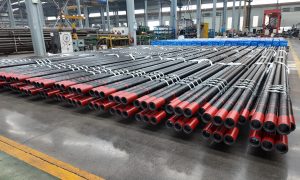
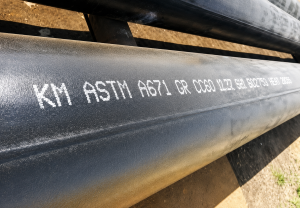
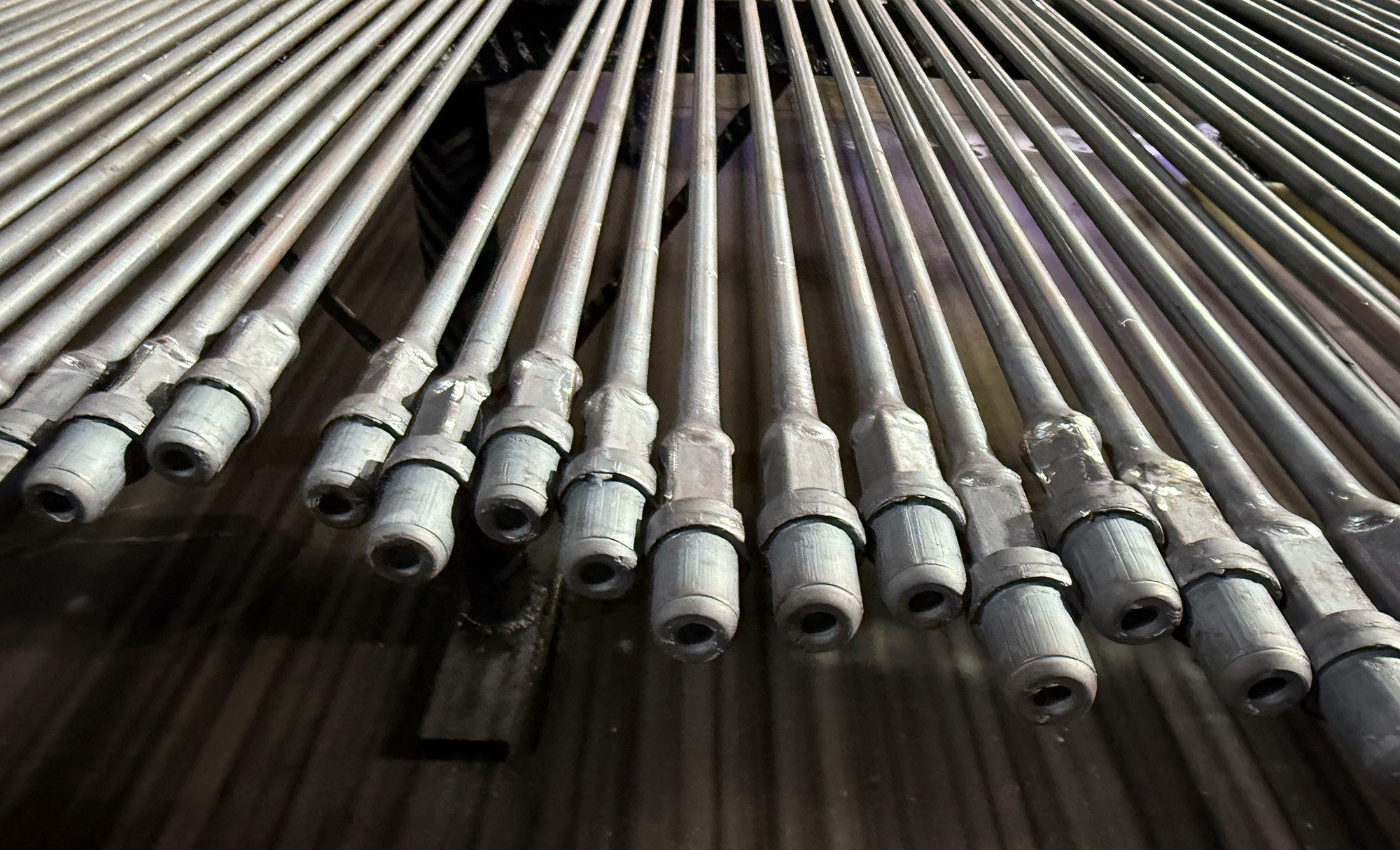
Sucker Rod 4330
Material Route: AISI 4330 / 4330M Ni-Cr-Mo alloy steel for high-load sucker rod service.
API Grade Control: Commonly reviewed under API 11B Grade D / Grade D Special strength requirements.
Application Focus: Suitable for deep wells, PCP systems, deviated wellbores and torque-sensitive rod strings.
Supply Range: Solid sucker rod, pony rod, PIN × PIN / PIN × BOX connections, Class T or slim-hole couplings.
Sucker rod 4330 refers to a sucker rod made from AISI 4330 / 4330M nickel-chromium-molybdenum alloy steel, normally discussed in API 11B Grade D, Grade D Special, or high-strength rod applications. From a material view, AISI 4330M is identified by its Ni-Cr-Mo chemistry, with typical sucker-rod data showing about 0.30–0.34% C, 1.65–1.85% Ni, 0.90–1.10% Cr and 0.15–0.30% Mo. This chemistry gives the rod hardenability and toughness support, while the finished API 11B Grade D strength still has to be verified against the 115,000–140,000 psi tensile range, heat treatment record, thread inspection and heat-lot traceability.
For high-load rod strings, AISI 4330M is valued not only for its alloy composition but also for how it responds under repeated tensile load and torque transfer. Deep wells, PCP systems and deviated wellbores can place higher stress on the rod body, pin end and coupling area. For this reason, 4330 sucker rod is usually reviewed together with connection stability, coupling clearance, thread-root fatigue risk and heat-treatment consistency, instead of being judged only by nominal rod diameter or material grade.
What Does 4330 Mean in Sucker Rod Material?
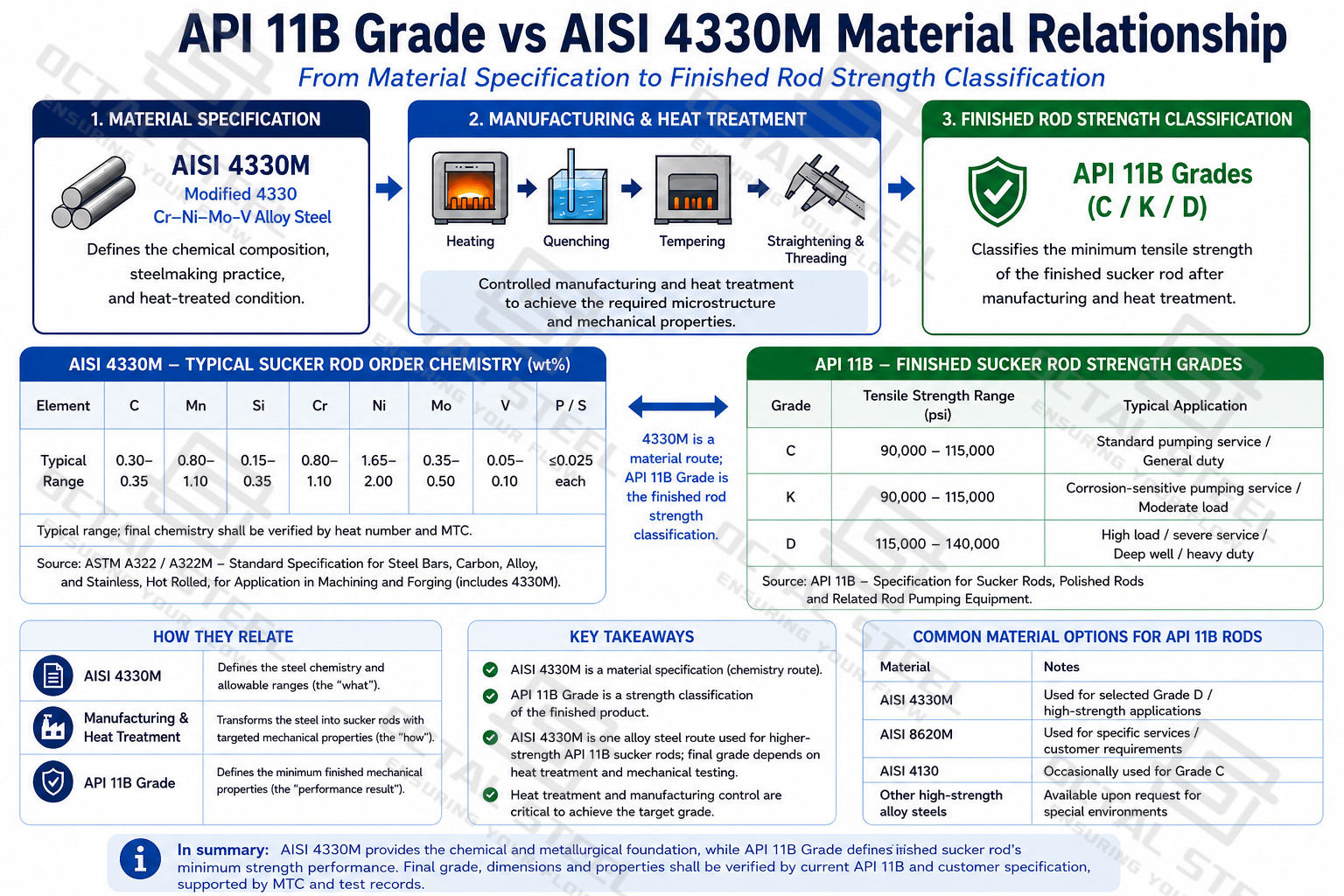
In sucker rod 4330, “4330” identifies the alloy steel route, not the finished API grade. AISI 4330M is a modified Ni-Cr-Mo alloy steel. Nickel, chromium and molybdenum work together to support hardenability, through-section strength response and toughness under high rod load.
This distinction matters because a finished API 11B sucker rod must still be verified by mechanical test results and inspection records. A rod described only as “4330 alloy steel sucker rod” is not complete technical identification. The material name should be linked with:
- API 11B grade, such as Grade D or Grade D Special
- Rod diameter and length
- Heat treatment route
- Tensile strength and yield strength record
- Thread and pin-end inspection
- Coupling type and connection match
- Heat number, MTC and rod marking
- Packing list and bundle identity
For a 4330 sucker rod, the alloy family explains the material route. The API grade and final inspection records confirm whether the rod body, thread area and coupling connection match the expected service condition.
AISI 4330M Chemical Composition and Alloying Logic
AISI 4330M chemical composition is built around carbon, nickel, chromium and molybdenum. For modified UNS G43300 / AISI 4330M sucker rod material, typical reference chemistry includes about 0.30–0.34% C, 1.65–1.85% Ni, 0.90–1.10% Cr and 0.15–0.30% Mo. This Ni-Cr-Mo alloy route supports hardenability, toughness and strength stability after heat treatment, which is why 4330M is commonly reviewed for high-load rod strings, PCP applications and fatigue-sensitive sucker rod connections. Final acceptance should still be based on the actual MTC, API 11B grade, mechanical test record and project specification.
| Element | Typical Range | Function in 4330 Sucker Rod |
|---|---|---|
| Carbon, C | 0.30–0.34% | Supports strength, hardness response and heat-treatment behavior. |
| Nickel, Ni | 1.65–1.85% | Improves toughness support for high-load rod service. |
| Chromium, Cr | 0.90–1.10% | Improves hardenability and strength consistency after heat treatment. |
| Molybdenum, Mo | 0.15–0.30% | Supports temper resistance, hardenability and strength stability. |
| Manganese / Silicon | Mn 0.70–1.10%; Si 0.15–0.35% | Contribute to steelmaking control, deoxidation and secondary strength. |
| P / S Residuals | P ≤ 0.030%; S ≤ 0.030–0.035% | Controlled residuals; lower levels help protect toughness and fatigue performance. |
Download:AISI 4330M Sucker Rod Chemical Composition and Alloy Function
AISI 4330M should be evaluated as a controlled Ni-Cr-Mo alloy route rather than by nominal strength level alone. Its composition is designed to support a stable strength-toughness balance after heat treatment, especially where the rod body, pin end, thread root, shoulder area and coupling connection are exposed to repeated tensile load and local stress concentration. For finished sucker rods, material chemistry should therefore be read together with API grade, heat treatment record, mechanical test results and connection inspection.
Mechanical Strength and API 11B Grade D Control
API 11B Grade D sucker rod is commonly controlled within a 115,000–140,000 psi tensile strength range. For AISI 4330M sucker rod, this strength level cannot be confirmed by the material name alone. The Ni-Cr-Mo chemistry provides the alloy basis for hardenability and strength response, but the finished rod still needs mechanical test results, heat treatment records, thread inspection and coupling verification.
AISI 4330M is therefore best understood as the material route, while API 11B Grade D is the finished rod strength category. When 4330M is used for high-load or Grade D Special applications, the review should connect material chemistry, tensile strength, heat-treatment condition, thread quality and traceability records into one consistent technical identity.
| Technical Item | Control Point | Why It Matters |
|---|---|---|
| AISI 4330M | Ni-Cr-Mo alloy steel material route | Defines the chemistry basis for hardenability, toughness support and heat-treatment response. |
| API 11B Grade D | 115,000–140,000 psi tensile strength range | Confirms the finished sucker rod strength category. |
| Grade D Special | Special alloy / high-load service route | Used where rod load, torque or fatigue risk requires closer strength and connection control. |
| Mechanical and Heat Treatment Records | Tensile test, yield strength, hardness review and heat-treatment condition | Verifies that the finished rod meets the required strength level, not only the nominal material grade. |
| Thread and Coupling Inspection | Pin end, thread root, shoulder area, coupling type and fit | Controls fatigue-sensitive connection areas and rod string compatibility. |
Download:API 11B Grade D and AISI 4330M Strength Control Sheet
For 4330 Grade D sucker rod, strength review should not stop at the rod body. The thread, shoulder, pin end and coupling interface are part of the working load path. If the rod body meets tensile strength but the thread fit or coupling match is inconsistent, the finished rod still carries field risk.
Why 4330 Sucker Rod Is Used in High-Load Rod Pumping Systems
A 4330 sucker rod is normally considered when the rod string faces higher load, longer stroke demand, deeper well conditions, high torque, or fatigue-sensitive connection behavior. The material is especially relevant when the rod string is no longer limited only by nominal tensile strength, but also by load transfer, impact behavior, thread-root stress and coupling wear.
Typical working conditions include:
- Deep rod pumping systems where rod string weight and cyclic tensile load increase.
- Deviated wells where rod body and coupling contact against tubing can increase wear risk.
- Medium to heavy-load reciprocating lift where repeated stress cycles concentrate near the pin end and shoulder area.
- PCP or high-torque service where torque transfer and connection stability require closer review.
- Slim-hole or clearance-sensitive wells where reduced diameter or slim hole couplings may be used.
AISI 4330M is mainly used where the rod string is exposed to higher repeated tensile load, torque transfer and connection stress, such as deep rod pumping systems, PCP applications and deviated wellbores. In these conditions, the limiting factors are not only nominal tensile strength, but also pin-end fatigue, thread-root stress, coupling wear and heat-treatment consistency. Its Ni-Cr-Mo alloy route gives the material a stronger basis for high-load service, but the final suitability still depends on API grade, mechanical test records, coupling design and actual well condition. If CO₂, H₂S, chloride-bearing fluid or severe corrosion is present, corrosion control and material suitability should be reviewed separately instead of treating 4330M as a universal corrosion-resistant option.
4330 Sucker Rod Supply Range
A complete 4330 sucker rod supply range normally covers solid sucker rod, pony rod, couplings and related rod string components. API 11B sucker rod dimensions commonly include OD sizes from 5/8 in to 1-3/4 in, rod lengths of 25 ft or 30 ft, and pony rod lengths such as 2 ft, 4 ft, 6 ft, 8 ft and 10 ft. Enpro also lists AISI 4130M, 4138M, 4330M, 4142M and 8630 material options, with Class T, reduced diameter and SM coupling types.
| Item | Available / Reference Scope | Technical Meaning |
|---|---|---|
| Product scope | Solid sucker rod, pony rod, polished rod-related components | Covers the main rod string parts and length-adjustment components. |
| Standard and grade | API 11B, Grade D / Grade D Special | Defines finished rod strength category and acceptance basis. |
| Material route | AISI 4330 / AISI 4330M | Ni-Cr-Mo alloy steel route for high-load rod service. |
| Size and length | 5/8 in to 1-3/4 in; 25 ft / 30 ft; pony rod 2–10 ft | Selected by rod load, pump design, string layout and well depth. |
| Connection and coupling | PIN × PIN / PIN × BOX; Class T, full size, reduced diameter or slim hole coupling | Must match rod string design, tubing clearance and wear condition. |
| Traceability records | MTC, heat number, mechanical test, rod marking and packing list | Confirms material identity, finished rod strength and shipment consistency. |
Thread, Coupling and Fatigue-Sensitive Areas
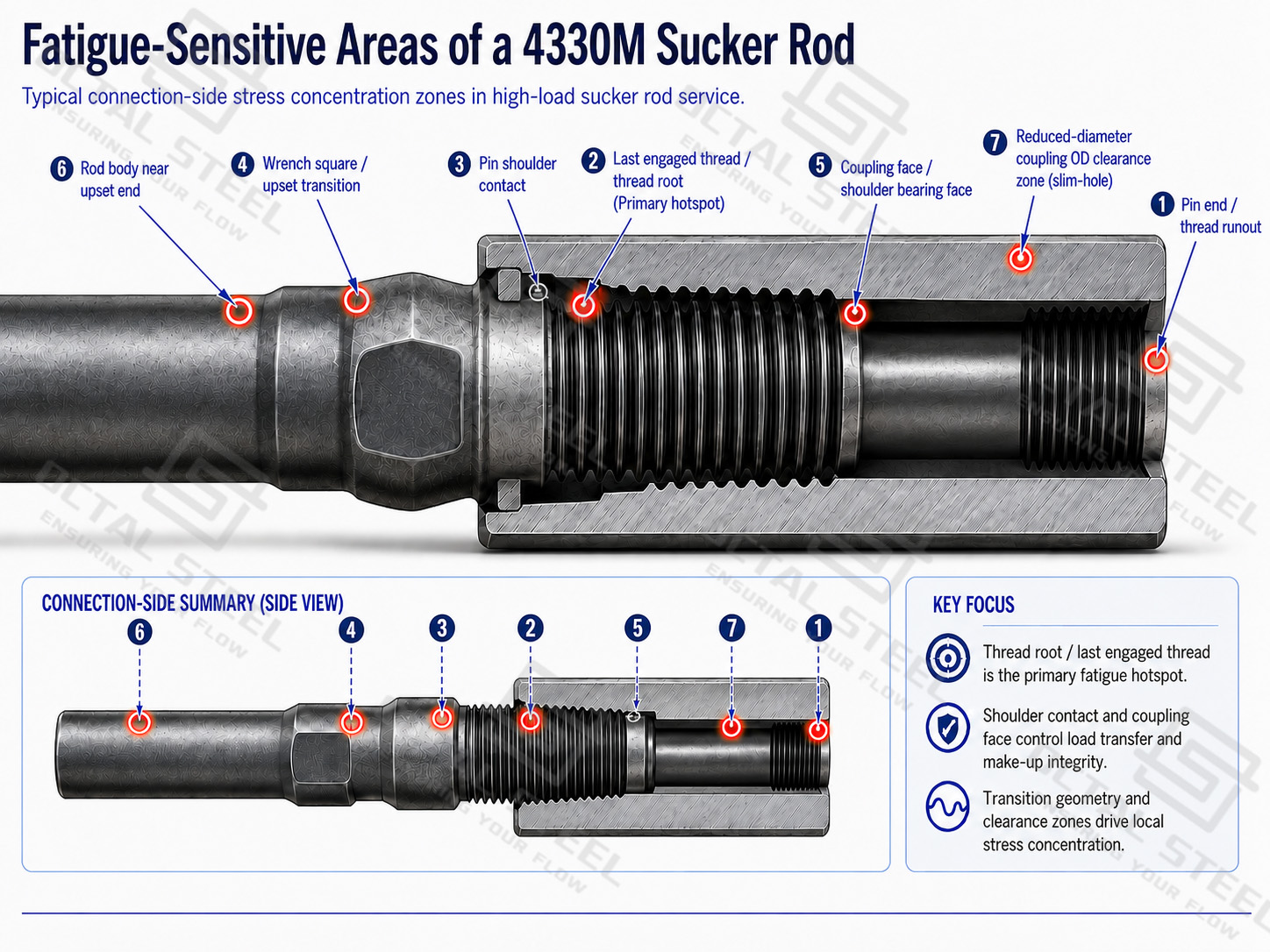
The working risk of a 4330 alloy steel sucker rod is often concentrated around the connection area. Tensile load may run through the rod body, but fatigue damage frequently begins where geometry, machining marks, shoulder contact and coupling fit create local stress concentration.
Key fatigue-sensitive areas include:
- Pin end
- Thread root
- Shoulder area
- Wrench square transition
- Coupling face
- Rod body area near the upset end
- Reduced diameter or slim hole coupling interface
Thread inspection should consider profile, surface condition, shoulder contact and connection match. Coupling review should not be limited to nominal size. Class T coupling, full-size coupling, reduced diameter coupling and slim hole coupling can create different clearance and wear behavior inside tubing.
For high-load or PCP-related 4330 sucker rod service, coupling choice may affect:
- Torque transfer stability
- Clearance in slim-hole tubing
- Wear behavior against tubing ID
- Load distribution across the thread teeth
- Fatigue risk around the pin end and shoulder
- Consistency between rod marking, coupling specification and packing records
A strong rod body does not compensate for unclear connection identity. For finished-product verification, thread inspection and coupling compatibility should be connected with rod size, API grade, material heat number and final marking.
4130 vs 4140 vs 4142 vs 4330 Sucker Rod
4130, 4140, 4142 and 4330 can all appear in alloy steel sucker rod discussions, but they do not represent the same material route. The key difference is not only strength level. It also includes carbon content, alloy design, hardenability, toughness support, heat-treatment response and the way the finished rod behaves under repeated tensile load, torque and connection stress.
| Material Route | Alloy Logic | Main Review Focus |
|---|---|---|
| 4130 / 4130M | Cr-Mo low alloy steel | Balanced strength, toughness and heat-treatment response for moderate to high-load rod service. |
| 4140 | Higher-carbon Cr-Mo alloy steel | Higher strength potential than 4130; review hardness, toughness and heat-treatment control. |
| 4142 / 4142M | Modified higher-carbon Cr-Mo alloy route | Common high-strength rod material; review tensile range, fatigue behavior and service condition. |
| 4330 / 4330M | Ni-Cr-Mo alloy steel | Higher-load and toughness-sensitive service; review Ni-Cr-Mo chemistry, coupling match and traceability. |
Download:4130 vs 4140 vs4142vs 4330 Sucker Rod Material Comparison
For a 4130 vs 4330 sucker rod, 4140 vs 4330 sucker rod, or 4142 vs 4330 sucker rod comparison, the material name alone is not enough. The more useful review points are:
- Rod load and pump depth
- Reciprocating or PCP application
- Torque level and connection stress
- Thread and coupling design
- Heat treatment record
- Tensile strength and hardness control
- MTC and heat-lot traceability
- Corrosion condition and inhibition plan where applicable
Inspection Points for 4330 Sucker Rod
Inspection for 4330 sucker rod should verify whether the finished rod matches the same technical identity from material chemistry to connection release. For AISI 4330M, the key check is not only the Ni-Cr-Mo alloy route, but also whether API grade, tensile strength, heat treatment, thread condition, coupling type and traceability records remain consistent. This is especially important for Grade D / Grade D Special sucker rods used in high-load rod strings, where pin-end fatigue, thread-root stress and coupling wear can become service-sensitive areas.
| Inspection Point | What to Check | Why It Matters |
|---|---|---|
| Material chemistry | C, Ni, Cr, Mo, Mn, Si and controlled P / S residuals | Confirms the AISI 4330M / Ni-Cr-Mo material route. |
| Mechanical properties | Tensile strength, yield strength, elongation and hardness where required | Verifies API 11B Grade D / Grade D Special strength identity. |
| Heat treatment record | Normalizing, tempering or specified project heat-treatment route | Links alloy chemistry to final strength, toughness and hardness response. |
| Rod body condition | Diameter, straightness, surface condition and visible defects | Reduces risk during handling, installation and rod-string operation. |
| Thread and coupling match | Pin end, thread root, shoulder area, Class T / full size / reduced diameter / slim hole coupling | Controls fatigue-sensitive connection areas and tubing clearance. |
| Traceability records | MTC, heat number, rod marking, bundle identity and packing list | Keeps material identity, finished rod strength and shipment records aligned. |
A practical traceability chain for 4330 sucker rod should connect heat number → MTC → mechanical test → heat treatment record → thread inspection → coupling match → rod marking → packing list. When these records match, the finished sucker rod can be verified as a complete API 11B rod product rather than only a material description.
Octal Steel Supply and Documentation Capability for 4330 Sucker Rod
Octal Steel supports 4330 sucker rod, pony rod and coupling supply with the technical focus placed on material-grade alignment, API strength grade, connection design, coupling selection and document consistency. For AISI 4330M sucker rod, the practical value is not only material availability. The finished rod should be traceable from steel heat to rod marking, with the grade, size, thread, coupling type and inspection record kept in one consistent document set.
For 4330 sucker rod supply, the technical review can include:
- AISI 4330M / 4330 alloy steel material route
- API 11B Grade D or Grade D Special strength identity
- Rod diameter, such as 1-1/4 in and 1-1/2 in where required
- Standard rod length, commonly 25 ft or 30 ft
- Pony rod lengths for rod-string adjustment
- PIN × PIN or PIN × BOX connection design
- Class T, full-size, reduced diameter or slim hole coupling
- MTC and heat number traceability
- Tensile test and heat treatment records
- Thread inspection and coupling match
- Rod marking, bundle marking and packing-list consistency
For finished 4330 sucker rod supply, the key value is not a single material name, but the consistency between AISI 4330M material, API 11B grade, rod size, connection design, coupling type and inspection records. When sucker rods, pony rods and couplings are supplied as one technical package, the document set should allow each finished rod to be traced from heat number and MTC to rod marking, bundle identity and packing list.
When the MTC, heat number, mechanical test record, rod marking, bundle identity and packing list show the same material grade, API grade, size, connection and coupling information, the finished rod can be verified as a complete API 11B rod product, not only a general alloy steel material. This consistency is especially important when 4330M is used for high-load rod strings, PCP service or fatigue-sensitive connection conditions.