Your Responsible Supplier Partner for Oil and Gas Products.

Ethylene Tank
Recent Products

Rencent Articles



Ethylene Tank
Covers refrigerated tanks, vacuum insulated tanks, and transportable ISO tank solutions
Selection should match storage duty, insulation route, boil-off control, and package scope
Package boundary should be defined early to avoid site rework and missing accessories
Complete documentation supports inspection release, handover, and project approval
An ethylene tank is a low-temperature storage vessel designed to hold liquid ethylene under controlled pressure and insulation conditions. Because ethylene is stored in cryogenic or refrigerated service, tank selection is usually driven by storage capacity, design pressure, boil-off control, insulation performance, material suitability, and the required document package for inspection and project approval.
At Octal, Ethylene Tank selection is framed around real project requirements such as storage capacity, pressure route, insulation performance, boil-off control, site layout, and final handover scope. In practice, a bulk refrigerated storage project, a compact cryogenic supply system, and a transportable containerized solution are not evaluated in the same way. For that reason, this page covers several ethylene storage options so buyers can compare the storage route that best matches design, operation, inspection, and delivery requirements.
Main Ethylene Storage Tank Options
Quick Comparison Table
| Product Type | Typical Duty | Capacity Range | Pressure Route | Main Advantage |
|---|---|---|---|---|
| Refrigerated ethylene storage tank | Large plant or terminal storage | Project-based large-capacity storage | Low-pressure refrigerated | Bulk inventory and stable long-term storage |
| Flat-bottom ethylene storage tank | Permanent large-capacity installation | 5,000–100,000 m³ | 10–50 kPa | Better for large site-built storage |
| Vacuum insulated ethylene storage tank | Plant-side cryogenic storage | 5–300 m³ | >0.2 MPa to 7.5 MPa | Compact factory-built package |
| Vertical ethylene storage tank | Compact process area | Based on selected tank size | Based on selected design | Smaller footprint |
| Horizontal ethylene storage tank | Skid or modular package | Based on selected tank size | Based on selected design | Easier transport and lower height |
| Ethylene ISO tank container | Mobile or intermodal supply | 21 m³ / 45.5 m³ | 0.8–2.4 MPa | Transport-ready certified container solution |
Refrigerated Ethylene Storage Tank
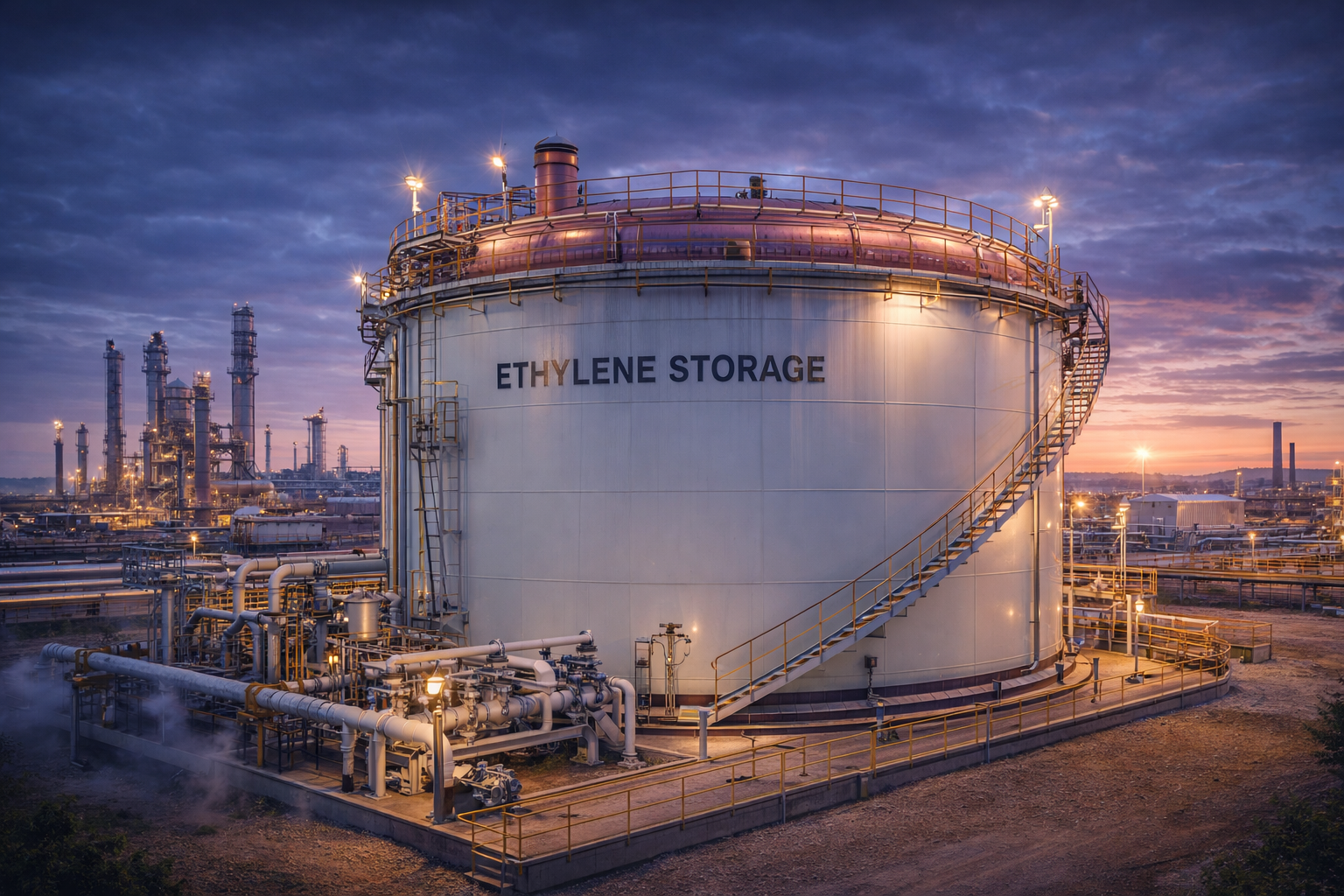
A refrigerated ethylene storage tank is the standard route for large-capacity liquid ethylene storage where the project needs stable low-pressure operation, controlled boil-off, and continuous supply to downstream units. This type is commonly used for petrochemical plants, receiving terminals, and large buffer storage duties where daily turnover and inventory stability matter more than transport flexibility.
Typical buyer focus:
- large inventory for continuous plant operation
- low-pressure refrigerated storage route
- insulation performance and evaporation control
- civil foundation and tank farm planning
- full fabrication and handover documentation
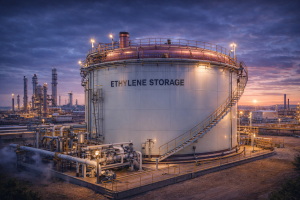
Flat-Bottom Storage Tank
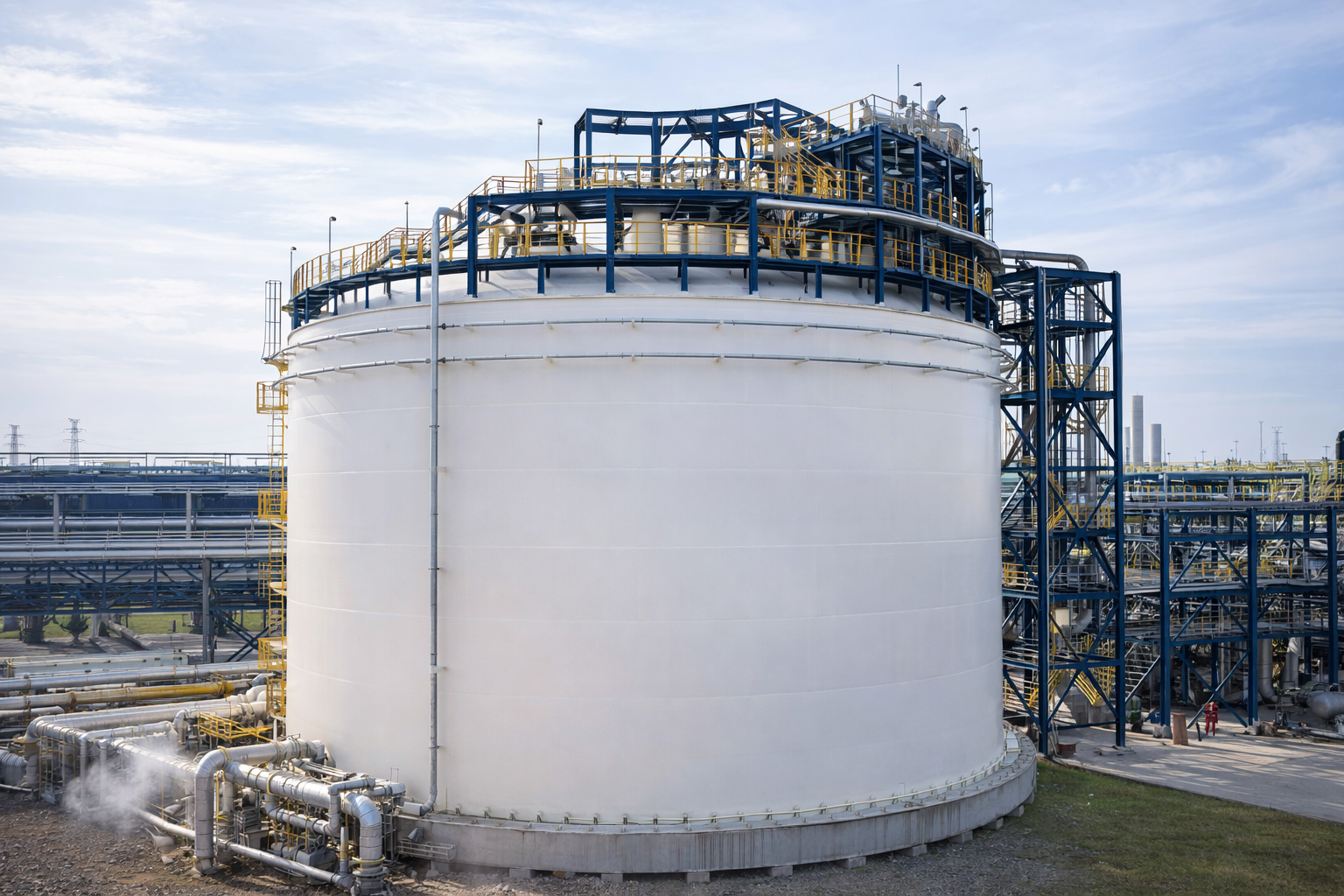
A flat-bottom ethylene tank is a more specific commercial option under the main ethylene storage category. It is suited to site-built projects where capacity is large, the tank is part of a permanent installation, and the owner needs a clear low-pressure refrigerated design basis rather than a compact factory-built pressure vessel.
- double-layer metal structure
- working pressure of 10–50 kPa
- volume range of 5,000–100,000 m³
- listed static evaporation rate of ≤0.08%/day for liquid ethylene
This route is usually a better fit when the project requires:
- high storage volume
- fixed plant installation
- stable long-cycle storage
- lower daily product loss target
- clear separation between tank scope and downstream gas handling scope
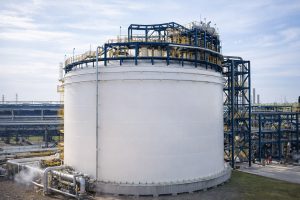
Vacuum Insulated Tank
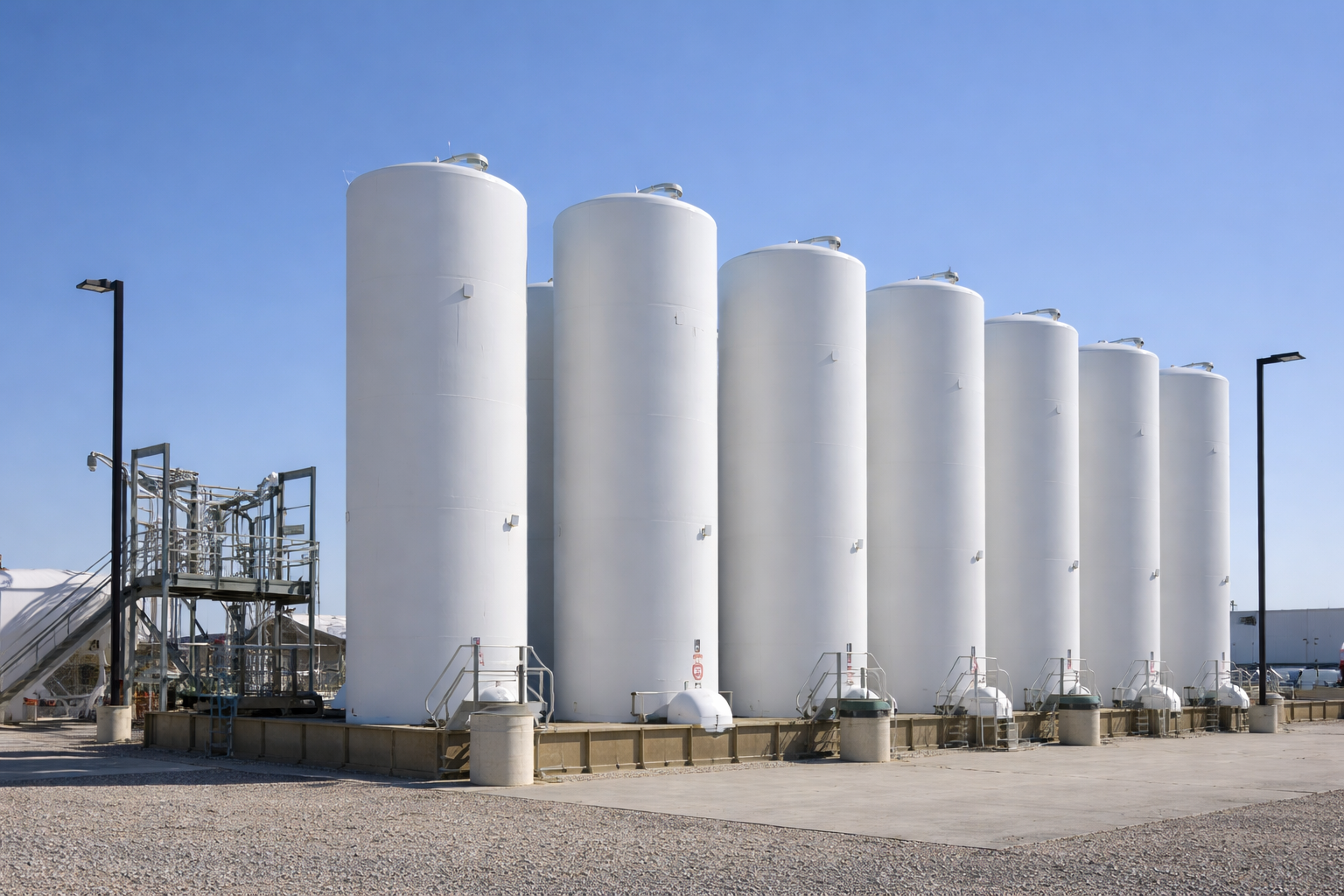
A vacuum insulated ethylene storage tank is used when the project needs cryogenic storage in a more compact, factory-fabricated, pressure-vessel format. Compared with a large flat-bottom tank, this route is easier to transport, faster to install, and better suited to packaged plant supply, filling duty, unloading stations, and smaller process storage.
- double-walled cylindrical structure
- working pressure above 0.2 MPa up to 7.5 MPa
- volume range of 5–300 m³
- design temperature of -196°C for the inner vessel and 50°C for the outer shell
This route is commonly selected for:
- plant-side cryogenic liquid supply
- compact installation footprint
- prefabricated delivery
- lower site construction workload
- faster commissioning schedule
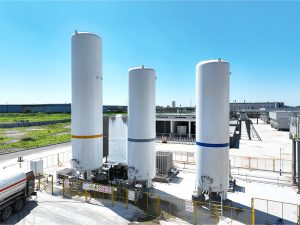
Vertical Storage Tank
A vertical ethylene storage tank is typically chosen where plot space is tighter and upright equipment arrangement makes piping, access, and maintenance easier. For plant utility zones and filling areas, vertical configuration can be easier to integrate with local pipe racks, platform access, and compact foundation layouts.
A vertical configuration is often preferred when the buyer needs:
- smaller footprint
- easier nozzle and piping arrangement
- clear platform and ladder layout
- packaged installation in a compact operating area
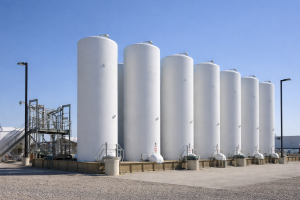
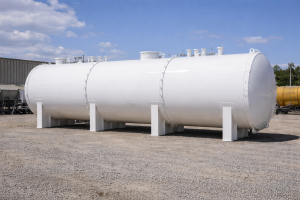
Horizontal Ethylene Storage Tank
A horizontal ethylene storage tank is commonly selected when transport convenience, skid integration, and lower installed height are more important than minimizing ground footprint. It is often used for modular supply systems, plant expansion projects, and smaller cryogenic storage packages where factory assembly and shipment practicality are key procurement drivers.
This route is usually preferred for:
- easier transport and handling
- skid-mounted package integration
- lower overall installation height
- modular plant expansion projects
Ethylene ISO Tank Container
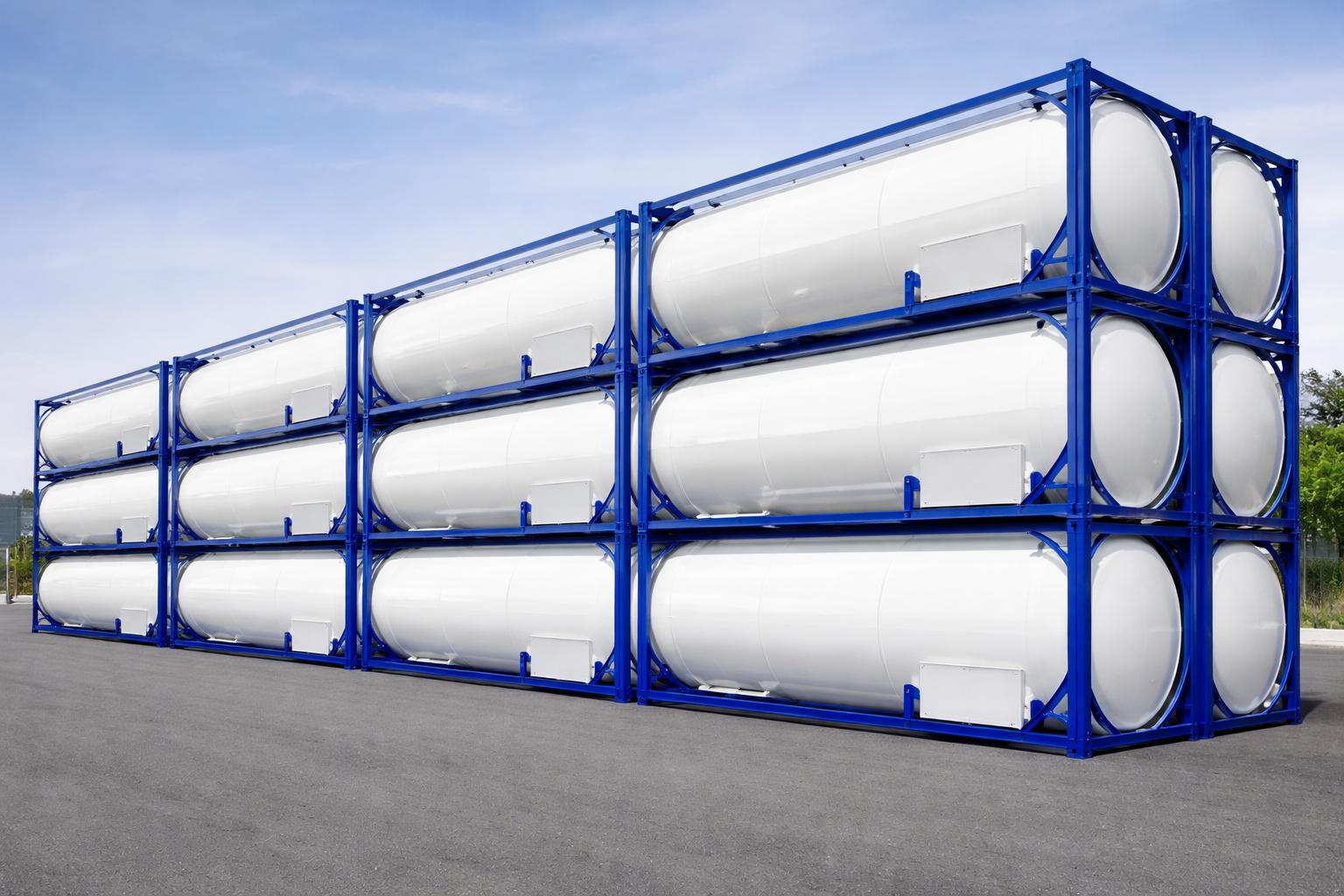
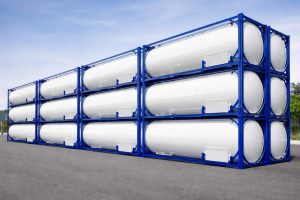
An ethylene ISO tank container is designed for liquid ethylene storage and transport in a certified intermodal format. Compared with a fixed ethylene storage tank, this route is more suitable for logistics movement, temporary supply, export transport, and projects that need liquid ethylene to move by road, rail, or sea under standard container dimensions.
- 20 ft and 40 ft options
- volume of 21 m³ and 45.5 m³
- high vacuum multilayer insulation
- working pressure of 0.8–2.4 MPa
- design service life of 20 years
This route is usually selected for:
- intermodal cryogenic transport
- export logistics
- temporary project supply
- containerized liquid ethylene distribution
How to Choose the Right Ethylene Storage Tank
Storage duty comes first
The first decision is whether the project needs large stationary refrigerated storage or smaller packaged cryogenic storage. That choice affects fabrication route, civil work, pressure basis, insulation method, delivery schedule, and final project cost more than tank shape alone.
Capacity must match turnover, not only inventory
A tank can look large enough on the drawing but still be commercially wrong if the turnover frequency, unloading mode, and downstream consumption pattern are not matched. In ethylene service, capacity should be evaluated together with how fast the product moves through the system, how often the tank is refilled, and how vapor balance is handled during normal operation. A larger tank does not automatically mean a better solution if holding time becomes too long, pressure control becomes less efficient, or the package adds unnecessary capital and operating cost.
Buyers should confirm:
- daily consumption
- refill frequency
- holding time requirement
- vapor return arrangement
- allowable product loss
- future expansion margin
These points affect not only tank volume, but also insulation route, pressure basis, relief philosophy, and the practical boundary between tank supply and the downstream process package. For projects with phased expansion or variable demand, it is often better to size the tank around realistic operating turnover rather than maximum theoretical inventory alone.
Pressure route and insulation route should be locked early
| Item | Why it should be defined early |
|---|---|
| Design pressure | Defines the pressure basis used for vessel design, code selection, and mechanical calculation. |
| Operating pressure | Determines the normal working pressure during filling, holding, and product withdrawal service. |
| Design temperature | Sets the minimum and maximum temperature range that the tank body and connected components must withstand safely. |
| Insulation type | Clarifies the selected insulation route, such as perlite, vacuum insulation, or another required system, which directly affects heat leak and structural design. |
| Expected evaporation or holding performance | Defines the target for boil-off control, static evaporation, or holding time under specified operating conditions. |
| Venting and relief philosophy | Specifies how pressure relief, vent handling, and abnormal pressure rise will be managed within the overall safety concept. |
Package scope should be confirmed before release
Many projects do not fail because of the tank shell. They fail because the supply boundary is vague. For an ethylene storage tank package, buyers usually need to confirm whether the order includes:
| Scope Item | What it includes or clarifies |
|---|---|
| Tank body | The main vessel itself, including shell, heads, and basic mechanical structure within the supply boundary. |
| Insulation system | The complete insulation arrangement required for the selected storage route, including insulation material and external protective structure where applicable. |
| Valves and piping | The inlet, outlet, vent, drain, and associated piping items that are included in the supplier’s scope. |
| Gauges and level instruments | The pressure, temperature, and level monitoring devices required for operation, inspection, and handover. |
| Pressure build-up or pressure regulation components | The components used to maintain, build up, or regulate operating pressure during storage and product withdrawal. |
| Unloading connection | The filling or unloading interface required to connect the tank package to the owner’s transfer or receiving system. |
| Ladder and platform | The access structure required for operation, maintenance, inspection, and safe routine use. |
| Control panel or local instrument package | The local control, indication, and instrument scope supplied together with the tank package, if included. |
| Final document package | The manufacturing, inspection, testing, traceability, and handover documents required for approval and project closeout. |
Related Ethylene Storage Package Scope
In many projects, the owner does not need only a tank. The real requirement is a storage package that can be connected, inspected, and put into operation without repeated scope clarification after delivery. In ethylene service, many site problems come from missing interfaces between storage, pressure control, vapor handling, and downstream use rather than from the vessel itself.
A common example is unloading and pressure management. The tank may be supplied correctly, but if the unloading connection, vapor return arrangement, or pressure build-up logic does not match the owner’s system, site modification may still be required. In other cases, the tank is ordered as storage only, while the actual process also needs vaporization and pressure regulation to make the package usable.
For that reason, ethylene storage projects are often discussed together with related package scope such as:
- unloading system, including liquid transfer connection and vapor return arrangement
- pressure regulation, where downstream users need stable outlet conditions
- vaporizer integration, where gas-phase supply and operating continuity must be considered together
- instrument and control boundary, including level, pressure, temperature, alarms, and local indication
- export packing and handover documents, which affect site receipt and final approval
Why Choose Octal for Ethylene Storage Tank Projects
In ethylene storage projects, the main risk is often not the tank itself, but whether the supplied package can really work at site. Buyers often run into the same issues: the quoted tank capacity looks acceptable, but the unloading connection does not match the plant piping; the vessel is ordered as storage only, but the process still needs vaporization or pressure regulation; or the tank arrives with incomplete records, which delays inspection release and handover.
Octal works from these risk points early. Before fabrication goes too far, the storage route, pressure route, insulation route, nozzle arrangement, and package boundary should already be checked against the actual operating condition. For large refrigerated storage, the project route is commonly linked to API 620 and API 625. For cryogenic pressure-vessel type storage, the design basis is more often tied to ASME Section VIII Division 1. Where export or regional compliance is required, the route may also need to follow PED, EN 13458, ADR, IMDG Code, or ISO 1496-3.
FAQ
Q1: What is the difference between a refrigerated ethylene storage tank and a vacuum insulated ethylene storage tank?
A refrigerated tank is usually used for large-capacity low-pressure stationary storage. A vacuum insulated tank is more suitable for smaller cryogenic pressure-vessel service with compact installation and easier transport.
Q2: What data should be confirmed before selecting an ethylene storage tank?
Buyers should confirm capacity, design pressure, design temperature, insulation type, filling or unloading mode, and required holding or boil-off performance before final selection.
Q3: What should be included in the package scope?
The order should clearly define whether the supply includes the tank body, unloading connection, vapor return, pressure regulation, vaporizer, local instruments, and handover documents.
Q4: How can buyers avoid site modification after delivery?
Before fabrication starts, buyers should confirm the unloading connection, nozzle orientation, vapor return arrangement, pressure regulation scope, and instrument boundary. These are the items most likely to cause rework during installation and commissioning.