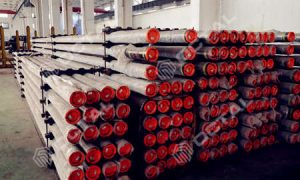
Your Responsible Supplier Partner for Oil and Gas Products.

API 5CT Grade N80 Type Q Casing Steel Pipes
Hot Topic
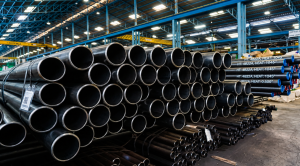


Rencent Articles



Recent Resources
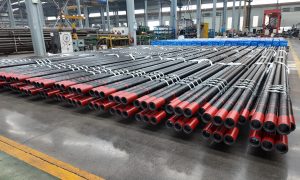
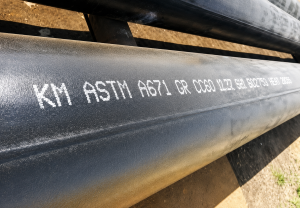
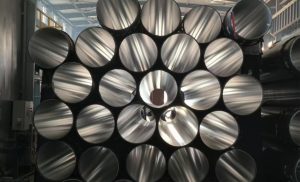
API 5CT Grade N80 Type Q Casing Steel Pipes
Standards: API SPEC 5CT
Grades: N80 type 1, N80 type Q
Stock Available: Yes
Manufacturing process: Seamless, ERW
Outer Diameter: 5 1/2”, 7”, 7 5/8”, 9 5/8”, 13 5/8”
Thickness: Common size in stock
Coupling thread: BTC, LTC, premium connections threads.
Length: R2, R3
API 5CT N80-Q casing pipe is a widely applied medium-grade steel casing in oil and gas well construction. Falling between lower-grade products such as J55/K55 and higher-performance grades like L80 or P110, N80 offers a balance of mechanical strength, toughness, and economic efficiency. Within the N80 specification, there are two distinct levels: N80 Type 1 and N80 Type Q, with the latter recognized for its improved quenching and tempering process that enhances collapse resistance and downhole performance.
In addition to standard N80 grades, materials such as 9Cr-80 and 13Cr-80 are available for wells where corrosive environments (e.g., CO₂, H₂S, or high chloride brines) demand extra resistance. With yield strengths typically around 552–689 MPa and tensile strengths exceeding 689 MPa, API 5CT N80-Q casing is trusted for medium-depth oil and gas wells, providing structural integrity and zonal isolation under demanding geological conditions.
N80 Type Q is frequently specified in medium-depth oil and gas wells where a balanced combination of strength, toughness, and collapse performance is required. In an API 5CT casing and tubing program, casing grade selection is typically validated against burst, collapse, and axial loading conditions, while also confirming connection family and inspection scope. For the broader standard framework—PSL levels, standard product definitions, and acceptance requirements — see API 5CT Casing and Tubing Specification. For casing sizes, ends, and grade availability across the full casing range, see Steel Casing Pipe API 5CT.
API 5CT N80 casing manufacturing processes
Like other grades of API 5CT, manufacturing processes includes hot rolled in seamless and ERW welded. In most of the cases the casing pipe adopts the seamless type.
Connection type, ends and Couplings
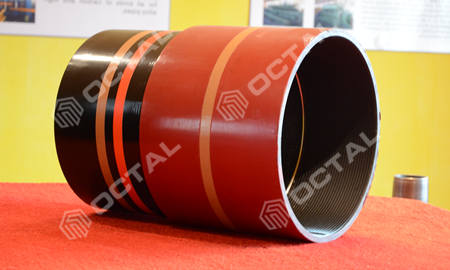
N80 casing pipe connection type usually refer to BTC, which is buttress thread marked with BC symbol; Other than this type there are short round and long round thread types, corresponding marked as SC or LC symbol. Octal also specialized in supplying premium connections in different types, air proof casing connections. And in case client required, we could customize connection threads and couplings.
Connection choice is a key part of casing integrity because thread geometry and make-up control directly influence sealing reliability under casing pressure changes. BTC/LTC and round thread families provide standardized options, while premium connections may be specified when gas-tight performance, torque capacity, or stricter leak resistance is required by the well envelope. For connection terminology, coupling functions, and casing vs tubing coupling distinctions, see API Coupling and Threads for Casing & Tubing (OCTG Coupling).
N80-1 and N80 Q casing pipe sizes
Casing pipe sizes of N80-1 and N80-Q refer to the pipe diameters equal to or more than 5 1/2” inch. Blow to this size is the tubing.
Chemicals and mechanical strength
For grade N80 type Q the chemicals composition details as: Unit in %, C content 0.28-0.32 (OD above 9 5/8” 244.48 mm, C content is 0.22-0.29), Si content 0.17-0.37, Mn content 1.30-1.45 (OD above 9 5/8” 244.48 mm, Mn content is 1.3-1.60, maximum Cr 0.25, maximum Ni 0.20, maximum Cu 0.20, V 0.07-0.12, maximum P 0.025, maximum S 0.020.
For N80 type 1 is the same chemicals with type Q.
Yield strength for N80 type Q and type 1, is 552 Mpa to 758 Mpa. Tensile strength minimum shall be 689 Mpa.
API 5CT N80 Casing pipe manufacturer and supply range
Standards: API SPEC 5CT casing steel pipe
Grades: N80 type 1, N80 type Q, L80, 9Cr-80, 13Cr-80
Stock Available: Yes
Manufacturing process: Seamless, ERW
Outer Diameter: 5 1/2”, 6 5/8”, 7”, 7 5/8”, 7 3/4”, 8 5/8”, 9 5/8”, 10 3/4”, 11 3/4”, 13 3/8”, 16”, 18 5/8”, 20”
Thickness: 14 LB/FT to 106.59 LB/FT, 0.244” to 0.875”
Coupling thread: BTC, LTC, Buttress (Regular, Special bevel or special clearance), premium connections threads.
Length: R2, R3, customized
Within the N80 specification, the practical selection question is often the difference between N80-1 and N80Q in heat treatment condition and verification scope. N80Q is delivered in a quenched-and-tempered condition and is commonly associated with stronger consistency in downhole performance expectations, while N80-1 is typically normalized. For a concise comparison focused on heat treatment, impact requirements, and NDT considerations, see Differences Between API 5CT N80-1 and N80Q.
conclusion
In modern well drilling projects, selecting the right casing grade is essential to maintaining wellbore integrity and production reliability. API 5CT N80-Q casing pipe provides a proven solution for medium-depth wells, balancing mechanical strength, collapse resistance, and cost-effectiveness. With options such as N80 Type 1, N80-Q, 9Cr-80, and 13Cr-80, operators can match the casing grade precisely to the reservoir environment and drilling program.
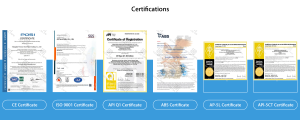
As a global supplier, Octal Steel delivers fully certified API 5CT N80-Q casing pipes, complete with mill test certificates (MTC), traceability, and strict compliance with API 5CT standards. Through rigorous quality control and extensive industry expertise, Octal Steel ensures that every casing string contributes to safe drilling operations and long-term well performance. For oil and gas companies seeking reliable tubular solutions, Octal Steel provides both technical precision and trusted supply capability.
FAQ
Q1: What is N80Q casing pipe used for in oil and gas wells?
A1: N80Q casing is commonly used in medium-depth wells where a balance of strength, toughness, and collapse performance is required under API 5CT casing service conditions.
Q2: What is the difference between N80-1 and N80Q in API 5CT casing?
A2: N80Q is typically supplied in a quenched-and-tempered condition, while N80-1 is commonly normalized. The selection may also be tied to impact performance expectations and inspection scope.
Q3: Which connections are commonly used for N80 casing pipe?
A3: N80 casing commonly uses BTC/LTC and round thread families, and premium connections may be specified when the completion requires enhanced sealing or torque capacity.
Q4: How do casing sizes relate to tubing sizes in an API 5CT program?
A4: In general, casing sizes begin at larger ODs (often 5 1/2 inch and above), while tubing is typically used for smaller OD flow strings installed inside casing. The full casing and tubing framework is summarized in API 5CT Casing and Tubing Specification.
Q5: Where can I check general API 5CT requirements for casing grade selection?
A5: Standard scope, PSL levels, and product definitions are summarized in API 5CT Casing and Tubing Specification, while product-level size ranges and ends can be reviewed on Steel Casing Pipe API 5CT.
The resource belongs to the product
Steel Casing Pipe API 5CT
Click permalink to view detail & more descripton.
Social Share