Your Responsible Supplier Partner for Oil and Gas Products.

SSAW Pipe
Hot Topic
Rencent Articles

Recent Resources
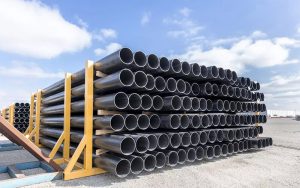
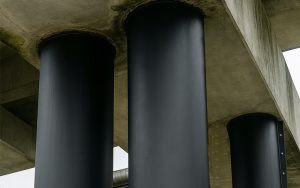

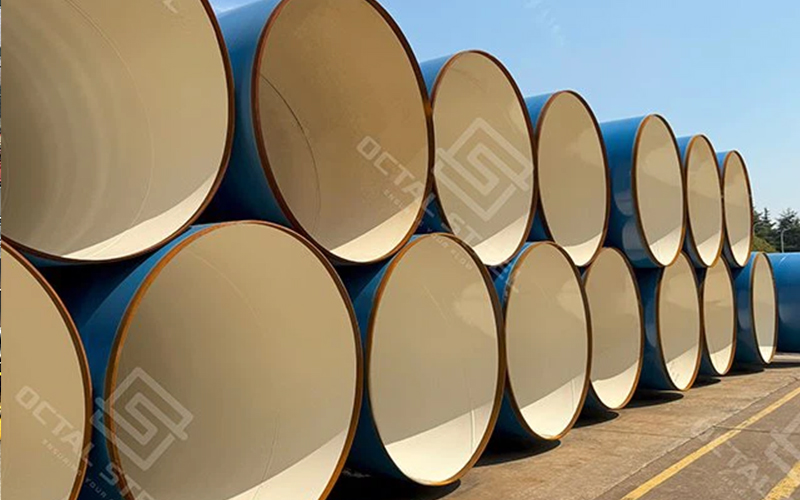
SSAW Pipe
rades & Standards: API 5L B–X90 (PSL1/PSL2), GB/T 9711, ISO 3183, ASTM A252, DNV-OS-F101, NACE MR0175.
Wall Thickness: 6–25.4 mm, lengths up to 18.5 m.
Manufacturing: Spiral forming from coil, double-sided SAW welding, hydro-static + NDT (UT/RT) testing.
Key Benefits: Excellent stress distribution, fast production, flexible dimensions, suits piling & low-to-medium pressure lines.
Coatings Available: 3LPE/3LPP, FBE, internal epoxy, CWC, PU insulation — full protection for buried, sub-sea, or potable water.
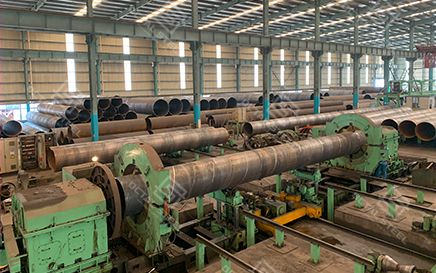
SSAW pipe (Spiral Submerged Arc Welded pipe) is produced by continuously forming steel coil into a helical pipe body, then completing the spiral seam with double-sided submerged arc welding so the weld runs along the pipe in a continuous helix. This spiral forming route helps distribute forming stress around the circumference and is commonly specified for large-diameter fluid transmission lines and structural work such as piling where geometry stability and weld inspection control are procurement-critical.
On the PO, buyers typically lock the variables that prevent site trouble—coil grade and chemistry, weld procedure qualification, NDT scope for the seam, dimensional tolerances, end preparation (beveled or plain), and the external coating system (e.g., FBE or 3LPE) matched to the installation environment. Octal Steel supplies SSAW pipe by diameter, wall thickness and API 5L grade (e.g., Grade B to X90), with optional coatings and length/end options defined to your project specification.
Compliance and Standards
Octal Steel’s SSAW pipes conform to key international and domestic standards, ensuring suitability for fluid conveyance and structural roles. Core specifications encompass:
API SPEC 5L (PSL1 and PSL2): Line pipes for petroleum and natural gas, with PSL2 including advanced testing for Charpy V-notch (CVN) impact, hydrogen-induced cracking (HIC), and sulfide stress cracking (SSC) in sour service.
GB/T 9711-2017: Steel pipes for pipeline systems in oil and gas industries, spanning grades L245/B to L625/X90.
ISO 3183: Global standard for steel pipes in petroleum and natural gas sectors, synchronized with API 5L.
ASTM A252: Welded steel pipe piles for foundational and structural support.
SY/T 5037-2018: Submerged arc welded pipes for general fluid transport.
DNV-OS-F101: Offshore guidelines for submarine pipelines.
Supplementary standards: EN 10219 for cold-formed welded structural sections, CSA Z245.1 for Canadian applications, and NACE MR0175/ISO 15156 for H2S environments.
Products include mill test certificates (MTC) per EN 10204 3.1 or 3.2, covering chemistry, mechanics, and NDT. Third-party verifications from SGS or BV guarantee traceability.
Applications
SSAW pipes are widely applied in scenarios demanding large diameters and economical strength:
Oil and Gas Transportation: Onshore trunk lines for crude and natural gas, handling pressures up to 80 bar with sour-resistant grades in regions like the Middle East.
Water Supply and Drainage: Municipal water networks, sewage, and irrigation systems, with epoxy linings ensuring NSF/ANSI 61 compliance for potable use.
Structural and Civil Engineering: Pipe piles for bridges, docks, and high-rises, distributing loads effectively in foundations.
Offshore and Marine Projects: Sub-sea flow-lines with CWC for buoyancy control, resisting currents in Gulf or North Sea installations.
Chemical and Industrial Slurries: Mining tailings or chemical transport, where abrasion-resistant coatings protect against erosive media.
Agricultural and Utility Infrastructure: Large-scale water diversion or district heating, with insulation for thermal efficiency.
Chemical Composition and Mechanical Properties
SSAW pipes at Octal Steel utilize premium steel coils (e.g., Q235, Q345, API 5L materials), with compositions engineered for optimal weldability, ductility, and resistance to environmental stresses. Grades like API 5L X60 excel in high-pressure scenarios.
| Grade | C max (%) | Mn max (%) | P max (%) | S max (%) | Yield Strength min (MPa) | Tensile Strength min (MPa) | Elongation min (%) |
|---|---|---|---|---|---|---|---|
| API 5L Grade B (PSL1) | 0.28 | 1.20 | 0.030 | 0.030 | 245 | 415 | 27 |
| API 5L X52 (PSL2) | 0.24 | 1.40 | 0.025 | 0.015 | 360 | 460 | 22 |
| API 5L X60 (PSL2) | 0.24 | 1.40 | 0.025 | 0.015 | 415 | 520 | 20 |
| API 5L X70 (PSL2) | 0.24 | 1.40 | 0.025 | 0.015 | 485 | 570 | 18 |
| GB/T 9711 L360 | 0.22 | 1.60 | 0.025 | 0.015 | 360 | 510 | 20 |
These attributes allow operation from -20°C to 100°C, with PSL2 variants undergoing CVN testing (≥27 J at 0°C) for enhanced toughness.
SSAW Pipe Manufacturing Process and Quality Assurance

Octal Steel’s SSAW pipe fabrication leverages automated, high-efficiency lines, grouped into major phases for consistent quality:
Raw Material Preparation
Steel coils (Q235/Q345/API 5L) arrive for inspection, verifying defects, chemistry, and dimensions. Uncoiling follows, with edge milling to form precise bevels (e.g., 30° angles) for seamless welding preparation.
Spiral Forming
Coils are continuously bent into a helical shape using forming machines, creating the pipe body with controlled seam angles for optimal stress distribution and roundness.
Welding and Seam Treatment
Double-wire submerged arc welding (SAW) secures internal and external seams under flux, achieving deep fusion. Post-weld, slag is removed, and heat treatment (annealing/normalizing) relieves stresses for uniform properties.
Testing and Finishing
Comprehensive NDT includes 100% ultrasonic testing (UT) and radiographic testing (RT) on seams, plus hydrostatic pressure tests to confirm integrity. Dimensional checks ensure accuracy, followed by end beveling and optional coatings like 3PE/FBE, tested for adhesion and durability.
Quality assurance runs throughout, with MTCs and optional third-party inspections (SGS/BV) validating zero defects.
As an SSAW pipe manufacturer, Octal Steel controls the key variables that decide field acceptance: spiral forming stability, double-sided submerged arc welding consistency, and release testing such as hydrostatic pressure testing plus UT/RT to the specified scope. Coils and welding procedures are matched to ordered standards (e.g., API 5L PSL1/PSL2), and coating options such as FBE or 3LPE can be integrated to suit buried or marine environments
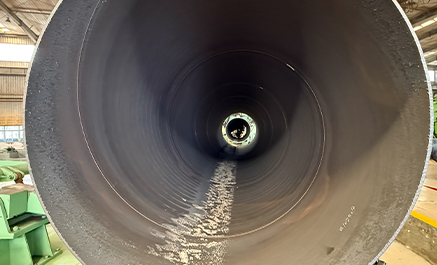
SSAW vs LSAW vs ERW – Which Pipe to Choose?
| Feature | SSAW (Spiral) | LSAW (Longitudinal) | ERW (Electric Resistance) |
|---|---|---|---|
| Diameter Range | 20–100 in (best for large) | 16–64 in | 1/2–24 in |
| Wall Thickness | 6–25.4 mm | Up to 75 mm | Up to 20 mm |
| Production Cost | Lowest (continuous coil) | Highest | Medium |
| Weld Seam | Helical – even stress distribution | Single straight seam | Straight seam |
| Ovality & Straightness | Good | Excellent | Very good |
| Best Applications | Water lines, piling, low-to-medium pressure gas | High-pressure oil/gas, offshore | Small-to-medium pipelines |
| Lead Time | Fastest | Longer | Fast |
Quick Rule of Thumb: Choose SSAW when you need large diameter + cost efficiency (water, piling, onshore gas). Choose LSAW for maximum pressure and offshore strength.
Available Coatings and Protection Options
Octal Steel provides complete external and internal protection systems to match any environment:
| Coating Type | Layer Structure | Thickness | Service Life | Typical Use |
|---|---|---|---|---|
| 3LPE / 3LPP | FBE + adhesive + PE/PP topcoat | 2.5–4.5 mm | 40–50+ years | Buried pipelines, onshore/offshore |
| FBE (Fusion Bonded Epoxy) | Single/dual-layer epoxy | 350–600 μm | 30+ years | Moderate temperature, water lines |
| Internal Epoxy Lining | Liquid epoxy or FBE | 300–500 μm | 30+ years | Potable water, oil, gas flowlines |
| Concrete Weight Coating (CWC) | Reinforced concrete over 3LPE | 40–150 mm | 50+ years | Subsea buoyancy control |
| Polyurethane Foam Insulation | PU foam + HDPE jacket | 50–100 mm foam | 30+ years | District heating, arctic pipelines |
All coatings are applied in-house, tested for adhesion (≥250 N/10 mm), holiday-free, and fully certified.
Key Advantages of SSAW Pipe
SSAW pipes provide unique benefits for cost-sensitive, large-scale projects, outperforming alternatives like ERW in certain scenarios:
- Economical Production: Helical seam allows continuous forming from coils, reducing costs for diameters over 20 in compared to LSAW.
- Superior Stress Distribution: Spiral design evenly spreads loads, enhancing resistance to bending and torsion in pipelines or piles.
- High Production Flexibility: Adaptable to varying thicknesses (6-25.4 mm) and lengths (up to 18.5 m), with quick grade changes.
- Corrosion and Wear Resistance: Compatible with advanced coatings like 3LPE, extending life in soil, water, or sub-sea up to 50+ years.
- Environmental Adaptability: Suitable for uneven terrain or seismic areas, with HIC/SSC options for sour service.
- Efficiency in Fluid Flow: Smooth internals minimize friction, ideal for high-volume transport.
What Defines a Qualified SSAW Pipe Manufacturer?
At Octal Steel, we treat “SSAW pipe manufacturer” as a capability that can be verified on the mill route and on the dock—not a label. Our SSAW production starts with controlled coil handling at the uncoiler, followed by strip preparation and fit-up discipline so the spiral seam enters welding with stable root geometry. During spiral forming, we manage helix stability and pipe geometry (OD/ovality) to keep the seam position and heat input inside the qualified window. Weld integrity is built through double-sided submerged arc welding: inside SAW and outside SAW are matched for bead placement and heat input, and we control flux and welding wire as WPS-linked consumables because they directly affect arc stability and seam consistency. Release is based on the ordered inspection scope—commonly UT for volumetric screening and RT (X-ray radiography) where specified—plus hydrostatic testing when pressure tightness is required, so the pipe can move into coating and field fit-up with predictable behavior.
Just as important, we manage project delivery as part of manufacturing. We plan batching and dispatch so output speed does not bypass QC gates, and we support shipment by container for suitable lengths/OD or breakbulk/bulk vessel for long length, large OD, and high tonnage orders, with end protection and handling plans aligned to port operations. Our pricing is scope-driven and transparent in structure—steel input and geometry (OD/WT) first, then inspection scope (UT/RT, hydrotest), coating options, packing, and freight—so buyers can optimize cost without sacrificing the acceptance requirements that matter on site.
Why Choose Octal Steel SSAW Pipe?
Octal Steel distinguishes itself as a premier supplier of SSAW welded steel pipes through a commitment to quality, innovation, and customer satisfaction. Here’s why industry professionals worldwide partner with us:
- Unmatched Manufacturing Expertise: Our ISO 9001 and API Q1 certified facilities utilize cutting-edge automation and Industry 4.0 technologies for precise production, ensuring pipes meet or exceed standards like API 5L and ISO 3183 with defect rates below 0.5%.
- Comprehensive Customization: From grades B to X90 and coatings like 3LPE/FBE to specific lengths and ends, we tailor solutions to your project—whether onshore gas lines or offshore flow-lines—reducing downtime and costs.
- Rigorous Quality Assurance: Every pipe undergoes multi-stage NDT (UT/RT), hydro-static testing, and third-party inspections (SGS/BV), backed by detailed MTCs for full traceability and compliance in sour or sub-sea environments.
- Global Supply Chain Efficiency: With strategic warehouses and logistics networks, we deliver promptly to key markets like the Middle East, North America, and Asia, minimizing lead times while offering competitive pricing.
- Sustainability and Reliability: We prioritize eco-friendly practices, using recyclable materials and low-emission processes, while our proven track record in major projects (e.g., large-scale water infrastructure) guarantees long-term performance up to 50+ years.
- Dedicated Support: Our technical team provides expert guidance from design consultation to installation, including value-added services like bundling, documentation, and after-sales assistance for seamless project execution.
Choosing Octal Steel means investing in durable, high-performance SSAW pipes from a trusted partner focused on your success.
FAQ
Q1: What is SSAW Pipe used for?
A: SSAW Pipe is used for large-diameter fluid transmission (oil, gas, water) and structural piling where cost efficiency and inspection evidence are required.
Q2: Can SSAW Pipe meet API 5L requirements?
A: Yes. API 5L SSAW Pipe can be supplied in PSL1/PSL2. Confirm grade, PSL level, and any sour service requirement in the inquiry.
Q3: How do you verify pipe weld quality on SSAW Pipe?
A: The spiral seam (pipe weld) is verified through process control plus UT/RT (as required) and hydrostatic testing, supported by MTC and inspection reports.
Q4: Which coating is recommended for buried or subsea service?
A: Buried lines often use 3LPE/3LPP or FBE; subsea service commonly requires CWC. Selection depends on temperature, medium, and design life.
Q5: Can you supply documentation and third-party inspection?
A: Yes. We provide EN 10204 3.1/3.2 MTC, NDT and hydrotest records, coating reports, and can arrange SGS/BV inspection when required.
The resource belongs to the product
Welded Steel Pipe
Click permalink to view detail & more descripton.
Social Share