Your Responsible Supplier Partner for Oil and Gas Products.

Inconel 625 / Nickel Alloy 625 / UNS N06625 Pipe and Tube
Hot Topic

Rencent Articles


Recent Resources
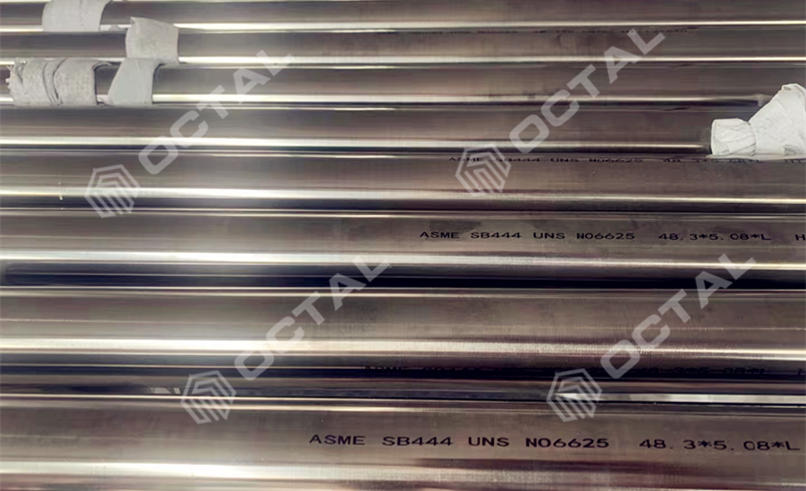
Inconel 625 / Nickel Alloy 625 / UNS N06625 Pipe and Tube
Inconel 625 (ASTM B444 UNS N06625) Nickel-Chromimum-Molybdenum-Columbium Alloys (Nickel 58%)
Incoloy 825 (ASTM B424 N08825) Nickel-Iron-Chromium-Molybdenum-Copper Alloy (Nickel 38 to 46%)
Wall thickness: SCH 10, SCH 40, SCH STD, SCH 80, SCH XS, SCH 160
Length: 6 meters, 12 meters or customized.
CRA Lined or Clad Pipes with 625 or 825: Lined or clad with carbon steel pipe with mechanical bonding or weld overlay
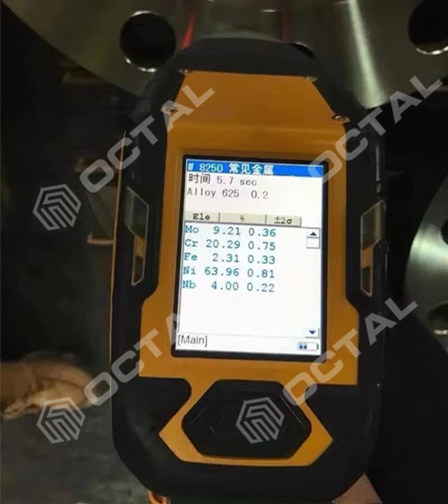
Nickel alloy 625 is nickel-chromium-molybdenum-columbium alloy material, major content Nickel minimum 58%, also called Inconel 625 or UNS NO6625 under standard ASTM B444 for pipes, or ASTM B443 for plates coils. Other chemical content Chromimum 20% to 23%, Columbium + tantalum 3.15% to 4.15%, Molybdenum 8.0% to 10.0%, columbium Cobalt allow 1.0% max if determined, Iron 5.0% max.
Density of 8.4 g/cm3, melting point of 1290-1350 °C. It has excellent corrosion resistance to inorganic acids, and has excellent corrosion resistance to various corrosive media in oxidative and reducing environments.
In procurement and receiving inspection, Alloy 625 pipe acceptance usually comes down to four items that must match the PO line: product form (pipe vs tube), heat treatment condition (Grade 1 annealed vs Grade 2 solution annealed), size expression (NPS + schedule vs OD + wall), and documentation scope (MTC/heat number traceability and any specified inspection records). This is especially important when the package includes solid Alloy 625 pipe/tube plus CRA lined/clad pipe in the same project.
Inconel Alloy 625 / Inconel 625 / UNS N06625 Features
Inconel alloy 625 is a non-magnetic, corrosion and oxidation resistant, nickel-chromium based solid solution strengthened deformed superalloy.
A Solid solution strengthened nickel-based deformed superalloy with molybdenum and niobium as the main strengthening elements. The high strength of Inconel 625 is due to the hardened combination of molybdenum and niobium on the nickel-chromium matrix of the alloy. The addition of molybdenum acts with the niobium to stiffen the alloy matrix, providing a high strength without a strengthening heat treatment.
Inconel 625 is extremely resistant to a variety of unusually severe corrosive environments, including high temperature effects such as oxidation and carburization, including corrosion. Because of the solid solution of the refractory Co and Mo in a Nickel-Chromium matrix, provides 625 an outstanding strength and toughness in high temperature ranging from low up to 2000°F (1093°C).
From an engineering point of view, Alloy 625’s “solid solution strengthened” behavior is useful because it provides strength and toughness without relying on precipitation hardening, which helps keep performance stable in many corrosive/high-temperature services. In real projects, Alloy 625 is frequently selected for chloride-bearing fluids, seawater exposure, mixed acid environments, and hot/wet corrosion mechanisms where stainless grades may struggle with localized corrosion (pitting/crevice) or stress corrosion risks.
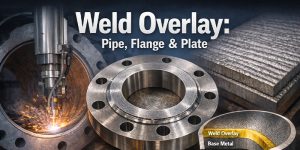
Inconel 625 Clad Pipe Lined Pipe / Nickel Alloy 625 Weld Overlay
Inconel 625 material could be clad or lined on high strength carbon steel pipe like API 5L X60, X65, X70, it includes outer mother pipe carbon steel to provide strength, and inner material cladded or lined Inconel 625, to provide high corrosion resistance in various environments including marine, airspace, chemical plants and petrochemical industries.
Cladding or lining inconel alloy 625 material inside of the carbon steel pipe has been a popular option to solve the corrosive problems and save a lot of cost.
In practice, CRA lined/clad solutions are chosen when the project needs carbon steel strength and cost efficiency while still requiring Alloy 625 corrosion resistance on the wetted surface. Typical execution routes include mechanically bonded lining or weld overlay cladding, and acceptance often focuses on CRA layer continuity, bonding integrity (where applicable), and the inspection plan for the overlay/liner interface. For projects with aggressive media, the technical discussion often includes required CRA thickness/coverage, end preparation, and how field welding will be handled at the tie-in locations.
Inconel 625 Advantages
| Inconel 625 Advantages |
|---|
| High tensile strength and high corrosion fatigue properties; |
| High resistance to oxidation at elevated temperatures up to 1050C. |
| Good processing and welding properties are good; |
| Excellent corrosion resistance and oxidation resistance; |
| Resistant to stress corrosion in a salt spray atmosphere; |
| Outstanding resistance to pitting, crevice corrosion and intercrystalline corrosion; |
| Excellent mechanical properties at both extremely low and extremely high temperatures; |
| Almost complete freedom from chloride induced stress corrosion cracking; |
| Good resistance to acids, such as nitric, phosphoric, sulfuric and hydrochloric, as well as to alkalis makes possible the construction of thin structural parts of high heat transfer. |
Nickel alloy 625 / Inconel 625 / UNS N06625 has a very low corrosion rate in both marine and non-marine environments, has good seawater corrosion resistance, is resistant to corrosion by various salt solutions, has good corrosion resistance to HNO3 phosphoric acid, and is resistant to heating to the boiling point. The following HCl and low-concentration sulfuric acid are also quite resistant. The aging hardening phenomenon of the alloy after long-term use at 550-700 ℃ can lead to some decline in the plasticity of the N06625/No6625 alloy. And resistance to stress corrosion cracking against chloride ions – making it an excellent choice for seawater and aerospace applications.
Applications
Common used parts for this alloy are springs, seals, bellows for submersible controls, cable connectors, fasteners, flexures, and oceanographic instrument components. A wide variety of plates, bars, tubes, and forgings are available. Fabricability is typical for a nickel alloy, with the material readily formable and weldable by a variety of techniques.
In piping projects, Alloy 625 is also commonly used for process pipework exposed to chlorides, offshore and marine piping, chemical injection lines, and corrosion-critical spools where long service life depends on controlling localized corrosion. Where fabrication is required, buyers typically confirm the heat treatment condition, weldability expectations, and whether the project requires additional inspection on welds or finished spools beyond standard mill documents.
| Applications |
|---|
| Aerospace |
| Marine engineering |
| Nuclear reactors |
| Boiler Furnace |
| Engine parts |
| Components where exposure to sea water and high mechanical stresses are required. |
| Oil and gas production where hydrogen sulfide and elementary sulfur exist at temperature in excess of 150℃. |
| Components exposed to flue gas or in flue gas desulfurization plants. |
| Flare stacks on offshore oil platforms. |
| Hydrocarbon processing from tar-sand and oil-shale recovery projects. |
| Polution control equipment |
Inconel Alloy 625 Chemical Composition:
Nickel 58% min
Chromium 20% to 23%
Molybdenum 8% to 10%
Iron 5.0% max
Carbon 0.10% max
Manganese 0.50% max
Silicon 0.50% max
Phosphorus 0.015% max
Sulfur 0.015% max
Aluminum 0.40% max
Titanium 0.40% max
Columbium + tantalum 3.15% to 4.15%
The table below presents the same chemistry in a receiving-friendly format for quick MTC checks.
| Element | Content |
|---|---|
| Nickel (Ni) | 58% min |
| Chromium (Cr) | 20% to 23% |
| Molybdenum (Mo) | 8% to 10% |
| Columbium + Tantalum (Nb + Ta) | 3.15% to 4.15% |
| Iron (Fe) | 5.0% max |
| Carbon (C) | 0.10% max |
| Manganese (Mn) | 0.50% max |
| Silicon (Si) | 0.50% max |
| Phosphorus (P) | 0.015% max |
| Sulfur (S) | 0.015% max |
| Aluminum (Al) | 0.40% max |
| Titanium (Ti) | 0.40% max |
ASTM B444 UNS N06625 Pipe and Tube Standard Specification
UNS N06625 products are furnished in two grades depending on different heat treatment methods:
Grade 1 in annealed, material normally employed in service temperaures up to 1100℉ (593℃).
Grade 2 in solution annealed, normally employed in service temperature above 1100℉ (593℃) when resistance to creep and rupture is required.
Hot-working or reannealing may change properties significantly, depending on working history and temperature.
(Other alloy mateiral UNS N06219 and UNS N08825 are supplied in solution annealed condition only.)
On purchase documents, the “grade” is typically tied to the heat treatment condition, and that condition impacts which mechanical properties are expected on the MTC. Where projects specify higher temperature service or creep/rupture requirements, the order often aligns inspection requirements (and any supplementary testing) with the heat treatment route stated on the certificate.
Table code (old-site style) — Grade 1 vs Grade 2 (heat treatment and use)
| Grade | Heat treatment condition | Typical service temperature note | Typical buyer focus at receiving |
|---|---|---|---|
| Grade 1 | Annealed | Normally employed up to 1100℉ (593℃) | Chemistry + mechanical results + traceability match PO line |
| Grade 2 | Solution annealed | Normally employed above 1100℉ (593℃) where creep/rupture resistance is required | Heat treatment statement + mechanical values + any specified inspection scope |
Reference Documents
ASTM Standard
ASTM B829 Specification for general requirements for Nickel and Nickel Alloy Seamless Pipe and Tube
E112 Test methods for determining average grain size
G28 Test methods for detecting susceptibility to intergranular corrosion in wrought, Nickel-Rich, Chromium-Bearing Alloys.
G48 Test methods for pitting and crevice corrosion resistance of stainless steels and related alloys by use of Ferric Chloride Solution
These reference items are commonly used as supporting test methods when a project ITP calls out intergranular corrosion susceptibility checks, pitting/crevice resistance screening, or metallographic confirmation—especially for corrosion-critical services.
Test referred
Chemical Composition – One test per lot.
Tensile Test – On test per lot.
Hydrostatic or Nodestructive Electric Test – Each piece in each lot.
Mechanical Strength for Nickel Alloy 625
For Alloy N06625 grade 1 with annealed heat treatment (Annealed ≥ 871℃/1600℉), tensile strength minimum 827 Mpa (120 ksi). Yield strength min 414 Mpa 60 ksi, Elongation minimum 30%.
For N06625 grade 2 with solution annealed, TS minimum 690 Mpa (100 ksi), YS minimum 276 Mpa (40ksi), Elongation minimum 30%.
Solution annealed at 2000℉ (1093℃) minimum, with or without subsequent stabilization anneal at 1800℉ (982℃) minimum to increase resistance to sensitization.
For quick bid leveling and receiving inspection, presenting the same strength requirements in a table reduces interpretation issues between Grade 1 and Grade 2.
Table code (old-site style) — Mechanical Strength (Grade 1 vs Grade 2)
| Grade | Heat treatment (as stated) | Tensile strength (min) | Yield strength (min) | Elongation (min) |
|---|---|---|---|---|
| Grade 1 | Annealed (≥ 871℃ / 1600℉) | 827 MPa (120 ksi) | 414 MPa (60 ksi) | 30% |
| Grade 2 | Solution annealed | 690 MPa (100 ksi) | 276 MPa (40 ksi) | 30% |
Inconel 625 VS Incoloy 825 (UNS N06625 VS UNS N08825)
Inconel 625 and Incoloy 825 are two most important nickel alloys used in oil and gas industry. The major difference between two materials is the nickel content value, for Inconel 625 Nickel 58% minimum, and for Incoloy 825 Nickel at range of 38% to 46%. And this makes the 625 material more expensive.
lncoloy 825 is an austenitic nickel-iron-chromium-molybdenum-copper alloy also containing high levels of chromium, nickel, copper and molybdenum that can provide high levels of corrosion resistance to both moderately oxidizing and moderately reducing environments.
This balance of alloying elements grants this alloy exceptional resistance to both chloride stress corrosion cracking, as well as crevice corrosion and general corrosion. Chloride stress corrosion cracking is a type of localised intergranular corrosion on materials that are put under tensile strength, in high temperatures and in an environment that includes oxygen and chloride ions such as seawater.
With high content of Nickel included with the percentage of molybdenum and copper in this nickel alloy produces substantially improved corrosion resistance in a corrosive environment such as reducing environments compared to stainless steel. Titanium added in Incoloy Alloy 825 also helps to stabilize the alloy against intergranular corrosion.
Chemical Content of Incoloy 825 (UNS N08825 under ASTM B424)
Nickel 38% to 46%
Chromium 19.5% to 23.5%
Iron 22.0% minimum
Carbon 0.05% max
Manganese 1.0% max
Copper 1.5% to 3.0%
Silicon 0.5% max
Sulfur 0.03% max
Aluminum 0.2% max
Titanjum 0.6% to 1.2%
Molybdenum 2.5% to 3.5%
Compared with alloy 625 material, alloy 825 has lower content of Nickel, but extra Titanjum and Copper.
Tensile strength 586 Mpa (85 ksi) min, yield strength 241 Mpa (35 ksi) min, Elongation 30% min.
Incoloy 825 (UNS N08825) is an austenitic, nickel alloy, the material is ductile over a wide range of temperatures from cryogenic to well in excess of 1000 °F (538 °C).
In bid evaluation, the 625 vs 825 discussion is usually anchored to media severity and failure mode: Alloy 625 is often selected when localized corrosion resistance and high-temperature strength margins are prioritized, while Alloy 825 is commonly considered for moderately aggressive environments where its chemistry balance is sufficient. Presenting the key differences in a table helps reduce “apples vs oranges” comparisons across vendors.
Table code (old-site style) — 625 vs 825 quick comparison (buyer view)
| Item | Alloy 625 (UNS N06625) | Alloy 825 (UNS N08825) |
|---|---|---|
| Nickel content (as stated) | 58% minimum | 38% to 46% |
| Key alloying approach | Ni-Cr matrix with Mo + Nb (strength + corrosion) | Ni-Fe-Cr with Mo + Cu + Ti (balanced corrosion resistance) |
| Typical decision driver | Higher corrosion severity and/or higher temperature strength requirement | Moderate oxidizing/reducing environments with cost sensitivity |
| Cost note (as stated) | More expensive (higher Ni minimum) | Typically lower than 625 |
Our Supply Range For Nickel Alloy 625
Standard and Grades: ASTM B444 UNS N06625 / ASTM B424 N08825
625 Material types: Nickel-Chromimum-Molybdenum-Columbium Alloys
825 Material types: Nickel-Iron-Chromium-Molybdenum-Copper Alloy
Manufacturing types: Seamless hot rolled, anneald; Welded
Sizes: 1/2” to 16”
Wall thickness: SCH10, SCH 20, SCH 40, SCH STD, SCH 80, SCH XS, SCH 160
Length: 6 meters, 12 meters or customized.
CRA Lined or Clad Pipes with 625 or 825: Lined or clad with carbon steel pipe with mechanical bonding or weld overlay
For Alloy 625 supply packages, Octal Steel focuses on “receiving-ready” delivery: the shipped pieces, markings, and certificates are aligned so the site team can verify compliance quickly. Typical deliveries are organized by heat number and lot, with clear piece-to-heat traceability, and MTCs that match the ordered grade/condition and size expression (schedule vs OD/WT). Where projects require additional verification, the submission pack can include PMI records, dimensional inspection reports, and NDT documentation in the same lot order as the packing list to reduce back-and-forth during EPC/owner review.
FAQ
Q1: What is the difference between ASTM B444 N06625 pipe Grade 1 and Grade 2?
A1: Grade 1 is annealed and is normally employed up to 1100℉ (593℃). Grade 2 is solution annealed and is normally employed above 1100℉ (593℃) when resistance to creep and rupture is required.
Q2: Why is Alloy 625 often selected for marine and chloride services?
A2: The alloy is widely recognized for strong resistance to localized corrosion mechanisms (pitting/crevice) and stress corrosion risks in severe chloride environments, and it maintains strength and toughness across a wide temperature range.
Q3: Why use CRA lined/clad pipe instead of solid Alloy 625 pipe?
A3: CRA lined/clad pipe combines a carbon steel “mother pipe” for strength and cost control with an Alloy 625 corrosion-resistant layer on the wetted surface, which is commonly used to solve corrosive problems while reducing total material cost versus solid CRA.
Q4: What information is most commonly checked on the MTC at receiving?
A4: Buyers typically verify chemistry and mechanical results tied to the heat number, the stated heat treatment condition (Grade 1 vs Grade 2), and traceability from the heat number to delivered pieces (marking and traceability list).
The resource belongs to the product
CRA Clad and Lined pipe
Click permalink to view detail & more descripton.
Social Share