Your Responsible Supplier Partner for Oil and Gas Products.

Precision Stainless Steel Tube
Recent Products

Rencent Articles


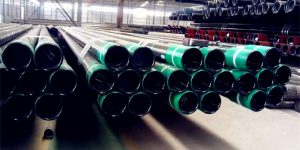



Precision Stainless Steel Tube
• Grades: SUS304 / SUS316 / SUS316L
• Finishes: AP / BA / MP / EP
• Roughness: BA Ra(max) 0.3 μm (opt) / 0.4 μm (std); EP Ra(max) 0.15 μm (opt) / 0.25–0.38 μm (std)
• Typical length: 6000 mm (A = 6000)
• Representative OD (mm): 6.35 / 9.53 / 12.70 / 19.05 / 25.40 / 50.80 / 101.60 / 152.40
• OD tolerance examples: ±0.06 mm (small sizes), up to ±0.8 mm (4″), ±1% (6″)
• Wall tolerance: ±12.5% (small sizes), ±10% (≥3/4″)
• Mechanical (JIS): HRB ≤95; YS ≥205 MPa (304/316), TS ≥520 MPa (304/316); 316L: YS ≥175 MPa, TS ≥480 MPa; EL ≥35%
Supply scope: tubing + stainless compression fittings + stainless steel valves
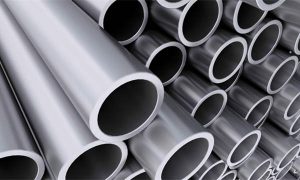
precision stainless steel tubing is stainless tubing manufactured with tighter dimensional tolerances, cleaner internal surfaces, and more consistent straightness/ovality—so it performs predictably in critical fluid, gas, and instrumentation systems. It is widely used in ultra-clean and high-reliability environments such as semiconductor, nuclear power, and bio-pharmaceutical process lines.
Where high-precision stainless steel tubing is used
• Semiconductor & electronics: UHP gas delivery, chemical distribution, tool hook-up lines (EP/BA finishes commonly specified).
• Bio-pharmaceutical & clean process: high-purity transfer lines, clean utilities, sampling systems.
• Nuclear & energy: high-reliability instrumentation, sampling and auxiliary lines.
• Instrumentation & analytical: impulse lines, calibration manifolds, carrier gases, chromatography lines.
• Hydraulic & high-pressure service: when paired with appropriate wall thickness, fittings, and validated pressure design rules (see stainless steel tubing pressure rating chart sub-page).
Materials, standards, and what “BA / EP” means
High precision stainless steel tube programs typically center on austenitic grades such as 304/304L and 316/316L, selected for corrosion resistance, weld-ability, and cleanliness control.
Common production / supply standards (examples):
• ASTM A269 (tube/pipe program with multiple OD/wall options)
• JIS G3459 (standard product range and tolerances)
Projects may also reference GB/T, ASTM/ASME, DIN, GOST depending on region/specification practice
Bright annealed stainless steel tubing (BA) is produced via bright annealing to achieve a clean, shiny surface and controlled roughness.
Electropolished stainless steel tubing (EP / EP pipe) uses electrolytic polishing to further reduce micro-roughness and improve clean-ability for ultra-clean service.
Surface finish options (AP / BA / MP / EP) and roughness targets
High precision stainless steel tubing is often specified by surface condition:
• AP (Annealed & Pickled): cold drawing + annealing (baseline industrial finish)
• BA (Bright Annealed): cold drawing + bright annealing (clean, bright finish)
• MP (Mechanical Polishing): mechanically polished to improve surface
• EP (Electropolishing): electropolished for ultra-clean internal surface
Typical roughness control shown for BA and EP:
• BA: Ra(max) 0.3 μm (optional) or 0.4 μm (standard)
• EP: Ra(max) 0.15 μm (optional) or 0.25 μm / 0.38 μm (standard)
Specifications overview (sizes, tolerances, mechanical properties)
Below is a practical spec snapshot for a high-precision stainless steel tubing program, aligned with the provided technical manual tables (ASTM A269/JIS G3459 references, surface grades, mechanical targets, and typical lengths).
| Item | Typical Options | Notes |
|---|---|---|
| Standards | ASTM A269; JIS G3459 | Range/tolerance tables shown in manual |
| Grades | SUS304 / SUS316 / SUS316L (JIS) | High purity & corrosion resistance use cases |
| Surface Finish | AP / BA / MP / EP | BA Ra(max) 0.3 μm (opt) / 0.4 μm (std); EP Ra(max) 0.15 μm (opt) / 0.25–0.38 μm (std) |
| Representative OD (ASTM A269 examples) | 1/4″ (6.35), 3/8″ (9.53), 1/2″ (12.70), 3/4″ (19.05), 1″ (25.40), 2″ (50.80), 4″ (101.60), 6″ (152.40) | Manual list shows multiple wall options per OD |
| Typical Length | 6000 mm | Shown as “A = 6000” for tube/pipe program |
| Mechanical Targets (JIS table) | HRB ≤ 95; Yield ≥ 205 MPa (304/316); Tensile ≥ 520 MPa (304/316); 316L: Yield ≥ 175 MPa, Tensile ≥ 480 MPa; Elongation ≥ 35% | Used as acceptance benchmarks in manual |
Product Range And Tolerances
The table below summarizes the standard production range for high-precision stainless steel tubing, including typical OD (mm), wall thickness options (mm), and tolerance limits. It also indicates availability by surface/process type (AP / BA / MP / EP) and by tube type (Welded / Seamless) for common sizes (Unit: mm).
| Size | OD (mm) | Wall Thickness (mm) | Tolerance | Product Type | Tube Type | |||||
|---|---|---|---|---|---|---|---|---|---|---|
| OD | Wall | AP | BA | MP | EP | Welded | Seamless | |||
| 1/8″ | 3.18 | 0.5 | ±0.06 | ±12.5% | ● | ● | ● | ● | ||
| 1/4″ | 6.35 | 1.0 (0.89) | ±0.06 | ● | ● | ● | ● | |||
| 3/8″ | 9.53 | 1.0 (0.89) | ±0.06 | ● | ● | ● | ● | |||
| 1/2″ | 12.7 | 1.0, 1.24 (1.65) | ±0.06 | ● | ● | ● | ● | |||
| 5/8″ | 15.88 | 1.0 (1.24) | ±0.06 | ● | ● | ● | ● | |||
| 3/4″ | 19.05 | 1.24, 1.65 | ±0.06 | ±10% | ● | ● | ● | ● | ● | ● |
| 1″ | 25.4 | 1.24, 1.65 | ±0.1 | ● | ● | ● | ● | ● | ● | |
| 1.5″ | 38.1 | 1.65 | ±0.3 | ● | ● | ● | ● | ● | ● | |
| 2″ | 50.8 | 1.65 | ±0.3 | ● | ● | ● | ● | ● | ● | |
| 2.5″ | 63.5 | 1.65 | ±0.5 | ● | ● | ● | ● | ● | ● | |
| 3″ | 76.2 | 1.65 | ±0.5 | ● | ● | ● | ● | ● | ● | |
| 4″ | 101.6 | 2.11 | ±0.8 | ● | ● | ● | ● | ● | ● | |
| 6″ | 152.4 | 2.77, 3.05 | ±1% | ● | ● | ● | ● | ● | ||
Mechanical Properties: Tensile Test
The tensile test data below defines baseline mechanical acceptance values for high-precision stainless steel tubing across common grades and surface conditions. It verifies that the tubing meets minimum requirements for hardness, yield strength, tensile strength, and elongation—helping ensure consistent forming, installation, and pressure-system performance for both AP/BA and MP/EP products.
| Surface | Grade | Standard | Hardness | Yield Strength | Tensile Strength | Elongation |
|---|---|---|---|---|---|---|
| HRB | (N/mm²) | (N/mm²) | (%) | |||
| AP/BA MP/EP |
SUS304 | JIS | ≤ 95 | Min 205 | Min 520 | Min 35 |
| SUS316 | JIS | ≤ 95 | Min 205 | Min 520 | Min 35 | |
| SUS316L | JIS | ≤ 95 | Min 175 | Min 480 | Min 35 |
Cleaning & packaging for high-purity service
For high-purity gas and chemical delivery systems, cleaning and packaging are not “extra steps”—they are part of how high-precision stainless steel tubing (especially BA and EP) keeps its internal surface stable, low-contamination, and consistent from production to installation. Below is a typical high-purity workflow and what each step is responsible for.
• Degreasing (Oil Removal)
Removes drawing oils, polishing compounds, and handling residues left from cold drawing, annealing, mechanical polishing, or electropolishing. This step prevents organic contamination from spreading to the internal surface and improves the effectiveness of later chemical treatments.
• Neutralization
Stops and balances any residual acidic/alkaline chemistry from earlier processing or cleaning. Neutralization helps prevent localized corrosion or chemical carryover that could interfere with passivation and final cleanliness.
• Passivation
Forms or restores a stable chromium-rich passive film on stainless steel surfaces. Passivation improves corrosion resistance and reduces the risk of metallic ion release, which is critical for high-purity gas/chemical applications and long-term surface stability.
• Drying
Removes moisture from the internal and external surfaces after wet processing. Proper drying reduces water spots, prevents microbial growth risk in storage, and avoids corrosion triggers—especially important before sealed packaging.
• DI Water Rinse / Ultrasonic Cleaning (as required)
DI (deionized) water rinse removes ionic residues and prevents mineral deposits that can be introduced by ordinary water. Ultrasonic cleaning uses cavitation to dislodge fine particles trapped in micro-scratches or surface valleys, especially beneficial for EP/BA tubing where particle control is critical.
• Nitrogen Purge
Flushes the tube interior with clean, dry nitrogen to drive out residual humidity and reduce oxygen exposure. Nitrogen purging helps maintain surface cleanliness, slows oxidation, and supports stable storage conditions for high-purity applications.
• Cleanliness Verification / Testing
Confirms the tubing meets cleanliness expectations before sealing and shipment. Depending on project requirements, this can include checks for particles, residues, appearance/visual inspection, roughness confirmation, or other internal acceptance controls.
• Nitrogen-Filled Sealed Packaging
Seals tubing in protective packaging (often with nitrogen hold) to prevent re-contamination and moisture ingress during storage and international shipping. This preserves the cleaned internal surface until installation.
• End Protection (Capping) + Transit Protection
End caps prevent dust and handling debris from entering the bore. Protective wrapping and rigid packing minimize dents, scratches, and end damage that can compromise fit-up, sealing, or cleanliness at site.
| Option | What It Includes | Purpose / Outcome | Typical Applications |
|---|---|---|---|
| Standard Clean | Degreasing + rinse + drying; basic visual check; end-caps | Removes oils/handling residues; keeps the bore protected during transport | General instrumentation tubing, standard process lines |
| High-Purity Clean | Degreasing + neutralization + passivation + DI water rinse + drying; cleanliness verification; end-caps | Controls ionic residues and improves corrosion resistance via passive film stability | High-purity gas/chemical distribution, clean process utilities |
| UHP Clean (BA/EP) | High-purity clean + ultrasonic cleaning (as required) + nitrogen purge; enhanced inspection/verification; end-caps | Reduces fine particles trapped in micro-features; lowers moisture/oxygen exposure in the bore | Semiconductor UHP gas lines, critical analytical/clean-room systems |
| Nitrogen-Sealed Packaging | Nitrogen purge + sealed bag/tube wrap (nitrogen hold); end-caps; protective outer packing | Prevents re contamination and moisture ingress during storage and international shipping | EP/BA tubing shipments, long transit time projects |
| Export Transit Protection | Rigid crate/wooden box + edge/impact protection; label/lot trace; end-caps retained | Minimizes dents, scratches, and end damage that can affect fit-up and sealing | International shipments, project site delivery with multiple handling points |
High pressure stainless steel tubing and pressure rating logic
“High pressure stainless steel tubing” is not defined by a single OD—it is a system outcome determined by:
• OD and wall thickness
• Material/heat treatment condition
• Operating temperature
• Design code / calculation method
• End connections (e.g., stainless compression fittings vs. welded joints)
A dedicated stainless steel tubing pressure rating chart sub-page typically consolidates these factors into a searchable table by OD × wall × grade × temperature band, plus design assumptions and safety factors.
Small diameter, metric tubing, and shaped tube options
High-precision programs often extend beyond inch OD into:
• small diameter stainless steel tubing for instrumentation and sampling
• stainless steel metric tubing / metric stainless tubing for international equipment interfaces
• shaped products such as ss square tube and stainless steel rectangular tubing for structural frames, skids, and enclosures (when the project combines fluid + mechanical integration)Stainless
steel pipe fittings & stainless steel valves
A high-precision stainless steel tubing line is typically packaged with matching flow components:
• stainless steel pipe fittings / stainless steel fittings: elbows, tees, reducers, caps, flanges, and specialty fabricated pieces (e.g., steel pipe elbow, reducing tee).
• stainless compression fittings: for clean, repeatable assembly in instrumentation and gas distribution systems.
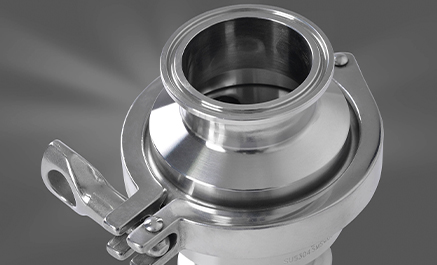
• stainless steel valves: ball valves and specialty valves for isolation and control.
• Example (ball valve capabilities shown in the manual): connection by clamp/flange/weld, actuation by manual/electric/pneumatic, with pressure testing and clean assembly expectations.
Custom stainless steel tubing & fabrication
For projects that can’t be solved by standard straight lengths, custom stainless steel tubing and stainless steel pipe fabrication commonly include:
• cut-to-length + end prep
• bending (controlled ovality/flattening requirements)
• welded spools and assemblies
• integrated custom valves and instrument take-offs
• cleanliness-preserved packaging workflows for EP/BA tubing
OCTAL Product Advantages for Procurement
OCTAL high-precision stainless steel tubing is designed to make purchasing and acceptance more predictable—especially when your project involves tight tolerances, surface requirements (BA/EP), and cross-item compatibility (tubing + fittings + valves). Instead of only listing capabilities, we focus on the points that typically slow down procurement: spec alignment, receiving inspection risk, documentation closure, and shipment-to-install cleanliness protection.
• Clear spec mapping for faster comparison: tubing is organized around commonly referenced standards such as ASTM A269 / JIS G3459, with OD/wall/tolerance ranges and finish categories (AP/BA/MP/EP) defined in a way that procurement and engineering can review side-by-side without re-interpretation.
• Batch control and traceability that reduces “mixed lot” risk: heat/lot identification and segregation are maintained through production and packing, so receiving inspection and warehouse management can keep traceability intact all the way to installation.
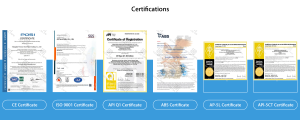
• Documentation-ready delivery: we support a clean quality document set aligned with typical acceptance steps (material grade identification, mechanical benchmarks, dimensional and finish identification), reducing back-and-forth and preventing “goods arrived but can’t be released” delays.
• High-purity cleaning & packaging that protects your acceptance: for BA/EP and high-purity service, the cleaning and packaging workflow (e.g., degreasing, passivation, DI rinse, drying, nitrogen purge, sealed packaging, end-caps) is structured to keep the bore condition stable during transit—minimizing particle/moisture issues that often trigger site rejection.
• Package consistency across tubing + fittings + valves: when the scope includes stainless compression fittings and stainless steel valves, we align sizes and connection logic to reduce mismatch risk and simplify sourcing under one package.
The FAQs below clarify how to specify “high-precision,” how BA and EP are selected, how pressure rating charts are applied, and how metric/small diameter sizes can be supplied together with matching fittings and valves.