Your Responsible Supplier Partner for Oil and Gas Products.

Concrete Weight Coating Pipe CWC – Submarine Pipeline
Concrete Weight Coating Pipe CWC – Submarine Pipeline
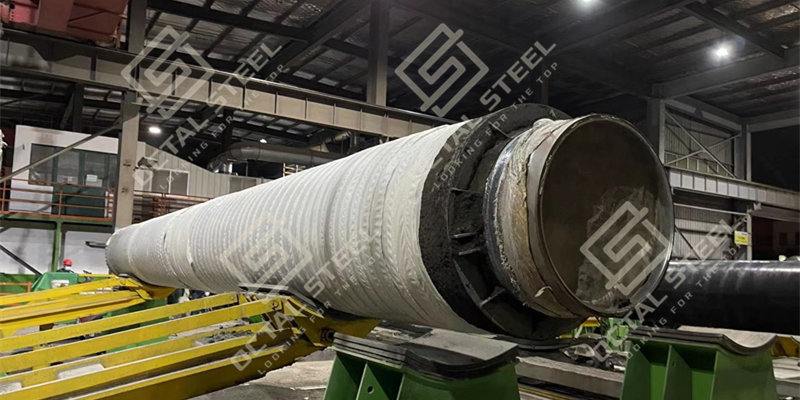
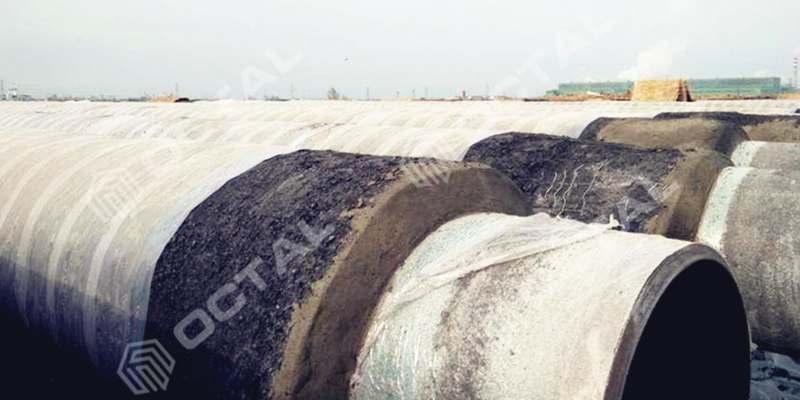
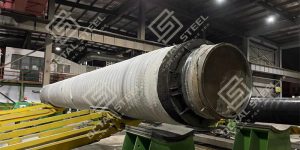
A concrete coated pipe, also known as a concrete weight coating pipe (CWC pipe), is a steel pipe that has been externally coated with concrete. The concrete coating consists of a mixture of cement, aggregates, reinforced steel mesh, and water. The purpose of this coating is to provide strong downward force protection or negative buoyancy for the pipelines. These pipes are commonly used in sub-sea (submarine) pipelines, as the concrete coating adds the necessary weight to withstand the pressure of seawater.
Concrete weight coating application is specified when a concrete weight coating pipeline needs defined negative buoyancy and external mechanical protection in seawater currents, landfall sections, and buoyancy-critical crossings. In project documents, concrete weight coating CWC is selected to meet on-bottom stability targets and installation limits, not by coating thickness alone.
Manufacturing Processes
A typical concrete weight coating process for concrete weight pipe coating starts with the external anti-corrosion coating on the steel pipe, then reinforcement placement (steel wire mesh), controlled concrete application (machine- or form-applied), curing, and joint-by-joint weighing. Key controls are coating density class, thickness tolerance, and mesh cover depth to match the project acceptance criteria.
Concrete Weight Coated Pipe types and dimensions
To accommodate various conditions in the sub-sea environment, concrete coated pipes are available in different dimensions and can be equipped with different weight, thickness, and density of concrete coatings. Additionally, they can be processed with anti-corrosion coatings and insulation coatings to enhance their durability and performance.
Concrete coated pipe weight is driven by OD, steel wall thickness, concrete thickness, concrete density, and reinforcement allowance. To calculate weight of concrete coated pipe during estimating, many EPC teams use a concrete coated pipe weight calculator based on these inputs, then validate final weights by joint weighing after coating and curing.
Below are the ranges from Octal:
Dimensions ranges for Concrete Weight Coating Pipe
Mother pipe standards: API 5L Grade B to Grade 80. ISO 3183 Grade L245 to L555.
Diameter range: 6” to 60”
Pipe Thickness: SCH 20, SCH 40, SCH 80
Length: Up to 12 meters
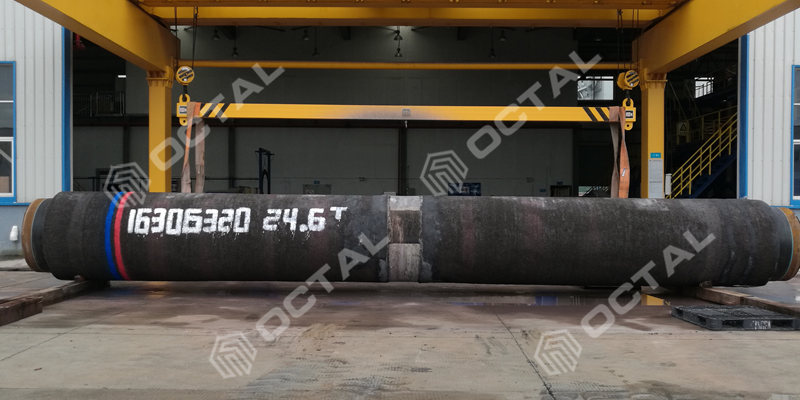
Concrete weight coating density
Concrete formulation can be tailored to any specified density specifications, normally 140, 165 and 190 pounds per cubic foot, smaller or grater densities are also applicable.
Density range: 1800-3450 kg/m3 (112-215 lbs/ft3)
Concrete compressive strength: From 3000 psi to 7200 psi. Up to 50 Mpa.
Concrete thickness: 1 inch to 8 inch. (25 mm to 200 mm)
Common Density: 3040 KG/m3
Heavy weight concrete pipe coating is used when higher submerged weight is required for stability in shallow water, strong currents, or near-shore sections. It typically relies on higher density mixes (often iron-ore blends) to increase negative buoyancy without over-thickening the concrete layer.
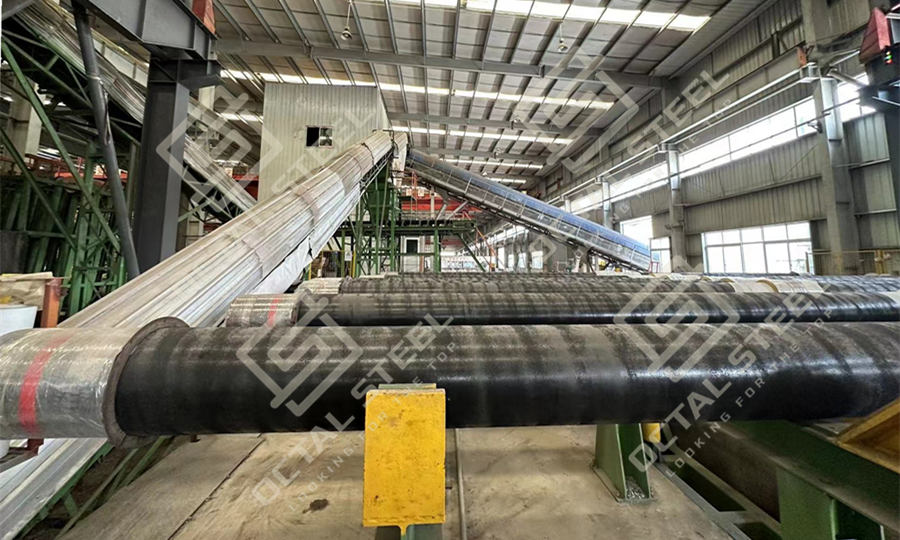
Concrete Weight Coating Plants
Referred Standards
DNV-OS-F101: Submarine Pipeline Systems – SAWL 245, SAWL 290, SAWL 320, SAWL 360, SAWL 415, SAWL 450, SAWL 485, SAWL 555
ISO 21809-5:2010: Petroleum and natural gas industries – External coatings for buried or submerged pipelines used in pipeline transportation systems – Part 5: External concrete coatings.
A concrete weight coating specification commonly defines density class, thickness tolerance, reinforcement requirements, curing, and inspection/testing scope for concrete coatings used on buried or submerged pipelines.
• ASTM C42 Standard Test Method for Obtaining and Testing Drilled Cores and Sawed Beams of Concrete
• ASTM C87 Test Methods for Effect of Impurities in Fine Aggregate on Strength of Mortar BS 1881 Methods of Testing Concrete
• ASTM C642 Standard Test Method for Specific Gravity, Absorption and Voids in Hardened Concrete
• BS 3148 Test Methods for Water for Making Concrete
• BS 4449 Material Specification for Carbon Steel Bars for Concrete Reinforcement
• BS 4482 Hard Drawn Mild Steel Wire for the Reinforcement of Concrete
• BS 4483 Specification for Steel Fabric for the Reinforcement of Concrete
• ISO 4012 Test Specimen of Determination of Compressive Strength
Anodes Installation: Sacrificial Anodes – Cathodic Protection
To properly install anodes on concrete coated pipes, any gaps between the concrete and the anode must be filled with an appropriate type of concrete or mastic.
Features of CWC pipe
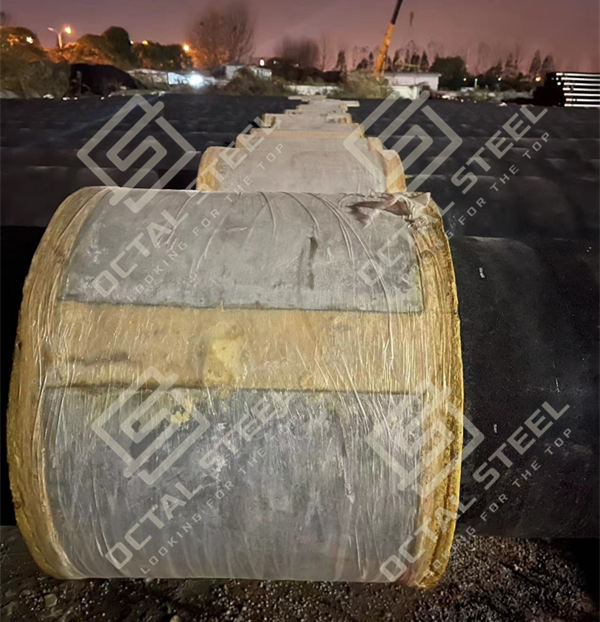
CWC pipe consists of cement, water, aggregates, and reinforcement materials. Its main advantage is that it ensures stable pipeline performance and provides effective mechanical protection. In comparison to other insulation types, such as pipe-in-pipe, CWC pipe offers cost savings, easier pipeline installation, and convenient operations.
Key notes during concrete weight coating pipe manufacturing processes
(Before coating the concrete, the steel pipe is generally coated with 3LPE coating.)
The first step is to calculate the proportionate quantities of cement, iron ore, sand, and granite aggregate, and then mix them together to achieve the desired density. During the concrete buildup process, it is important to control the position of the steel wire mesh in order to achieve a specific wire depth within the coating. Each joint of the pipe should be weighed to ensure that it meets the project requirements. The concrete coated pipe ends should be cleaned and any excess wire trimmed. Once the OD, concrete thickness, and density class are confirmed, a concrete coated pipe weight chart can be prepared for planning and handling. Final concrete coated pipe weight is then verified by shop weighing for each joint. Concrete weight coating pipe mesh position and cover depth are controlled as key QA checks, as they affect crack resistance and handling performance during transport and laying. After curing for 30 days, the material will be ready for delivery.
The concrete coating can be applied using either machine or form-applied methods and can be prepared to any required thickness on-site. The purpose of the external concrete coating is to safeguard the pipe’s isolation coating from potential mechanical damage during repair, upgrading, construction, and operation. The concrete coating method is considered to be an advanced and highly effective means of protecting pipelines, in accordance with regulatory procedures.
Octal Procurement-Ready CWC Delivery
Octal supports CWC projects the way procurement teams actually buy them: one responsible party for mother pipe plus coating scope, clear acceptance points, and a documentation set that closes inspections without back-and-forth. As a concrete weight coating manufacturer, we keep the scope aligned from pipe selection to coating interface, so ordering, QA, and delivery stay consistent across the lot.
What reduces RFQ risk is repeatable verification. Density class and thickness tolerance are set against the line’s stability requirement, then each joint is weighed after coating to confirm the as-coated shipping weight and coating consistency. Mesh position and cover depth are treated as measurable QA items, because they directly influence crack resistance and handling performance during transport and laying.
On the commercial side, Octal keeps procurement work predictable: coating interfaces (such as 3LPE under CWC) are matched to the mother pipe coating spec, pipe ends are kept clean for field welding and joint coating, and the shipment is prepared with traceability and an inspection dossier. With factory execution built around measurable checks and recorded results, the final supply is easier to reconcile against the project ITP and logistics plan.
FAQ
Q1: Is there a concrete coated pipe weight chart for typical sizes?
A1: A weight chart is most reliable after the project fixes coating thickness and density class; then weights per joint or per meter can be tabulated across the ordered size range and verified by shop weighing.
Q2: How do I use a concrete coated pipe weight calculator for project estimating?
A2: Input OD, steel wall thickness, concrete thickness, density class, and reinforcement allowance to estimate unit weight, then confirm by joint weighing after coating and curing.
Q3: What does concrete weight coating pipe mesh control in acceptance checks?
A3: Mesh position and cover depth are controlled and checked because they affect crack resistance and impact tolerance during handling, transport, and pipe laying.
Q4: Which concrete weight coating specification is commonly referenced for submarine pipelines?
A4: ISO 21809-5 is commonly referenced for external concrete coatings, alongside project requirements defining density class, thickness tolerance, reinforcement, and testing scope.


Tags:api 5lAPI 5L pipeConcrete Coated PipeConcrete weight coatingLine Pipe
Related Products
Related Resources
Recent News

Hot Topic

Octal is located in China recognized as a leading supplier, distributor, and manufacturer union in providing piping solutions for oil and gas company. Product ranges in Steel Pipe, Casing and Tubing, Steel Plate, Sucker Rod, Steel Pipe Fittings, Valves, and Equipment for pipelines.
Contact Info
Unit 2544, 25/F, Tower A, Wanda Plaza, Wenfeng District, Anyang, Henan, China & Building A, No.18 Dirun Road, Zhengdong New District, Zhengzhou, Henan, China
+86 372 2157660 / +86 186 3727 1277
[email protected]