Your Responsible Supplier Partner for Oil and Gas Products.

How to Choose Cone Crusher
How to Choose Cone Crusher
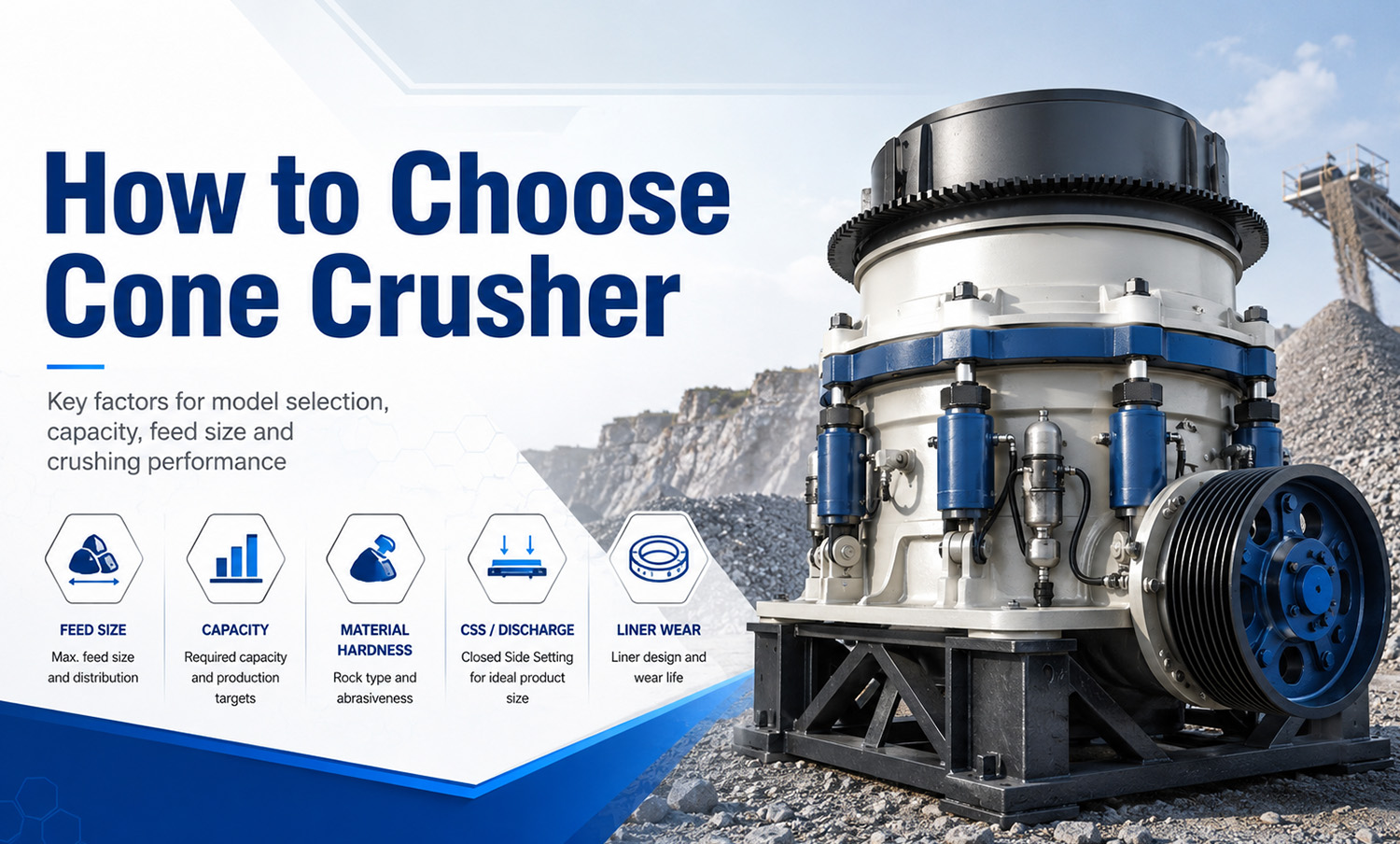
A cone crusher should not be selected by capacity alone. In a real crushing plant, the correct model depends on feed size after primary crushing, target product size, CSS closed side setting, chamber type, rock hardness, moisture, liner wear, screen return load and the position of the crusher in the whole circuit.
This is why two crushers with similar motor power can perform very differently on site. One plant may need a secondary cone crusher to take jaw crusher discharge down to a screenable size. Another plant may need a tertiary cone crusher to improve 10–20 mm aggregate shape. A mining circuit may care more about stable ore reduction before grinding. The right choice starts with the process, not the catalog page.
Start from the Crushing Stage
Cone crushers are normally used after a primary crusher. A jaw crusher or gyratory crusher handles large blasted rock first; the cone crusher then reduces the material into a controlled size range for screening, stockpiling, sand making or further processing.
A practical selection begins by identifying the cone crusher’s duty in the line.
| Crushing Stage | Typical Duty | Key Selection Focus |
|---|---|---|
| Secondary crushing | Reduces primary crusher discharge | Feed top size, chamber opening, crushing force, throughput |
| Tertiary crushing | Produces smaller aggregate fractions | CSS range, product gradation, screen matching, return load |
| Fine crushing | Prepares material for final aggregate or sand making | Particle shape, fines control, liner wear, stable CSS |
| Pebble / ore crushing | Reduces hard and abrasive ore in mining circuits | Power draw, tramp protection, automation, wear parts plan |
A secondary crusher usually needs a chamber that can accept larger feed. A tertiary or fine crusher needs tighter product control and a chamber matched to smaller feed. Mixing these duties is one of the most common reasons for unstable output, high liner wear and poor final aggregate shape.
Cone Crusher Feed Size Selection
Feed size is one of the first conditions to confirm before selecting a cone crusher. The chamber must accept the actual material coming from the jaw crusher or previous crushing stage, including both the maximum lump size and the normal feed distribution. If the feed contains occasional oversize rock, the crusher may face pressure peaks, lower throughput and uneven liner wear. If the feed is too fine for the selected chamber, material may pass through too quickly and the lower liner area may wear before the full crushing cavity is used.
For a real quarry or mining line, feed data should come from site material sampling, jaw crusher discharge records or previous production experience. The crusher should not be selected only from the material name. Granite, basalt, river pebble and limestone can behave very differently depending on hardness, abrasiveness, moisture and clay content.
| Feed Information | Selection Meaning |
|---|---|
| Maximum feed size | Confirms whether the chamber can accept the largest material entering the crusher |
| Main feed size range / P80 | Helps match the chamber profile, reduction ratio and expected product size |
| Fine content | Excessive fines may reduce crushing efficiency and increase packing risk |
| Moisture and clay | Wet or sticky feed can lower real capacity and cause buildup in the chamber |
| Rock hardness | Affects crushing force, motor load and chamber selection |
| Abrasiveness | Influences mantle, concave and liner replacement cost |
| Feed consistency | Segregated feed can cause uneven liner wear and unstable product gradation |
Basalt with high abrasiveness may require a stronger liner plan than limestone. River pebble is rounded and hard, so it can be demanding on wear parts even when the feed size looks manageable. Moist limestone may crush easily in terms of strength, but clay and fines can still reduce flow stability. For this reason, the feed condition should be treated as a selection factor, not just a line in the quotation sheet.
Cone Crusher Product Size Selection
The required discharge size should be fixed before comparing cone crusher models. A crusher selected only for higher tph may still miss the finished aggregate size if the chamber type, CSS and screening circuit do not match the target fraction. In practice, a 10–20 mm concrete aggregate, a 0–5 mm sand-making feed and an ore feed before grinding place different loads on the crusher, even when the feed material comes from the same primary crushing line.
Product size should be written as a clear size band in the project sheet, not as a rough word such as “small stone” or “fine material”. The size target decides whether the crusher needs a coarse, medium or fine chamber, how tight the CSS should be, and whether a closed circuit with screen return is required.
| Target Product | Common Production Situation | Selection Meaning |
|---|---|---|
| 20–40 mm coarse aggregate | Road base, concrete aggregate, first screened product | Usually handled by secondary or coarse tertiary crushing |
| 10–20 mm aggregate | Concrete, asphalt and commercial aggregate | Requires tighter CSS control and proper screen matching |
| 5–10 mm fine aggregate | Fine aggregate production | Needs stable gradation and controlled liner wear |
| 0–5 mm sand-making feed | Material before VSI or sand-making system | Cone crusher reduces oversize and stabilizes feed for the next stage |
| Ore before grinding | Mining process feed preparation | Capacity, hardness, liner life and power draw become critical |
The product size cannot be corrected by CSS alone. If the target fraction is too fine for the selected chamber, the crusher may need a finer chamber, a different liner profile, a closed-circuit screen arrangement or an additional sand-making stage. For stable operation, the crusher should reach the required product size within a normal working CSS range, instead of running constantly at the minimum setting.
Cone Crusher CSS Setting
CSS, or closed side setting, is the smallest gap between the mantle and concave near the bottom of the crushing chamber. It is one of the most important parameters in cone crusher selection because it affects product gradation, capacity, power draw and liner wear.
A smaller CSS usually produces finer output, but it also increases the load inside the chamber. Capacity may drop, wear may rise, and the crusher may become more sensitive to feed changes. A larger CSS normally allows higher throughput, but the product becomes coarser.
A good selection rule is this:
Choose a cone crusher that can produce the target size within a stable CSS range, not one that must run permanently at the minimum setting.
If the required aggregate size can only be reached by forcing the CSS too low, the model or chamber is probably wrong. In that situation, the plant should recheck the crushing stage, chamber type, screen opening and return load.
Cone Crusher Chamber Selection
Cone crushers are available with different chamber profiles, usually including coarse, medium, fine and extra-fine options. The chamber controls how material enters the crusher, how many compression actions occur, and how the final product leaves the cavity.
| Chamber Type | Suitable Use | Selection Risk |
|---|---|---|
| Coarse chamber | Larger feed, secondary crushing | Product may be too coarse for fine aggregate |
| Medium chamber | General secondary or tertiary crushing | Must match feed size and screen return load |
| Fine chamber | Smaller product, tighter gradation | Oversize feed may reduce capacity or cause blockage |
| Extra-fine chamber | Fine crushing or sand-making preparation | Higher wear risk if feed is not clean and controlled |
A chamber that is too coarse may give poor reduction. A chamber that is too fine may not accept real feed size, especially when the feed includes occasional oversize rock. Chamber selection should therefore be reviewed together with feed opening, CSS, stroke, liner profile and final product requirement.
Cone Crusher Capacity Selection
Cone crusher capacity should be read together with the working condition, not as a fixed number. The same model may produce different output when the feed changes from clean granite to wet limestone, or when the circuit changes from open discharge to closed screening with return material. For plant selection, the capacity value should always be checked with feed size, CSS, chamber type, material density and screen arrangement.
In a quarry or mining line, the listed tph is usually only a reference under controlled feed conditions. Real output can drop when the feed contains clay, excessive fines, high moisture or irregular oversize stone. In a closed circuit, part of the material returns from the screen to the crusher, so the crusher load may be high while the final saleable output is lower than expected.
| Capacity Factor | What to Confirm Before Selection | Effect on Crusher Output |
|---|---|---|
| Raw material | Granite, basalt, limestone, river pebble, iron ore or copper ore | Different hardness and abrasiveness change crushing load and liner wear |
| Feed size | Maximum feed size and normal feed distribution | Oversize feed can reduce throughput and create pressure peaks |
| Bulk density | Site material density or project design assumption | Changes the real tons per hour passing through the chamber |
| Moisture and clay | Dry, wet, sticky, washed or clay-bearing feed | Wet sticky material may cause buildup and lower stable capacity |
| CSS setting | Expected operating CSS, not only the minimum setting | Smaller CSS usually produces finer output but may reduce capacity |
| Chamber type | Coarse, medium, fine or extra-fine chamber | Wrong chamber selection can limit feed acceptance or product control |
| Circuit type | Open circuit or closed circuit with screen return | Return load affects net output and crusher operating load |
| Screen opening | Required final aggregate size and screen efficiency | Poor screen matching can increase recirculating load |
| Working schedule | Continuous production or intermittent operation | Long running hours require stronger wear and maintenance planning |
For a reliable selection, capacity should be discussed as a working range under defined conditions. A basalt aggregate plant with high abrasiveness may need more attention to liner life and chamber wear. A limestone plant with moisture and clay may need better feed control and screening balance. An ore crushing line may require closer monitoring of power draw, tramp protection and closed-circuit load. These details make the capacity estimate closer to real production instead of a catalog number only.
Cone Crusher Product Shape
For aggregate production, product shape is often as important as tonnage. Concrete aggregate, asphalt aggregate and road material usually require better cubical shape and fewer elongated particles. Cone crusher product shape is affected by chamber design, CSS, feed distribution, liner condition and recirculating load.
If the plant is producing 10–20 mm concrete aggregate, for example, the crusher should not simply run at maximum discharge opening for more tons per hour. The CSS and screen circuit need to keep the product inside the required fraction. If too much material returns from the screen, the crusher may run under higher load, increase liner wear and reduce net output.
To improve particle shape, pay attention to:
● Stable feed level in the chamber
● Centered feed, not one-sided loading
● Correct chamber type for the crushing stage
● CSS matched to the target product size
● Screen capacity and return load control
● Regular inspection of mantle and concave wear profile
A cone crusher with good design still needs good feeding. Poor feed distribution can make even a strong machine produce uneven gradation.
Cone Crusher Choke Feeding
A cone crusher works best when the chamber is properly filled with evenly distributed material. This is usually called choke feeding. It helps stabilize crushing pressure, reduce power peaks and improve liner utilization.
Poor feeding is a quiet capacity killer. The crusher may be correctly sized, but if the feed is segregated, off-center or intermittent, the actual output will not match the expected performance. One side of the liner may wear faster. Product size may drift. The operator may keep adjusting CSS to fix a feeding problem, which then creates more wear.
For stable feeding, review the layout before the cone crusher:
| Feeding Point | Practical Meaning |
|---|---|
| Surge bin or buffer | Keeps feed steady instead of starving the crusher |
| Controlled feeder | Allows stable material flow into the crushing chamber |
| Center feed arrangement | Reduces one-sided liner wear and product size fluctuation |
| Non-segregated feed | Keeps coarse and fine material evenly mixed before entering the chamber |
| Discharge conveyor interlock | Prevents the crusher from loading before the discharge system is ready |
| Screen balance | Avoids excessive return load in a closed-circuit crushing system |
A cone crusher should be treated as part of a process line. The feeder, screen, return conveyor and discharge conveyor are not background equipment; they decide whether the crusher can perform steadily.
Single-Cylinder vs Multi-Cylinder Cone Crusher
The choice between a single-cylinder cone crusher and a multi-cylinder cone crusher should be based on the crushing duty, product size control, feed condition and maintenance expectation. They can both handle medium-hard to hard materials, but they are usually selected for different plant priorities.
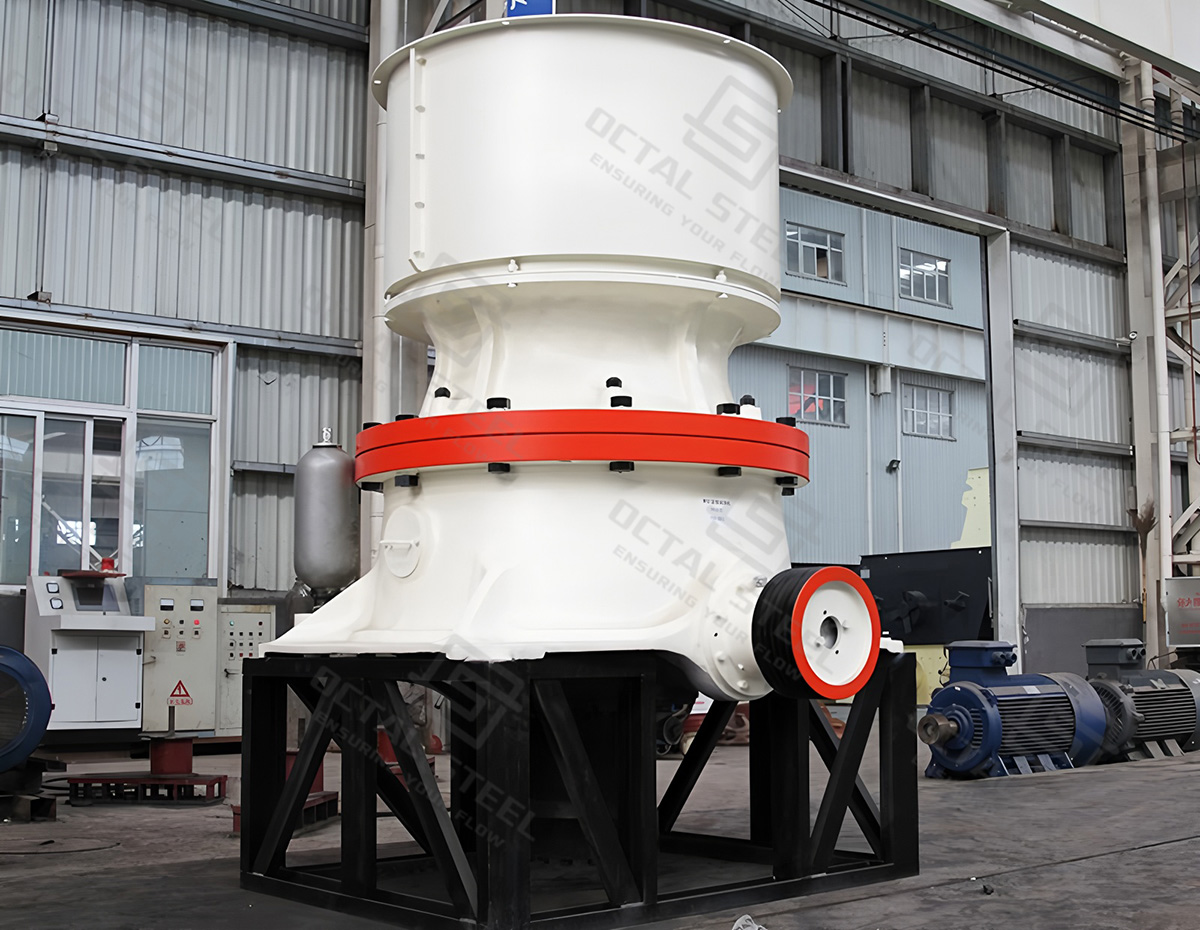
A single-cylinder hydraulic cone crusher is often used where the plant needs a simpler structure, general hydraulic adjustment and reliable secondary crushing. It is easier to understand from a maintenance point of view and can be suitable for standard aggregate production when the feed size is stable, the product size requirement is not too tight, and the circuit does not carry a heavy return load from the screen.
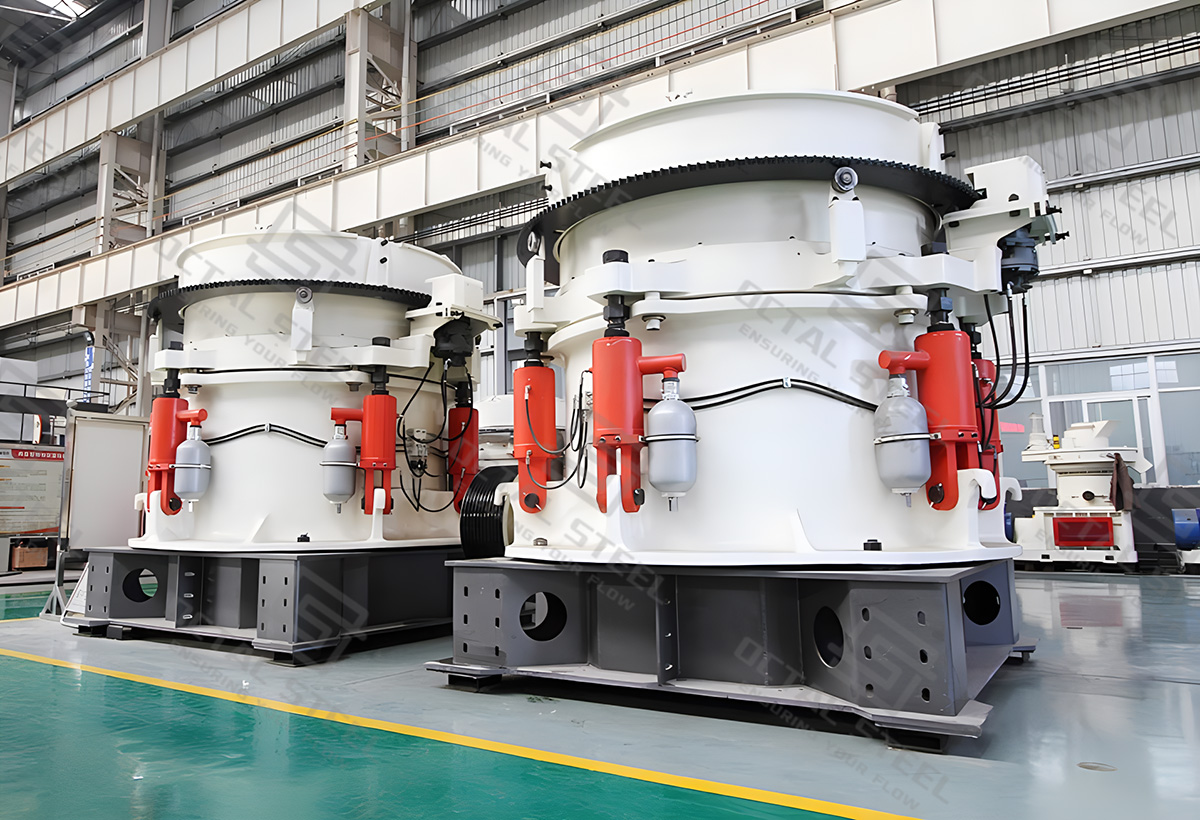
A multi-cylinder hydraulic cone crusher is more suitable when the line needs stronger chamber control, more accurate CSS adjustment and better overload protection. In hard rock plants processing granite, basalt, river pebble or metallic ore, the crusher often works under changing feed size, higher crushing pressure and longer operating hours. In this situation, hydraulic CSS adjustment, tramp iron release, hydraulic clearing and multiple chamber options become practical operating advantages, not just catalog features.
| Selection Point | Single-Cylinder Cone Crusher | Multi-Cylinder Hydraulic Cone Crusher |
|---|---|---|
| Main selection logic | Simpler structure and general crushing duty | Stronger control for secondary, tertiary and fine crushing |
| Feed condition | More suitable for stable and less complicated feed | Better suited for hard, abrasive or variable feed conditions |
| Product size control | Works for standard aggregate sizes | Better when tighter gradation and finer output are required |
| CSS adjustment | Suitable for normal adjustment needs | More practical for frequent CSS control during production |
| Overload protection | Basic hydraulic protection depending on design | Stronger protection with hydraulic release and clearing system |
| Chamber options | Usually selected for common crushing duties | Coarse, medium, fine and extra-fine chambers can support different product targets |
| Typical plant use | Standard secondary crushing or simpler aggregate lines | Hard rock aggregate, manufactured sand preparation and metallic ore crushing |
| Maintenance focus | Simpler inspection and adjustment | More attention to hydraulic, lubrication and control systems |
For a small or medium aggregate line with stable limestone or ordinary stone feed, a single-cylinder crusher may be enough if the final product size is not very demanding. For a hard rock line that needs 10–20 mm aggregate, 5–10 mm fine aggregate, or 0–5 mm sand-making feed preparation, a multi-cylinder hydraulic cone crusher is usually the safer direction because the crusher must hold product size while working with screen return and liner wear.
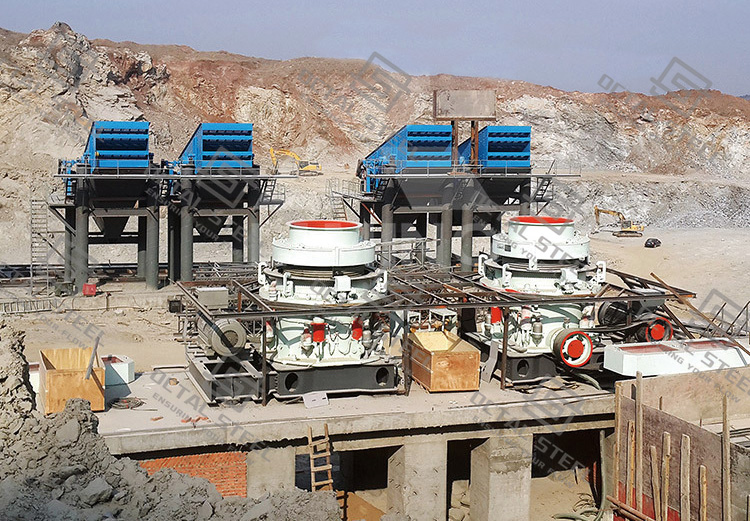
For example, HPY Multi-cylinder Hydraulic Cone Crusher is designed for secondary, tertiary and fine crushing. Its model range covers HPY-100 to HPY-1250, with feed size up to 350 mm depending on model and chamber type, output size commonly controlled from 6 mm to 64 mm by CSS and screening circuit, and reference capacity from about 20 to 3000 t/h under different model configurations. These values should still be checked with real material hardness, bulk density, feed grading, moisture, chamber selection, CSS and open-circuit or closed-circuit operation before final model confirmation.
In practical selection, the multi-cylinder option becomes more meaningful when the buyer is not only asking for “more tons per hour,” but also needs stable particle size, lower unplanned shutdown risk, easier clearing after blockage, and better control when the liners begin to wear. This is why the crusher type should be selected together with the whole plant layout, not only by comparing machine weight or motor power.
Cone Crusher Screening Circuit
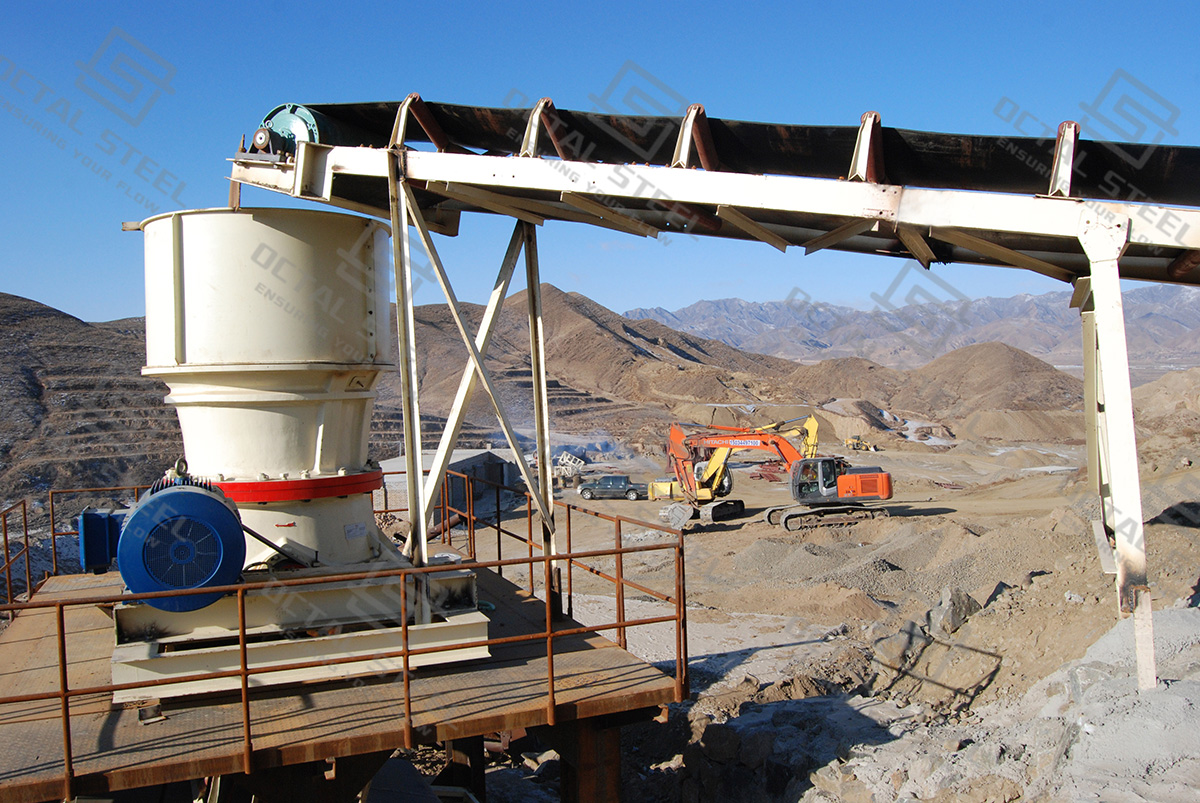
In many plants, the cone crusher does not work alone. It works with a vibrating screen. Oversize material returns to the crusher until it reaches the required product size. This is a closed-circuit crushing system.
Closed circuit improves product control, but it also adds a risk: return load. If too much material keeps circulating, the crusher may look busy but the final product output may be lower than expected.
A healthy closed-circuit system should balance:
● Crusher capacity
● Screen opening
● Screen area and screening efficiency
● Return conveyor capacity
● Feed grading
● Target product size
● Liner condition
● Moisture and fines content
If the screen is undersized, the cone crusher may be blamed for a problem it cannot solve. If the chamber is too coarse, too much oversize returns. If the CSS is too tight, wear and load increase. The selection should include both crusher and screen, not just the crusher model.
Cone Crusher Wear Parts
The cost of a cone crusher is not only the purchase price. Mantle, concave and bowl liner wear, together with bushings, seals, lubrication parts, hydraulic parts and downtime, all affect operating cost.
For abrasive rock such as basalt, granite, river pebble or certain metallic ores, liner wear may become one of the biggest cost items. A crusher that looks economical at the beginning may become expensive if liners wear quickly, the chamber profile changes too fast, or spare parts are not prepared before production starts.
Before confirming the model, review these wear-related points:
| Wear Question | Why It Matters |
|---|---|
| How abrasive is the rock? | Controls liner material and replacement cycle |
| Is the feed stable? | Unstable feed causes uneven liner wear |
| What chamber profile is required? | Different chambers need different mantle and concave profiles |
| How often will liners be inspected? | Prevents product size drift after wear |
| Are spare wear parts stocked? | Reduces shutdown time during replacement |
| Is tramp iron protection included? | Protects the chamber from uncrushable material |
| Is lubrication monitored? | Prevents bearing and bushing damage |
Liner wear is not only a maintenance issue. It also affects product size. As the chamber wears, the crushing profile changes. A plant that needs stable aggregate gradation should monitor liner condition before the product moves outside the required range.
Cone Crusher Automation and Protection
Modern cone crushers are expected to do more than crush stone. They also need to protect the machine and keep the process stable. Hydraulic adjustment, tramp iron release, lubrication monitoring and operating status alarms are especially useful in continuous aggregate and mining lines.
Important protection and control functions include:
● Hydraulic CSS adjustment
● Tramp iron release
● Hydraulic chamber clearing
● Lubrication oil temperature monitoring
● Lubrication oil pressure monitoring
● Feed level monitoring
● Power draw monitoring
● Alarm and shutdown logic
● Interlock with feeder and conveyor
These features reduce the risk of chamber blockage, liner damage and unplanned shutdown. They also help operators keep product size more stable when feed condition changes during the day.
Cone Crusher Selection Checklist
Before confirming the crusher model, prepare a selection sheet. This avoids vague communication and makes technical comparison much easier.
| Item | Required Information |
|---|---|
| Crushing stage | Secondary, tertiary, fine crushing, pebble crushing |
| Raw material | Granite, basalt, limestone, river pebble, iron ore, copper ore |
| Feed size | Maximum feed size and normal feed distribution |
| Target product | Required output size and final aggregate fraction |
| Capacity target | Stable tph under real material and circuit conditions |
| CSS range | Expected operating CSS, not only minimum setting |
| Chamber type | Coarse, medium, fine or extra-fine |
| Circuit type | Open circuit or closed circuit with screen return |
| Feed condition | Dry, wet, sticky, clay-bearing or mixed |
| Wear expectation | Abrasiveness and liner replacement plan |
| Control system | Hydraulic adjustment, tramp release, lubrication monitoring |
| Installation | Stationary plant, modular plant or mobile crushing line |
| Maintenance access | Liner change space, hydraulic system access, spare parts route |
This table is more useful than comparing model names alone. It helps the engineer judge whether the requested capacity is realistic and whether the machine can fit the whole crushing circuit.
Download the cone crusher selection checklist to prepare feed size, CSS, chamber type, capacity target and screening circuit information before model confirmation.
Common Mistakes When Choosing a Cone Crusher
Many cone crusher failures start before the machine arrives on site. The crusher may not be badly designed; it may simply be selected from incomplete information.
Common mistakes include:
● Choosing capacity from a catalog without checking material condition
● Using only maximum feed size and ignoring feed distribution
● Selecting a fine chamber while the real feed contains oversize lumps
● Running CSS too small to force a finer product
● Expecting the crusher to solve a screening problem
● Ignoring wet sticky feed or clay content
● Allowing segregated feed into the chamber
● Forgetting that liner wear changes product size over time
● Selecting the crusher without checking discharge conveyor and screen capacity
● Ordering the machine without a spare wear parts plan
A good cone crusher selection should reduce these problems before shipment, not after installation.
Cone Crusher Material Selection
The material type should be checked before the crusher model is confirmed. In a real quarry or mining line, the same cone crusher will not perform the same on limestone, basalt, river pebble or metallic ore. The difference is not only hardness. Abrasiveness, moisture, clay content, feed shape and downstream product requirement all change the chamber load, liner wear and stable capacity.
For example, dry limestone may be easier to crush, but wet limestone with clay can create buildup in the chamber and reduce screening efficiency. Basalt and granite usually need more attention to liner wear, choke feeding and product shape. River pebble is often rounded and hard, so it can be demanding on mantle and concave wear, especially when the plant prepares feed for sand making. Ore crushing places more pressure on power draw, tramp protection and closed-circuit control because the crusher must keep a stable feed size for the next processing stage.
| Material | Field Condition to Watch | Selection Focus |
|---|---|---|
| Granite | Hard rock, possible high abrasiveness, strict aggregate shape demand | Use stable chamber control, proper CSS range and a planned mantle / concave replacement cycle |
| Basalt | High wear demand, cubical aggregate requirement, heavy load in continuous crushing | Select wear-resistant liners, maintain choke feeding and avoid running CSS too tight for long periods |
| River pebble | Rounded hard stone, poor bite in the chamber, high wear in sand-making preparation | Use cone crusher to reduce oversize before VSI; control feed distribution and liner wear closely |
| Limestone | Easier crushing in dry condition, but fines, moisture and clay may affect flow | Avoid over-crushing; match CSS with screen opening and keep wet sticky feed under control |
| Iron ore | Hard and abrasive feed, continuous load, high impact on power draw | Check chamber type, motor load, liner life, tramp protection and closed-circuit return load |
| Copper ore | Variable hardness, downstream grinding feed requirement, possible tramp material risk | Keep reduction stable, protect the chamber and plan maintenance around liner wear and power draw |
Material selection should not stop at the material name. A project sheet should include feed size distribution, moisture condition, abrasiveness, required output size and whether the crusher works in open circuit or closed circuit. This makes the model selection closer to real production instead of a general capacity estimate.
FAQ
Q1:What information should I provide before buying a cone crusher?
Before buying a cone crusher, provide raw material, maximum feed size, normal feed distribution, target output size, required capacity, moisture condition, CSS range, chamber requirement and whether the line is open circuit or closed circuit. These details help the supplier select the model by real working condition, not only by catalog capacity.
Q2:How do I choose the right cone crusher capacity?
Cone crusher capacity should be selected according to feed size, rock hardness, bulk density, CSS setting, chamber type and screening circuit. A higher catalog capacity does not always mean higher final output, especially when the material is wet, abrasive, clay-bearing or returned from a closed-circuit screen.
Q3:Which cone crusher chamber should I choose?
A coarse chamber is better for larger feed and secondary crushing, while a fine or medium-fine chamber is used when the plant needs smaller aggregate size or tighter gradation. The chamber should match the actual feed top size, target product size and CSS range to avoid blockage, poor reduction or fast liner wear.
Q4:When should I choose a multi-cylinder hydraulic cone crusher?
A multi-cylinder hydraulic cone crusher is more suitable for hard rock, abrasive aggregate, metallic ore, tertiary crushing and fine crushing where stable product size is important. It is also preferred when the plant needs hydraulic CSS adjustment, tramp iron release, hydraulic clearing and multiple chamber options.
Q5:What affects the long-term cost of a cone crusher?
The main long-term costs come from mantle and concave wear, liner replacement, lubrication parts, hydraulic components, downtime and spare parts availability. For abrasive materials such as basalt, granite, river pebble or ore, buyers should confirm liner material, spare wear parts plan and maintenance access before placing the order.


Recent Faqs
Rencent Articles
Hot Topic

Custom Posts

Octal is located in China recognized as a leading supplier, distributor, and manufacturer union in providing piping solutions for oil and gas company. Product ranges in Steel Pipe, Casing and Tubing, Steel Plate, Sucker Rod, Steel Pipe Fittings, Valves, and Equipment for pipelines.
Contact Info
Unit 2544, 25/F, Tower A, Wanda Plaza, Wenfeng District, Anyang, Henan, China & Building A, No.18 Dirun Road, Zhengdong New District, Zhengzhou, Henan, China
+86 372 2157660 / +86 186 3727 1277
[email protected]