Your Responsible Supplier Partner for Oil and Gas Products.

Pipe Connection Reliability and Sealing Controls for Steel Piping Systems
Pipe Connection Reliability and Sealing Controls for Steel Piping Systems
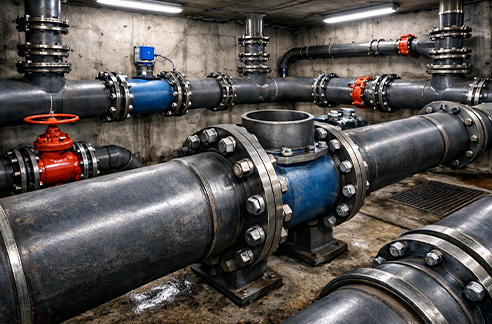
A stable pipe connection is built when joint geometry is repeatable, sealing load is repeatable, and the acceptance evidence is already defined before fabrication starts. In steel piping projects, the highest rework risk concentrates at interfaces—where tolerances stack up across pipe, pipe connection fittings, and assembly practice.
What procurement is really buying: a “joint package” with acceptance points
A complete scope is not “pipe + coating + fittings.” It is a set of pipe connection details that can be assembled without forcing, tested without re-torque loops, and closed out with traceable records. In practical project terms, the joint package is defined by:
• Interface geometry (end prep / face condition / groove or thread form)
• Sealing system (gasket or sealant window and mating requirements)
• Load method (bolt preload method or clamp/coupling tightening method)
• Evidence list (what is recorded per lot / per spool / per pipe connection joint)
When these items are not locked early, the project pays twice: first in field fit-up time, then in rework and acceptance back-and-forth.
Pipe connection methods and the selection logic that prevents forced assembly
Different pipe connection methods succeed for different reasons, but the failure mechanisms are predictable by pipe connection type:
• Welded steel pipe connection: strongest continuity, but most sensitive to end prep variation, alignment drift, and distortion—especially near flanged tie-ins.
• Flanged joints: fastest to assemble/disassemble, but sealing depends on face condition + gasket behavior + preload repeatability acting together.
• Threaded joints: fast for small-bore utilities, but reliability is driven by thread integrity and consistent make-up/sealant control.
• Mechanical couplings / repair sleeves: speed-focused; performance depends on dimension control and uniform clamp load, not “tightness feel.”
Selection that ignores access for NDE/repair, installation sequence, or tolerance stack-up often turns into bolt-hole correction, spool forcing, and localized seal failure during hydro-test.
Where factory control starts: the right machine and the right tool for repeatability
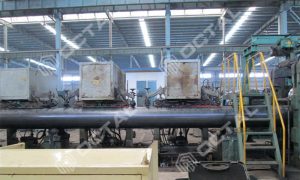
A pipe connection machine reduces the variation that later shows up as weld repairs or flange leaks. Typical repeatability-critical equipment includes end beveling/facing machines, grooving machines, and thread cutting/finishing machines—used to keep the joint geometry within the intended procedure window.
A calibrated pipe connection tool is equally important on the sealing side: torque wrenches, hydraulic torque systems, or bolt tensioners convert “tightening” into a repeatable preload method, reducing scatter across the bolt circle and improving gasket stress uniformity.
Welded joints: controls that make NDE pass rates predictable
A stable welded joint is built by controlling geometry before welding, not by “repairing to pass.”
Interface controls that drive stability
• End prep consistency (bevel form, land, end-face condition)
• Fit-up stability (root opening control and tack strategy)
• Alignment/ovality control (internal mismatch and concentricity that affect root fusion)
• Distortion awareness near flanges and rigid attachments (weld heat input can shift face condition)
Example from piping execution
A pump skid tie-in often combines short spools and multiple restraints. When end prep and fit-up drift across short pieces, weld repairs increase; when those repairs sit near a flange, the distortion can translate into a sealing problem even if weld NDE passes—leaks appear localized around one sector of the flange after hydro-test.
Flange sealing: one system made of three variables
Flange sealing remains stable only when these three variables are controlled together:
1. Flange face condition: waviness/flatness, surface finish, and damage-free contact band
2.Gasket working window: correct type for media/temperature and a compression range that preserves recovery
3.Bolt preload repeatability: staged tightening method and controlled friction condition to reduce scatter
Operational checkpoints that prevent re-torque loops
• Face protection and damage mapping (nicks and dents become leak paths)
• Correct gasket handling (contamination and deformation reduce recovery)
• Staged cross-pattern tightening with consistent lubrication/friction condition
• Awareness of distortion after nearby welding (face can shift from “flat enough” to local over/under-compression)
Example from installation
Bolt-hole misalignment in a fabricated spool is often corrected by forcing the flange to align. The installation stress creates uneven gasket compression; hydrotest then shows leakage around a few bolts rather than an even seep—tightening more can worsen the condition by warping the face further.
Mechanical couplings and clamps: fast joints that demand dimension discipline
Mechanical systems deliver speed, but only when the geometry and clamp load are controlled.
A pipe connection clamp or coupling is reliable when:
• The pipe surface condition and dimensions match the coupling design window
• Gasket seating is clean and aligned (no pinched or rolled seals)
• Clamp/coupling load is applied uniformly and verified (not tightened by feel)
Example from maintenance
Emergency clamps can restore containment quickly on a damaged line, but long-term stability depends on correct sizing, surface preparation, and uniform tightening. If the clamp load is uneven, seepage may reappear after vibration or thermal cycling.
When pipe connection has been broken: three failure patterns and the checks that isolate root cause
Pattern A: Localized flange leak after hydrotest or startup
• Often linked to face damage/distortion, uneven preload, or forced alignment during assembly
• Typical sign: wetting concentrated on one side or around a few bolts
Pattern B: Repeated weld repair near a flange tie-in
• Often linked to end prep variation + fit-up drift, then distortion affecting flange face condition
• Typical sign: NDE pass rate drops on short-piece assemblies; sealing becomes unstable after repair cycles
Pattern C: Mechanical coupling seep under vibration
• Often linked to groove/fit dimension drift, gasket seating issues, or uneven clamp load
• Typical sign: joint is dry at installation, then shows early-life seepage after cycling
The common chain reaction in field failures is not “bad gasket.” It is tolerance stack-up → forced assembly stress → uneven compression → re-torque → further distortion → recurring leak.
What Octal provides to keep pipe connection orders predictable
Octal supplies steel piping connection packages as a controlled deliverable, not just loose components. For a steel pipe connection scope, what we provide is the combination procurement teams care about: clear scope ownership, measurable acceptance points, and a documentation set that closes out quickly.
• One accountable supply scope: we can supply mother pipe and matched pipe connection fittings under the same order boundary, so interface ownership is clear and “grey-zone” disputes are reduced when a pipe connection joint is assembled on site.
• Connection readiness at delivery: each shipment is prepared with protected interfaces—flange faces, threads, grooves, and ends—so handling and storage do not turn into rework before installation.
• Joint-level traceability and inspection evidence: we provide heat/batch traceability and inspection records mapped to lots/spools/joints, so receiving inspection and close-out reviews are faster and less repetitive.
• Method-matched deliverables for different pipe connection type and pipe connection methods:
1)welded: end condition controls and weld/NDE documentation linkage as required
2)flanged: gasket/bolting method alignment with the specified standard and face condition protection
3)threaded: thread protection and identification consistency per the ordered connection
4) mechanical/clamp: dimensional fit checks and assembly-related records where required
• Factory execution you can audit: from our factory side, production and inspection records are organized to match typical ITP/hold points, so evidence is easy to review without back-and-forth.
This approach reduces the two procurement pain points that cost the most time: (1) interface responsibility disputes, and (2) document gaps that delay acceptance—while keeping the delivered package ready for installation across the specified connection type.
One matrix to keep pipe connection details aligned under schedule pressure
| Pipe connection type | What must stay controlled | Where failure starts first | Acceptance evidence that usually matters |
|---|---|---|---|
| Welded steel pipe connection | End prep, fit-up, alignment, distortion, NDE access | NDE repairs; distortion near flange tie-ins | Dimensional checks (as required); NDE reports; weld/NDE traceability; tests per project |
| Flanged | Face condition, gasket window, bolt preload repeatability | Localized leak at one sector | Gasket/bolting method definition; face protection status; test records |
| Threaded | Thread integrity, sealant consistency, make-up control | Early leakage after rework/cycling | Thread/sealant control evidence (where required); tests per project |
| Mechanical / clamp systems | Dimensional fit, gasket seating, uniform clamp load | Seep under vibration/cycling | Dimensional checks (where applicable); assembly records; tests per project |
FAQ


Tags:steel pipe fittings
Recent Faqs
Rencent Articles

Hot Topic

Custom Posts

Octal is located in China recognized as a leading supplier, distributor, and manufacturer union in providing piping solutions for oil and gas company. Product ranges in Steel Pipe, Casing and Tubing, Steel Plate, Sucker Rod, Steel Pipe Fittings, Valves, and Equipment for pipelines.
Contact Info
Unit 2544, 25/F, Tower A, Wanda Plaza, Wenfeng District, Anyang, Henan, China & Building A, No.18 Dirun Road, Zhengdong New District, Zhengzhou, Henan, China
+86 372 2157660 / +86 186 3727 1277
[email protected]
Octal Steel Group Websites